Bently Nevada
RFQ Ready
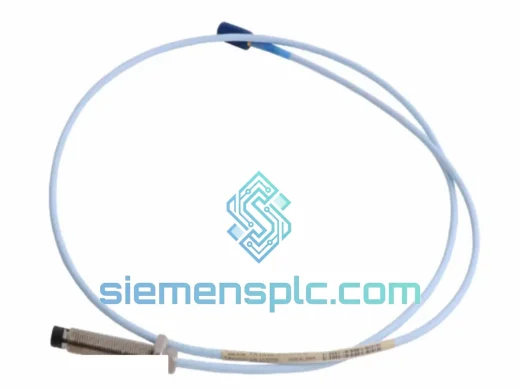
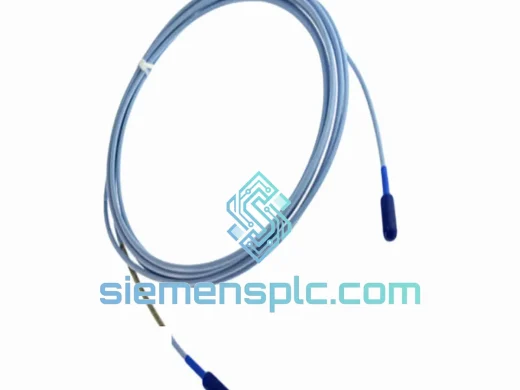
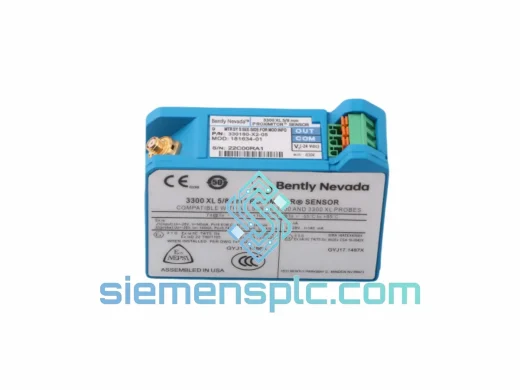
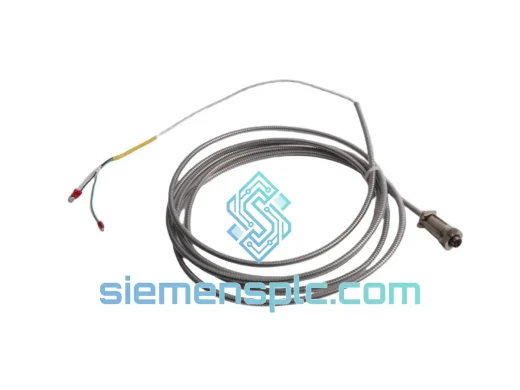
Bently Nevada 84661-12 Velomitor Interconnect Cable
3300 Series
Origin US
Vibration Monitoring Cable
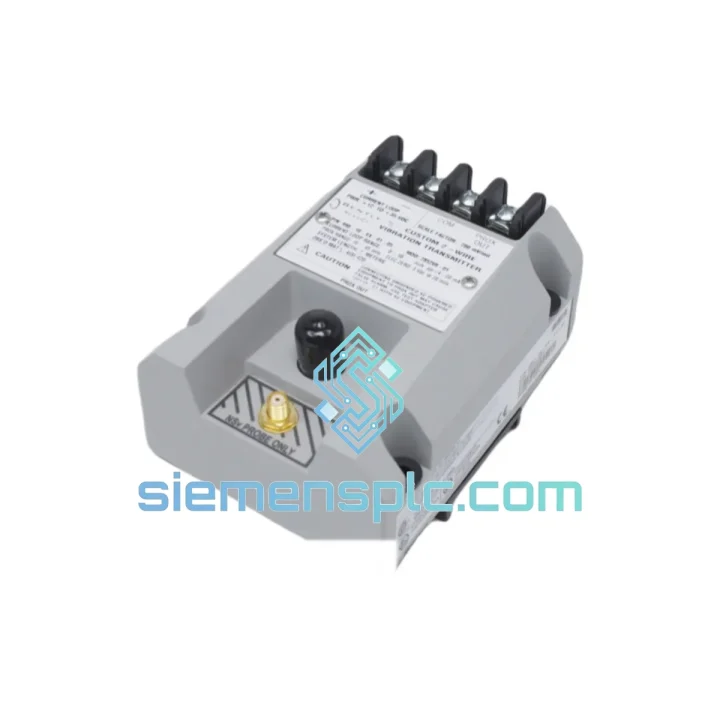
Request verified availability, condition, replacement risk review, packing options and courier lead time for 990-10-70-01-00.
Click Request Quote and the part number is inserted into the inquiry form automatically.
Core fields for model confirmation and RFQ routing. Detailed product narrative remains below.
The Bently Nevada 990-10-70-01-00 is a dual-channel shaft relative vibration monitor module designed for integration within the 3300 Series condition monitoring rack. Its primary function is continuous, real-time measurement of radial shaft displacement using eddy-current proximity transducers, providing the foundational protection layer required by API 670 for critical rotating machinery. In a control loop context, this module occupies the sensing and alarm-generation tier: it receives raw transducer signals, applies configurable filtering and setpoint logic, and outputs both analog process values and discrete relay contacts to the plant DCS or safety instrumented system (SIS). Without this module, the 3300 rack loses its ability to detect shaft orbit deviation, bearing wear progression, and rotor instability — conditions that, left undetected, escalate to forced outage or mechanical destruction within minutes.
Deployed across gas turbines, steam turbines, centrifugal compressors, and large-bore pumps in power generation, LNG, petrochemical, and offshore applications, the 990-10-70-01-00 has accumulated decades of field hours in environments where ambient temperature swings exceed 60 °C, electromagnetic interference from variable-frequency drives is continuous, and maintenance windows are measured in hours per year. Its architecture reflects those demands: galvanically isolated signal paths, hardware-enforced alarm latching, and a deterministic scan cycle that does not depend on software scheduling.
Real-time Stock & RFQ: [email protected] | WhatsApp: +86 18359268345
| Parameter | Specification |
|---|---|
| Part Number / SKU | 990-10-70-01-00 |
| Brand | Bently Nevada (Baker Hughes) |
| Series | 3300 Series Condition Monitoring System |
| Module Function | Dual-Channel Shaft Relative Vibration Monitor |
| Measurement Principle | Eddy-current proximity (non-contact) |
| Compatible Transducers | 3300 XL 8 mm (330180-XX-XX), 3300 XL 11 mm (330101-XX-XX) |
| Input Voltage Range | −24 VDC nominal (rack-supplied) |
| Analog Output | 4–20 mA per channel, proportional to gap/vibration amplitude |
| Relay Outputs | Alert (1×) and Danger (1×) per channel; SPDT, rated 2 A @ 30 VDC |
| Frequency Response | DC to 10 kHz (−3 dB) |
| Alarm Setpoints | Independent Alert and Danger per channel; field-configurable |
| Time Delay | Configurable 0–60 s on Alert; Danger typically 0 s (immediate) |
| Operating Temperature | 0 °C to +65 °C |
| Storage Temperature | −40 °C to +85 °C |
| Humidity | 5–95 % RH, non-condensing |
| Housing / Form Factor | 3300 Series rack-mount module (single-slot) |
| Compliance | API 670 4th Edition, CE, RoHS |
| Weight | Approx. 1,000 g |
| Warranty | 12 months against manufacturing defects |
The 990-10-70-01-00 implements a fully analog front-end signal chain before any digital processing occurs. The eddy-current proximity probe generates a voltage proportional to the gap between probe tip and shaft surface — typically in the range of −2 VDC to −18 VDC for a standard 8 mm probe system. This raw DC-coupled signal enters the module through a galvanically isolated input stage. Galvanic isolation here is not a convenience feature; it is a structural requirement. In turbomachinery installations, the shaft is often at a different ground potential than the rack chassis due to shaft grounding currents, stray capacitance in long cable runs (up to 9 m for standard probe systems), and ground loops introduced by the DCS. Without isolation, common-mode noise at 50/60 Hz and its harmonics would corrupt the vibration amplitude measurement, producing false alarms or, more dangerously, masking real alarm conditions.
The isolated signal is then split into two parallel processing paths. The first path passes through a high-pass filter (typically 1 Hz corner frequency) to extract the AC vibration component — the dynamic shaft displacement relative to the bearing housing. This AC signal is full-wave rectified and peak-detected to produce a 0–peak or peak–peak amplitude value in engineering units (µm or mils). The second path retains the DC component, representing the static gap (average shaft position within the bearing clearance). Both values are independently compared against their respective setpoints in dedicated hardware comparators — not in firmware. Hardware comparators eliminate the scan-cycle latency inherent in software-based alarm evaluation, ensuring that a step-change vibration event (such as a blade loss) triggers the relay output within microseconds rather than within one PLC scan cycle.
EMC performance is achieved through a combination of shielded module housing, ferrite bead filtering on all I/O lines, and differential signal routing on the internal PCB. The module meets IEC 61000-4-2 (ESD), IEC 61000-4-4 (EFT/Burst), and IEC 61000-4-6 (conducted RF immunity) — the three most relevant EMC threats in a switchgear-adjacent rack environment. The relay output contacts are arc-suppressed with RC snubber networks, preventing contact erosion and the associated contact resistance drift that would degrade alarm reliability over a 10–15 year service life.
Hot-swap capability is implemented through a passive backplane architecture: the rack backplane carries only power and communication lines; the module’s internal circuitry initializes from a cold state within 500 ms of insertion, with alarm outputs held in the de-energized (safe) state during initialization. This prevents spurious relay chatter during module replacement under live rack conditions.
Every 990-10-70-01-00 unit supplied through siemensplc.com is sourced from verified Bently Nevada (Baker Hughes) authorized distribution channels. Each unit undergoes a structured pre-shipment verification protocol:
Shipments originate from our Xiamen, China logistics hub. Standard export documentation (commercial invoice, packing list, certificate of origin) is prepared for all international orders. Express freight options via DHL Express, FedEx International Priority, and UPS Worldwide Express are available, with typical transit times of 3–5 business days to Europe, North America, and Southeast Asia. For time-critical AOG (aircraft on ground) or emergency plant situations, same-day dispatch is available for in-stock units upon order confirmation before 14:00 CST.
Email: [email protected]
WhatsApp: +86 18359268345
Web: siemensplc.com
Location: Xiamen, China
© 2026 siemensplc.com. All rights reserved.
We check the full part number, brand, series and visible nameplate information before quotation.
Sales confirms stock path, condition option, quantity and realistic lead time for export dispatch.
DHL, FedEx, UPS or buyer courier arrangements can be reviewed with packing requirements.
Similar brand or category products for fast comparison and multi-item RFQ lists.