Woodward
In Stock OK
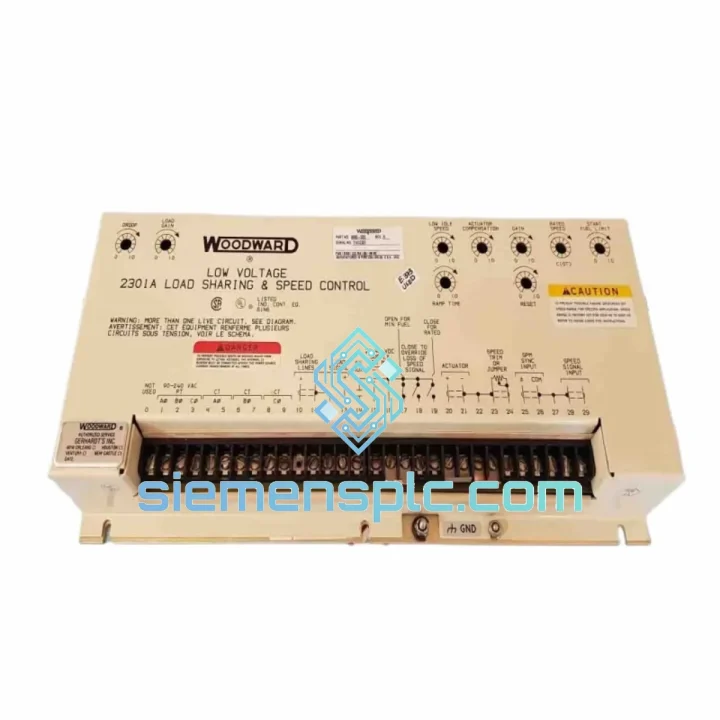
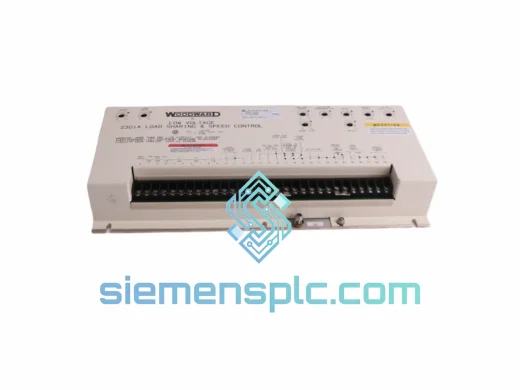
WOODWARD 9905-021 Speed Control Module – Load Sharing Governor
Request verified availability, condition, replacement risk review, packing options and courier lead time for 9905-021.
BrandWoodward
Part Number9905-021
ConditionAvailability Check
Lead TimeRFQ Confirmation
DocumentsDatasheet / photos by RFQ
ShippingExport packing available
Auto-filled RFQ
9905-021
Click Request Quote and the part number is inserted into the inquiry form automatically.
- Reply by email: [email protected]
- WhatsApp / Tel: +86 18359268345
- Mon-Sat 9:00-18:00 GMT+8
Procurement Data
Key Product Information
Core fields for model confirmation and RFQ routing. Detailed product narrative remains below.
- Brand
- Woodward
- Primary Part Number
- 9905-021
- Product Type
- Speed Control Module
- Product Family
- Other series
- Manufacturer
- WOODWARD
- Country of Origin
- US
- Catalog Category
- PLCs & Controllers
- Operating Temp.
- −40 °C to +85 °C
- Warranty
- 12 months against manufacturing defects
Model confirmed for inquiry
9905-021
Send quantity, destination and urgency. The RFQ form keeps this part number attached.
Request Quote
Product Overview
WOODWARD 9905-021: Isochronous Load Sharing Speed Controller for Parallel Generator Applications
The WOODWARD 9905-021 is an analog-digital hybrid speed control module purpose-built for isochronous load sharing in parallel generator set installations. Its core function within the control loop is to maintain zero steady-state frequency error across all paralleled prime movers while simultaneously arbitrating real power (kW) distribution through a shared analog bus. Unlike pure droop governors, the 9905-021 holds engine speed at the programmed reference regardless of load magnitude — a property that is non-negotiable in island-mode microgrids, marine switchboards, and critical standby power plants where frequency deviation directly affects sensitive process loads.
The module accepts a magnetic pickup (MPU) signal from the engine flywheel ring gear, conditions it through a frequency-to-voltage converter stage, and compares the resulting speed signal against an internal reference. The error signal feeds a PID compensation network with independently adjustable proportional gain, integral time, and derivative damping — all accessible via front-panel potentiometers without requiring a laptop or configuration software. The corrected output drives WOODWARD EG, UG, and ProAct series electrohydraulic actuators directly at 0–200 mA, eliminating the need for external current amplifiers in standard installations.
Real-time Stock & RFQ: [email protected] | WhatsApp: +86 18359268345
Technical Parameters
| Part Number | 9905-021 |
| Manufacturer | WOODWARD |
| Module Function | Isochronous Load Sharing Speed Control |
| Control Modes | Isochronous Load Sharing / Droop (field-selectable) |
| Supply Voltage | 18–40 VDC (nominal 24 VDC) |
| MPU Input Frequency Range | 100 Hz – 10,000 Hz |
| Load Sharing Bus Signal | 0–5 VDC differential analog bus |
| Actuator Output Current | 0–200 mA (proportional) |
| Speed Droop Adjustment | 0–10% (potentiometer) |
| Steady-State Frequency Regulation | ±0.25% (isochronous mode) |
| Operating Temperature | −40 °C to +85 °C |
| Mounting | DIN-rail or panel-mount |
| Actuator Compatibility | WOODWARD EG, UG, ProAct series |
| Max Units per Load Sharing Bus | 8 units (with bus termination resistors) |
| Certifications | CE, UL (verify current revision with OEM datasheet) |
| Weight | Approx. 1,750 g |
| Warranty | 12 months against manufacturing defects |
Hardware Logical Analysis
The 9905-021 is structured around three discrete signal-processing stages that operate in sequence within each control cycle:
Stage 1 — MPU Signal Conditioning: The raw magnetic pickup signal, which varies in amplitude with engine RPM and tooth geometry, is passed through a zero-crossing detector and frequency-to-voltage (F/V) converter. This stage normalizes the input across the 100 Hz–10 kHz acceptance band, making the module agnostic to flywheel tooth count and ring gear diameter. The F/V output is a low-impedance DC voltage linearly proportional to engine speed, which feeds the comparison summing junction.
Stage 2 — Load Sharing Arbitration Network: The load sharing bus is a passive analog summing network. Each 9905-021 on the bus both reads and writes a voltage proportional to its own actuator output position. The bus voltage represents the fleet-average fuel demand. Each unit’s internal speed reference is offset by the difference between its own actuator position and the bus average — a negative feedback mechanism that forces all units to converge on equal fuel rack positions, and therefore equal kW output, without requiring digital communication or a master controller. This analog arbitration architecture has deterministic latency measured in microseconds, not milliseconds, which is critical for transient load events.
Stage 3 — PID Output and Actuator Drive: The compensated error signal passes through a PID network. The proportional term provides immediate response to speed deviation; the integral term eliminates steady-state offset (the defining characteristic of isochronous control); the derivative term damps oscillation during load step transients. The output stage converts the PID result to a 0–200 mA current sink, which directly energizes the actuator coil. The current-output topology is inherently immune to wiring resistance variation — a significant advantage over voltage-output governors in installations with long cable runs between the control panel and the engine actuator.
EMC Design: The module’s PCB layout isolates the high-frequency MPU input circuitry from the DC power supply and actuator output stages using ground plane segmentation. Input and output terminals are filtered with common-mode chokes and transient voltage suppressors (TVS) rated for the industrial electrical environment, where capacitor bank switching and motor starting events generate conducted interference exceeding IEC 61000-4-4 Level 3 thresholds.
System Integration Benefits
- Zero-droop frequency regulation: Isochronous mode holds bus frequency at the reference setpoint under any load within the prime mover’s rated capacity, eliminating the frequency offset inherent in droop-only governors.
- Passive bus architecture eliminates single-point failure: The analog load sharing bus has no master controller. Any unit can be removed from the bus without disrupting the remaining paralleled units, which automatically re-converge on equal load sharing.
- Field tuning without software: Gain, stability, droop, and speed reference adjustments are made via front-panel potentiometers. No laptop, no proprietary software license, no firmware version dependency — critical for field service in remote installations.
- Broad MPU compatibility: The 100 Hz–10 kHz input range accommodates flywheel configurations from low-tooth-count industrial engines to high-speed gas turbine accessory gear trains without hardware modification.
- Direct actuator drive: The 0–200 mA current output directly energizes WOODWARD EG and ProAct actuator coils, removing the external amplifier card required by voltage-output competitors and reducing panel wiring complexity.
- Droop mode fallback: Disconnecting the load sharing bus reverts the unit to conventional droop speed control, providing a deterministic degraded-mode operation path when the bus cable is damaged or a unit is isolated for maintenance.
- Wide supply voltage tolerance: The 18–40 VDC input range accommodates battery-backed DC bus voltage variation during engine cranking and load transients without requiring a regulated supply.
- Scalable to 8-unit bus: A single load sharing bus supports up to 8 paralleled generator sets, covering plant configurations from small island grids to large industrial power stations without additional hardware tiers.
Quality Assurance & Global Logistics
Every WOODWARD 9905-021 unit supplied by siemensplc.com is sourced through verified industrial distribution and authorized surplus channels. Prior to dispatch from our Xiamen, China facility, each module undergoes a structured inspection protocol: visual examination of housing, connector pins, and OEM label markings; verification of part number and revision code against WOODWARD published part marking standards; and a functional pre-shipment check of power-up behavior and output continuity.
Counterfeit risk is mitigated through strict supplier qualification. Units that cannot be verified against WOODWARD marking standards are quarantined and never listed for sale. A certificate of conformance, commercial invoice, and packing list accompany every shipment. OEM technical documentation — including the applicable WOODWARD manual and wiring diagram — is provided with each order at no additional charge.
Logistics from Xiamen are handled via DHL Express, FedEx International Priority, and SF Express International, with typical transit times of 3–5 business days to Europe and North America, and 2–4 business days to Southeast Asia. All shipments are fully tracked and insured. Export documentation, including commercial invoice and packing list compliant with destination customs requirements, is prepared by our in-house trade compliance team. Expedited same-day dispatch is available for orders confirmed before 14:00 CST.
Contact Information
Email: [email protected]
WhatsApp: +86 18359268345
Web: siemensplc.com
Location: Xiamen, China
© 2026 siemensplc.com. All rights reserved.
Ready to quote
[email protected]
Send This Part Number to Sales
RFQ workflow
Quality workflow ->
Confirmation Process
01Model confirmation
We check the full part number, brand, series and visible nameplate information before quotation.
02Availability reply
Sales confirms stock path, condition option, quantity and realistic lead time for export dispatch.
03Packing & courier
DHL, FedEx, UPS or buyer courier arrangements can be reviewed with packing requirements.
Continue sourcing
Browse full catalog ->
Related Automation Parts
Similar brand or category products for fast comparison and multi-item RFQ lists.
Woodward
RFQ Ready
WOODWARD 9905-028 Load Sharing Speed Control Module
Origin US
Load Sharing & Speed Control Module