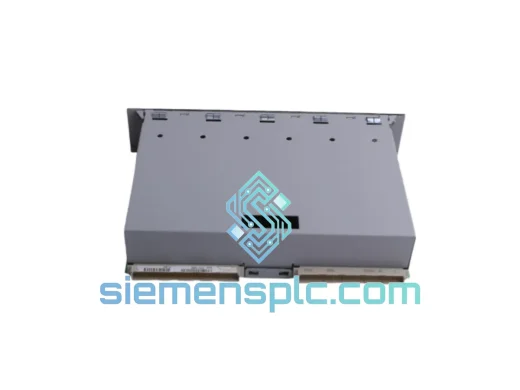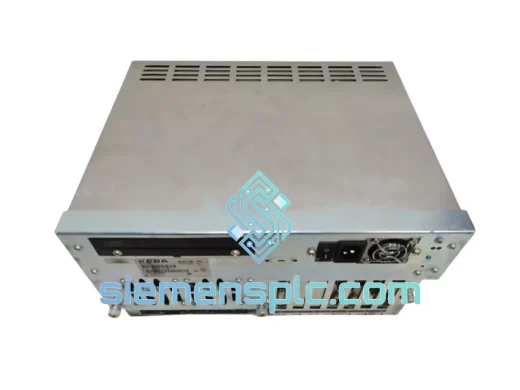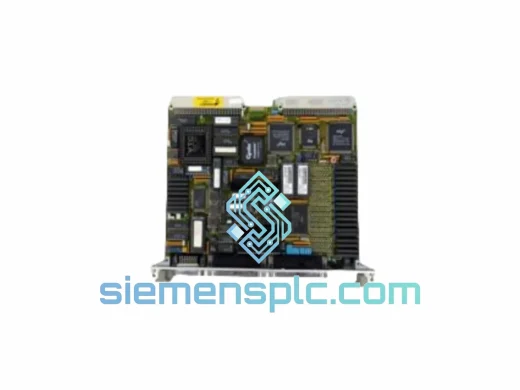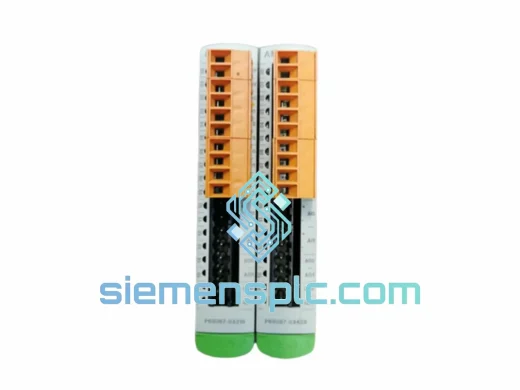
KEBA
RFQ Ready
KEBA AM299/A Bus Coupling Module – AM Series
Industrial PLC
Origin AT
Bus Coupling Module
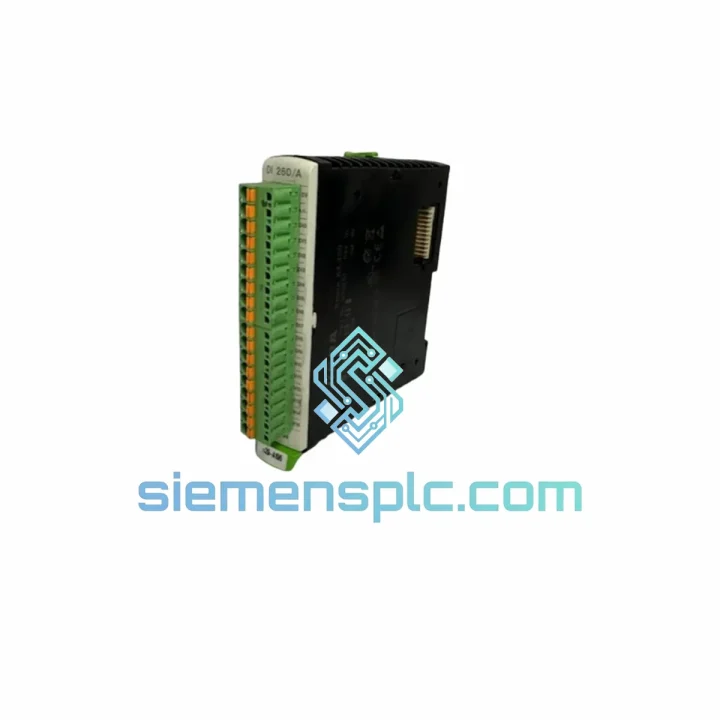
Request verified availability, condition, replacement risk review, packing options and courier lead time for DI260/A.
Click Request Quote and the part number is inserted into the inquiry form automatically.
Core fields for model confirmation and RFQ routing. Detailed product narrative remains below.
The KEBA DI260/A is a high-density digital input card engineered for deployment within KEBA’s KeControl modular PLC platform. Positioned as the primary field-signal acquisition layer between physical sensors and the controller’s execution engine, the DI260/A handles the deterministic capture of binary process states — limit switches, proximity sensors, safety interlocks, push-button stations, and relay contact feedback — and presents them to the CPU over the KeControl internal backplane bus with sub-millisecond latency. In control architectures where scan-cycle jitter directly affects loop stability, the signal integrity and timing consistency of the input card are not secondary concerns; they are foundational to system correctness.
KEBA AG, headquartered in Linz, Austria, has built its KeControl platform around a deterministic real-time kernel and a tightly coupled I/O subsystem. The DI260/A is not a generic input card adapted to fit the platform — it is a purpose-designed module whose electrical interface, firmware handshake protocol, and diagnostic register map are co-developed with the KeControl CPU architecture. This co-design approach eliminates the translation overhead and timing uncertainty that arise when third-party I/O modules are integrated via fieldbus adapters, making the DI260/A the preferred choice for OEMs building machines where cycle-accurate input sampling is a contractual requirement.
Real-time Stock & RFQ: [email protected] | WhatsApp: +86 18359268345
| Parameter | Specification |
|---|---|
| Part Number / SKU | DI260/A |
| Manufacturer | KEBA AG, Linz, Austria |
| Series / Platform | KeControl Modular PLC |
| Module Function | Digital Input Card (DI) |
| Signal Type | Binary / Digital (24 V DC nominal) |
| Input Voltage Range | 20.4 V DC – 28.8 V DC (IEC 61131-2 Type 1/3) |
| Input Current per Channel | ≤ 7 mA at 24 V DC |
| Galvanic Isolation | Opto-coupler isolation, channel groups to backplane |
| Input Filter Time | Configurable: 0.1 ms – 20 ms (software-selectable per channel group) |
| Backplane Interface | KeControl proprietary high-speed parallel bus |
| Module Weight | 1,210 g |
| Mounting | Plug-in card, KeControl rack/backplane |
| Operating Temperature | 0 °C to +55 °C |
| Storage Temperature | -25 °C to +70 °C |
| Relative Humidity | 5 % – 95 %, non-condensing |
| EMC Compliance | EN 61000-4-2 (ESD), EN 61000-4-4 (EFT/Burst), EN 61000-4-5 (Surge) |
| Standards | IEC 61131-2, CE marked |
| Country of Origin | Austria |
| Warranty | 12 months from date of shipment |
The DI260/A’s input front-end employs a two-stage signal conditioning chain. The first stage is a passive RC filter network at each input terminal, providing hardware-level debounce and suppression of high-frequency transients generated by inductive loads switching in the field — motor contactors, solenoid valves, and relay coils are the primary sources of such transients in machine-tool environments. The RC time constant is factory-set to a baseline value, with software-configurable digital filtering applied in the second stage by the module’s onboard ASIC.
Galvanic isolation is implemented via high-speed opto-couplers arranged in channel groups. Each opto-coupler presents a forward voltage threshold that rejects signals below the IEC 61131-2 Type 1/3 “logic 0” threshold (≤ 5 V DC) while reliably switching at “logic 1” levels (≥ 15 V DC). The isolation barrier sustains a working voltage sufficient to protect the backplane logic from field-side ground potential differences — a critical requirement in large machine frames where ground loops between the control cabinet and remote sensor mounting points can introduce several volts of common-mode noise.
On the backplane side, the module’s local controller reads the opto-coupler output states at a rate synchronized to the KeControl CPU’s I/O scan request. The synchronization mechanism uses a hardware interrupt line on the backplane bus rather than a polled protocol, which means input state capture is triggered by the CPU’s scan cycle edge rather than by an asynchronous timer in the module. This eliminates the phase uncertainty between input sampling and program execution that is inherent in modules using autonomous local scan timers — a distinction that matters in applications such as cam-switch emulation or high-speed registration mark detection, where the relationship between input state and program scan position must be deterministic to within a single scan cycle.
The module’s diagnostic logic monitors the 24 V DC field supply voltage continuously. If the field supply drops below the minimum operating threshold, the module sets a diagnostic flag in its status register, which the KeControl CPU reads during the next scan cycle and can map to a program variable for alarm handling. This supply-monitoring function operates independently of the input channel logic, so a field supply failure is reported even if all input channels happen to be in the “0” state at the time of failure — a scenario where a module without supply monitoring would be indistinguishable from a correctly powered module with all sensors deactivated.
Every KEBA DI260/A unit supplied by siemensplc.com is sourced through verified supply channels and subjected to a structured pre-shipment inspection protocol. Physical inspection covers connector pin condition, PCB surface integrity, label authenticity, and firmware version confirmation against the KEBA release matrix. Functional verification is performed on a representative sample basis using a KeControl reference rack, confirming that the module enumerates correctly, all input channels respond to applied 24 V DC test signals, and diagnostic registers report expected values.
Units are packed in anti-static bags with foam-lined outer cartons rated for the module’s 1,210 g mass and the mechanical shock levels specified in IEC 60068-2-27. Export documentation — commercial invoice, packing list, and certificate of origin — is prepared for each shipment to support customs clearance in the destination country. Shipments originate from Xiamen, China, with DHL Express, FedEx International Priority, and UPS Worldwide Express available as carrier options. Transit times to major industrial hubs in Europe, Southeast Asia, the Middle East, and North America are typically 3–7 business days from dispatch. A 12-month warranty covers manufacturing defects and confirmed functional failures under normal operating conditions.
Email: [email protected]
WhatsApp: +86 18359268345
Web: siemensplc.com
Location: Xiamen, China
© 2026 siemensplc.com. All rights reserved.
We check the full part number, brand, series and visible nameplate information before quotation.
Sales confirms stock path, condition option, quantity and realistic lead time for export dispatch.
DHL, FedEx, UPS or buyer courier arrangements can be reviewed with packing requirements.
Similar brand or category products for fast comparison and multi-item RFQ lists.