
GE
In Stock OK
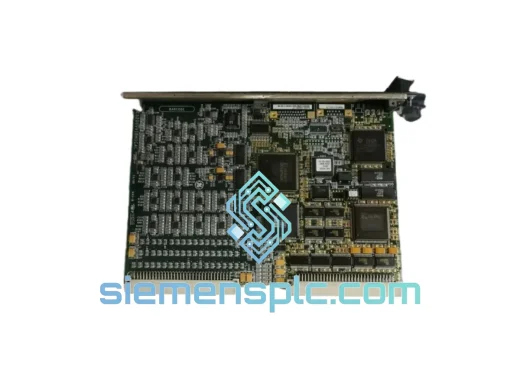
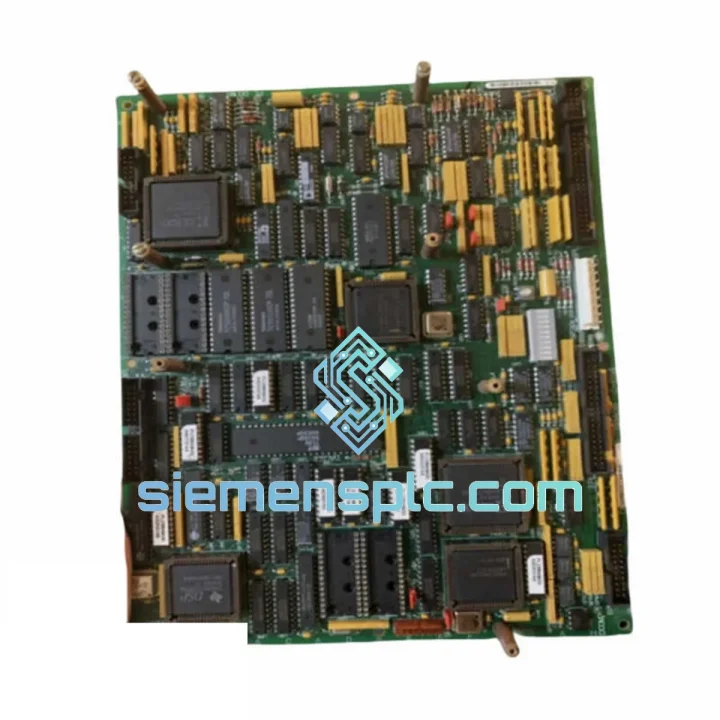
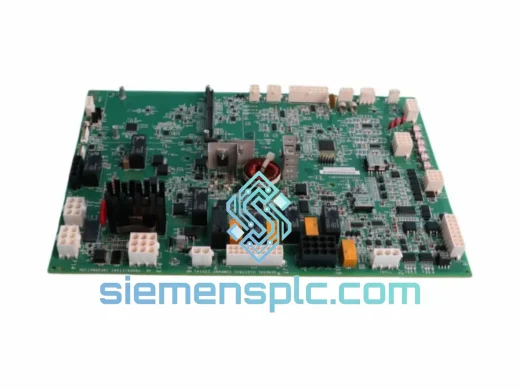
GE DS200SDCCG4RGD Turbine Control Card – Mark VI TMR
Request verified availability, condition, replacement risk review, packing options and courier lead time for DS200SDCCG4RGD.
BrandGE
Part NumberDS200SDCCG4RGD
ConditionAvailability Check
Lead TimeRFQ Confirmation
DocumentsDatasheet / photos by RFQ
ShippingExport packing available
Auto-filled RFQ
DS200SDCCG4RGD
Click Request Quote and the part number is inserted into the inquiry form automatically.
- Reply by email: [email protected]
- WhatsApp / Tel: +86 18359268345
- Mon-Sat 9:00-18:00 GMT+8
Procurement Data
Key Product Information
Core fields for model confirmation and RFQ routing. Detailed product narrative remains below.
- Brand
- GE
- Primary Part Number
- DS200SDCCG4RGD
- Product Type
- Turbine Control Card
- Series / Family
- Mark VI
- Manufacturer
- General Electric (GE)
- Country of Origin
- US
- Catalog Category
- Industrial Automation Spares
- Operating Temp.
- 0 °C to +60 °C (panel-mounted ambient)
- Warranty
- 12 months from date of shipment
Model confirmed for inquiry
DS200SDCCG4RGD
Send quantity, destination and urgency. The RFQ form keeps this part number attached.
Request Quote
Product Overview
DS200SDCCG4RGD — Shaft Frequency Acquisition and Real-Time Dynamics Processing in the GE Mark VI Triple-Modular-Redundant Control Platform
The DS200SDCCG4RGD is a Speed and Dynamics Control Card (SDCC) produced by General Electric for integration within the Mark VI Turbine Management System — a triple-modular-redundant (TMR) distributed control architecture deployed across gas turbines, steam turbines, and combined-cycle generation units in utility-scale and heavy industrial power facilities. Within the Mark VI functional hierarchy, this board occupies a dedicated signal acquisition node: it receives raw frequency-domain signals from magnetic pickup units (MPU) or proximity probes mounted on the turbine shaft, conditions those signals through purpose-built analog circuitry, derives instantaneous shaft speed in engineering units, and delivers the computed result to the Mark VI controller backplane within a bounded, deterministic latency window that the governor algorithm requires for stable closed-loop speed regulation.
Unlike general-purpose analog input modules, the DS200SDCCG4RGD is architected exclusively for shaft speed acquisition and derivative computation. The board calculates both instantaneous speed and shaft acceleration in real time, supplying the governor with anticipatory correction data before a speed deviation becomes observable at the output shaft. In a Frame 7FA gas turbine operating at 3,600 RPM on a 60 Hz grid — or a Frame 9E at 3,000 RPM on a 50 Hz grid — the operational margin between acceptable speed variation and an overspeed protective trip is narrow. The SDCC’s capacity to deliver low-latency, high-fidelity speed data with embedded dynamics information is what enables the governor to hold shaft speed within ±0.5% of rated setpoint across load transient events. The G4RGD hardware revision represents a mature production iteration with documented improvements in thermal fatigue resistance and analog signal-path noise immunity relative to earlier G1 and G3 board revisions.
Real-time Stock & RFQ: [email protected] | WhatsApp: +86 18359268345
Technical Parameters
| Parameter | Specification |
|---|---|
| Part Number | DS200SDCCG4RGD |
| Manufacturer | General Electric (GE) |
| Product Series | Mark VI Turbine Management System |
| Board Function | Speed & Dynamics Control Card (SDCC) |
| Hardware Revision | G4RGD |
| Speed Sensor Input Type | Magnetic Pickup Unit (MPU) / Proximity Probe — differential input |
| MPU Input Voltage Range | 1 Vrms – 100 Vrms (normalized via onboard AGC stage) |
| Speed Input Channels | 3 independent channels (TMR) / 1 channel (Simplex) |
| Measurable Frequency Range | 0 – 20,000 Hz (shaft-speed equivalent) |
| Signal Conditioning Method | Hardware low-pass filter + AGC + zero-crossing detection |
| Backplane Interface | Mark VI VME-derivative high-speed serial bus |
| Board Supply Voltage | +5 VDC / ±15 VDC (backplane-supplied) |
| Operating Temperature | 0 °C to +60 °C (panel-mounted ambient) |
| Storage Temperature | −40 °C to +85 °C |
| Relative Humidity | 5% – 95% RH, non-condensing |
| PCB Form Factor | 6U VME (Mark VI standard) |
| Approximate Weight | 360 g |
| Compatible Turbine Frames | GE Frame 6B, 7EA, 7FA, 9E, 9FA; steam turbine variants |
| Compatible Control Panels | Mark VI TMR and Simplex configurations |
| EMC Immunity | IEC 61000-4-4 Level 3 (EFT); IEC 61000-4-5 Level 3 (Surge) |
| Warranty | 12 months from date of shipment |
Hardware Logical Analysis
Automatic Gain Control and Zero-Crossing Detection Architecture: Magnetic pickup sensors produce output voltages that scale with shaft rotational speed. At cranking speeds below 100 RPM, MPU output may be as low as 1 Vrms; at rated operating speed the same sensor can produce signals exceeding 80 Vrms. A fixed-threshold comparator would either miss tooth counts at low speed or saturate at high speed. The DS200SDCCG4RGD resolves this with a dedicated AGC stage that continuously normalizes incoming MPU signal amplitude to a stable internal reference before it reaches the zero-crossing comparator. This ensures accurate tooth-count frequency measurement from initial shaft rotation through full-load operation without requiring manual gain adjustment during commissioning or after sensor replacement.
Multi-Layer PCB Ground Plane Isolation and EMC Design: Turbine control enclosures operate in proximity to high-current ignition exciter systems, variable-frequency drives for auxiliary equipment, and high-voltage bus infrastructure — all generating broadband conducted and radiated electromagnetic interference. The SDCC board uses multi-layer PCB construction with dedicated analog and digital ground planes separated by internal copper pours, physically isolating the high-impedance MPU signal conditioning section from digital logic and backplane interface circuitry. Ferrite bead filters are placed at each MPU input connector pin to attenuate high-frequency conducted noise before it reaches the analog front end. Conducted immunity performance meets IEC 61000-4-4 Level 3 and IEC 61000-4-5 Level 3, consistent with requirements for industrial control equipment in power generation environments.
TMR Voting Architecture and Single-Channel Fault Isolation: In a TMR Mark VI panel, three DS200SDCCG4RGD boards operate simultaneously and independently, each connected to a separate MPU sensor on the turbine shaft. Each board computes shaft speed from its own sensor input and transmits the result to the Mark VI controller’s voter module via the backplane bus. The voter applies a 2-of-3 majority algorithm: if one SDCC reports a speed value deviating from the other two beyond a configurable threshold, the voter flags that channel as faulted, excludes it from the control calculation, and continues operating on the two remaining valid inputs. A single SDCC hardware failure — from a component fault, degraded MPU sensor, or wiring fault — does not interrupt turbine control or trigger a protective trip. The faulted channel is annunciated to the operator and logged for maintenance action while the turbine continues in degraded-redundancy operation. This architecture supports SIL 2 classification under IEC 61511 for overspeed protection applications when properly configured.
G4RGD Revision — Thermal Fatigue Resistance: Gas turbine control panels experience repeated thermal cycling as generating units start, load, unload, and shut down. Earlier SDCC revisions exhibited solder joint fatigue on high-pin-count through-hole components after extended service in high-cycle-count applications, manifesting as intermittent contact resistance increases that produced erratic speed readings before progressing to hard failures. The G4RGD revision incorporates revised PCB pad geometry with increased annular ring dimensions, selective application of solder alloys with improved thermal fatigue characteristics at critical component joints, and component-level substitutions that reduce thermal mass at vulnerable solder interfaces. Field data from long-term Mark VI installations indicates the G4RGD revision demonstrates a measurably lower field failure rate in applications with more than 500 annual start-stop cycles compared to G1-series boards in equivalent service conditions.
Hardware-Independent Overspeed Trip Path: The SDCC’s frequency counter hardware operates independently of the Mark VI controller’s main processor. The board continuously computes shaft speed in hardware and compares the result against a hardwired overspeed threshold. If the threshold is exceeded, the board asserts a discrete trip output directly — without waiting for the controller CPU to execute a software scan cycle. This hardware-level trip path remains active during controller software faults, watchdog resets, or communication bus interruptions, providing a last-resort overspeed protection layer that does not depend on software execution integrity.
System Integration Benefits
- Drop-In Replacement Compatibility: The DS200SDCCG4RGD maintains full compatibility with existing Mark VI panel wiring harnesses, I/O termination boards, and backplane slot assignments. In the majority of replacement scenarios, no ToolboxST configuration edits are required, reducing board swap time to under 30 minutes for a trained technician.
- Sub-1 ms Deterministic Backplane Data Delivery: Computed speed data is delivered to the Mark VI controller within a fixed, sub-1 ms latency window from signal acquisition to backplane availability. This deterministic timing ensures the governor algorithm always operates on current speed data, eliminating jitter-induced phase lag that would degrade closed-loop stability margins under dynamic load transients.
- Continuous Self-Diagnostic Reporting Without Shutdown: The SDCC monitors its own MPU input signal quality in real time, detecting and reporting signal-loss events, out-of-range amplitude conditions, and frequency-counter overflow states to the Mark VI diagnostic bus. These diagnostics are accessible via ToolboxST software without interrupting turbine operation, enabling condition-based maintenance decisions without a unit shutdown.
- CPU-Independent Overspeed Protection: The board’s overspeed trip logic operates in hardware independent of the controller CPU, keeping the protective trip function available during controller software faults — a critical safety architecture requirement for turbine protection systems operating under IEC 61511 functional safety standards.
- Fleet Standardization Across Multiple Frame Types: Facilities operating mixed fleets of Frame 6B, 7EA, 7FA, and 9E turbines can maintain the DS200SDCCG4RGD as a single common spare part number, reducing spare parts inventory complexity, minimizing carrying costs, and eliminating the risk of stocking the wrong board revision for a specific frame type.
- Full ToolboxST Software Compatibility: The G4RGD revision is fully recognized by GE’s ToolboxST configuration and diagnostic software suite. Technicians can perform parameter read-back, channel calibration verification, MPU signal amplitude trending, and firmware version confirmation directly from the software interface without specialized bench test equipment.
- Predictive Maintenance via MPU Amplitude Trending: MPU signal amplitude data logged by the SDCC’s diagnostic subsystem can be trended over time to identify gradual sensor degradation — decreasing amplitude at a given speed indicates increasing air gap or sensor wear — before the degradation progresses to a board fault or a spurious trip, supporting a shift from time-based to condition-based maintenance scheduling.
- Elimination of Extended OEM Lead Time Exposure: GE Mark VI board lead times from OEM channels have historically ranged from 8 to 26 weeks depending on production scheduling and component availability. A pre-positioned DS200SDCCG4RGD spare eliminates the forced-outage extension risk associated with waiting for OEM supply during an unplanned speed card failure — a risk that carries significant financial exposure in utility and industrial generation applications.
- Reduced Commissioning Risk on Replacement: The board’s hardware-level parameter storage retains calibration data across power cycles. When replacing a failed unit, the replacement board accepts the same ToolboxST configuration download as the original, eliminating manual re-entry of calibration constants and reducing the probability of commissioning errors during a time-critical outage recovery.
Quality Assurance & Global Logistics
Every DS200SDCCG4RGD unit dispatched through siemensplc.com is sourced from verified supply channels and processed through a structured pre-shipment inspection protocol before dispatch. Visual inspection covers PCB surface condition, solder joint integrity at high-stress component locations, connector pin straightness and plating condition, revision marking verification against GE’s published part number documentation, and label authenticity. Boards are handled exclusively within ESD-controlled environments from receipt through final packaging — grounded workstations, wrist straps, and conductive transport containers are used at every handling stage. Final packaging uses conductive foam-lined anti-static bags heat-sealed and placed within double-wall corrugated cartons with die-cut foam inner packaging, consistent with JEDEC JESD625 ESD packaging guidelines for international air freight handling.
All shipments originate from Xiamen, China — a primary international logistics hub with direct carrier access to DHL Express, FedEx International Priority, and UPS Worldwide Express. Typical transit times are 3–5 business days to Southeast Asia and Northeast Asia, 4–6 business days to the Middle East, South Asia, and Europe, and 5–7 business days to North America and Australia. Every shipment includes full end-to-end tracking, commercial invoice, and packing list. Export compliance documentation — including country-of-origin certificates and export control classification confirmation where applicable — is available upon request. A 12-month warranty from the date of shipment covers manufacturing defects and functional failures under normal operating conditions. Advance replacement arrangements are available for critical applications where downtime exposure requires a board on-site before the failed unit is returned for inspection.
Contact Information
Email: [email protected]
WhatsApp: +86 18359268345
Web: siemensplc.com
Location: Xiamen, China
© 2026 siemensplc.com. All rights reserved.
Ready to quote
[email protected]
Send This Part Number to Sales
RFQ workflow
Quality workflow ->
Confirmation Process
01Model confirmation
We check the full part number, brand, series and visible nameplate information before quotation.
02Availability reply
Sales confirms stock path, condition option, quantity and realistic lead time for export dispatch.
03Packing & courier
DHL, FedEx, UPS or buyer courier arrangements can be reviewed with packing requirements.
Continue sourcing
Browse full catalog ->
Related Automation Parts
Similar brand or category products for fast comparison and multi-item RFQ lists.
GE
RFQ Ready
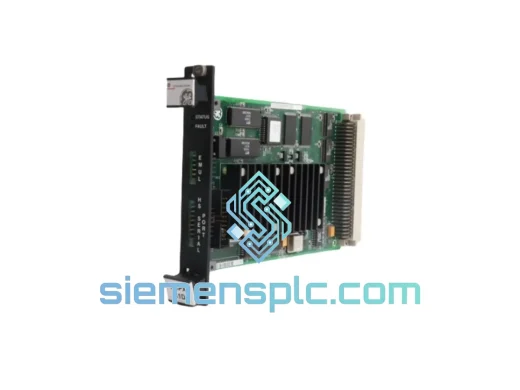
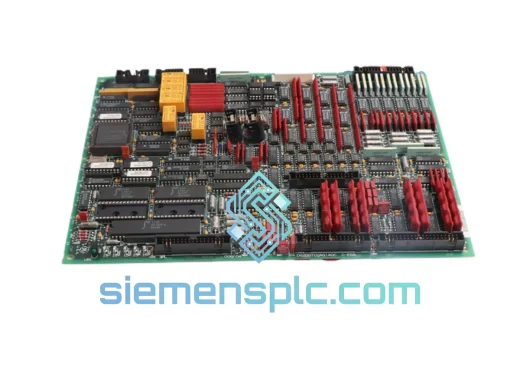
GE IS215WETAH1CA Wind Turbine Control Module
Mark VI
Origin US
Wind Turbine Control Module