Honeywell
RFQ Ready
Honeywell TK-ODD321 Discrete Output Module – Safety Manager
Safety Manager
Origin US
Discrete Output Module
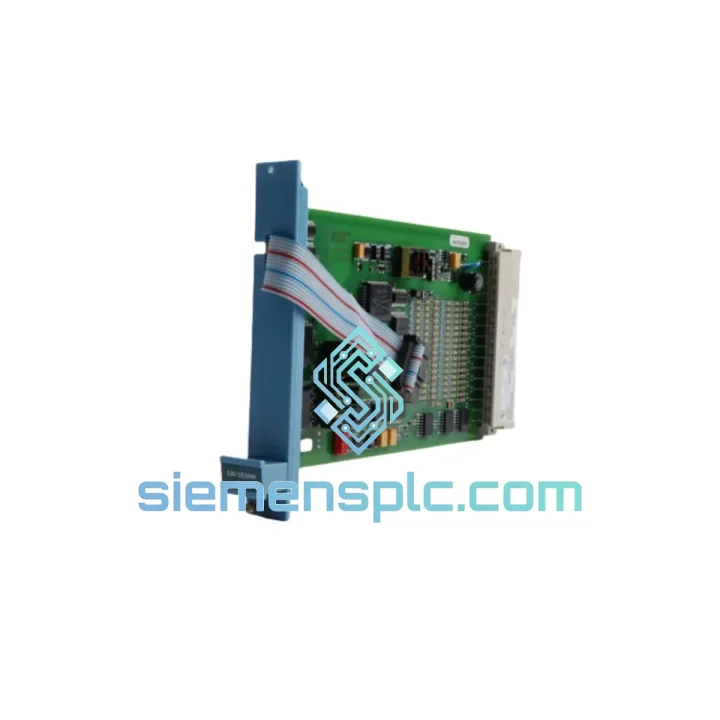
Request verified availability, condition, replacement risk review, packing options and courier lead time for FC-TSDOL-0424C.
Click Request Quote and the part number is inserted into the inquiry form automatically.
Core fields for model confirmation and RFQ routing. Detailed product narrative remains below.
Your Safety Manager chassis just flagged a module fault. The FC-TSDOL-0424C is offline. Your ESD loop is degraded, your proof-test window is blown, and your operations team is breathing down your neck. This is not a procurement exercise — this is a recovery operation. We stock the Honeywell FC-TSDOL-0424C and ship globally via DHL Express and FedEx International Priority. From our Xiamen warehouse to your plant gate, most destinations in Asia, the Middle East, and Europe receive within 3–5 business days. No waiting on OEM lead times. No six-week backorders.
URGENT REQUIREMENT? Contact: [email protected] | WhatsApp: +86 18359268345
| Parameter | Specification |
|---|---|
| Part Number | FC-TSDOL-0424C |
| Manufacturer | Honeywell Process Solutions |
| Series | Safety Manager (TotalPlant Safety System) |
| Module Function | Safe Digital Output with Integrated Line Monitoring |
| Output Channels | 4 channels, independently monitored |
| Output Voltage | 24 VDC nominal |
| Line Monitoring | Continuous open-circuit & short-circuit detection |
| Safety Integrity Level | SIL 2 capable (IEC 61508 / IEC 61511) |
| Certification | TÜV Rheinland |
| Trip Logic | Energize-to-Trip (ETT) & De-energize-to-Trip (DTT) |
| Backplane Interface | Safety Manager chassis backplane |
| Operating Temperature | Per Honeywell SM Hardware Manual |
| Compliance | IEC 61508, IEC 61511, ATEX (zone per installation) |
| Weight | 2,000 g |
| Availability | ✅ Ready to Ship — Xiamen Stock |
After ten years of field work on Safety Manager systems, here are the failure patterns and swap-out traps that catch engineers off guard with the FC-TSDOL-0424C:
1. Fault Code Interpretation Before You Pull the Module
Before physically removing the FC-TSDOL-0424C, pull the diagnostic data from the Safety Manager controller. Common fault codes associated with this module include output channel open-circuit faults (typically reported as DO_LINE_FAULT or equivalent in your SM configuration), short-circuit detection alarms, and module communication loss. A DO_LINE_FAULT on a single channel does not necessarily mean the module has failed — check the field wiring first. A corroded terminal block or a failed solenoid valve coil will trigger the same alarm. Swap the field device before condemning the module.
2. Module Addressing — No DIP Switches, But Slot Position Matters
The FC-TSDOL-0424C uses automatic slot-based addressing within the Safety Manager chassis. There are no physical DIP switches or rotary address selectors on this module. The controller assigns I/O addresses based on physical slot position. When replacing, ensure the new module is inserted into the exact same chassis slot as the failed unit. If you move it to a different slot, the SM controller will not recognize it as the same I/O point — your SIS logic will reference the wrong address and the system will generate a configuration mismatch fault. Verify slot assignment in your SM configuration tool before powering up.
3. Firmware Compatibility Check
The FC-TSDOL-0424C firmware version must be compatible with your Safety Manager controller firmware. Mismatched firmware between the SM controller and I/O modules is a documented cause of module initialization failures. Before installing a replacement unit, confirm the firmware revision of your existing modules (visible via the SM engineering workstation) and verify that the replacement unit carries a compatible firmware version. If the replacement unit has a newer firmware, check the Honeywell release notes for backward compatibility. In most cases, newer module firmware is backward compatible with older SM controller firmware, but this must be verified for your specific revision combination.
4. Hot-Swap Procedure — Do Not Rush
The Safety Manager platform supports online module replacement under specific conditions. Before attempting a hot-swap of the FC-TSDOL-0424C, confirm that your SM system is configured for online replacement and that the affected SIF is in a safe state or bypassed per your Management of Change (MOC) procedure. Pulling a live output module without placing the associated SIF in bypass will cause the SM controller to detect a module loss and may initiate a spurious trip on connected final elements. Follow your site’s SIS bypass and inhibit procedure. Document the bypass in your proof-test records.
5. Line Monitoring Calibration After Replacement
After installing the replacement FC-TSDOL-0424C, the line monitoring function requires verification. The module continuously monitors the load impedance on each output channel. If the replacement module’s line monitoring thresholds are not matched to your field device impedance profile, you may see nuisance open-circuit alarms immediately after installation. Run a channel-by-channel verification using the SM diagnostic display to confirm that each output channel reports a healthy line status before removing the bypass and returning the SIF to service.
6. Post-Replacement Proof Test
Replacing a safety module resets the proof-test clock for that module. Update your SIS proof-test records accordingly. Perform a full functional test of each output channel — energize and de-energize each channel and verify that the connected final element responds correctly. Record the test results in your SIS maintenance management system. This is not optional — IEC 61511 requires documented proof-test evidence for every safety function.
The FC-TSDOL-0424C is not a commercial-grade module dressed up in industrial packaging. It is purpose-built for the environments where safety systems actually operate — offshore platforms with constant vibration from rotating machinery, onshore petrochemical plants where ambient temperatures swing from sub-zero winter shutdowns to 55°C summer peaks, and coastal LNG terminals where salt-laden humid air attacks every exposed connector.
Honeywell’s Safety Manager I/O modules are designed and tested to withstand continuous vibration per IEC 60068-2-6, with sinusoidal vibration profiles that simulate the mechanical stress of pump and compressor proximity mounting. The module’s conformal-coated PCB provides protection against condensation and airborne contaminants — a critical feature in humid tropical environments and in plants where process leaks create corrosive atmospheres. The backplane connector system is rated for thousands of insertion cycles, meaning that repeated module swaps during proof-test cycles do not degrade the electrical connection integrity.
Thermal management is handled through the chassis airflow design rather than module-level fans, eliminating a common failure point. The FC-TSDOL-0424C operates within the Safety Manager chassis thermal envelope, which is validated for continuous operation at elevated ambient temperatures. In high-temperature environments, ensure that chassis ventilation clearances are maintained per the Honeywell installation guidelines — restricted airflow is the leading cause of premature module failure in hot climates.
The module’s output driver circuitry is protected against inductive load switching transients — a real-world concern when driving solenoid valve coils, which generate voltage spikes on de-energization. Internal transient suppression protects the output stage from the repetitive switching stress that accumulates over years of SIF demand cycles and proof tests.
Our dispatch hub is in Xiamen, Fujian Province — one of China’s primary export ports with direct access to DHL Express, FedEx International Priority, and UPS Worldwide Express services. When you confirm an order for the FC-TSDOL-0424C, here is exactly what happens:
Day 0 — Order Confirmation: Payment confirmed or credit terms agreed. Module pulled from bonded warehouse stock, serial number recorded, and ESD-safe packaging initiated. Export documentation preparation begins: commercial invoice, packing list, Certificate of Origin (COO), and any required material safety data.
Day 1 — Export Clearance & Handover: Shipment cleared through Xiamen Customs. Handed to DHL Express or FedEx International Priority depending on destination and your preference. Tracking number issued and sent to your procurement contact within 2 hours of carrier pickup.
Days 2–5 — In-Transit: Typical transit times from Xiamen: Southeast Asia 1–2 days, Middle East 2–3 days, Europe 3–4 days, Americas 4–5 days. All shipments are fully insured. Real-time tracking available via carrier portal.
Delivery: Module arrives at your facility or freight forwarder. All customs documentation is pre-prepared to minimize clearance delays. For destinations with complex import requirements (India, Brazil, certain Middle East countries), we advise on documentation requirements at the time of order.
We do not use consolidation services or economy freight for emergency replacement orders. Every FC-TSDOL-0424C ships as a dedicated express consignment. Your downtime clock is running — we treat every shipment accordingly.
Email: [email protected]
WhatsApp: +86 18359268345
Web: siemensplc.com
© 2026 siemensplc.com. All rights reserved.
We check the full part number, brand, series and visible nameplate information before quotation.
Sales confirms stock path, condition option, quantity and realistic lead time for export dispatch.
DHL, FedEx, UPS or buyer courier arrangements can be reviewed with packing requirements.
Similar brand or category products for fast comparison and multi-item RFQ lists.