
GE
In Stock OK
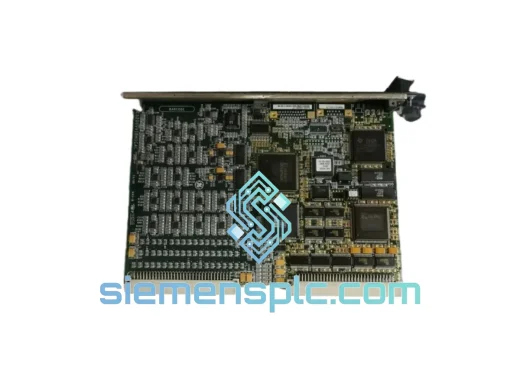
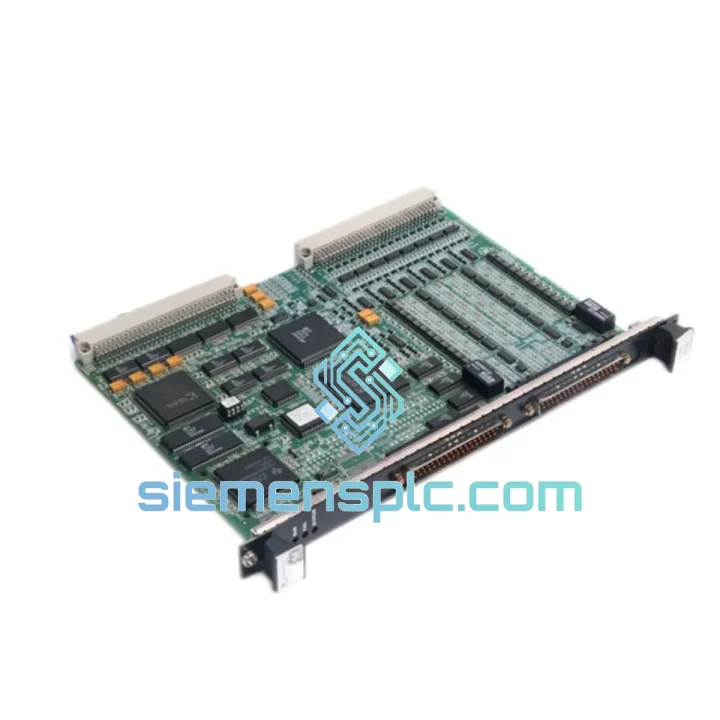
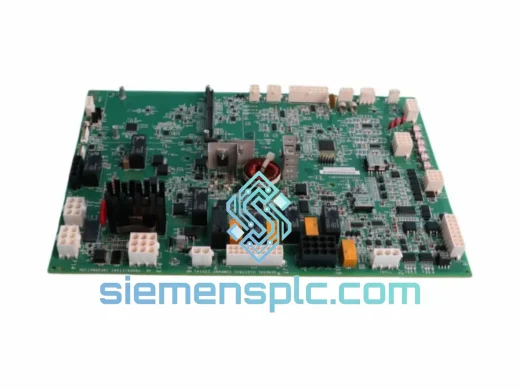
GE IS200VRTDH1D Printed Circuit Board
Request verified availability, condition, replacement risk review, packing options and courier lead time for IS200VRTDH1D.
BrandGE
Part NumberIS200VRTDH1D
ConditionAvailability Check
Lead TimeRFQ Confirmation
DocumentsDatasheet / photos by RFQ
ShippingExport packing available
Auto-filled RFQ
IS200VRTDH1D
Click Request Quote and the part number is inserted into the inquiry form automatically.
- Reply by email: [email protected]
- WhatsApp / Tel: +86 18359268345
- Mon-Sat 9:00-18:00 GMT+8
Procurement Data
Key Product Information
Core fields for model confirmation and RFQ routing. Detailed product narrative remains below.
- Brand
- GE
- Primary Part Number
- IS200VRTDH1D
- Product Type
- Printed Circuit Board
- Series / Family
- Mark VI
- Manufacturer
- GE Energy / GE Vernova
- Country of Origin
- US
- Catalog Category
- Industrial Automation Spares
- Operating Temp.
- 0°C to 60°C
Model confirmed for inquiry
IS200VRTDH1D
Send quantity, destination and urgency. The RFQ form keeps this part number attached.
Request Quote
Product Overview
IS200VRTDH1D Down? Every Minute of Turbine Downtime Costs You — We Ship Today
Your Mark VI cabinet is offline. The IS200VRTDH1D board has failed. Your operations team is watching the clock and your maintenance manager is on the phone. This is exactly the scenario we built siemensplc.com for. We stock the GE IS200VRTDH1D — a VME-format printed circuit board for the GE Mark VI turbine control platform — and we dispatch same-day from Xiamen. No waiting on OEM lead times. No grey-market gambles. Just a verified, tested board in your hands as fast as international express freight can move.
The IS200VRTDH1D sits at the heart of Mark VI I/O and communication architecture. When it fails, the entire turbine control loop is compromised. Frame 5, 6, 7, and 9 series gas turbines, steam turbine governor systems, and combined-cycle plant control panels all depend on this board being functional. We have seen this failure mode dozens of times across power plants in Southeast Asia, the Middle East, and Europe. The pattern is always the same: the plant waits too long trying to source through official channels, loses days, and pays far more in lost generation revenue than the board itself costs. Don’t be that plant.
URGENT REQUIREMENT? Contact: [email protected] | WhatsApp: +86 18359268345
Quick Technical Datasheet
| Parameter | Specification |
|---|---|
| Part Number | IS200VRTDH1D |
| Manufacturer | GE Energy / GE Vernova |
| Series | Mark VI Turbine Control System |
| Module Type | Printed Circuit Board (PCB) |
| Form Factor | VME-compatible, single-slot |
| Operating Temperature | 0°C to 60°C |
| Supply Voltage | Per Mark VI backplane (±5V / ±15V / +24V rails) |
| Communication Interface | IONet / Ethernet (Mark VI native protocol) |
| Connector Type | DIN 41612 rear-plane connector |
| Condition | New / Surplus-New / Tested Refurbished |
| Stock Status | ✅ Ready to Ship — Xiamen Warehouse |
| Lead Time | Same-day dispatch for in-stock units |
| Origin | USA (OEM manufactured) |
Troubleshooting & Replacement Tips
After handling IS200VRTDH1D failures across multiple plant types, here are the failure modes and replacement pitfalls that actually matter in the field:
Common Failure Indicators
- IOFLT / IOERR fault codes on the Mark VI HMI — these point directly to I/O board communication loss. If the fault clears on reset but returns within minutes, the board’s IONet transceiver is degrading. Replace, don’t reset-loop.
- Intermittent analog input drift — if your thermocouple or RTD readings are erratic without sensor changes, suspect the IS200VRTDH1D’s signal conditioning circuitry. Vibration-induced solder joint fatigue is the usual culprit in turbine enclosures.
- Board LED status — a solid red FAULT LED with no accompanying HMI alarm usually means the board has lost communication with the VCMI (VME Communication Module Interface). Check the IONet cable first, but if the cable is intact, the board is the failure point.
- Backplane voltage sag — a failing IS200VRTDH1D can pull down the +5V rail on the VME backplane, causing cascading faults on adjacent boards. If multiple boards are alarming simultaneously, measure backplane voltages before condemning all of them.
Replacement Procedure — Critical Steps
- Firmware revision matching: The IS200VRTDH1D must match the firmware revision of the VCMI and the overall Mark VI system software version. Check the existing board’s label for the firmware suffix (e.g., H1D vs H1C). Mismatched firmware will cause IOFLT on startup even with a physically good board.
- DIP switch / jumper configuration: The board carries address jumpers that define its slot identity within the Mark VI I/O rack. Before removing the failed board, photograph or document the jumper positions. The replacement must be configured identically — the Mark VI does not auto-detect slot addressing on this board generation.
- ESD protocol: This board is highly sensitive to electrostatic discharge. Ground yourself to the cabinet chassis before handling. Do not place the board on painted surfaces or plastic. Use the anti-static bag it ships in until the moment of installation.
- Power sequencing: Always power down the Mark VI cabinet before swapping this board. Hot-swap is not supported on the IS200VRTDH1D. Failure to de-energize the backplane before insertion risks permanent damage to the VME bus drivers on both the new board and adjacent modules.
- Post-installation verification: After installation, perform a Mark VI I/O diagnostic from the ToolboxST workstation. Navigate to the board’s I/O module in the hardware tree and run a channel-by-channel scan. Confirm all channels report expected values before returning the turbine to service.
Reliability in Harsh Conditions
The IS200VRTDH1D was designed for continuous operation inside turbine control enclosures — environments that are fundamentally hostile to electronics. GE’s Mark VI hardware specification mandates performance across conditions that would destroy consumer-grade electronics within hours.
The board’s conformal coating protects the PCB substrate and component leads against humidity ingress, condensation cycles, and airborne contaminants common in coastal power plants and offshore platforms. The coating is applied to IPC-CC-830 standard, providing resistance to salt fog, fungal growth, and chemical vapors from turbine lubricants.
Vibration tolerance is engineered to IEC 60068-2-6 specifications — the board withstands sinusoidal vibration across the 10–500 Hz range at amplitudes representative of turbine foundation vibration. Solder joint design uses through-hole construction for high-stress connector areas, reducing the fatigue failure risk that plagues surface-mount-only designs in high-vibration installations.
Thermal management is handled through the VME chassis forced-air cooling system, but the board itself is rated for ambient temperatures up to 60°C — sufficient for most turbine control room environments even without air conditioning. Electrolytic capacitors are rated for 105°C, extending service life in elevated-temperature installations.
Every unit we ship has been stored in climate-controlled conditions. Surplus-new units are inspected for capacitor bulging, connector oxidation, and PCB delamination before dispatch. We do not ship boards that show any sign of thermal stress or moisture damage — a board that fails on your bench is worse than no board at all.
Global Express Logistics
Our dispatch hub is in Xiamen, Fujian Province — one of China’s primary export ports with direct DHL and FedEx gateway access. This is not a drop-ship arrangement. The board is physically in our warehouse, inspected, and ready to pack the moment your order is confirmed.
Shipping workflow from order to delivery:
- Order confirmation → same-day packing: Orders confirmed before 15:00 CST are packed and handed to the carrier the same business day. Anti-static packaging, foam-lined outer carton, and a printed inspection report are included with every shipment.
- Export documentation: We prepare the commercial invoice, packing list, and HS code declaration (HS 8537.10) in advance. For destinations requiring a Certificate of Origin, we can arrange this through the Xiamen Chamber of Commerce — add 1 business day.
- DHL Express Worldwide: Typical transit times — Southeast Asia 2–3 days, Middle East 3–4 days, Europe 4–6 days, Americas 5–7 days. DHL’s industrial spare parts priority routing is available for critical shipments.
- FedEx International Priority: Available as an alternative carrier. Comparable transit times with different customs clearance strengths depending on destination country — we advise on the better option for your specific destination.
- Customs clearance support: We provide pre-shipment HS code confirmation and can prepare a detailed technical description letter to support customs clearance in countries with strict import controls on electronic components. We have shipped to 40+ countries without customs seizure issues.
- Tracking: Tracking number sent via email and WhatsApp within 2 hours of carrier pickup. We monitor shipments proactively and alert you to any delays before you need to ask.
If your plant is in a location with known customs delays — Nigeria, Brazil, India, Saudi Arabia — tell us when you order. We have routing and documentation strategies that significantly reduce clearance time for these destinations.
Contact Information
📧 Email: [email protected]
📱 WhatsApp: +86 18359268345
🌐 Web: siemensplc.com
© 2026 siemensplc.com. All rights reserved.
Ready to quote
[email protected]
Send This Part Number to Sales
RFQ workflow
Quality workflow ->
Confirmation Process
01Model confirmation
We check the full part number, brand, series and visible nameplate information before quotation.
02Availability reply
Sales confirms stock path, condition option, quantity and realistic lead time for export dispatch.
03Packing & courier
DHL, FedEx, UPS or buyer courier arrangements can be reviewed with packing requirements.
Continue sourcing
Browse full catalog ->
Related Automation Parts
Similar brand or category products for fast comparison and multi-item RFQ lists.
GE
RFQ Ready
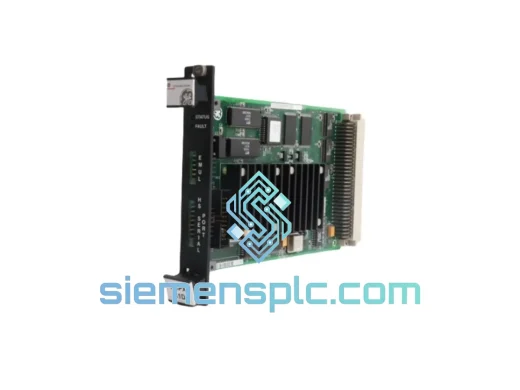
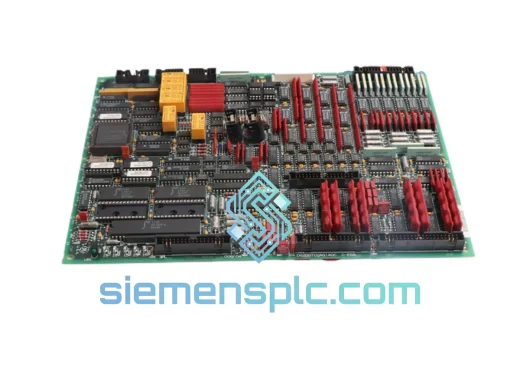
GE IS215WETAH1CA Wind Turbine Control Module
Mark VI
Origin US
Wind Turbine Control Module