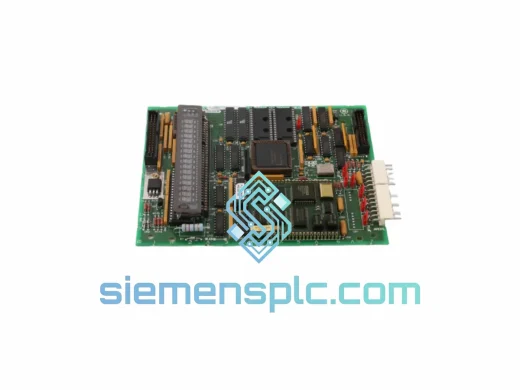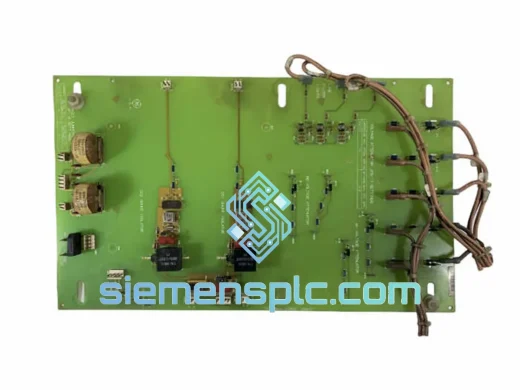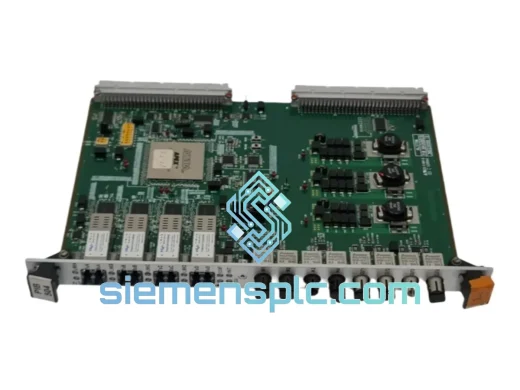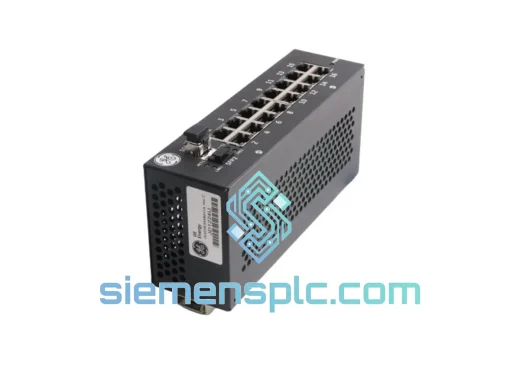
GE
In Stock OK
GE IS420UCSDS1 Communication Module – Mark VI Series
Request verified availability, condition, replacement risk review, packing options and courier lead time for IS420UCSDS1.
BrandGE
Part NumberIS420UCSDS1
ConditionAvailability Check
Lead TimeRFQ Confirmation
DocumentsDatasheet / photos by RFQ
ShippingExport packing available
Auto-filled RFQ
IS420UCSDS1
Click Request Quote and the part number is inserted into the inquiry form automatically.
- Reply by email: [email protected]
- WhatsApp / Tel: +86 18359268345
- Mon-Sat 9:00-18:00 GMT+8
Procurement Data
Key Product Information
Core fields for model confirmation and RFQ routing. Detailed product narrative remains below.
- Brand
- GE
- Primary Part Number
- IS420UCSDS1
- Product Type
- Communication Module
- Series / Family
- Mark VI
- Manufacturer
- GE (General Electric) – Grid Solutions / Power Conversion
- Country of Origin
- US
- Catalog Category
- Communication
- Operating Temp.
- 0 °C to +60 °C (storage: –40 °C to +85 °C)
- Warranty
- 12 months from date of shipment
Model confirmed for inquiry
IS420UCSDS1
Send quantity, destination and urgency. The RFQ form keeps this part number attached.
Request Quote
Product Overview
GE IS420UCSDS1 UCSNet Communication Module: Backbone of Mark VI Distributed Control Architecture
The IS420UCSDS1 is a dedicated UCSNet serial communication module engineered for GE’s Mark VI and Mark VIe turbine control platforms. Within a Mark VI control cabinet, the UCS (Unit Control System) network serves as the high-speed deterministic data highway interconnecting the controller triplex (VCMI/VCRC/VTUR) with I/O packs, HMI workstations, and peer controllers. The IS420UCSDS1 physically implements this network interface, handling frame arbitration, token passing, and real-time data exchange at the hardware level. Without a correctly functioning UCSNet module, the controller loses its ability to synchronize voted I/O data across redundant channels — a condition that directly compromises turbine protection logic and process availability.
In a typical Frame 7FA or Frame 9E gas turbine installation, the Mark VI cabinet houses three IS420UCSDS1 modules operating in a TMR (Triple Modular Redundancy) configuration. Each module independently maintains its own UCSNet segment, and a hardware voting circuit continuously compares the three data streams. Any single-module fault is isolated and annunciated without interrupting the control loop — a design discipline that underpins the system’s SIL 2 / SIL 3 functional safety rating. The IS420UCSDS1 therefore occupies a structurally critical position: it is not a peripheral accessory but an integral node in the fault-tolerant communication fabric.
Real-time Stock & RFQ: [email protected] | WhatsApp: +86 18359268345
Technical Parameters
| Parameter | Specification |
|---|---|
| Part Number | IS420UCSDS1 |
| Manufacturer | GE (General Electric) – Grid Solutions / Power Conversion |
| Series | IS420 / Mark VI Turbine Control System |
| Module Function | UCSNet Serial Communication Interface |
| Network Protocol | UCSNet (GE proprietary deterministic serial bus) |
| Redundancy Architecture | TMR (Triple Modular Redundancy) – three modules per cabinet |
| Data Transfer Rate | Up to 10 Mbit/s on UCSNet segment |
| Backplane Interface | Mark VI VME-style backplane, 32-bit data bus |
| Operating Voltage | +5 VDC / +24 VDC via backplane supply |
| Operating Temperature | 0 °C to +60 °C (storage: –40 °C to +85 °C) |
| Relative Humidity | 5% to 95% non-condensing |
| EMC Compliance | IEC 61000-4-2 (ESD), IEC 61000-4-4 (EFT), IEC 61000-4-5 (Surge) |
| Form Factor | Single-width VME card, rack-mount |
| Connector Type | Rear-panel backplane + front-panel RJ-45 / fiber port (model-dependent) |
| Diagnostic LED Indicators | PWR, COMM, FAULT, VOTE (per channel) |
| Firmware Compatibility | Mark VI firmware R04.x and above; Mark VIe compatible with adapter |
| Weight | Approx. 400 g |
| Country of Origin | United States |
| Warranty | 12 months from date of shipment |
Hardware Logical Analysis
The IS420UCSDS1 implements a multi-layer hardware design that addresses the specific electromagnetic and timing demands of turbine plant environments.
Optical Isolation on Communication Ports: All external UCSNet signal lines pass through high-speed optocouplers rated at 10 kV/μs common-mode transient immunity. This galvanic barrier prevents ground-loop currents — common in large generator step-up transformer environments — from corrupting the serial data stream or damaging the module’s ASIC front-end. The isolation capacitance is held below 10 pF to preserve signal integrity at 10 Mbit/s.
Deterministic Token-Ring Arbitration: UCSNet uses a hardware-enforced token-passing scheme rather than CSMA/CD. The IS420UCSDS1 contains a dedicated arbitration ASIC that guarantees each node receives bus access within a bounded latency window (typically <1 ms cycle time). This determinism is non-negotiable for turbine overspeed protection logic, where a missed scan cycle could delay a trip signal beyond the mechanical response window of the fuel control valve.
TMR Voting Logic at the Hardware Layer: The module’s onboard comparator circuit continuously evaluates the local data frame against the two peer modules’ frames. Disagreement beyond a configurable threshold (typically 1 LSB on analog values or a single bit on discrete status words) triggers a diagnostic fault without asserting a trip — preserving availability while flagging the degraded channel for maintenance. This hardware-level voting offloads the CPU from performing redundancy management in software, reducing jitter in the control loop.
EMC Shielding Architecture: The PCB uses a six-layer stackup with dedicated ground planes on layers 2 and 5, providing >40 dB of inter-layer isolation. The front panel is bonded to chassis ground through a low-impedance spring-finger contact strip, ensuring the module contributes to the cabinet’s overall Faraday cage integrity. Ferrite beads are placed on all power supply pins entering the board to suppress conducted emissions in the 150 kHz–30 MHz range per CISPR 11 Class A.
Watchdog and Self-Test Circuitry: An independent hardware watchdog timer monitors the main communication processor. If the processor fails to service the watchdog within 50 ms, the module asserts a hardware FAULT signal on the backplane, allowing the remaining two TMR modules to continue operation without interruption. A power-on self-test (POST) sequence verifies SRAM integrity, ASIC register accessibility, and loopback communication path before the module asserts READY on the backplane.
System Integration Benefits
- Deterministic Real-Time Response: Hardware token-ring arbitration enforces a <1 ms scan cycle across all UCSNet nodes, ensuring turbine protection functions execute within their required response time budgets without software scheduling uncertainty.
- Transparent Fault Diagnostics: Per-channel LED indicators (PWR / COMM / FAULT / VOTE) provide immediate visual triage at the cabinet level, reducing mean time to diagnose (MTTD) without requiring a laptop connection to the HMI.
- Non-Disruptive Hot-Swap Capability: In a properly configured TMR cabinet, a degraded IS420UCSDS1 can be replaced under power while the remaining two channels maintain control continuity — eliminating the need for a planned outage for module replacement.
- Backward Compatibility with Mark VIe: With the appropriate firmware revision and backplane adapter, the IS420UCSDS1 integrates into Mark VIe distributed I/O architectures, protecting the capital investment in existing spare parts inventory.
- Reduced CPU Loading: By offloading TMR voting and bus arbitration to dedicated ASICs on the IS420UCSDS1, the main controller CPU (VCMI/VCRC) is freed to execute application logic at full scan rate — a measurable benefit in high-point-count installations exceeding 2,000 I/O tags.
- Galvanic Isolation Protects System Integrity: 10 kV/μs optocoupler isolation on all external ports prevents ground faults in field wiring from propagating into the controller backplane, a failure mode that historically caused unplanned turbine trips in plants without proper isolation architecture.
- Standardized Diagnostic Data via HMI: The module exposes a structured diagnostic word on the UCSNet data frame, readable by GE’s ToolboxST configuration software. Maintenance engineers can monitor communication error counts, voting discrepancy events, and watchdog resets from the HMI historian without physical access to the cabinet.
- Long-Term Parts Availability: The IS420 series has been in production for over two decades and remains the standard communication module for installed Mark VI fleets globally. Stocking IS420UCSDS1 spares directly reduces exposure to the extended lead times (12–26 weeks) typical of OEM procurement channels for legacy turbine control components.
Quality Assurance & Global Logistics
Every IS420UCSDS1 unit dispatched from our Xiamen, China facility is a genuine GE-manufactured module sourced through traceable industrial supply channels. Prior to shipment, each unit undergoes a structured inspection protocol: visual examination for counterfeit markings and component substitution, powered bench verification of backplane communication handshake, and loopback test of the UCSNet port. Units that do not pass all three stages are quarantined and not offered for sale.
Packaging follows IEC 61340-5-1 ESD control requirements: modules are sealed in anti-static poly bags, placed in conductive foam inserts, and enclosed in double-wall corrugated cartons rated for international air freight handling. Each shipment includes a commercial invoice, packing list, and certificate of conformance. Export documentation is prepared in compliance with Chinese customs regulations and the destination country’s import requirements.
From Xiamen, we dispatch via DHL Express, FedEx International Priority, and UPS Worldwide Express. Transit times to major industrial hubs: USA / Canada 3–5 business days; Germany / Netherlands 3–4 business days; UAE / Saudi Arabia 2–3 business days; Southeast Asia 1–2 business days. Expedited same-day dispatch is available for orders confirmed before 14:00 CST. All shipments are fully tracked and insured. A 12-month warranty covers manufacturing defects and verified functional failures under normal operating conditions.
Contact Information
📧 Email: [email protected]
📱 WhatsApp: +86 18359268345
🌐 Web: siemensplc.com
📍 Location: Xiamen, China
© 2026 siemensplc.com. All rights reserved.
Ready to quote
[email protected]
Send This Part Number to Sales
RFQ workflow
Quality workflow ->
Confirmation Process
01Model confirmation
We check the full part number, brand, series and visible nameplate information before quotation.
02Availability reply
Sales confirms stock path, condition option, quantity and realistic lead time for export dispatch.
03Packing & courier
DHL, FedEx, UPS or buyer courier arrangements can be reviewed with packing requirements.
Continue sourcing
Browse full catalog ->
Related Automation Parts
Similar brand or category products for fast comparison and multi-item RFQ lists.