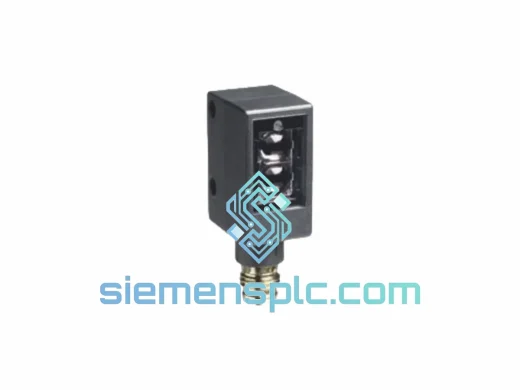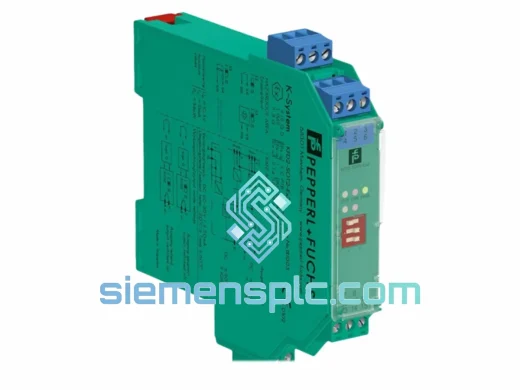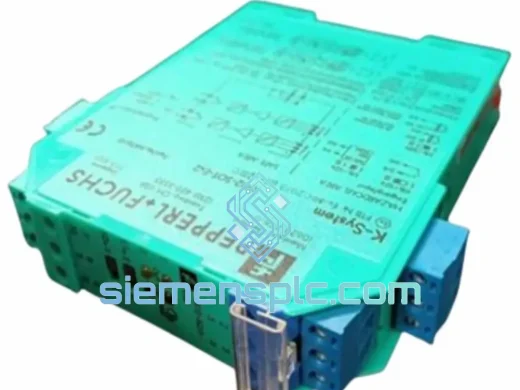
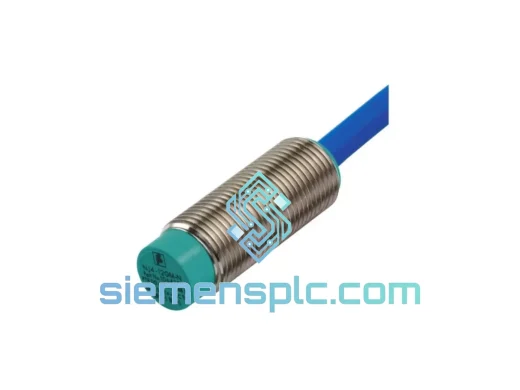
Pepperl+Fuchs
RFQ Ready
Pepperl+Fuchs NJ4-12GM-N-10M Inductive Proximity Sensor – NJ Series
Origin DE
Inductive Proximity Sensor
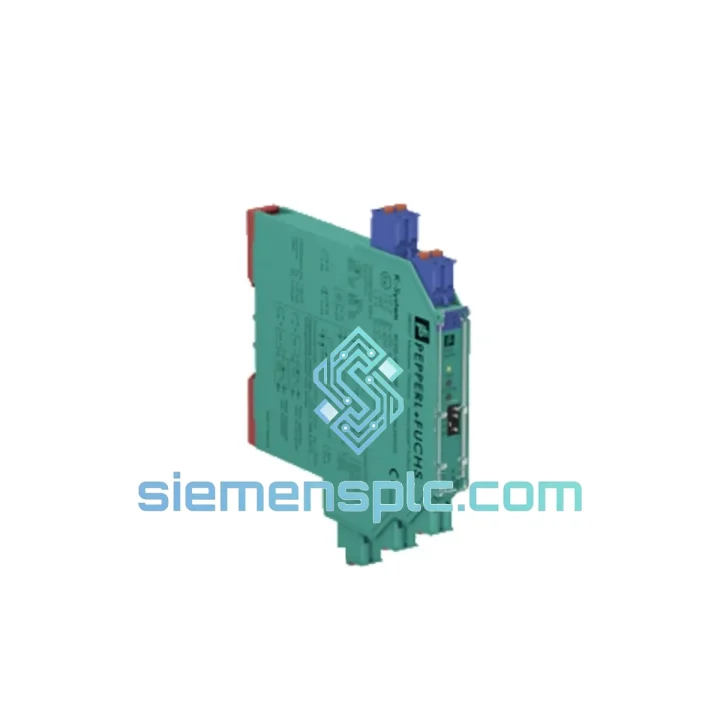
Request verified availability, condition, replacement risk review, packing options and courier lead time for KCD2-SR-EX2.
Click Request Quote and the part number is inserted into the inquiry form automatically.
Core fields for model confirmation and RFQ routing. Detailed product narrative remains below.
The KCD2-SR-EX2 occupies a structurally critical position in any intrinsically safe control loop: it sits at the boundary between the safe area marshalling cabinet and the field instruments installed inside classified hazardous zones. Its primary function is to receive low-energy NAMUR-compliant switching signals from inductive proximity sensors or mechanical contacts located in Zone 0, Zone 1, or Zone 2 environments, condition those signals galvanically, and present clean relay-contact outputs to the safe-area PLC or DCS digital input cards. Without a device of this class, direct wiring from a hazardous-area sensor to a standard PLC input would violate IEC 60079-14 installation requirements and invalidate the Ex certification of the entire loop.
The dual-channel architecture of the KCD2-SR-EX2 means a single 12.5 mm-wide K-System housing handles two independent sensing loops simultaneously. In a typical process plant marshalling cabinet, this halves the module count compared to single-channel alternatives, directly reducing DIN rail space, terminal block count, and inter-module wiring density. For projects with 200–500 field instruments, this translates to measurable cabinet footprint reduction and lower installed cost per loop.
Each channel monitors the NAMUR sensor current continuously. At nominal sensor impedance (approximately 1 kΩ), the module draws roughly 8 mA into the field circuit — well within the intrinsic safety entity parameters. When the sensor target enters the switching range, impedance drops below approximately 340 Ω, pulling current above the NAMUR threshold and toggling the corresponding relay output. Wire-break detection activates when field circuit current falls below approximately 0.35 mA; short-circuit detection activates above approximately 6.5 mA. Both fault states are flagged via the module’s LED indicators and, where the K-System Power Rail diagnostic bus is used, can be propagated to a segment diagnostic module for SCADA-level visibility.
The relay outputs are SPDT (single-pole double-throw), rated for standard PLC input card voltage levels. This eliminates the need for interposing relays or signal converters between the KCD2-SR-EX2 and the control system, reducing component count in the signal path and improving overall loop reliability. The galvanic isolation barrier between the hazardous-area input circuit, the safe-area relay output, and the 24 V DC power supply provides three-port isolation, preventing ground loops and common-mode interference from propagating between field and control room equipment.
Real-time Stock & RFQ: [email protected] | WhatsApp: +86 18359268345
| Parameter | Value |
|---|---|
| Model | KCD2-SR-EX2 |
| Manufacturer | Pepperl+Fuchs GmbH |
| Series | KCD2 (K-System) |
| Function | 2-channel NAMUR switch amplifier with relay output |
| Supply Voltage | 20–30 V DC (via K-System Power Rail or direct terminals) |
| Current Consumption | ≤ 30 mA (both channels active) |
| Input Type | NAMUR / EN 60947-5-6; mechanical contacts accepted |
| Input Voltage (field) | 8 V DC nominal (intrinsically safe) |
| NAMUR Switching Threshold | High: > 2.1 mA; Low: < 1.2 mA |
| Wire-Break Detection | < 0.35 mA |
| Short-Circuit Detection | > 6.5 mA |
| Output Type | 2 × SPDT relay, volt-free contacts |
| Output Contact Rating | 30 V DC / 0.5 A; 250 V AC / 2 A (resistive) |
| Isolation | Galvanic, 3-port (input / output / power) |
| Hazardous Area Classification | ATEX II (1) G [Ex ia Ga] IIC; IECEx Ex ia IIC Ga |
| Safe Area Mounting | 35 mm DIN rail, K-System housing |
| Module Width | 12.5 mm |
| Operating Temperature | –20 °C to +60 °C |
| Storage Temperature | –40 °C to +85 °C |
| Protection Degree | IP20 (module); cabinet-dependent for system |
| Approvals | ATEX, IECEx, cULus, FM, CSA |
| Weight | approx. 100 g |
| Country of Origin | Germany |
| Warranty | 12 months against manufacturing defects |
The KCD2-SR-EX2 implements a passive Zener-diode barrier topology on the hazardous-area input side, combined with an active galvanic isolation stage using an optocoupler-driven relay driver on the safe-area output side. This hybrid architecture is deliberate: the Zener barrier limits the maximum voltage and current that can be delivered into the hazardous zone under any single-fault condition, satisfying the entity concept requirements of IEC 60079-11. The active output stage then provides the relay switching energy entirely from the safe-area 24 V DC supply, ensuring that no energy from the output circuit can back-feed into the intrinsically safe input circuit.
The EMC design of the K-System housing addresses conducted and radiated interference through several layers. The metal backplane of the K-System Power Rail provides a continuous equipotential bonding path across all mounted modules, suppressing differential-mode noise that would otherwise couple between adjacent channels. Each module’s internal PCB uses a ground plane beneath the signal routing layers, reducing parasitic inductance in the NAMUR current-sense circuit. The relay coil is fitted with a transient suppression diode to clamp the inductive kick at de-energisation, preventing voltage spikes from coupling into adjacent low-level signal circuits on the same DIN rail segment.
The NAMUR current-sense circuit uses a precision resistor in series with the field loop to develop a voltage proportional to sensor current. A comparator with hysteresis evaluates this voltage against fixed thresholds corresponding to the NAMUR standard switching levels. The hysteresis band — typically 0.3–0.5 mA wide — prevents relay chatter when the sensor operates near the switching threshold, which is a common failure mode in vibration-intensive environments such as compressor skids or rotating machinery platforms. The wire-break and short-circuit detection thresholds are set outside the normal NAMUR operating range, ensuring that fault detection does not interfere with normal switching operation.
Power Rail compatibility means the module draws its 24 V DC supply from the shared bus rather than individual terminal connections. This reduces the number of power wiring terminations in the cabinet by one per module — a significant labour saving in large installations — and ensures that all modules on a segment share a common supply reference, eliminating potential ground offset errors between channels.
Every KCD2-SR-EX2 unit supplied by siemensplc.com is sourced through verified industrial distribution channels and carries full Pepperl+Fuchs original manufacturer traceability. Each unit is inspected against original P+F packaging integrity, label authenticity, and date-code consistency before dispatch. Units are stored in ESD-safe, climate-controlled warehousing in Xiamen, China, maintaining component integrity across the storage period.
Xiamen’s geographic position provides direct access to major international freight hubs, with express air freight services to Europe, North America, Southeast Asia, and the Middle East typically achieving 3–7 business day door-to-door transit times. For urgent project requirements, same-day dispatch is available on confirmed in-stock units. Sea freight consolidation is available for bulk project orders where lead time permits. All shipments are accompanied by commercial invoice, packing list, and certificate of origin documentation to support customs clearance in the destination country.
A 12-month warranty against manufacturing defects applies to all units. Warranty claims are processed directly through siemensplc.com with replacement unit dispatch on confirmed defect verification. Technical support for installation, commissioning, and loop verification is available via email and WhatsApp during business hours (UTC+8).
Email: [email protected]
WhatsApp: +86 18359268345
Web: siemensplc.com
Location: Xiamen, China
© 2026 siemensplc.com. All rights reserved.
We check the full part number, brand, series and visible nameplate information before quotation.
Sales confirms stock path, condition option, quantity and realistic lead time for export dispatch.
DHL, FedEx, UPS or buyer courier arrangements can be reviewed with packing requirements.
Similar brand or category products for fast comparison and multi-item RFQ lists.