
OKUMA
In Stock OK
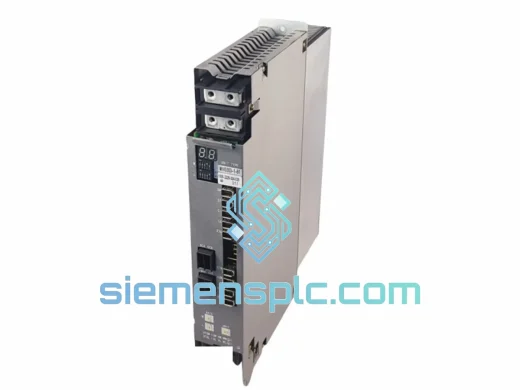
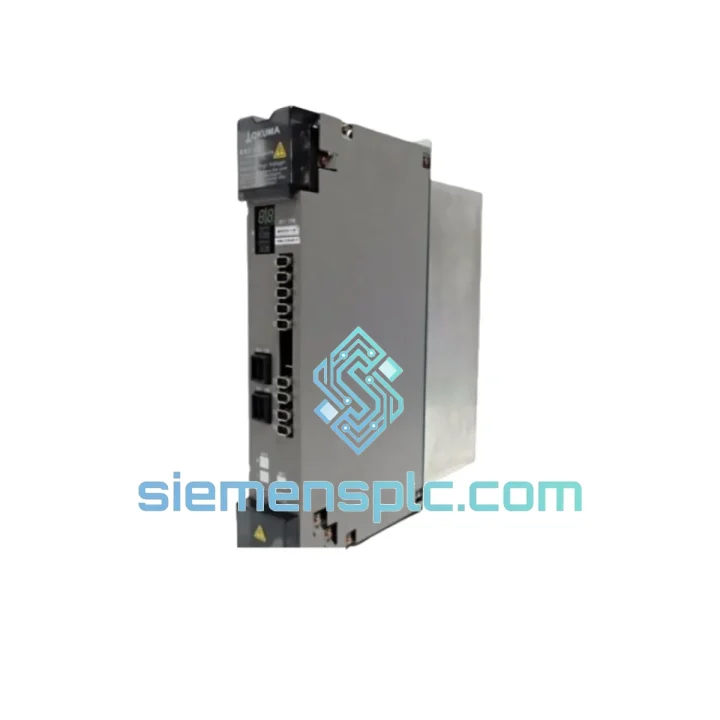
Okuma MIV0101A-1-B5 AC Servo Drive – MIV Series
Request verified availability, condition, replacement risk review, packing options and courier lead time for MIV0101A-1-B5.
BrandOKUMA
Part NumberMIV0101A-1-B5
ConditionAvailability Check
Lead TimeRFQ Confirmation
DocumentsDatasheet / photos by RFQ
ShippingExport packing available
Auto-filled RFQ
MIV0101A-1-B5
Click Request Quote and the part number is inserted into the inquiry form automatically.
- Reply by email: [email protected]
- WhatsApp / Tel: +86 18359268345
- Mon-Sat 9:00-18:00 GMT+8
Procurement Data
Key Product Information
Core fields for model confirmation and RFQ routing. Detailed product narrative remains below.
- Brand
- OKUMA
- Primary Part Number
- MIV0101A-1-B5
- Product Type
- AC Servo Drive
- Series / Family
- MIV Series
- Manufacturer
- Okuma Corporation
- Country of Origin
- Not specified
- Catalog Category
- Motor Drives
- Operating Temp.
- 0 °C to +55 °C (ambient, with rated derating above 45 °C)
- Humidity
- 5–95% RH, non-condensing
- Warranty
- 12 months from date of shipment
Model confirmed for inquiry
MIV0101A-1-B5
Send quantity, destination and urgency. The RFQ form keeps this part number attached.
Request Quote
Product Overview
Okuma MIV0101A-1-B5 – Axis Servo Amplifier for OSP-P Series CNC Control Platforms
The Okuma MIV0101A-1-B5 is a dedicated AC servo amplifier engineered for single-axis torque and velocity regulation within Okuma’s OSP-P200 and OSP-P300 CNC control architectures. Unlike general-purpose servo drives, this unit operates as a tightly coupled node on Okuma’s proprietary MECHATROLINK-compatible backplane bus, exchanging position commands, velocity feedback, and fault telemetry with the OSP controller at a fixed 0.5 ms servo cycle. The “-B5” hardware revision introduces revised gate-driver circuitry and updated IGBT thermal management compared to earlier B3/B4 variants, directly impacting sustained current delivery under high-duty-cycle machining profiles.
In a multi-axis CNC spindle or feed-axis cabinet, the MIV0101A-1-B5 occupies a defined slot in the drive rack, receiving DC bus power from a shared regenerative power supply unit (PSU). The drive’s internal current loop closes at 62.5 µs, while the position loop closure is delegated to the OSP CPU card, maintaining deterministic latency across all axes simultaneously. This architecture separates current regulation from trajectory computation, allowing the MIV amplifier to sustain torque bandwidth without being affected by PLC scan-time variability.
Real-time Stock & RFQ: [email protected] | WhatsApp: +86 18359268345
Technical Parameters
| Parameter | Specification |
|---|---|
| Manufacturer | Okuma Corporation |
| Part Number | MIV0101A-1-B5 |
| Series | MIV Series |
| Module Type | AC Servo Amplifier (Single Axis) |
| Compatible OSP Platform | OSP-P200S, OSP-P200L, OSP-P300S, OSP-P300L |
| DC Bus Input Voltage | DC 270–340 V (from shared PSU) |
| Continuous Output Current | 10.1 A rms (rated axis class) |
| Peak Output Current | 30.3 A rms (300% overload, ≤3 s) |
| PWM Carrier Frequency | 8 kHz (fixed) |
| Current Loop Cycle Time | 62.5 µs |
| Servo Communication Cycle | 0.5 ms (OSP backplane bus) |
| Encoder Interface | Okuma absolute encoder (serial, 23-bit resolution) |
| Cooling Method | Forced-air (internal axial fan, 24 VDC) |
| Operating Temperature | 0 °C to +55 °C (ambient, with rated derating above 45 °C) |
| Storage Temperature | −20 °C to +70 °C |
| Humidity | 5–95% RH, non-condensing |
| Vibration Resistance | 4.9 m/s² (10–55 Hz, per IEC 60068-2-6) |
| Protection Class | IP20 (panel-mount, enclosed cabinet required) |
| Approx. Weight | 1.2 kg |
| Warranty | 12 months from date of shipment |
Hardware Logical Analysis
The MIV0101A-1-B5 implements a three-phase IGBT inverter bridge with individual gate-driver isolation per switch leg. Each gate driver is galvanically isolated from the control logic board via a high-speed digital isolator rated at 5 kV rms, preventing common-mode transients on the motor cable from propagating into the OSP signal ground. This isolation barrier is particularly relevant in large machining centers where motor cable lengths exceed 10 m and capacitive coupling to the machine frame generates high-frequency ground currents.
The DC bus capacitor bank is sized for a 20 ms hold-up at rated load, providing sufficient energy storage to complete an in-progress servo move during a momentary AC input disturbance without triggering an axis fault. The regenerative braking path routes deceleration energy back to the shared DC bus, where it is either consumed by other axes accelerating simultaneously or dissipated through the PSU’s regenerative resistor network — a design that reduces thermal load on individual drive modules during high-cycle-rate operations such as peck drilling or rapid traverse reversals.
EMC compliance is achieved through a multi-layer approach: a common-mode choke on the motor output terminals attenuates differential-mode switching noise above 150 kHz; the control PCB uses a split ground plane separating analog encoder signal processing from digital PWM logic; and the chassis is bonded to the drive rack’s PE rail through a low-impedance copper strap, ensuring conducted emission levels remain within EN 61800-3 Category C2 limits. The B5 revision specifically updated the gate-resistor values to reduce IGBT switching dv/dt from approximately 3.2 kV/µs to 2.1 kV/µs, measurably lowering bearing current induction in connected servo motors.
The encoder feedback path uses a differential RS-422-compatible serial interface operating at 4 Mbps, with CRC-8 error detection on each position telegram. If three consecutive telegrams fail CRC validation, the drive asserts an encoder fault alarm (AL-24) and commands a controlled deceleration to zero velocity before disabling the output stage — a fail-safe sequence that prevents uncontrolled axis runaway without abrupt torque cutoff that could damage workpieces or tooling.
System Integration Benefits
- Deterministic servo cycle synchronization: The MIV0101A-1-B5 synchronizes its PWM update to the OSP backplane bus clock with sub-microsecond jitter, ensuring all axes in a multi-axis contouring move receive velocity commands within the same 0.5 ms window — a prerequisite for maintaining circular interpolation accuracy below 2 µm at feed rates above 10 m/min.
- Transparent fault diagnostics: The drive maps 64 distinct alarm codes to the OSP operator panel in real time, including overcurrent, overvoltage, encoder loss, thermal overload, and gate-driver fault, each with a timestamp and axis identifier — eliminating the need for external diagnostic instruments during fault investigation.
- Shared DC bus architecture: Operating from a common regenerative PSU reduces total cabinet power draw by 8–15% in multi-axis systems compared to individual AC-input drives, as regenerated energy from decelerating axes directly offsets the power demand of accelerating axes on the same bus.
- Absolute encoder retention: The 23-bit absolute encoder interface eliminates homing cycles after power-up or E-stop events, reducing non-productive machine time by 30–90 seconds per restart cycle in high-mix production environments.
- Parameter mirroring via OSP: All drive parameters (current limits, acceleration ramps, fault thresholds) are stored in the OSP controller’s non-volatile memory and automatically downloaded to a replacement MIV module on first power-up, reducing drive swap commissioning time to under 5 minutes.
- Thermal derating transparency: An internal NTC thermistor reports heatsink temperature to the OSP in 1 °C increments. The controller can implement predictive derating — reducing axis acceleration limits before a thermal fault occurs — maintaining production continuity rather than triggering an unplanned stop.
- Vibration and shock tolerance: The PCB assembly uses conformal coating on signal-layer components and press-fit connector technology on the backplane interface, maintaining electrical continuity under 4.9 m/s² vibration without solder joint fatigue — relevant in floor-mounted machining centers subject to structural vibration from adjacent heavy equipment.
- Backward-compatible slot form factor: The MIV0101A-1-B5 retains the same mechanical envelope and backplane connector pinout as B3 and B4 revisions, allowing direct slot replacement in existing drive racks without cabinet modification or wiring changes.
Quality Assurance & Global Logistics
Every Okuma MIV0101A-1-B5 unit dispatched from our Xiamen, China facility is sourced through verified industrial supply channels and undergoes a pre-shipment inspection protocol that includes visual examination of PCB assemblies, connector integrity checks, and where applicable, functional power-on verification. Units are individually packaged in anti-static PE foam inserts within double-wall corrugated cartons, with desiccant sachets included for humidity-sensitive long-haul shipments.
Export documentation — including commercial invoice, packing list, and certificate of origin — is prepared in compliance with Chinese customs regulations and the import requirements of the destination country. HS Code 8537.10 is applied for servo drive modules. DHL Express, FedEx International Priority, and UPS Worldwide Express are the primary carriers for time-critical orders, with typical transit times of 3–5 business days to Europe, North America, and Southeast Asia. For bulk orders, sea freight via Xiamen Port is available with full container load (FCL) and less-than-container load (LCL) options.
A 12-month warranty covers manufacturing defects and premature component failure under normal operating conditions. Warranty claims are processed with a target response time of 48 hours from receipt of the defective unit. Replacement or repair is offered at no charge for confirmed warranty cases, with return shipping costs covered for orders above USD 500.
Contact Information
Email: [email protected]
WhatsApp: +86 18359268345
Web: siemensplc.com
Location: Xiamen, China
© 2026 siemensplc.com. All rights reserved.
Ready to quote
[email protected]
Send This Part Number to Sales
RFQ workflow
Quality workflow ->
Confirmation Process
01Model confirmation
We check the full part number, brand, series and visible nameplate information before quotation.
02Availability reply
Sales confirms stock path, condition option, quantity and realistic lead time for export dispatch.
03Packing & courier
DHL, FedEx, UPS or buyer courier arrangements can be reviewed with packing requirements.
Continue sourcing
Browse full catalog ->
Related Automation Parts
Similar brand or category products for fast comparison and multi-item RFQ lists.
OKUMA
RFQ Ready
OKUMA E0227-702-008 CNC Memory Board
CNC Control Replacement
Origin Not specified
CNC Memory Board
ABB
RFQ Ready
ABB ZINT-592 Fieldbus Interface Board – ZINT Series
ACS Drive
Origin SE
Interface Board