Yokogawa
RFQ Ready
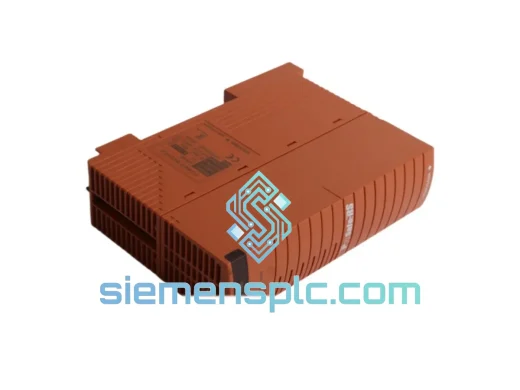
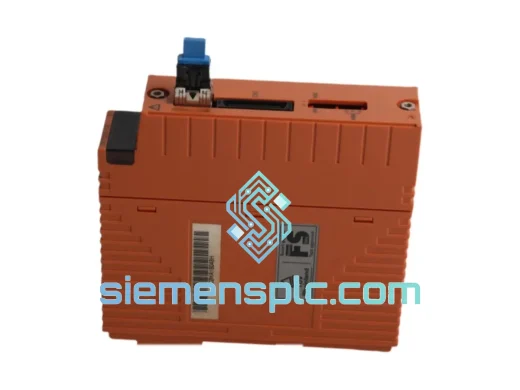
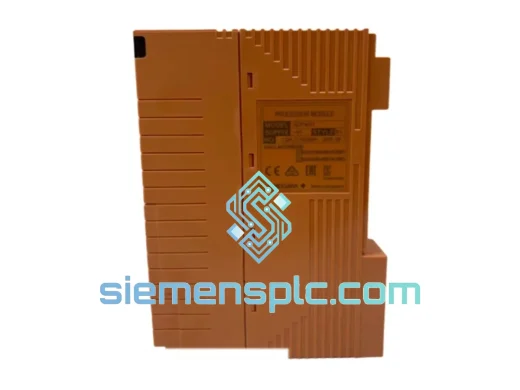
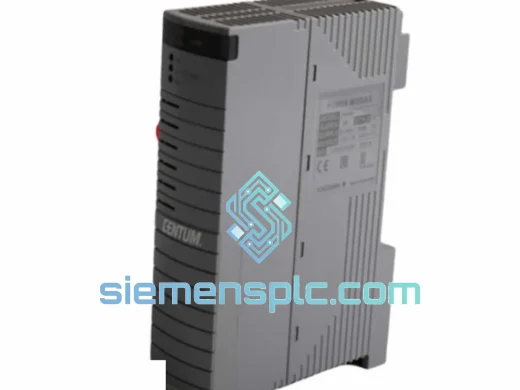
Yokogawa ASS9562DK-00 Analog Input Module – STARDOM FCN/FCJ
STARDOM
Origin JP
Analog Input Module
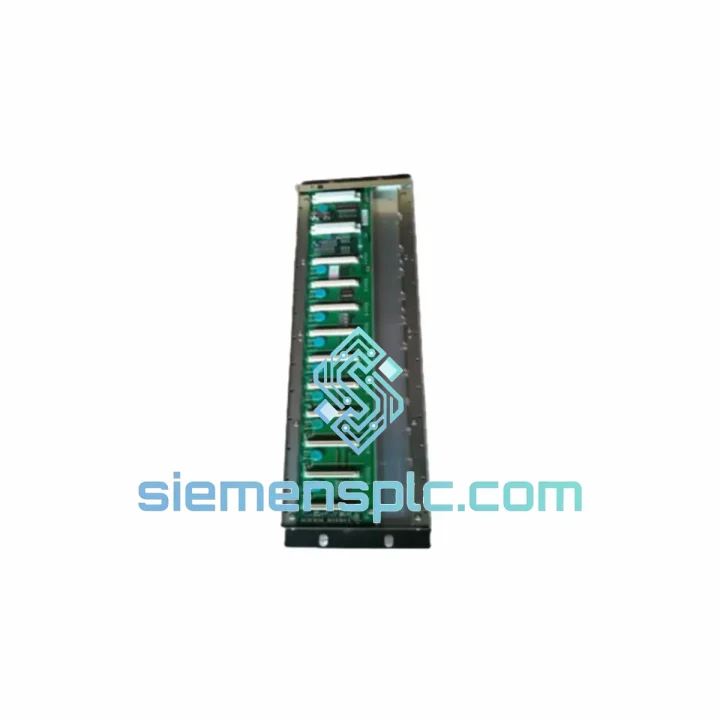
Request verified availability, condition, replacement risk review, packing options and courier lead time for NFBU200-S16.
Click Request Quote and the part number is inserted into the inquiry form automatically.
Core fields for model confirmation and RFQ routing. Detailed product narrative remains below.
The Yokogawa NFBU200-S16 S1 is the structural and electrical foundation of every STARDOM FCN/FCJ rack assembly. In a distributed control system, the backplane base unit performs a function that is architecturally invisible during normal operation but immediately catastrophic when absent or degraded: it provides the physical mounting interface, the internal communication bus, and the regulated power distribution rails that allow every installed I/O or function module to exchange data with the autonomous controller at deterministic cycle rates. Without a correctly specified and electrically sound base unit, no I/O module in the rack can participate in the control loop — regardless of the controller’s processing capability or the field wiring integrity.
The NFBU200-S16 S1 accommodates 16 module slots, making it the highest-density base unit in the S1-generation STARDOM FCN product line. Each slot presents a standardized backplane connector that carries both the internal communication bus signals and the module power supply rails. The S1 designation identifies this unit as belonging to the first-generation STARDOM FCN hardware platform, which uses a proprietary backplane bus protocol optimized for the FCN autonomous controller’s scan cycle architecture. This bus protocol operates at a fixed clock rate, delivering bounded latency between the controller’s I/O scan request and the module’s data response — a property that is essential for maintaining deterministic control loop execution in process applications where scan jitter directly affects PID loop stability and alarm response accuracy.
The backplane bus architecture in the NFBU200-S16 S1 is organized as a shared parallel bus with slot-addressed arbitration. The FCN controller module, installed in the designated controller slot, acts as the bus master. Each I/O module installed in the remaining slots responds only when addressed by the master, preventing bus contention and ensuring that the controller’s scan sequence proceeds in a fixed, repeatable order. This master-slave arbitration model eliminates the non-deterministic latency that characterizes token-ring or CSMA-based bus architectures, making the NFBU200-S16 S1 suitable for applications where the control loop scan period must be held within ±1 ms of the configured value across all 16 slots simultaneously.
Power distribution within the base unit is implemented through dedicated backplane power rails that are electrically isolated from the bus signal traces. The power rails carry the 5 V DC logic supply and the 24 V DC field power supply to each module slot independently. This rail architecture prevents voltage drops caused by high-current field output modules from affecting the logic supply voltage at adjacent analog input modules — a failure mode that produces measurement offset errors in 4–20 mA input channels when the power rail impedance is shared between high-current and precision-measurement loads. The power rail conductors are sized to carry the aggregate current demand of a fully populated 16-slot rack without exceeding the thermal derating thresholds specified in Yokogawa’s FCN hardware design guidelines.
The NFBU200-S16 S1 supports hot-swap replacement of installed I/O modules without interrupting the controller’s scan cycle or requiring a rack power-down. Hot-swap capability is implemented through a sequenced connector engagement design: the power pins on each module connector make contact before the bus signal pins during module insertion, and break contact after the bus signal pins during module removal. This sequencing prevents bus signal contention during the insertion transient, which would otherwise cause the bus master to log a communication fault and potentially trigger a controller diagnostic alarm. The hot-swap architecture is particularly valuable in continuous-process environments — oil and gas separation trains, chemical reactor control systems, water treatment SCADA installations — where a rack power-down for module replacement would require a process shutdown with associated production loss and restart procedures.
The PCB assembly within the NFBU200-S16 S1 uses a multi-layer construction with dedicated ground planes separating the bus signal layer from the power distribution layer. This layer separation reduces capacitive coupling between the switching power supply transients on the power rails and the low-level bus signal traces, maintaining signal integrity on the backplane bus at the full 16-slot population. The board-level EMC design is consistent with Yokogawa’s standard for industrial-grade hardware, targeting immunity to conducted disturbances and radiated fields at levels appropriate for installation in process plant control rooms and field junction boxes where variable frequency drives, motor starters, and high-current switching loads are present in adjacent cabinet bays.
The mechanical construction uses a rigid aluminum alloy chassis with captive DIN rail mounting clips. The chassis provides the structural reference plane for all 16 module slots, maintaining connector alignment within the tolerance required for reliable backplane contact engagement across the full operating temperature range of 0 °C to 55 °C. Thermal expansion of the chassis and installed modules is accommodated by the connector design, which allows limited axial movement without degrading contact resistance. The chassis also provides the equipotential bonding path between all installed modules and the cabinet ground rail, which is required for compliance with the EMC installation requirements of IEC 61326-1 for industrial control equipment.
Real-time Stock & RFQ: [email protected] | WhatsApp: +86 18359268345
| Parameter | Specification |
|---|---|
| Part Number / SKU | NFBU200-S16 S1 |
| Manufacturer | Yokogawa Electric Corporation |
| Product Series | STARDOM FCN / FCJ Distributed Control System |
| Generation | S1 (First-generation STARDOM FCN hardware platform) |
| Module Slot Count | 16 slots (I/O modules and function modules) |
| Backplane Bus Type | Proprietary parallel bus, master-slave slot-addressed arbitration |
| Bus Master | FCN autonomous controller module (installed in designated controller slot) |
| Power Rail — Logic Supply | 5 V DC, distributed to all 16 slots via dedicated backplane rail |
| Power Rail — Field Supply | 24 V DC, distributed to all 16 slots via dedicated backplane rail |
| Hot-Swap Support | Yes — sequenced connector engagement (power before signal on insertion) |
| Mounting | DIN rail, captive aluminum alloy chassis clips |
| Operating Temperature | 0 °C to +55 °C |
| Storage Temperature | −25 °C to +70 °C |
| Relative Humidity | 5% to 95%, non-condensing |
| Degree of Protection | IP20 (panel-mounted) |
| PCB Construction | Multi-layer with dedicated ground planes (signal / power layer separation) |
| Chassis Material | Rigid aluminum alloy |
| Weight | Approx. 740 g |
| Compatible Controllers | Yokogawa STARDOM FCN, FCJ autonomous controllers (S1 generation) |
| Compatible I/O Modules | NFAI, NFAO, NFDI, NFDO series (S1 generation) |
| Country of Origin | Japan |
| Warranty | 12 months from date of dispatch |
The slot-addressed master-slave arbitration on the NFBU200-S16 S1 backplane bus eliminates the scan jitter that characterizes token-passing or collision-detection bus architectures. Because the FCN controller module polls each slot in a fixed sequence at a fixed clock rate, the worst-case latency between a field input change and its reflection in the controller’s process image is bounded by the product of the slot count and the per-slot polling interval — a deterministic value that can be calculated at system design time and verified during commissioning. This property is not achievable on Ethernet-based backplane architectures without additional real-time protocol layers, making the NFBU200-S16 S1’s hardwired bus arbitration a structural advantage for tight PID loop applications.
The power rail isolation between the 5 V logic supply and the 24 V field supply prevents a failure mode that is common in single-rail backplane designs: when a digital output module switches a high-current field load, the resulting voltage transient on the shared power rail can couple into the analog input module’s reference voltage circuit, producing a measurement error that is correlated with the output switching frequency. In the NFBU200-S16 S1, the two supply rails are routed on separate PCB layers with independent ground return paths, reducing the inter-rail coupling impedance to a level where switching transients from a fully loaded 16-channel digital output module produce less than 0.1 mV of noise on the 5 V logic rail — well below the threshold that would affect the ADC reference voltage in adjacent analog input modules.
The hot-swap connector sequencing — power contact engagement before signal contact engagement during insertion — prevents a specific bus fault condition: if the bus signal pins were to make contact before the module’s internal power supply had stabilized, the module’s bus interface logic would be in an indeterminate state and could drive the shared bus lines to an undefined voltage, causing the bus master to log a communication fault across all slots. The sequenced engagement ensures that the module’s power supply has reached its regulated output voltage before the bus interface logic is connected to the backplane, guaranteeing that the module presents a valid high-impedance state on the bus lines during the insertion transient.
The aluminum alloy chassis provides a low-impedance equipotential bonding path between all installed modules and the cabinet ground rail. In installations where the control cabinet is located adjacent to variable frequency drives or motor control centers, high-frequency common-mode currents can flow through the cabinet structure and couple into module signal circuits via the chassis ground path. The low-impedance chassis bonding in the NFBU200-S16 S1 ensures that these common-mode currents are shunted to the cabinet ground rail before they can develop a voltage differential between module chassis points — a differential that would appear as a common-mode input to the analog signal conditioning circuits in installed I/O modules.
Every Yokogawa NFBU200-S16 S1 unit dispatched from siemensplc.com is sourced through documented supply channels with full batch and serial number traceability. Prior to dispatch, each unit undergoes a structured pre-shipment inspection: backplane connector pin integrity is verified across all 16 slots, PCB surface condition and component seating are checked, chassis mounting clip function is confirmed, and label authenticity is validated against Yokogawa’s original part marking specifications. Units are sealed in anti-static ESD bags and packed within foam-lined outer cartons rated for international air freight handling, protecting the backplane PCB assembly and connector array from electrostatic discharge and mechanical shock during transit.
Shipments originate from Xiamen, China, with access to DHL Express, FedEx International Priority, and UPS Worldwide Express services. Standard transit times to major industrial procurement destinations — Frankfurt, Rotterdam, Houston, Singapore, Tokyo, Dubai, Sydney — range from 3 to 5 business days under express freight. Full export documentation accompanies every international shipment: commercial invoice, packing list, and certificate of conformity. Country-of-origin certificates and additional customs documentation for regulated procurement environments are available upon request at no additional charge.
A 12-month warranty from the date of dispatch covers manufacturing defects and component failures under normal operating and storage conditions as specified in Yokogawa’s FCN hardware documentation. Warranty claims are acknowledged within 1 business day. Replacement or credit arrangements are confirmed after technical fault verification by our engineering team. Volume procurement customers may request blanket order arrangements and consignment stock programs — contact our sales team for terms and minimum order quantities.
Email: [email protected]
WhatsApp: +86 18359268345
Web: siemensplc.com
Location: Xiamen, China
© 2026 siemensplc.com. All rights reserved.
We check the full part number, brand, series and visible nameplate information before quotation.
Sales confirms stock path, condition option, quantity and realistic lead time for export dispatch.
DHL, FedEx, UPS or buyer courier arrangements can be reviewed with packing requirements.
Similar brand or category products for fast comparison and multi-item RFQ lists.