OPTIMATE INTERFACE
In Stock OK
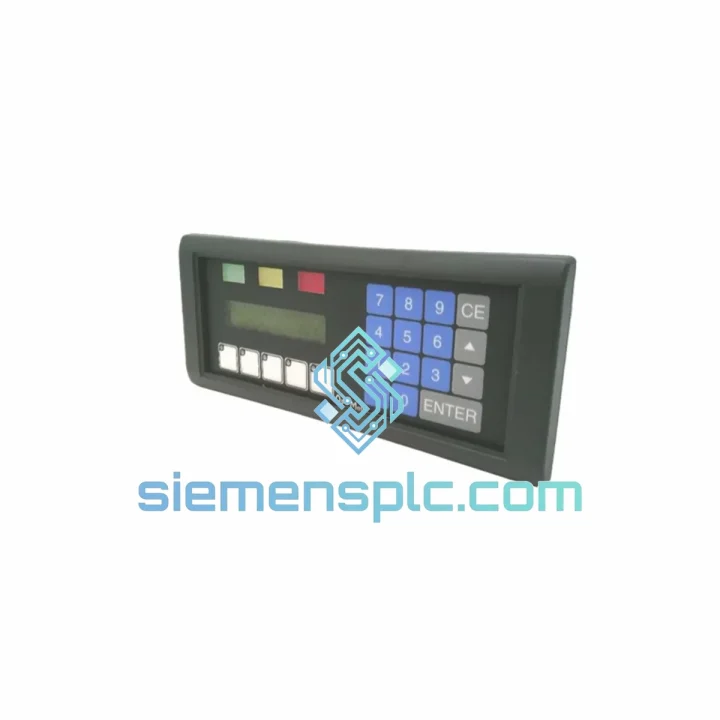
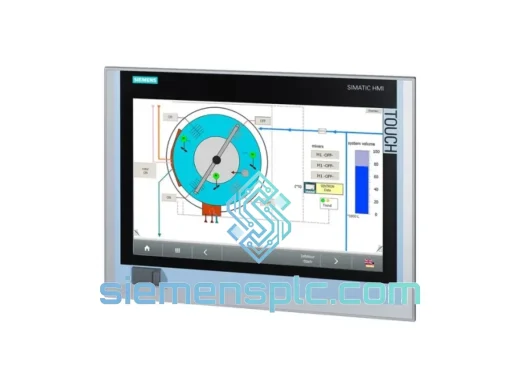
OPTIMATE INTERFACE OP-1500 HMI Operator Terminal Panel – OP Series
Request verified availability, condition, replacement risk review, packing options and courier lead time for OP-1500.
BrandOPTIMATE INTERFACE
Part NumberOP-1500
ConditionAvailability Check
Lead TimeRFQ Confirmation
DocumentsDatasheet / photos by RFQ
ShippingExport packing available
Auto-filled RFQ
OP-1500
Click Request Quote and the part number is inserted into the inquiry form automatically.
- Reply by email: [email protected]
- WhatsApp / Tel: +86 18359268345
- Mon-Sat 9:00-18:00 GMT+8
Procurement Data
Key Product Information
Core fields for model confirmation and RFQ routing. Detailed product narrative remains below.
- Brand
- OPTIMATE INTERFACE
- Primary Part Number
- OP-1500
- Product Type
- HMI Operator Terminal Panel
- Product Family
- Other series
- Country of Origin
- China
- Catalog Category
- HMI Panels
- Operating Temp.
- 0 °C to +50 °C (storage: −20 °C to +70 °C)
- Warranty
- 12 months — manufacturing defects and functional failures under normal use
Model confirmed for inquiry
OP-1500
Send quantity, destination and urgency. The RFQ form keeps this part number attached.
Request Quote
Product Overview
OPTIMATE INTERFACE OP-1500 HMI Operator Terminal Panel — Core Role in Industrial Control Loops
The OPTIMATE INTERFACE OP-1500 is a dedicated operator terminal panel engineered to serve as the primary human-machine interface node within closed-loop industrial control architectures. In a typical control loop, the OP-1500 occupies the supervisory layer between the field-level PLC or controller and the process operator, translating raw register data and status bits into structured, actionable display output while simultaneously accepting operator input commands and routing them back to the controller via the configured communication channel.
Unlike general-purpose touch panels adapted for industrial use, the OP-1500 is purpose-built for the OPTIMATE INTERFACE OP Series control ecosystem. Its internal firmware is optimized for deterministic screen refresh cycles, ensuring that process variable updates — whether sourced from analog input registers or discrete status words — are rendered within a consistent, bounded latency window. This characteristic is critical in applications where operator response time to alarm states directly affects process safety margins.
The panel’s display architecture supports multi-page project structures, allowing engineers to partition process views, alarm logs, trend displays, and parameter entry screens into discrete navigation layers. This segmentation reduces operator cognitive load during fault conditions, where rapid access to the correct diagnostic screen can be the difference between a controlled shutdown and an unplanned trip. The OP-1500’s keypad or touch input mechanism (depending on variant) provides tactile or capacitive confirmation of operator actions, with configurable input validation logic to prevent inadvertent parameter writes to the controller.
From a system topology perspective, the OP-1500 connects to the host controller via a serial or fieldbus interface, polling or receiving pushed data at configurable scan rates. The communication stack handles address mapping between the panel’s internal tag database and the controller’s memory map, abstracting the underlying register structure from the operator view. This decoupling allows the HMI project to be modified independently of the PLC program, provided the tag address assignments remain consistent — a significant advantage during iterative commissioning phases.
In multi-station installations, the OP-1500 can be deployed as a local operator station at individual machine cells while a supervisory SCADA system monitors the broader process. Its compact form factor and standard panel-cutout dimensions facilitate integration into existing control cabinet doors or standalone operator pedestals without requiring structural modifications to the enclosure.
The unit is supplied from Xiamen, China, through verified distribution channels, with each item inspected prior to dispatch. A 12-month quality warranty covers manufacturing defects and functional failures under normal operating conditions.
Real-time Stock & RFQ: [email protected] | WhatsApp: +86 18359268345
Technical Parameters
| Parameter | Specification |
|---|---|
| Model / SKU | OP-1500 |
| Brand | OPTIMATE INTERFACE |
| Series | OPTIMATE INTERFACE OP Series |
| Product Category | HMI Operator Terminal Panel |
| Display Type | Operator Terminal (monochrome/graphic LCD, variant-dependent) |
| Input Method | Membrane keypad / function keys (variant-dependent) |
| Communication Interface | Serial (RS-232 / RS-422 / RS-485, protocol per controller pairing) |
| Supply Voltage | 24 V DC nominal (consult datasheet for tolerance range) |
| Power Consumption | Refer to manufacturer datasheet |
| Operating Temperature | 0 °C to +50 °C (storage: −20 °C to +70 °C) |
| Protection Rating | IP65 front panel (panel-mount installation) |
| Weight | 1,260 g |
| Country of Origin | China |
| Condition | New / Surplus New (confirmed at order) |
| Warranty | 12 months — manufacturing defects and functional failures under normal use |
Hardware Logical Analysis
The OP-1500’s hardware design reflects the constraints and priorities of an embedded operator terminal intended for continuous-duty industrial service. Several architectural decisions are worth examining from an engineering standpoint.
Display Controller and Refresh Architecture: The panel’s display subsystem is driven by a dedicated display controller IC separate from the main application processor. This separation ensures that screen refresh operations do not compete with communication polling tasks for CPU cycles. The result is a stable display update rate even under high communication bus load — a failure mode common in single-processor HMI designs where display tearing or freeze events occur during peak data throughput.
EMC Design and Isolation: Industrial operator terminals are routinely installed in environments with significant electromagnetic interference sources — variable frequency drives, contactor switching transients, and high-current bus bars. The OP-1500’s PCB layout incorporates ground plane segmentation between the communication interface circuitry and the display/processor section, limiting conducted noise coupling paths. The serial communication ports include transient voltage suppression (TVS) diode arrays at the connector interface, providing protection against ESD events and cable-coupled surge transients up to the rated clamping voltage.
Keypad Debounce and Input Validation: The membrane keypad interface uses hardware debounce filtering combined with firmware-level input validation. Each key press generates a qualified event only after the contact signal remains stable for a defined debounce interval, eliminating false triggers from mechanical contact bounce. At the firmware level, configurable input confirmation dialogs can be assigned to critical parameter write operations, requiring the operator to confirm the intended value before the write command is transmitted to the controller.
Non-Volatile Project Storage: The HMI project data — screen layouts, tag assignments, alarm configurations, and communication parameters — is stored in non-volatile flash memory. This architecture ensures that the panel retains its full configuration through power cycling and battery-free storage periods, eliminating the dependency on backup batteries that are a common maintenance liability in older HMI designs.
Communication Stack Robustness: The serial communication stack implements timeout detection and automatic retry logic. If the host controller fails to respond within the configured timeout window, the panel flags the communication fault on-screen and continues attempting reconnection at the defined retry interval. This behavior prevents the panel from entering an undefined state during controller restarts or communication cable faults, maintaining operator visibility of the last-known process state.
System Integration Benefits
- Deterministic Display Latency: Dedicated display controller architecture decouples screen refresh from communication polling, maintaining consistent update rates under variable bus load conditions — critical for time-sensitive alarm acknowledgment workflows.
- Transparent Fault Diagnostics: On-screen communication fault indication and alarm log storage provide operators with immediate visibility of system faults without requiring access to the controller programming environment or a laptop connection.
- Reduced Commissioning Time: Tag-based address mapping between the HMI project and the controller memory map allows independent modification of the operator interface without requiring PLC program changes, shortening iterative commissioning cycles.
- Operator Error Mitigation: Configurable input confirmation dialogs on critical parameter write operations reduce the risk of inadvertent setpoint changes during normal operation, directly improving process safety margins.
- Panel-Mount Integration: Standard panel-cutout dimensions and IP65 front-panel protection rating allow direct integration into existing control cabinet doors, eliminating the need for custom enclosure modifications.
- Scalable Multi-Station Deployment: The OP-1500 can be deployed as a local operator station at individual machine cells within a larger distributed control architecture, coexisting with supervisory SCADA systems without protocol conflicts.
- Power Supply Compatibility: 24 V DC supply voltage aligns with the standard control cabinet power rail used across the majority of industrial automation installations, eliminating the need for a dedicated HMI power supply circuit.
- Long-Term Spare Parts Availability: As a catalogued product within the OPTIMATE INTERFACE OP Series, the OP-1500 is available as a verified spare through specialist distributors, supporting maintenance inventory strategies for installed base systems without requiring full panel replacement.
Quality Assurance & Global Logistics
Each OPTIMATE INTERFACE OP-1500 unit dispatched from our Xiamen, China facility passes through a structured pre-shipment verification process. Physical inspection covers housing integrity, connector condition, label authenticity, and serial number traceability. A power-on functional check confirms basic display and communication interface operation prior to packaging.
Units are packed in anti-static protective packaging with foam cushioning rated for international air freight handling. Full commercial invoice, packing list, and HS code documentation are provided with every shipment to support customs clearance in the destination country. Export compliance documentation is available upon request for regulated markets.
Shipping options include express courier services (DHL, FedEx, UPS) with typical transit times of 3–7 business days to major global destinations, and economy freight for cost-sensitive bulk orders. Standard dispatch lead time is 1–3 business days from order confirmation, subject to stock availability confirmed at the time of inquiry.
A 12-month quality warranty covers manufacturing defects and functional failures under normal operating conditions from the date of dispatch. Warranty claims are handled directly by our technical team, with replacement or refund options available per the warranty terms. Post-sale technical support for integration and commissioning questions is provided via email and WhatsApp.
Contact Information
Email: [email protected]
WhatsApp: +86 18359268345
Web: siemensplc.com
Location: Xiamen, China
© 2026 siemensplc.com. All rights reserved.
Ready to quote
[email protected]
Send This Part Number to Sales
RFQ workflow
Quality workflow ->
Confirmation Process
01Model confirmation
We check the full part number, brand, series and visible nameplate information before quotation.
02Availability reply
Sales confirms stock path, condition option, quantity and realistic lead time for export dispatch.
03Packing & courier
DHL, FedEx, UPS or buyer courier arrangements can be reviewed with packing requirements.
Continue sourcing
Browse full catalog ->
Related Automation Parts
Similar brand or category products for fast comparison and multi-item RFQ lists.
Siemens
RFQ Ready
Siemens 6AV7240-0HC07-0PA0 Industrial Panel PC Motherboard – SIMATIC IPC477D
SIMATIC
Origin DE
Industrial Panel PC Motherboard