Parker Hannifin
RFQ Ready
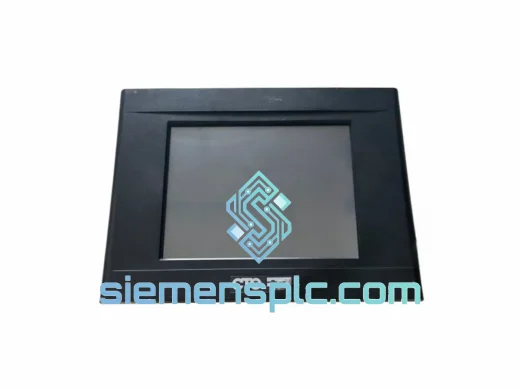
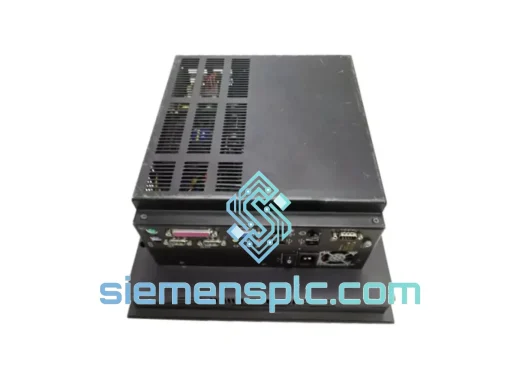
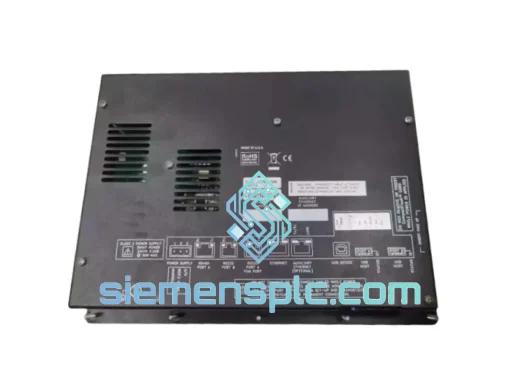
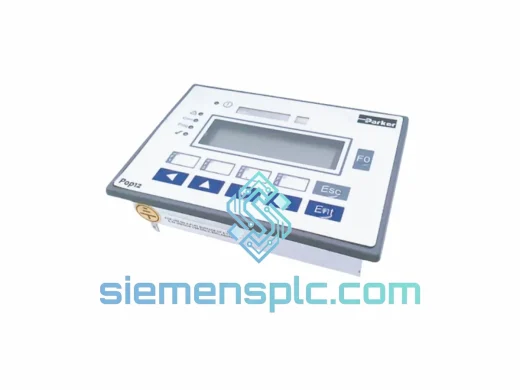
Parker POP12 HMI Operator Panel – Compax3 Series
Servo Drive
Origin Germany
HMI Operator Panel
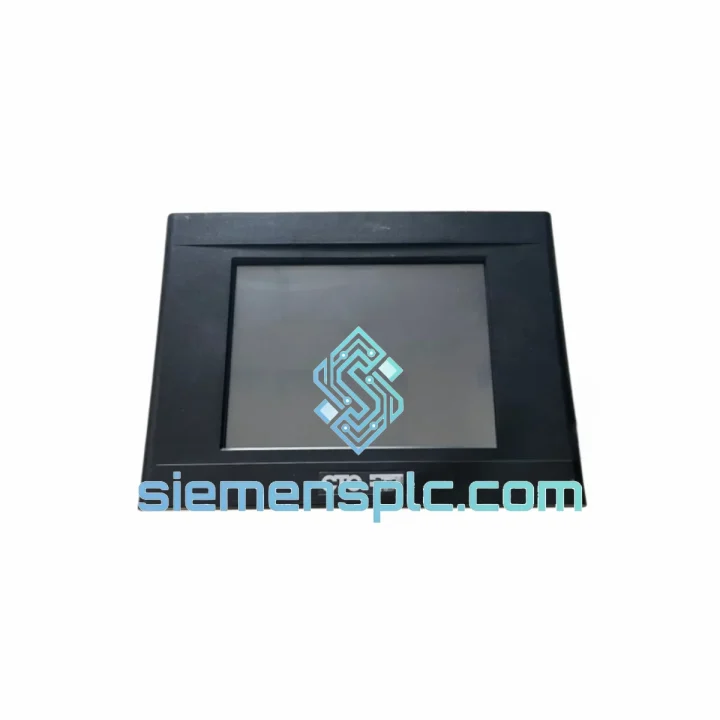
Request verified availability, condition, replacement risk review, packing options and courier lead time for P11-014DR.
Click Request Quote and the part number is inserted into the inquiry form automatically.
Core fields for model confirmation and RFQ routing. Detailed product narrative remains below.
The Parker P11-014DR is a dedicated operator interface panel engineered for direct integration within Parker Hannifin motion and process control architectures. Positioned at the human-machine boundary of a closed-loop control system, this unit serves as the primary data entry and status visualization node between field-level actuators and supervisory control logic. Its role is not decorative — it carries real-time parameter write access to drive registers, live feedback from encoder and analog input chains, and alarm acknowledgment authority that directly affects loop continuity.
In a typical Parker AC890 or SSD 690+ drive installation, the P11-014DR communicates over a proprietary serial link, polling drive status registers at fixed scan intervals. This deterministic polling architecture ensures that operator-initiated setpoint changes propagate to the drive’s velocity or torque reference register within a bounded latency window — a requirement in tension-controlled winding, extruder speed regulation, and hydraulic pressure management applications where operator intervention must not introduce unpredictable transients into the control loop.
The panel’s embedded firmware handles screen rendering, keypad debounce, and serial framing independently of the host drive processor, which means the drive’s real-time control task is not interrupted by display refresh cycles. This architectural separation is a deliberate design choice that preserves the drive’s interrupt service routine timing integrity under all operator interaction scenarios.
Real-time Stock & RFQ: [email protected] | WhatsApp: +86 18359268345
| Part Number | P11-014DR |
| Brand | Parker Hannifin |
| Series | P11 Operator Interface Series |
| Product Type | Operator Interface Panel (HMI) |
| Display Type | Backlit LCD, multi-line alphanumeric |
| Input Voltage | 24 VDC (nominal), ±15% tolerance |
| Current Consumption | ≤ 150 mA @ 24 VDC |
| Communication Interface | RS-232 / RS-485, Parker proprietary protocol |
| Baud Rate | 9600 – 115200 bps (configurable) |
| Keypad | Membrane tactile keypad, IP65-rated front face |
| Operating Temperature | 0 °C to +50 °C |
| Storage Temperature | -20 °C to +70 °C |
| Humidity | 5% – 95% RH, non-condensing |
| Protection Rating | IP65 (front panel), IP20 (rear terminals) |
| Mounting | Panel cutout, snap-in clip retention |
| Weight | Approx. 1,100 g |
| Country of Origin | USA |
| HS Code | 8537.10 |
| Certifications | CE, UL |
| Warranty | 12 months against manufacturing defects |
The P11-014DR’s hardware design reflects the engineering constraints of panel-mount operator terminals deployed in electrically noisy industrial enclosures. Several design decisions are worth examining at the circuit level.
Serial Isolation Architecture: The RS-485 transceiver stage incorporates optical isolation between the panel’s internal logic ground and the drive’s communication ground reference. This galvanic barrier — typically implemented with a high-speed optocoupler rated at ≥ 2,500 V isolation — prevents ground loop currents from corrupting the serial data stream. In installations where the drive’s DC bus generates common-mode noise on the PE conductor, this isolation stage is the primary defense against framing errors and register corruption.
EMC Filtering on Power Input: The 24 VDC supply rail passes through an LC filter network before reaching the panel’s internal DC-DC converter. This filter attenuates conducted emissions from the drive’s switching power supply, which can reach 150 kHz – 30 MHz on the 24 V auxiliary rail in installations with long cable runs. Without this filtering, display flicker and microcontroller resets are common failure modes in high-noise environments.
Membrane Keypad Debounce Logic: The keypad scanning firmware implements a hardware-assisted debounce algorithm using a dedicated timer peripheral. Key closure events are only registered after a stable logic level is maintained for a configurable debounce window (typically 20–50 ms). This prevents spurious parameter writes caused by contact bounce — a critical requirement when the panel is used to modify drive speed references or torque limits in live production.
Display Controller Independence: The LCD controller operates on a separate clock domain from the serial communication processor. This means a display refresh cycle — which involves row-by-row scanning of the LCD matrix — does not generate interrupt latency on the UART receive buffer. In high-baud-rate configurations (115200 bps), this separation prevents character overrun errors that would otherwise corrupt incoming drive status frames.
Thermal Management: The panel’s internal power dissipation is kept below 3.6 W under worst-case conditions (maximum backlight brightness, continuous keypad scanning, active serial communication). This low thermal budget allows the unit to operate without forced air cooling in sealed enclosures rated to +50 °C ambient, which is a practical requirement in outdoor or wash-down installations.
Every Parker P11-014DR unit supplied through siemensplc.com is sourced from traceable supply channels with full documentation integrity. Before dispatch from our Xiamen, China facility, each unit undergoes a structured pre-shipment inspection protocol: visual examination of the front panel membrane for delamination or keypad damage, continuity verification of the serial connector pins, and a power-on functional check confirming display initialization and keypad response.
Units are shipped in anti-static packaging with foam cushioning rated for the product’s weight class. For international shipments, we prepare full export documentation including commercial invoice, packing list, and certificate of conformance. Customs HS code 8537.10 is applied consistently to ensure accurate duty classification at destination ports.
Express logistics via DHL Express, FedEx International Priority, and UPS Worldwide Express are available from Xiamen Gaoqi International Airport, with typical transit times of 3–5 business days to Europe, 4–6 days to North America, and 2–4 days to Southeast Asia. For time-critical procurement, same-day dispatch is available for orders confirmed before 14:00 CST.
A 12-month warranty against manufacturing defects is provided on all new units. Warranty claims are processed with a target response time of 2 business days. Replacement units are dispatched before the defective unit is returned, subject to a security deposit, to minimize production downtime for customers with urgent operational requirements.
Email: [email protected]
WhatsApp: +86 18359268345
Web: siemensplc.com
Location: Xiamen, China
© 2026 siemensplc.com. All rights reserved.
We check the full part number, brand, series and visible nameplate information before quotation.
Sales confirms stock path, condition option, quantity and realistic lead time for export dispatch.
DHL, FedEx, UPS or buyer courier arrangements can be reviewed with packing requirements.
Similar brand or category products for fast comparison and multi-item RFQ lists.