Sanyo Denki
RFQ Ready
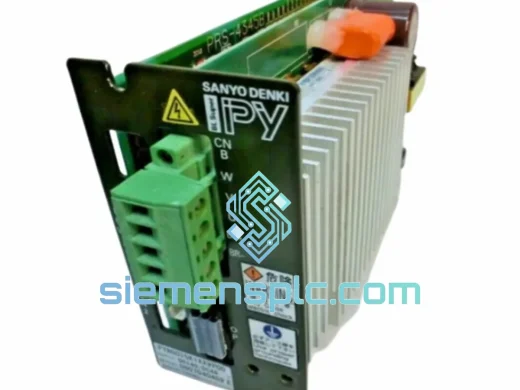
SANYO DENKI PYRG015K1XXVP00 Servo Amplifier
I PYRG015K1XXVP00 PY Series
Origin JP
Servo Amplifier
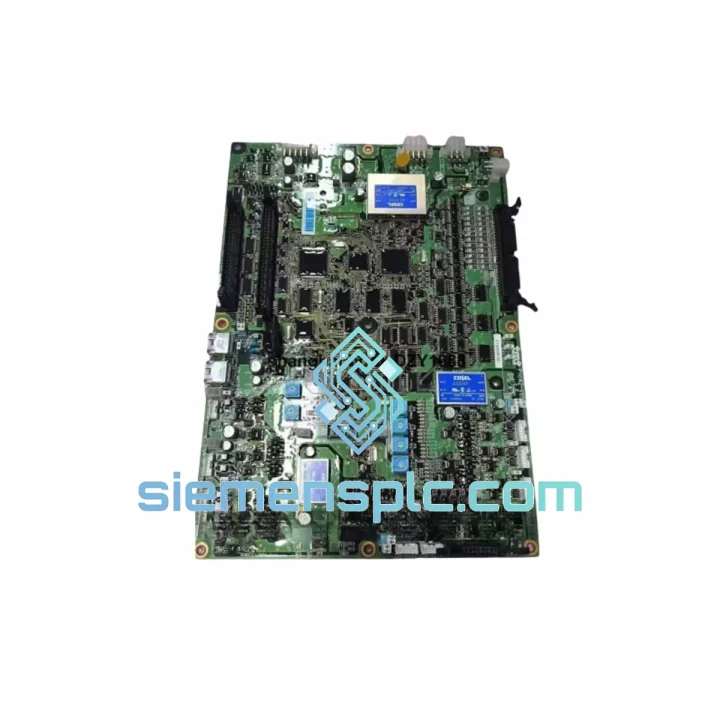
Request verified availability, condition, replacement risk review, packing options and courier lead time for PQM0A150EXXYST0.
Click Request Quote and the part number is inserted into the inquiry form automatically.
Core fields for model confirmation and RFQ routing. Detailed product narrative remains below.
The Sanyo Denki PQM0A150EXXYST0 is a single-axis AC servo amplifier from the PQM Series, rated at 1.5 A continuous output current and designed for 200–230 VAC single-phase or three-phase supply. It occupies a compact DIN-rail-compatible footprint and targets applications where axis density, deterministic response, and low-noise operation are non-negotiable engineering constraints. The amplifier supports simultaneous position, speed, and torque control modes selectable via parameter configuration, making it applicable across a broad range of motion profiles without hardware substitution.
In a closed-loop servo control architecture, the PQM0A150EXXYST0 sits between the host controller and the servo motor, executing the current loop at a fixed PWM carrier frequency that determines torque ripple and acoustic noise characteristics. The internal current regulator bandwidth is tuned to track the commanded torque reference with minimal phase lag, which is the foundational requirement for stable velocity and position loop closure at the supervisory controller level. Engineers integrating this amplifier into multi-axis gantry or pick-and-place systems benefit from its consistent loop timing, which simplifies the gain-scheduling work required when axes share a common motion coordinator.
The amplifier accepts pulse-train position commands (sign + pulse or 90° quadrature) from PLCs and CNC controllers, as well as ±10 V analog references for speed and torque modes. This dual-interface architecture allows the same hardware to serve both legacy relay-logic panels being retrofitted and modern IEC 61131-3 motion controllers without requiring a separate SKU per interface type.
Real-time Stock & RFQ: [email protected] | WhatsApp: +86 18359268345
| Parameter | Value |
|---|---|
| Manufacturer | Sanyo Denki Co., Ltd. |
| Model / SKU | PQM0A150EXXYST0 |
| Series | PQM Series AC Servo Amplifier |
| Rated Output Current | 1.5 A (continuous) / 4.5 A (peak, 3× overload) |
| Input Supply Voltage | Single-phase or three-phase 200–230 VAC ±10%, 50/60 Hz |
| Control Power Supply | 24 VDC ±10% (logic and I/O supply, separate rail) |
| Control Modes | Position (pulse train) / Speed (analog ±10 V) / Torque (analog ±10 V) |
| Position Command Interface | Sign + pulse or 90° quadrature, max 500 kpps |
| Encoder Interface | Sanyo Denki incremental (A/B/Z differential) and absolute serial encoder |
| Analog I/O | Speed/torque reference ±10 V; monitor output ±10 V (speed or torque) |
| Digital I/O | 8 inputs (24 VDC sink/source), 4 outputs (open collector, 50 mA max) |
| Regenerative Braking | Internal resistor; external resistor terminal available for high-inertia loads |
| PWM Carrier Frequency | Selectable (default 8 kHz) |
| Protection Functions | Overcurrent, overvoltage (DC bus), undervoltage, overload (I²t), encoder fault, runaway detection |
| Operating Temperature | 0 °C to +55 °C (ambient, with rated derating above 45 °C) |
| Storage Temperature | −20 °C to +65 °C |
| Humidity | 20–90% RH, non-condensing |
| Vibration Resistance | 4.9 m/s² (10–60 Hz, IEC 60068-2-6) |
| Enclosure Rating | IP20 (panel-mount installation required) |
| Approx. Weight | 200 g |
| Compliance | CE (LVD + EMC), RoHS 2011/65/EU |
| Warranty | 12 months against manufacturing defects under normal operating conditions |
The PQM0A150EXXYST0 implements a three-loop cascade control structure: an innermost current (torque) loop, a middle velocity loop, and an outer position loop. Each loop executes on a dedicated interrupt cycle within the DSP, with the current loop running at the PWM carrier period (125 µs at 8 kHz default) to ensure torque bandwidth well above the mechanical resonance frequencies typical of light-duty servo axes in the 50–200 W class.
EMC and Isolation Architecture: The DC bus and power stage are galvanically isolated from the control logic board via optocoupler barriers on all gate-drive signals. The digital I/O section uses a separate 24 VDC rail, preventing ground-loop coupling between the high-current switching node and the signal-level encoder lines. The encoder differential receiver (RS-422 compliant) provides common-mode rejection exceeding 7 V, which is sufficient to suppress the conducted noise injected by adjacent VFDs sharing the same cabinet ground bus. The PCB layout routes the encoder signal traces on an inner layer with a continuous ground plane above and below, reducing radiated susceptibility without requiring external shielded conduit in most panel configurations.
Overload and Thermal Management: The I²t accumulator in firmware tracks the thermal state of the output IGBT module in real time. When the accumulated thermal energy reaches 85% of the trip threshold, the amplifier asserts a pre-alarm output that the host PLC can use to initiate a controlled deceleration before a hard fault occurs. This two-stage warning architecture reduces unplanned downtime compared to single-threshold protection schemes. The heatsink is integrated into the rear panel of the amplifier housing; forced-air cooling is not required at rated current below 45 °C ambient, simplifying cabinet thermal design for low-density installations.
Absolute Encoder Battery Backup: When paired with a Sanyo Denki absolute encoder, the amplifier’s encoder interface circuit maintains the encoder’s multi-turn counter via a 3.6 V lithium backup cell (user-replaceable). The battery voltage is monitored continuously; a low-battery alarm is surfaced through both a dedicated digital output and the amplifier’s status register, readable over the RS-232C parameter port. This eliminates the need for a homing cycle after power interruption, which is a significant cycle-time advantage in high-throughput assembly equipment.
Every Sanyo Denki PQM0A150EXXYST0 unit supplied by siemensplc.com is sourced through verified industrial distribution channels with full manufacturer traceability. Incoming units undergo a structured inspection protocol: label and date-code verification against manufacturer records, visual inspection of connector pins and housing integrity, and functional power-on screening where test fixtures are available. Anti-static packaging (ESD bag + foam insert) is used for all servo amplifier shipments to prevent electrostatic damage during transit.
Counterfeit risk on high-demand Sanyo Denki SKUs is assessed at the sourcing stage. Units with anomalous label fonts, non-standard hologram placement, or date codes inconsistent with known production batches are quarantined and not offered for sale. This screening process is applied to every incoming lot, not sampled.
Shipments originate from our warehouse in Xiamen, China. Standard export documentation (commercial invoice, packing list, certificate of origin) is prepared for all international orders. DHL Express, FedEx International Priority, and UPS Worldwide Expedited are the primary carriers, with typical transit times of 3–7 business days to Europe, North America, and Southeast Asia. For time-critical orders, same-day dispatch is available for in-stock units confirmed before 14:00 CST. All units are covered by a 12-month warranty against manufacturing defects under normal operating conditions.
Email: [email protected]
WhatsApp: +86 18359268345
Web: siemensplc.com
Location: Xiamen, China
© 2026 siemensplc.com. All rights reserved.
We check the full part number, brand, series and visible nameplate information before quotation.
Sales confirms stock path, condition option, quantity and realistic lead time for export dispatch.
DHL, FedEx, UPS or buyer courier arrangements can be reviewed with packing requirements.
Similar brand or category products for fast comparison and multi-item RFQ lists.