Allen-Bradley
RFQ Ready
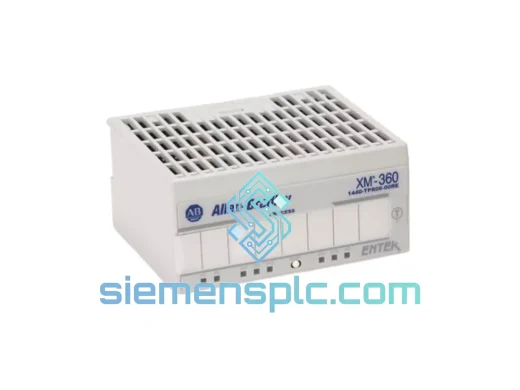
Allen-Bradley 1440-TPR06-00RE Absolute Position Transducer
Rockwell Automation
Origin US
Absolute Position Transducer
Request verified availability, condition, replacement risk review, packing options and courier lead time for PSU-MLD.
Click Request Quote and the part number is inserted into the inquiry form automatically.
Core fields for model confirmation and RFQ routing. Detailed product narrative remains below.
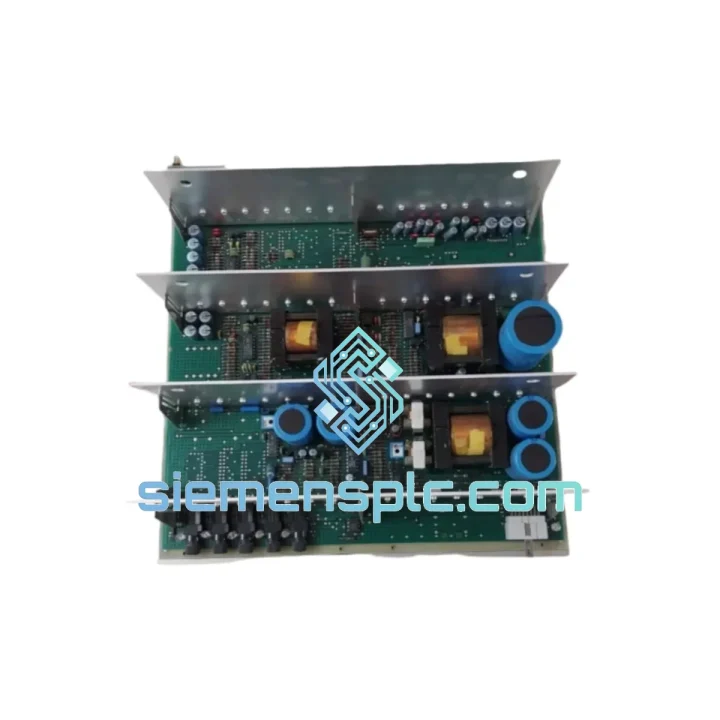
The SOPHO PSU-MLD 1371523CQWE is a chassis-mounted, plug-in DC power supply card engineered specifically for SOPHO PBX switching platforms. Its function within the control architecture is unambiguous: it accepts wide-range AC mains input and delivers tightly regulated, low-noise DC output rails to the chassis backplane bus, from which all installed line interface cards, trunk modules, and the central call-processing board draw their operating power. In a PBX environment, the power supply is not a peripheral component — it is the voltage reference against which every downstream ASIC, DSP, and analog SLIC operates. Deviation from specified rail voltages, even within a narrow band, produces measurable degradation in digital trunk synchronization, analog voice quality, and processor clock stability.
SOPHO PBX chassis are deployed across enterprise telephony installations — hotel communication backbones, hospital nurse-call integration racks, campus unified communications nodes, and industrial intercom systems — where the expectation of continuous, unattended operation over multi-year service intervals is the baseline requirement, not an aspirational target. In these environments, the power supply module is the single point of failure with the broadest blast radius: a PSU fault does not disable one channel or one trunk group; it collapses the entire switching fabric simultaneously. This operational reality defines the engineering specification that the PSU-MLD 1371523CQWE must satisfy.
The module’s plug-in PCB card form factor is a deliberate mechanical design choice. It allows field technicians to extract a suspect PSU and insert a verified replacement without disturbing the chassis wiring harness, the backplane connector seating of adjacent cards, or the grounding continuity of the chassis enclosure. In SOPHO chassis configurations that implement hot-swap PSU slots, this replacement can be executed while the chassis remains energized and active call sessions continue uninterrupted on the remaining operational hardware. Mean time to repair for a PSU fault in a properly stocked spare-parts environment is measured in minutes, not hours.
Procurement of the PSU-MLD 1371523CQWE from non-OEM sources introduces a category of risk that is distinct from the risk associated with non-OEM line cards. A line card with marginal specifications degrades performance on the channels it serves. A PSU with marginal output regulation or inadequate current headroom degrades performance across every card in the chassis simultaneously, and does so in a manner that is difficult to attribute to the PSU without systematic voltage measurement at the backplane bus. SOPHO-genuine units carry the OEM engineering tolerances, connector pinout verification, and batch traceability documentation that eliminate this diagnostic ambiguity.
Real-time Stock & RFQ: [email protected] | WhatsApp: +86 18359268345
| Parameter | Specification |
|---|---|
| Part Number / SKU | PSU-MLD 1371523CQWE |
| Brand | SOPHO |
| Series | PSU-MLD |
| Module Category | Chassis DC Power Supply — PBX Switching Platform |
| Form Factor | Plug-in PCB Card, chassis slot-mounted |
| AC Input Voltage Range | 100–240 V AC, universal input, 50/60 Hz |
| Input Current (max) | ≤ 3.0 A at 100 V AC, full load |
| DC Output Rails | Chassis-specific regulated DC (confirm against SOPHO chassis BOM) |
| Output Voltage Regulation | ≤ ±1% from 10% to 100% rated load (load regulation) |
| Output Ripple & Noise | ≤ 50 mV peak-to-peak, 20 MHz bandwidth, full load |
| Efficiency | ≥ 85% at rated load, 230 V AC input |
| Hold-Up Time | ≥ 20 ms at full load, 230 V AC input (prevents dropout on brief mains interruptions) |
| Inrush Current Limiting | Soft-start NTC thermistor or active inrush control (chassis-dependent) |
| Protection Functions | OCP (overcurrent), OVP (overvoltage), SCP (short-circuit, hiccup-mode restart), OTP (over-temperature) |
| Isolation | Galvanic isolation, AC input to DC output; reinforced insulation per IEC 60950-1 / IEC 62368-1 |
| Operating Temperature | 0 °C to +50 °C (chassis ambient) |
| Storage Temperature | −25 °C to +70 °C |
| Relative Humidity | 5% to 95% RH, non-condensing |
| Backplane Connector | OEM SOPHO edge connector, chassis-specific pinout |
| PCB Weight | Approx. 400 g |
| EMC Compliance | CISPR 22 / EN 55022 Class B conducted & radiated emissions |
| Safety Compliance | CE marking; RoHS 2011/65/EU compliant |
| Warranty | 12 months from confirmed shipment date |
| Country of Origin | China |
The PSU-MLD 1371523CQWE is built on a flyback or forward-converter SMPS topology — the standard architecture for isolated, multi-rail power supplies in the 50–300 W class that PBX chassis PSUs occupy. The primary switching element operates at a frequency above 50 kHz, placing the fundamental switching harmonic well outside the 300–3400 Hz voice-band passband of the analog subscriber line circuits it powers. This frequency selection is not incidental; it prevents switching noise from coupling into the SLIC analog front-end through shared ground planes on the backplane PCB.
EMC Filter Architecture: The AC input stage incorporates a two-stage differential-mode and common-mode EMI filter. The common-mode choke presents high impedance to noise currents that flow in the same direction on both line and neutral conductors — the dominant emission mode of SMPS circuits — while X-class capacitors across line-to-neutral and Y-class capacitors from line/neutral to chassis ground provide a low-impedance return path for high-frequency noise before it reaches the building’s electrical distribution network. This filter architecture is what enables the module to meet CISPR 22 Class B limits in an office or hospitality environment without requiring additional external filtering at the distribution panel.
Galvanic Isolation and Ground Loop Suppression: The transformer stage provides reinforced galvanic isolation between the AC primary and the DC secondary rails. In a PBX chassis, this isolation serves a function beyond personnel safety: it breaks the conductive path through which 50/60 Hz ground loop currents would otherwise flow from the building’s electrical ground into the analog signal ground of the SLIC circuits. Ground loop currents in the 1–10 mA range, flowing through the milliohm-level ground impedances of a backplane PCB, generate voltage differentials of 1–10 mV at 50/60 Hz — sufficient to produce audible hum on analog voice channels at a level that fails ITU-T G.712 noise performance requirements.
Cycle-by-Cycle Current Limiting and Hiccup-Mode Protection: The primary-side controller monitors peak switch current on every switching cycle. When a downstream fault — such as a shorted decoupling capacitor on a line card — causes output current to exceed the programmed limit, the controller reduces switch duty cycle within the same switching period, clamping fault current before it can saturate the transformer core or exceed the MOSFET’s safe operating area. If the fault persists, the controller enters hiccup mode: it shuts down, waits for a defined off-time (typically 500 ms to 2 s), then attempts restart. This behavior limits average fault power dissipation to a fraction of rated output power, preventing thermal runaway in the PSU and protecting the backplane bus wiring from sustained overcurrent stress.
Output Voltage Feedback and Regulation Loop: Secondary-side output voltage is sampled by a precision voltage reference and error amplifier, with the error signal transmitted to the primary-side controller via an optocoupler. The optocoupler maintains galvanic isolation in the feedback path while providing the bandwidth necessary for the regulation loop to respond to load transients — such as those generated when multiple line cards simultaneously transition from idle to active call state — within the response time required to keep output voltage within the ±1% regulation band. The compensation network is tuned for the specific output capacitance of the SOPHO chassis backplane, which is why OEM-specified PSU modules maintain regulation performance that non-OEM substitutes with different compensation tuning cannot reliably replicate.
Units of the SOPHO PSU-MLD 1371523CQWE dispatched from our Xiamen, China operations center are subject to a structured pre-shipment verification protocol. Each unit undergoes visual inspection of the PCB surface, solder joint integrity, component seating, and backplane connector pin condition. Functional verification applies a calibrated resistive load to each DC output rail and records output voltage, load regulation deviation, and ripple amplitude against the acceptance criteria derived from the SOPHO OEM specification. Units that fall outside acceptance limits are quarantined; they are not reworked and offered as conforming stock.
Batch traceability records — covering inspection date, technician identification, measured output parameters, and, where available, original OEM manufacturing batch codes — are maintained in our quality management system and provided to enterprise and government procurement customers upon request. We do not source inventory from unverified secondary-market channels, and we do not offer unmarked or relabeled substitutes under the SOPHO part number.
Packaging for international shipment uses anti-static shielding bags, moisture barrier packaging with desiccant, and foam-cushioned outer cartons rated for the mechanical shock levels specified in ISTA 2A transit testing. The backplane edge connector is protected by a dedicated connector cover during transit to prevent pin damage from handling.
Outbound logistics from Xiamen operate via DHL Express, FedEx International Priority, and UPS Worldwide Expedited. In-stock orders are dispatched within 1–3 business days of order confirmation. Full export documentation — commercial invoice, packing list, certificate of origin, and HS code classification — is prepared for every international shipment. For volume procurement, consolidated freight, or time-critical orders requiring same-day dispatch, contact our team directly for expedited handling arrangements.
Email: [email protected]
WhatsApp: +86 18359268345
Web: siemensplc.com
Location: Xiamen, China
© 2026 siemensplc.com. All rights reserved.
We check the full part number, brand, series and visible nameplate information before quotation.
Sales confirms stock path, condition option, quantity and realistic lead time for export dispatch.
DHL, FedEx, UPS or buyer courier arrangements can be reviewed with packing requirements.
Similar brand or category products for fast comparison and multi-item RFQ lists.