
Rorze
In Stock OK
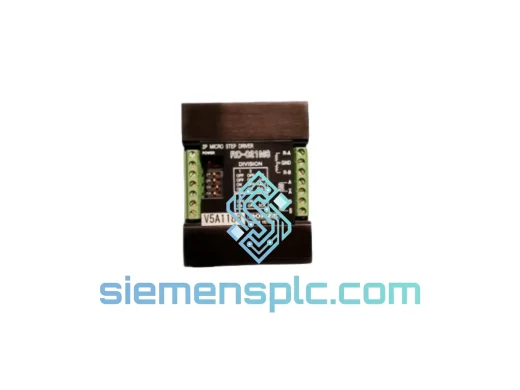
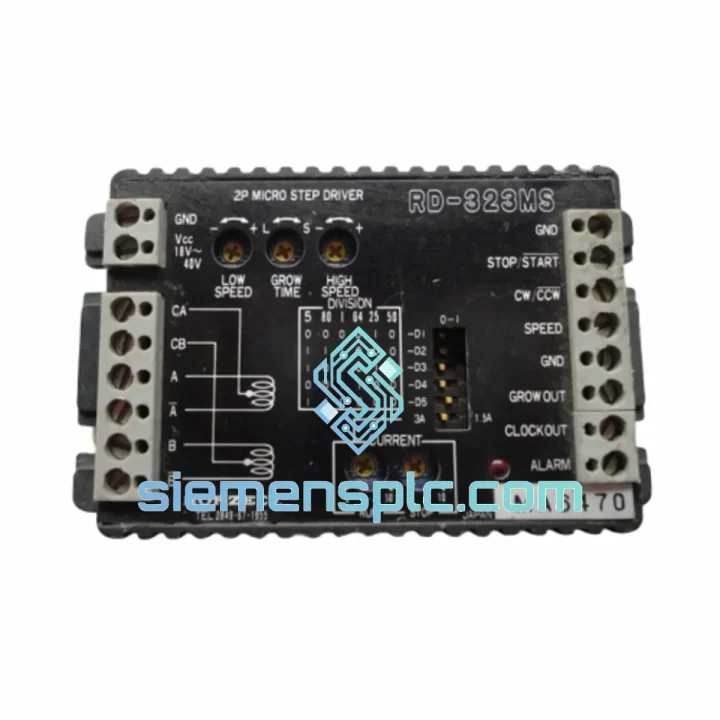
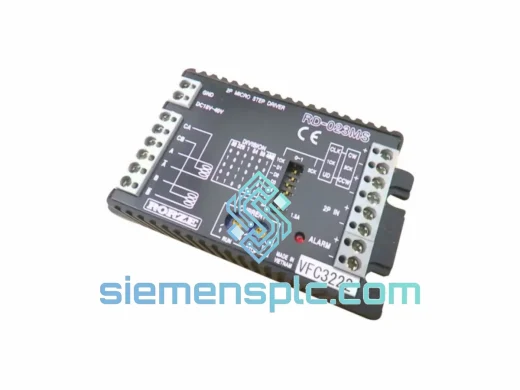
RORZE RD-323MS Stepper Motor Driver – RD Series
Request verified availability, condition, replacement risk review, packing options and courier lead time for RD-323MS.
BrandRorze
Part NumberRD-323MS
ConditionAvailability Check
Lead TimeRFQ Confirmation
DocumentsDatasheet / photos by RFQ
ShippingExport packing available
Auto-filled RFQ
RD-323MS
Click Request Quote and the part number is inserted into the inquiry form automatically.
- Reply by email: [email protected]
- WhatsApp / Tel: +86 18359268345
- Mon-Sat 9:00-18:00 GMT+8
Procurement Data
Key Product Information
Core fields for model confirmation and RFQ routing. Detailed product narrative remains below.
- Brand
- Rorze
- Primary Part Number
- RD-323MS
- Product Type
- Stepper Motor Driver
- Product Family
- Other series
- Manufacturer
- RORZE Corporation, Japan
- Country of Origin
- Japan
- Catalog Category
- Motor Drives
- Operating Temp.
- 0 °C to +50 °C ambient
- Warranty
- 12 months from date of shipment
Model confirmed for inquiry
RD-323MS
Send quantity, destination and urgency. The RFQ form keeps this part number attached.
Request Quote
Product Overview
RORZE RD-323MS: Precision Microstepping Drive Architecture for High-Demand Motion Control Systems
The RORZE RD-323MS is a 2-phase hybrid stepper motor driver engineered for deterministic, low-vibration motion control in semiconductor handling, precision metrology, and industrial automation platforms. Unlike general-purpose stepper drives, the RD-323MS is purpose-built within the RORZE RD Series ecosystem — a lineage of motion control hardware developed specifically for cleanroom-grade and high-cycle-rate applications where positional repeatability, thermal stability, and signal integrity are primary design constraints.
At its core, the RD-323MS implements a constant-current bipolar chopper topology. The drive synthesizes sinusoidal current waveforms across motor phases A and B using pulse-width modulation at a fixed carrier frequency, subdividing each full electrical cycle into discrete microsteps. This approach directly attenuates the mid-frequency resonance band that characterizes full-step and half-step operation — a critical requirement in wafer transport and optical alignment stages where mechanical resonance translates into positioning error and substrate damage risk.
The driver accepts a standard STEP/DIR digital interface, making it compatible with any motion controller or PLC capable of generating TTL-level pulse trains. Optocoupled input isolation decouples the control-side ground reference from the power stage, suppressing common-mode noise injection from motor switching transients back into the controller bus — a design discipline that becomes essential in multi-axis cabinets where ground loops are a persistent EMC liability.
Real-time Stock & RFQ: [email protected] | WhatsApp: +86 18359268345
Technical Parameters
| Manufacturer | RORZE Corporation, Japan |
| Model / SKU | RD-323MS |
| Drive Topology | Bipolar constant-current PWM chopper |
| Motor Compatibility | 2-phase hybrid stepper motors (4-lead, 6-lead, 8-lead) |
| Microstep Resolution | Full / Half / 1/4 / 1/8 / 1/16 step (switch-selectable) |
| Supply Voltage | 24–48 VDC (refer to OEM nameplate) |
| Output Phase Current | Up to 3.0 A/phase peak (refer to OEM datasheet) |
| Control Interface | STEP / DIR, optocoupled TTL input |
| Input Signal Voltage | 5 VDC logic (TTL compatible) |
| Minimum STEP Pulse Width | ≥ 2 µs (confirm with datasheet revision) |
| Protection Functions | Overcurrent shutdown, thermal protection, short-circuit detection |
| Idle Current Reduction | Automatic standby current reduction (configurable) |
| Mounting | DIN rail / panel mount |
| Operating Temperature | 0 °C to +50 °C ambient |
| Storage Temperature | -20 °C to +70 °C |
| Weight | Approx. 250 g |
| Country of Origin | Japan |
| Warranty | 12 months from date of shipment |
Hardware Logical Analysis
The RD-323MS implements a fixed-frequency PWM current regulator operating in a bipolar H-bridge configuration per motor phase. Each H-bridge switches at a carrier frequency sufficiently above the audible range to prevent tonal noise while maintaining adequate current ripple control at rated load. The chopper threshold is set by an internal DAC-driven reference voltage, which the microstepping lookup table modulates in real time to approximate a sinusoidal current envelope across the full electrical cycle.
Optocoupler Input Stage: The STEP and DIR inputs are galvanically isolated via high-speed optocouplers with a propagation delay specification tight enough to support pulse rates consistent with the driver’s maximum step frequency. This isolation barrier prevents switching noise from the power stage — which can reach dV/dt values of several hundred V/µs during H-bridge commutation — from coupling back into the motion controller’s I/O bus.
Thermal Management: The power stage MOSFETs are mounted to an integrated heatsink structure. An internal NTC thermistor monitors junction-adjacent temperature; when the threshold is exceeded, the driver executes a controlled shutdown rather than an uncontrolled latch-off, preserving the motor winding state and allowing the host controller to log the fault condition before re-enabling the drive.
Idle Current Reduction Logic: After a configurable hold-off period following the last STEP pulse, the RD-323MS reduces phase current to a preset standby level. This reduces I²R heating in both the driver and motor windings during stationary hold phases — a meaningful thermal benefit in multi-axis systems where several axes may be idle simultaneously.
EMC Design Discipline: The PCB layout separates the high-current switching loop (DC bus capacitor → H-bridge → motor terminals) from the low-level signal traces (STEP/DIR, current reference DAC). Decoupling capacitors are placed at the DC bus input to suppress conducted emissions. The motor cable shield, when grounded at the driver chassis, provides a low-impedance return path for common-mode currents induced by the switching waveform, reducing radiated emissions in compliance with industrial EMC standards.
System Integration Benefits
- Deterministic step execution: The optocoupled STEP input ensures each pulse edge is captured without jitter introduced by ground potential differences between the controller and drive, maintaining positional accuracy across long cable runs.
- Scalable microstep resolution: Switch-selectable subdivision from full-step to 1/16 step allows the same hardware to serve both high-torque, low-speed indexing applications and high-speed, low-inertia scanning axes without firmware changes.
- Native RORZE ecosystem compatibility: Designed to interface directly with RORZE motion controllers and multi-axis cards, eliminating the need for signal conditioning or protocol translation layers that introduce latency and failure points.
- Reduced mechanical resonance: Sinusoidal current approximation via microstepping suppresses the resonance peaks that occur at specific step rates in full/half-step drives, enabling stable operation through speed ranges that would otherwise require active damping.
- Fault transparency: Overcurrent and thermal fault outputs allow the host PLC or motion controller to log fault codes, enabling predictive maintenance workflows rather than reactive downtime.
- Compact panel footprint: The drive’s form factor is optimized for dense multi-axis control cabinets common in semiconductor fab tooling, where rack space is a constrained resource.
- Automatic standby current management: Reduces thermal load on the control cabinet during idle phases, extending the service interval of cooling components and improving overall system MTBF.
- Broad motor compatibility: Accepts 4-lead, 6-lead, and 8-lead 2-phase stepper motors, providing flexibility for system upgrades or motor substitutions without driver replacement.
- Standard STEP/DIR interface: Compatible with any industrial motion controller, PLC pulse output module, or PC-based motion card that generates TTL-level step pulses — no proprietary communication protocol required.
- Stable torque across speed range: Constant-current regulation maintains phase current at the programmed setpoint regardless of back-EMF variation, preserving torque output at higher step rates compared to voltage-mode drives.
Quality Assurance & Global Logistics
Every RD-323MS unit supplied by siemensplc.com is sourced through verified industrial distribution channels with full traceability to RORZE Corporation’s manufacturing output. Units are inspected prior to dispatch for label integrity, connector condition, and hardware revision consistency. Traceability documentation — including lot number, revision code, and inspection report — is available upon request for regulated-industry procurement requirements.
All orders ship from our warehouse in Xiamen, China via DHL Express, FedEx International Priority, or UPS Worldwide, with typical transit times of 3–7 business days to major industrial hubs in Europe, North America, Southeast Asia, and the Middle East. Export documentation, commercial invoice, packing list, and HS code classification are prepared for every shipment to minimize customs clearance delays. For time-critical MRO requirements, same-day dispatch is available for in-stock units ordered before the daily cut-off.
A 12-month warranty applies from the date of shipment. Warranty coverage includes verified manufacturing defects and early-life failures under normal operating conditions. Our technical team provides post-sale support for installation, parameter configuration, and fault diagnosis — reducing the engineering burden on your maintenance staff during commissioning and troubleshooting.
Contact Information
Email: [email protected]
WhatsApp: +86 18359268345
Web: siemensplc.com
Location: Xiamen, China
© 2026 siemensplc.com. All rights reserved.
Ready to quote
[email protected]
Send This Part Number to Sales
RFQ workflow
Quality workflow ->
Confirmation Process
01Model confirmation
We check the full part number, brand, series and visible nameplate information before quotation.
02Availability reply
Sales confirms stock path, condition option, quantity and realistic lead time for export dispatch.
03Packing & courier
DHL, FedEx, UPS or buyer courier arrangements can be reviewed with packing requirements.
Continue sourcing
Browse full catalog ->
Related Automation Parts
Similar brand or category products for fast comparison and multi-item RFQ lists.
ABB
RFQ Ready
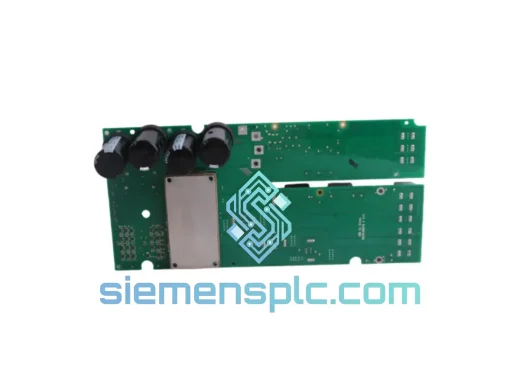
ABB ZINT-592 Fieldbus Interface Board – ZINT Series
ACS Drive
Origin SE
Interface Board