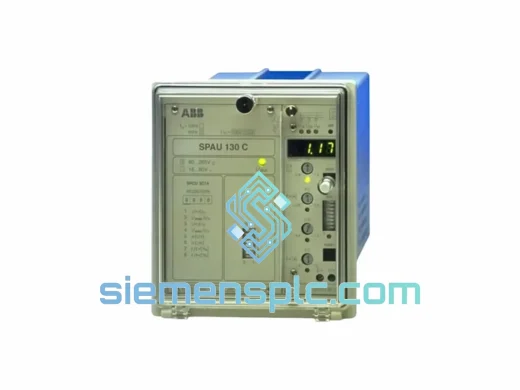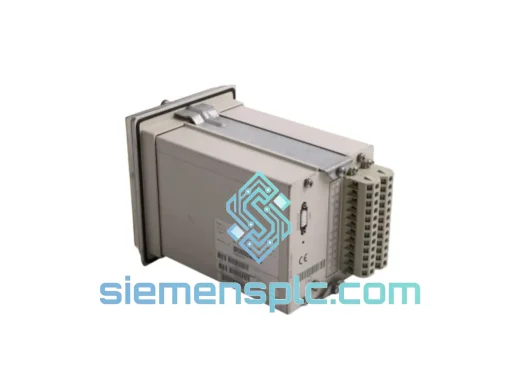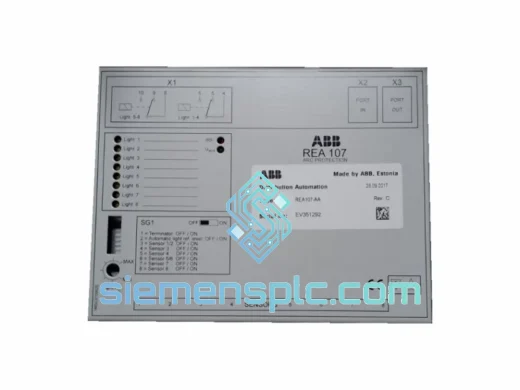
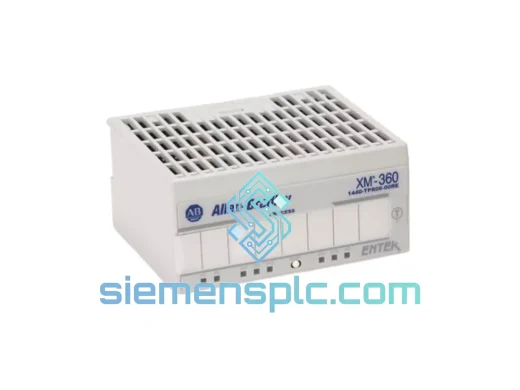
Allen-Bradley
RFQ Ready
Allen-Bradley 1440-TPR06-00RE Absolute Position Transducer
Rockwell Automation
Origin US
Absolute Position Transducer
Request verified availability, condition, replacement risk review, packing options and courier lead time for 0050-41144.
Click Request Quote and the part number is inserted into the inquiry form automatically.
Core fields for model confirmation and RFQ routing. Detailed product narrative remains below.
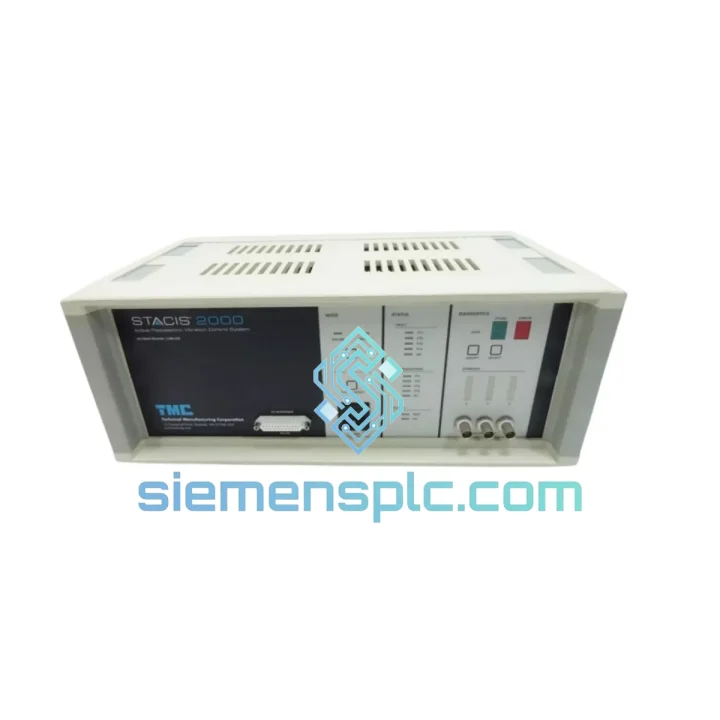
The TMC STACIS2000 series represents one of the most mechanically rigorous approaches to active floor vibration cancellation in precision instrumentation. Unlike passive air-table isolators that rely on pneumatic compliance to attenuate mid-to-high frequency disturbances, the STACIS2000 platform employs a hard-mount architecture combined with closed-loop piezoelectric actuation. This configuration allows the system to cancel floor vibration at frequencies as low as 0.6 Hz — a regime where passive isolators are entirely ineffective and where ground-borne micro-seismic noise directly corrupts measurement repeatability in electron microscopy, wafer inspection, and interferometric metrology.
This specific assembly — STACIS2000 C-GUN M12 + DECKELSEITE VM 1500 W-CG, Part No. 0050-41144 — integrates the C-GUN M12 actuator pod with the DECKELSEITE VM 1500 W-CG side-cover enclosure. The C-GUN designation identifies the actuator geometry optimized for column-gun mounting interfaces, where the M12 metric thread provides a standardized, torque-controlled mechanical interface to the equipment base. The DECKELSEITE (German: cover-side) VM 1500 W-CG enclosure is a precision-machined housing that maintains the clean-room-compatible sealed boundary of the actuator assembly while providing structural rigidity to the piezoelectric stack under compressive pre-load.
In a deployed STACIS2000 system, three or more of these actuator pods are arranged in a triangular or rectangular footprint beneath the equipment frame. Each pod contains a piezoelectric stack actuator operating in compression mode, a co-located geophone (velocity sensor), and the signal conditioning interface to the central STACIS controller. The controller executes a feedforward-feedback hybrid algorithm: the geophone signal is differentiated to yield acceleration, filtered through a plant model, and inverted to generate a correction voltage applied to the piezoelectric stack within the same vibration cycle. The result is active force injection into the equipment frame that destructively interferes with the incoming floor disturbance — achieving 10× to 40× attenuation across the 0.6 Hz to 100 Hz band depending on floor noise spectrum.
The hard-mount mechanical path — as opposed to a soft pneumatic mount — preserves the high resonant frequency of the equipment-isolator system, which is critical for tools that require rapid stage settling after a move. Semiconductor wafer scanners, for example, demand that the optical column return to positional stability within tens of milliseconds after a reticle stage step. A soft-mount isolator would introduce a low-frequency resonance that extends settling time; the STACIS2000 hard-mount topology avoids this penalty entirely while still delivering sub-nanometer floor noise rejection.
Real-time Stock & RFQ: [email protected] | WhatsApp: +86 18359268345
| Parameter | Specification |
|---|---|
| Manufacturer | TMC (Technical Manufacturing Corporation) |
| Full Part Number | STACIS2000 C-GUN M12 + DECKELSEITE VM 1500 W-CG 0050-41144 |
| Series | STACIS® 2000 |
| Isolation Technology | Active piezoelectric, hard-mount, closed-loop feedback |
| Actuator Type | Piezoelectric stack, compression-mode (C-GUN geometry) |
| Mounting Interface | M12 metric thread (DIN 13), torque-controlled |
| Enclosure Assembly | DECKELSEITE VM 1500 W-CG — precision-machined side-cover |
| Active Attenuation Band | 0.6 Hz – 100 Hz (typical, floor-noise dependent) |
| Sensor Type | Co-located geophone (velocity transducer) |
| Control Algorithm | Feedforward-feedback hybrid, plant-model inversion |
| Mechanical Interface | Hard-mount (rigid load path, no pneumatic compliance) |
| Unit Weight | 2,600 g (2.6 kg) |
| Compliance | ISO 9001 (TMC manufacturing facility) |
| Origin | United States |
| Warranty | 12 months from date of shipment (genuine OEM unit) |
The C-GUN M12 actuator pod operates on the principle of inverse piezoelectric effect: a voltage applied across the PZT (lead zirconate titanate) ceramic stack produces a controlled axial displacement in the range of 10–40 µm at full drive voltage. Under the compressive pre-load imposed by the M12 mounting thread, the stack operates in its linear regime, where displacement is proportional to applied voltage with hysteresis below 2% when driven by the STACIS controller’s charge-mode amplifier. Charge-mode drive — as opposed to voltage-mode — eliminates the frequency-dependent hysteresis that would otherwise introduce phase error into the cancellation signal at frequencies above 50 Hz.
The DECKELSEITE VM 1500 W-CG enclosure performs three simultaneous mechanical functions: it provides the pre-load reaction structure that keeps the piezoelectric stack in compression across the full dynamic range of floor excitation; it houses the geophone in a thermally decoupled sub-cavity to prevent thermal drift of the sensor zero-point from corrupting the DC offset of the feedback loop; and it presents a clean, flat mating surface to the equipment base that distributes the static equipment load uniformly across the M12 thread shank, preventing bending moments that would introduce cross-axis coupling into the vertical isolation axis.
EMC design within the pod follows a shielded-coaxial topology: the geophone signal cable is routed inside a grounded copper braid that is bonded to the enclosure chassis at a single point to prevent ground loops. The piezoelectric drive cable is a separate, twisted-pair shielded line with the shield grounded at the controller end only. This single-point grounding architecture reduces common-mode noise injection from the drive amplifier into the sensor signal path — a critical consideration in environments where the floor itself carries conducted EMI from nearby vacuum pumps, RF generators, or motor drives.
The VM 1500 enclosure designation also implies compatibility with the 1500 N static load rating of the STACIS2000 pod family, meaning each pod can support up to 1,500 N of equipment dead weight while maintaining full active stroke authority. For a three-pod installation, this yields a maximum supported equipment mass of approximately 459 kg — sufficient for most SEM columns, AFM frames, and CMM granite tables in the 200–400 kg range.
Every TMC STACIS2000 unit supplied through siemensplc.com is a genuine OEM assembly sourced through verified procurement channels with full traceability documentation. Prior to shipment from our Xiamen, China facility, each unit undergoes a structured inspection protocol: physical integrity check of the M12 thread and enclosure mating surfaces, continuity verification of the geophone and piezoelectric drive circuits, and label authentication against TMC’s part numbering convention for the 0050-41144 reference.
Xiamen’s geographic position — a major southeastern China port city with direct access to Xiamen Gaoqi International Airport and Xiamen Port — enables same-day handover to DHL Express, FedEx International Priority, and UPS Worldwide Expedited services. Transit times to major semiconductor and precision-instrument hubs are typically 2–4 business days to Japan, South Korea, and Taiwan; 3–5 business days to Germany, Netherlands, and the United Kingdom; and 3–6 business days to the United States and Canada. Sea freight consolidation is available for multi-unit project orders where lead time permits.
Export documentation — commercial invoice, packing list, HS code declaration (HS 9031.80 for precision measurement/vibration instruments), and certificate of origin — is prepared in-house and transmitted electronically to the freight forwarder at time of booking, minimizing customs clearance delays at destination. All units are packed in anti-static foam-lined double-wall cartons with shock-watch indicators to detect mishandling in transit.
Email: [email protected]
WhatsApp: +86 18359268345
Web: siemensplc.com
Location: Xiamen, China
© 2026 siemensplc.com. All rights reserved.
We check the full part number, brand, series and visible nameplate information before quotation.
Sales confirms stock path, condition option, quantity and realistic lead time for export dispatch.
DHL, FedEx, UPS or buyer courier arrangements can be reviewed with packing requirements.
Similar brand or category products for fast comparison and multi-item RFQ lists.