TRICONEX
RFQ Ready
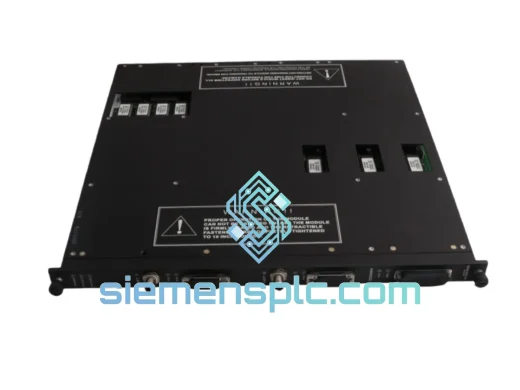
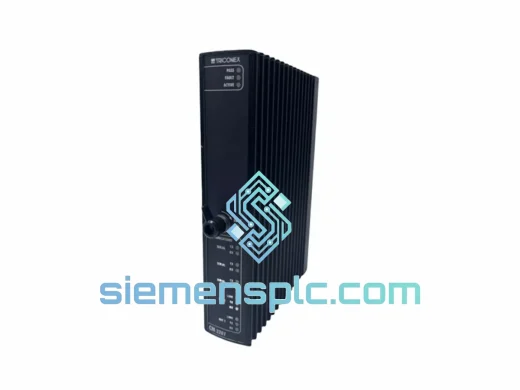
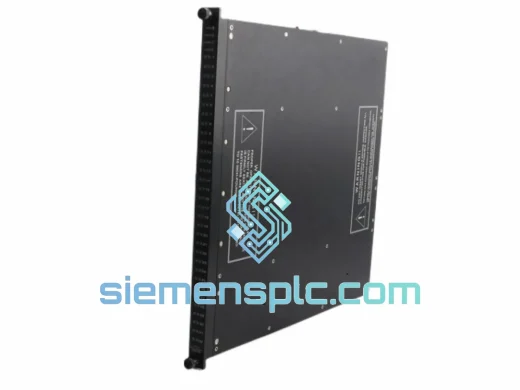
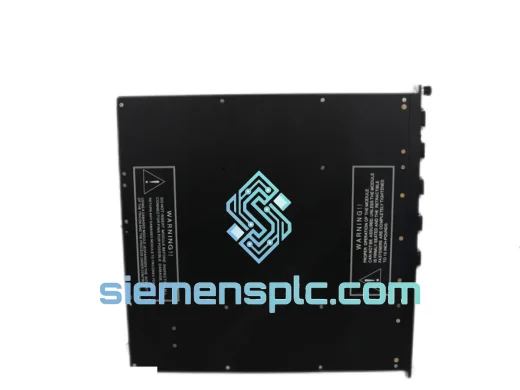
TRICONEX 4351B Communication Module – Tricon TMR
Tricon
Origin US
Communication Module
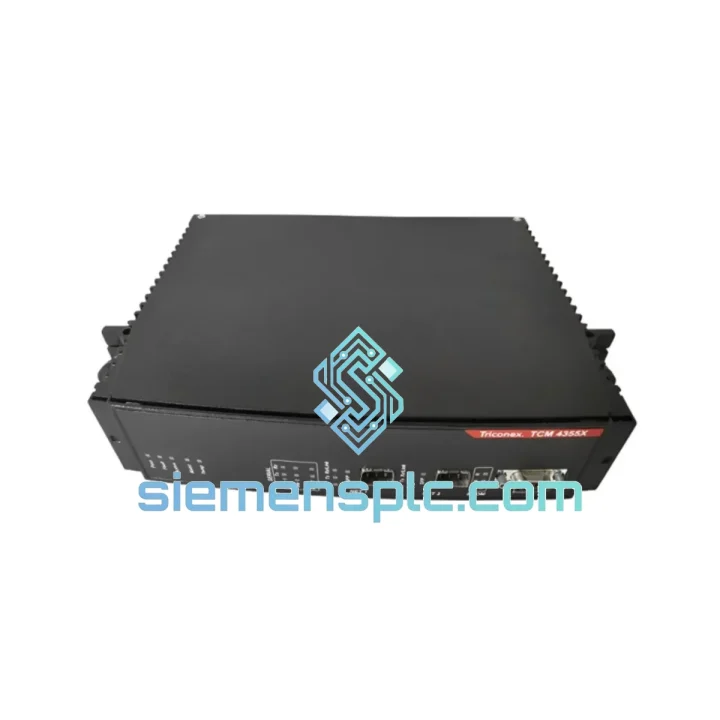
Request verified availability, condition, replacement risk review, packing options and courier lead time for TCM 4355X.
Click Request Quote and the part number is inserted into the inquiry form automatically.
Core fields for model confirmation and RFQ routing. Detailed product narrative remains below.
The TCM 4355X is a dedicated communication module designed for the Tricon Triple Modular Redundancy (TMR) safety PLC platform, manufactured by Triconex, a Schneider Electric brand. Its primary function within a safety instrumented system (SIS) is to provide a deterministic, certified data pathway between the Tricon main chassis backplane and external supervisory networks — including SCADA hosts, distributed control systems (DCS), and peer Tricon nodes. In process industries where IEC 61511 compliance is mandatory, the TCM 4355X serves as the boundary interface that must maintain communication integrity even under partial hardware degradation.
Unlike general-purpose industrial Ethernet gateways, the TCM 4355X is architecturally integrated into the TMR voting fabric. Each of the three redundant legs within the Tricon chassis independently processes inbound and outbound communication frames. A hardware voter arbitrates the three results before any data is committed to the safety application or transmitted to the host network. This means a single-leg failure — whether caused by component aging, transient overvoltage, or firmware exception — cannot produce a corrupted data frame or a spurious process trip. The module’s role in the control loop is therefore not merely connectivity; it is the enforcement point for communication determinism and fault containment.
Real-time Stock & RFQ: [email protected] | WhatsApp: +86 18359268345
| Parameter | Specification |
|---|---|
| Part Number / SKU | TCM 4355X |
| Manufacturer | Triconex (Schneider Electric) |
| Module Classification | Tricon Communication Module (TCM) |
| Platform Compatibility | Tricon TMR Safety PLC — v9.x and v10.x chassis |
| Redundancy Architecture | Triple Modular Redundancy (TMR), 2-out-of-3 hardware voting |
| Supported Protocols | Modbus TCP/IP, OPC DA, Tricon peer-to-peer (TriStation 1131) |
| Network Interface | Dual 10/100 Mbps Ethernet ports |
| Safety Integrity Level | SIL 3 capable — IEC 61508 / IEC 61511 |
| Operating Temperature | 0 °C to +60 °C |
| Storage Temperature | −40 °C to +85 °C |
| Relative Humidity | 5 % to 95 %, non-condensing |
| Form Factor | Single-slot Tricon backplane card |
| Approx. Weight | 500 g |
| Certifications | TÜV Rheinland, FM Approved, CE Marked |
| Country of Origin | United States |
| Warranty | 12 months against manufacturing defects |
The TCM 4355X occupies a dedicated communication slot on the Tricon main chassis backplane. Internally, the module contains three independent processing sub-systems — one per TMR leg — each running an identical firmware stack. Communication requests arriving via the dual Ethernet ports are simultaneously dispatched to all three legs. Each leg independently parses the protocol frame, validates the request against the current safety application state, and generates a response. The on-board voter compares the three responses; only a 2-out-of-3 agreement results in a committed output. A dissenting leg is flagged for diagnostic review without interrupting the communication cycle.
EMC Design: The module’s PCB layout isolates the Ethernet physical layer (PHY) from the backplane logic using transformer-coupled magnetics rated to 1.5 kV isolation. This prevents common-mode noise injected from the plant network — a frequent source of spurious faults in heavy industrial environments — from propagating into the TMR voting logic. Transient voltage suppression (TVS) diodes on each Ethernet port clamp surge events to within the PHY’s absolute maximum ratings, providing a first line of defense against cable-coupled transients from nearby variable-frequency drives (VFDs) or switchgear operations.
Backplane Bus Arbitration: The TCM 4355X communicates with the Tricon main processor modules (MPs) via the proprietary Tricon backplane bus, which operates at a fixed, deterministic cycle time synchronized to the safety application scan rate. The communication module does not introduce variable latency into this bus; its internal DMA engine pre-fetches data from the application image and stages it for transmission within a fixed window, ensuring that host SCADA polling never competes with the safety scan cycle for bus bandwidth.
Redundant Network Topology Support: The dual Ethernet ports can be configured in either active-standby or load-sharing mode. In active-standby, the secondary port monitors link health and assumes traffic within one network scan cycle upon primary port failure — a switchover time well within the response time budget of most SIS applications. This eliminates the Ethernet switch as a single point of failure in the host communication path.
Every TCM 4355X unit supplied by siemensplc.com is sourced as genuine Triconex hardware through verified industrial supply channels. Prior to dispatch, each module undergoes a structured inspection protocol: visual examination of PCB, connectors, and labeling for signs of counterfeit or rework; power-on functional test confirming backplane communication and Ethernet port activity; and firmware version verification against the Triconex release matrix. A functional test report is issued with each shipment, and the module serial number is recorded for post-sale traceability.
Our logistics operations are based in Xiamen, China — a major international freight hub with direct access to DHL Express, FedEx International Priority, and UPS Worldwide Expedited services. Standard dispatch time for in-stock units is 1–3 business days after order confirmation. Transit times to most destinations in Southeast Asia, the Middle East, and Europe range from 3 to 7 business days via express courier. All shipments include a commercial invoice, packing list, and certificate of origin. Export classification and HS code documentation are prepared in compliance with Chinese customs regulations and destination-country import requirements. Crating and ESD-protective packaging are applied as standard for all electronic module shipments.
Email: [email protected]
WhatsApp: +86 18359268345
Web: siemensplc.com
Location: Xiamen, China
© 2026 siemensplc.com. All rights reserved.
We check the full part number, brand, series and visible nameplate information before quotation.
Sales confirms stock path, condition option, quantity and realistic lead time for export dispatch.
DHL, FedEx, UPS or buyer courier arrangements can be reviewed with packing requirements.
Similar brand or category products for fast comparison and multi-item RFQ lists.