Control Techniques
RFQ Ready
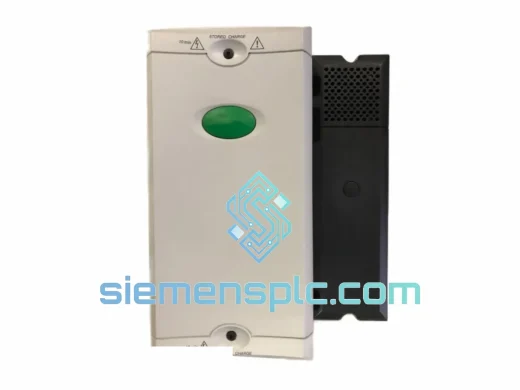
Control Techniques SPMC2402 AC Variable Frequency Drive – Commander Series
Closed-Loop Vector VFD
Origin GB
AC Variable Frequency Drive
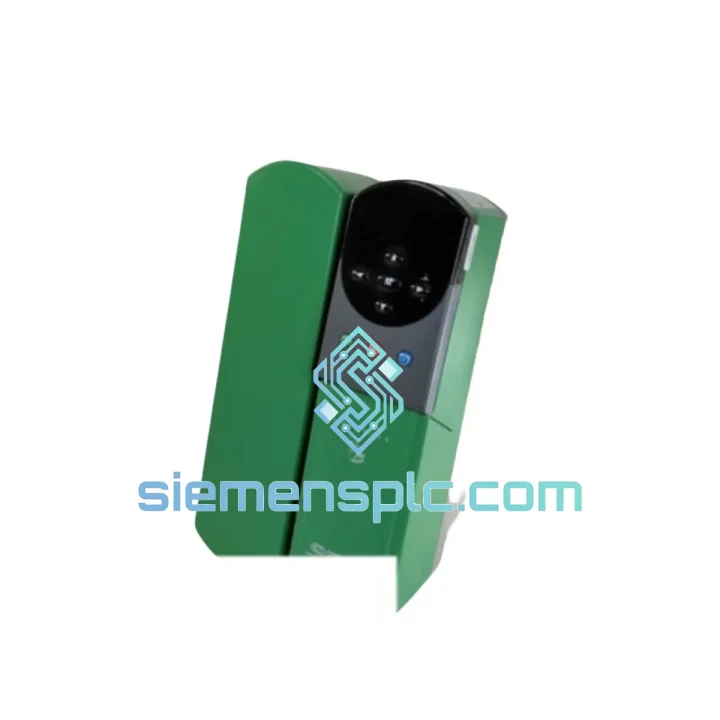
Request verified availability, condition, replacement risk review, packing options and courier lead time for UNI2402.
Click Request Quote and the part number is inserted into the inquiry form automatically.
Core fields for model confirmation and RFQ routing. Detailed product narrative remains below.
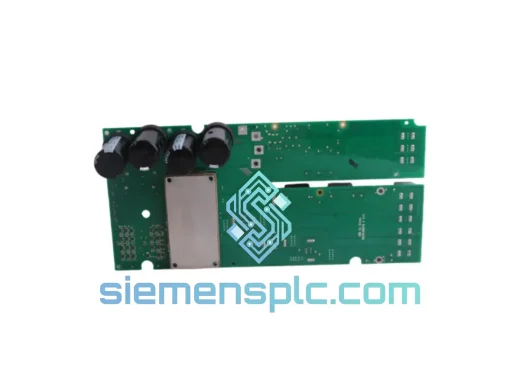
The Control Techniques UNI2402 is a universal drive interface module designed to bridge the command and feedback signal paths between host controllers — including PLCs and DCS platforms — and variable speed drives (VSDs) operating in industrial automation environments. Its core function is deterministic signal translation: analog speed and torque reference signals originating from the controller are conditioned, scaled, and forwarded to the drive’s analog input terminals, while discrete status outputs from the drive (run confirmation, at-speed, fault) are returned to the controller via optically isolated digital channels. This bidirectional signal architecture enables full supervisory loop closure without direct electrical coupling between the controller and drive power stages.
Within a control loop, the UNI2402 occupies the interface layer between the supervisory control tier and the drive execution tier. It absorbs ground potential differences between cabinet sections, suppresses common-mode noise introduced by long cable runs, and normalizes signal levels to match the input impedance specifications of the target drive. In multi-drive installations, this normalization function is critical: without it, reference signal deviation across drive channels introduces speed asymmetry in coordinated motion applications such as web tension control, multi-axis conveyors, and synchronized pump stations.
The module is manufactured by Control Techniques, a Nidec Industrial Automation brand with over four decades of field deployment in process, manufacturing, and infrastructure automation. The UNI2402 is part of the Universal Interface Series, a product family engineered for broad drive compatibility and minimal commissioning overhead.
Real-time Stock & RFQ: [email protected] | WhatsApp: +86 18359268345
| Parameter | Specification |
|---|---|
| Part Number / SKU | UNI2402 |
| Manufacturer | Control Techniques (Nidec Industrial Automation) |
| Series | Universal Interface Series |
| Module Classification | Universal Drive Interface Module |
| Supply Voltage | 24 V DC ±10% |
| Analog Input | 0–10 V DC / 4–20 mA (software selectable) |
| Analog Output | 0–10 V DC / 4–20 mA, 12-bit resolution |
| Digital Inputs | 24 V DC logic, optically isolated, IEC 61131-2 Type 1 |
| Digital Outputs | Relay or transistor, optically isolated, max 250 V AC / 30 V DC |
| Signal Isolation | Optical isolation, 500 V AC test voltage |
| Mounting | 35 mm DIN rail (EN 60715) / panel mount |
| Operating Temperature | 0°C to +50°C |
| Storage Temperature | -25°C to +70°C |
| Relative Humidity | 5% to 95% non-condensing |
| Protection Rating | IP20 (IEC 60529) |
| EMC Compliance | EN 61000-6-2 (immunity), EN 61000-6-4 (emission) |
| Safety Compliance | CE marked; RoHS 2011/65/EU compliant |
| Country of Origin | United Kingdom |
| Warranty | 12 months from date of dispatch |
The UNI2402 implements a three-stage signal processing chain. In the first stage, incoming analog reference signals pass through a passive RC low-pass filter network with a cutoff frequency tuned to attenuate switching noise above 1 kHz — a frequency band commonly contaminated by PWM harmonics from adjacent drive cabinets. This pre-conditioning step preserves the DC accuracy of the reference signal before it enters the active processing stage.
In the second stage, an instrumentation amplifier with a common-mode rejection ratio (CMRR) exceeding 80 dB at 50/60 Hz amplifies the differential signal while rejecting ground-referenced interference. This is particularly relevant in installations where the controller and drive share a common cabinet but are powered from separate transformer secondaries, creating measurable ground potential differences of 1–5 V that would otherwise corrupt a single-ended analog reference.
The third stage handles digital I/O isolation. Each digital channel — both input and output — passes through a dedicated optocoupler rated at 500 V AC isolation voltage. The optocoupler response time is specified at under 1 ms, which is sufficient for drive command signals (run, stop, fault reset, direction) that operate on supervisory timescales rather than real-time control cycles. The relay output channels use bifurcated gold-plated contacts rated for low-level signal switching (10 mA minimum load), preventing contact oxidation in dry-circuit applications.
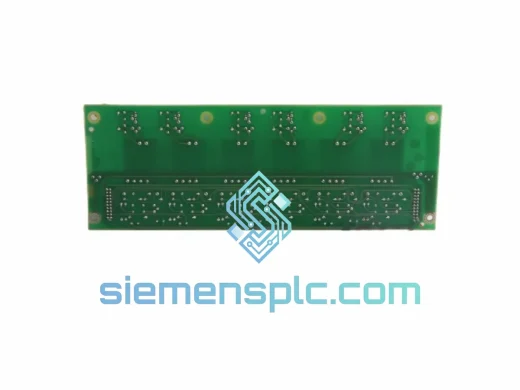
EMC design follows a layered approach: the PCB uses a four-layer stackup with dedicated ground planes separating analog and digital signal layers. Ferrite beads are placed at all I/O entry points to suppress conducted RF interference. The module enclosure is constructed from zinc-plated steel, providing shielding effectiveness of approximately 20 dB at frequencies up to 1 GHz — adequate for industrial environments classified as Zone A per EN 61000-6-2.
Every UNI2402 unit supplied by siemensplc.com is sourced through verified industrial distribution channels and undergoes a structured pre-dispatch inspection protocol. Visual inspection confirms enclosure integrity, terminal block condition, and label authenticity against Control Techniques part numbering and date code standards. Functional verification confirms supply voltage acceptance, analog I/O signal continuity, and digital channel isolation resistance. Units that do not pass all inspection criteria are quarantined and not dispatched.
Packaging follows ISTA 2A transit testing standards: anti-static foam insert, moisture barrier bag with desiccant, and double-wall corrugated outer carton rated for 32 ECT. Each shipment includes a packing list with unit serial number, inspection date, and inspector ID for full traceability.
Logistics operations are based in Xiamen, China — a major international freight hub with direct access to DHL Express, FedEx International Priority, and UPS Worldwide Express services. Standard export documentation (commercial invoice, packing list, certificate of origin) is prepared for all international shipments. For orders requiring CITES, dual-use, or end-user certificate documentation, our logistics team coordinates with the relevant authorities prior to dispatch. Typical transit times are 3–5 business days to Europe and North America, 2–4 business days to Southeast Asia, and 1–2 business days to Hong Kong and Taiwan.
All units are covered by a 12-month warranty from the date of dispatch. Warranty claims are processed within 5 business days of receipt of the returned unit. Replacement units are dispatched from stock where available; repair or credit note is issued where replacement stock is not immediately available.
Email: [email protected]
WhatsApp: +86 18359268345
Web: siemensplc.com
Location: Xiamen, China
© 2026 siemensplc.com. All rights reserved.
We check the full part number, brand, series and visible nameplate information before quotation.
Sales confirms stock path, condition option, quantity and realistic lead time for export dispatch.
DHL, FedEx, UPS or buyer courier arrangements can be reviewed with packing requirements.
Similar brand or category products for fast comparison and multi-item RFQ lists.