
GE Fanuc
In Stock OK
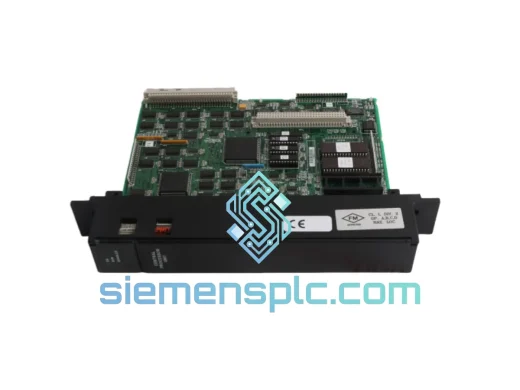
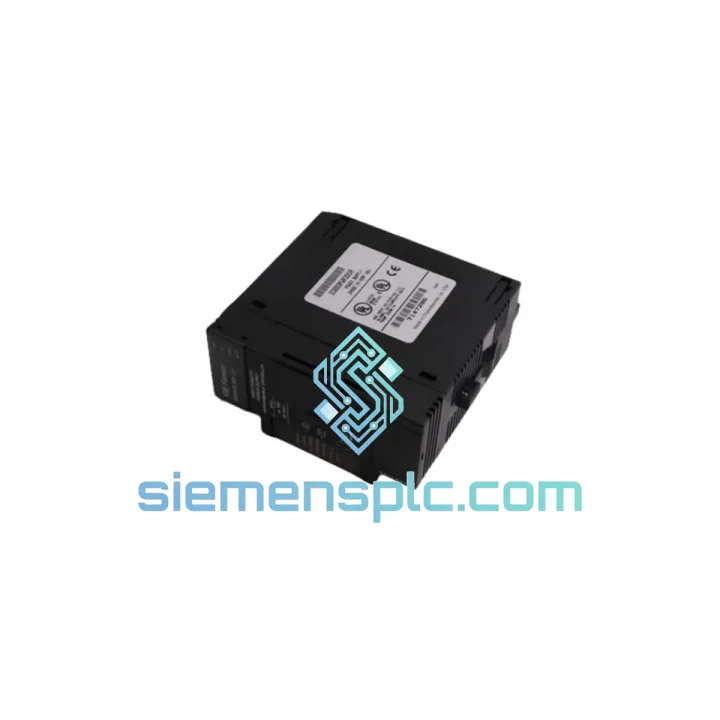
GE GEUR9KH PLC CPU Module – Series 90-70
Request verified availability, condition, replacement risk review, packing options and courier lead time for UR9KH.
BrandGE Fanuc
Part NumberUR9KH
ConditionAvailability Check
Lead TimeRFQ Confirmation
DocumentsDatasheet / photos by RFQ
ShippingExport packing available
Auto-filled RFQ
UR9KH
Click Request Quote and the part number is inserted into the inquiry form automatically.
- Reply by email: [email protected]
- WhatsApp / Tel: +86 18359268345
- Mon-Sat 9:00-18:00 GMT+8
Procurement Data
Key Product Information
Core fields for model confirmation and RFQ routing. Detailed product narrative remains below.
- Brand
- GE Fanuc
- Primary Part Number
- UR9KH
- Product Type
- PLC CPU Module
- Series / Family
- Fanuc
- Country of Origin
- US
- Catalog Category
- Robotics & Motion
- Operating Temp.
- 0°C to +60°C (32°F to 140°F)
- Warranty
- 12 months from date of shipment
Model confirmed for inquiry
UR9KH
Send quantity, destination and urgency. The RFQ form keeps this part number attached.
Request Quote
Product Overview
GE GEUR9KH CPU Module: Backplane Bus Architecture and Control Loop Authority in the Series 90-70 Rack
The GE Fanuc Series 90-70 platform was engineered for deterministic, high-throughput discrete and process control in environments where scan-cycle jitter is operationally unacceptable. At the center of every Series 90-70 rack sits the CPU module — the arbitration point for all backplane bus transactions, the executor of the ladder/structured-text program, and the sole authority over I/O data table updates. The GEUR9KH occupies this role with a hardware architecture that reflects GE Fanuc’s design philosophy for continuous-duty industrial computing: conservative clock margins, hardware-enforced watchdog supervision, and a VME-derived backplane bus that sustains deterministic data transfer across up to 12 I/O slots per rack.
In a Series 90-70 rack, the CPU does not poll I/O modules sequentially. Instead, the backplane bus operates as a shared parallel bus with arbitrated access, allowing the CPU to pipeline I/O reads and writes against program scan execution. The GEUR9KH manages this arbitration through an onboard bus controller ASIC that enforces slot priority, handles bus timeout detection, and isolates faulted modules without halting the scan cycle — a critical behavior in partial-fault scenarios where production continuity takes precedence over a single failed I/O card.
The module’s memory architecture separates program storage from the I/O data table and system configuration registers into distinct address spaces, preventing runaway pointer errors in user logic from corrupting system-level parameters. Battery-backed SRAM retains the user program and retentive data across power cycles, while a dedicated configuration EEPROM holds rack topology and I/O module type assignments independently of the main program battery — meaning a battery failure does not erase the rack configuration, only retentive data values.
From a control-loop perspective, the GEUR9KH supports both fixed and variable scan modes. In fixed-scan mode, the CPU enforces a constant scan period by inserting idle time at the end of each cycle, ensuring that PID loops and time-critical interlocks execute at a predictable rate regardless of program growth. This is particularly relevant in chemical batch processes and turbine auxiliary control, where loop timing directly affects process stability margins.
The module interfaces with GE’s Proficy Machine Edition programming environment via the serial programming port or, on equipped variants, an onboard Ethernet port. Program download, online monitoring, and forced I/O operations are all handled through this interface without interrupting the scan cycle, enabling live diagnostics in running production systems — a capability that reduces mean time to repair (MTTR) by allowing engineers to observe real-time data table values and force discrete outputs during fault investigation without taking the system offline.
Real-time Stock & RFQ: [email protected] | WhatsApp: +86 18359268345
Technical Parameters
| Parameter | Specification |
|---|---|
| Part Number | GEUR9KH |
| SKU | UR9KH |
| Brand | GE Fanuc (General Electric) |
| Series | Series 90-70 |
| Module Type | CPU (Central Processing Unit) |
| Form Factor | Rack-mount, Series 90-70 VME-derived backplane |
| Backplane Bus | Parallel arbitrated bus, up to 12 I/O slots per rack |
| Program Memory | Battery-backed SRAM (retentive); EEPROM for rack config |
| Scan Modes | Fixed-period and variable scan |
| Programming Interface | Serial port; Ethernet (variant-dependent) |
| Programming Software | GE Proficy Machine Edition |
| Operating Temperature | 0°C to +60°C (32°F to 140°F) |
| Relative Humidity | 5% to 95% non-condensing |
| Power Consumption | Supplied via Series 90-70 backplane (5 VDC bus) |
| Weight | Approx. 300 g |
| Country of Origin | United States |
| Warranty | 12 months from date of shipment |
Hardware Logical Analysis
The GEUR9KH’s EMC design addresses the primary coupling paths found in industrial panel environments: conducted interference on the backplane power rails and radiated interference from adjacent variable-frequency drives, contactors, and high-current bus bars. The module’s PCB layout employs a ground plane strategy that separates the analog reference plane (used by onboard ADC circuits for battery voltage monitoring) from the digital ground plane, with a single-point star connection at the backplane connector. This topology prevents high-frequency digital switching currents from injecting noise into the analog measurement circuits — a common failure mode in lower-cost CPU designs that manifests as erratic battery-low fault alarms.
The watchdog timer circuit operates independently of the main CPU clock domain. It is driven by a dedicated RC oscillator that cannot be halted by a software hang or clock tree failure. If the CPU fails to service the watchdog within the configured timeout window — typically 200 ms to 2 s depending on application configuration — the watchdog asserts a hardware reset and simultaneously drives the backplane FAULT signal, which forces all output modules to their configured safe states. This two-stage response (CPU reset + output safe-state assertion) is architecturally superior to software-only watchdog implementations, where a hung CPU may reset itself but leave outputs in an indeterminate state during the reboot interval.
The bus controller ASIC implements slot-level fault isolation through a bus timeout counter. If an I/O module fails to respond to a backplane transaction within the defined timeout window, the ASIC logs the slot address in the fault table, marks the corresponding I/O data table entries as invalid, and continues the scan cycle. The CPU program can then read the fault table via system status words and execute application-level fault handling logic — for example, switching a PID loop to manual mode when its analog input module stops responding — without requiring a full rack restart.
Redundancy configurations using paired Series 90-70 racks rely on the CPU’s hot-standby arbitration logic. The primary CPU continuously synchronizes its I/O data table and program state to the standby CPU via a dedicated redundancy link. Switchover is triggered by the primary CPU’s watchdog fault or by an explicit application command, with bumpless transfer achieved because the standby CPU’s data table is current to within one scan cycle at the moment of switchover.
System Integration Benefits
- Deterministic Scan Execution: Fixed-scan mode enforces a constant cycle period, eliminating timing variability in PID and interlock logic regardless of program size growth over the system lifecycle.
- Non-Disruptive Online Diagnostics: Live data table monitoring and forced I/O via Proficy Machine Edition operate concurrently with the running scan cycle, reducing MTTR without requiring a production shutdown.
- Slot-Level Fault Isolation: The bus controller ASIC isolates individual faulted I/O modules without halting the scan, allowing the application program to execute graceful degradation logic and maintain partial production continuity.
- Bumpless Redundancy Switchover: Hot-standby configurations achieve sub-scan-cycle state synchronization, ensuring process variables and output states are preserved across primary-to-standby transitions.
- Independent Configuration Retention: Rack topology and I/O type assignments are stored in EEPROM separately from the battery-backed program memory, preventing configuration loss during battery replacement or failure.
- Structured Fault Reporting: System status words expose slot-level fault codes, module type mismatches, and communication errors in a structured format readable by the application program, enabling automated alarm generation without custom diagnostic hardware.
- Broad I/O Module Compatibility: The GEUR9KH operates with the full Series 90-70 I/O catalog — digital, analog, specialty, and communications modules — preserving existing field wiring and eliminating re-engineering costs during CPU replacement.
- Hardware Watchdog Independence: The RC-oscillator-driven watchdog circuit operates outside the CPU clock domain, guaranteeing safe-state output assertion even in the event of a complete CPU clock tree failure.
Quality Assurance & Global Logistics
Every GEUR9KH unit supplied by siemensplc.com is sourced through verified channels and subjected to a structured pre-shipment verification process. Visual inspection covers PCB surface condition, connector pin integrity, component seating, and label authenticity against known-genuine reference units. Functional bench testing verifies power-on self-test (POST) completion, backplane communication readiness, and programming port response. Units that do not pass all verification steps are quarantined and not offered for sale.
Shipments originate from our warehouse in Xiamen, China — a major logistics hub with direct access to international express courier networks. Standard export packaging uses anti-static bags, foam-lined cartons, and moisture-barrier sealing appropriate for air freight. Express delivery via DHL, FedEx, or UPS typically achieves door-to-door transit in 3–7 business days to destinations in Europe, North America, Southeast Asia, and the Middle East. Sea freight consolidation is available for bulk orders. All shipments include a commercial invoice, packing list, and, upon request, a certificate of conformance. A 12-month warranty covers all units against defects in materials and workmanship from the date of shipment.
Contact Information
Email: [email protected]
WhatsApp: +86 18359268345
Web: siemensplc.com
Location: Xiamen, China
© 2026 siemensplc.com. All rights reserved.
Ready to quote
[email protected]
Send This Part Number to Sales
RFQ workflow
Quality workflow ->
Confirmation Process
01Model confirmation
We check the full part number, brand, series and visible nameplate information before quotation.
02Availability reply
Sales confirms stock path, condition option, quantity and realistic lead time for export dispatch.
03Packing & courier
DHL, FedEx, UPS or buyer courier arrangements can be reviewed with packing requirements.
Continue sourcing
Browse full catalog ->
Related Automation Parts
Similar brand or category products for fast comparison and multi-item RFQ lists.
GE Fanuc
RFQ Ready
GE Fanuc IC752SPL013 PLC Programmer Interface
Fanuc
Origin US
PLC Programmer Interface