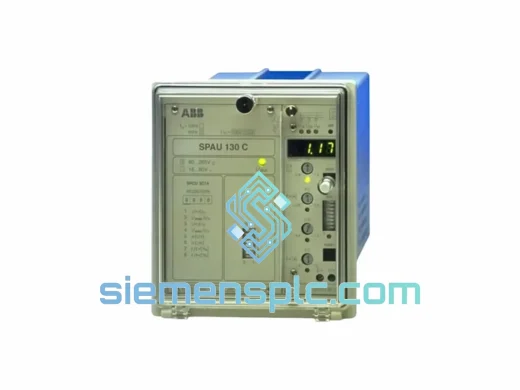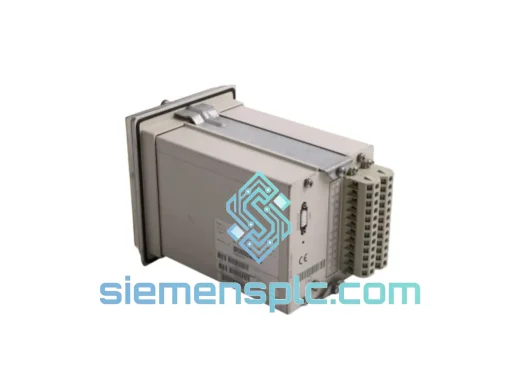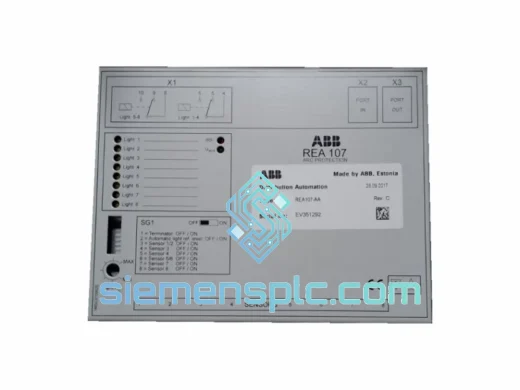
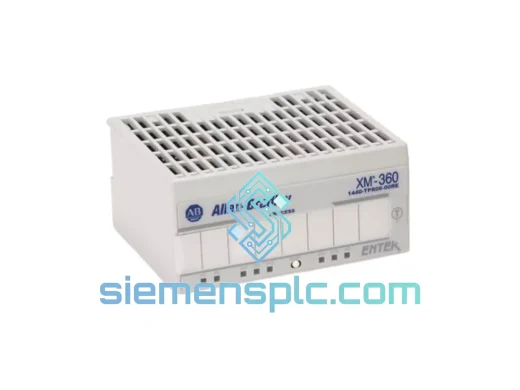
Allen-Bradley
RFQ Ready
Allen-Bradley 1440-TPR06-00RE Absolute Position Transducer
Rockwell Automation
Origin US
Absolute Position Transducer
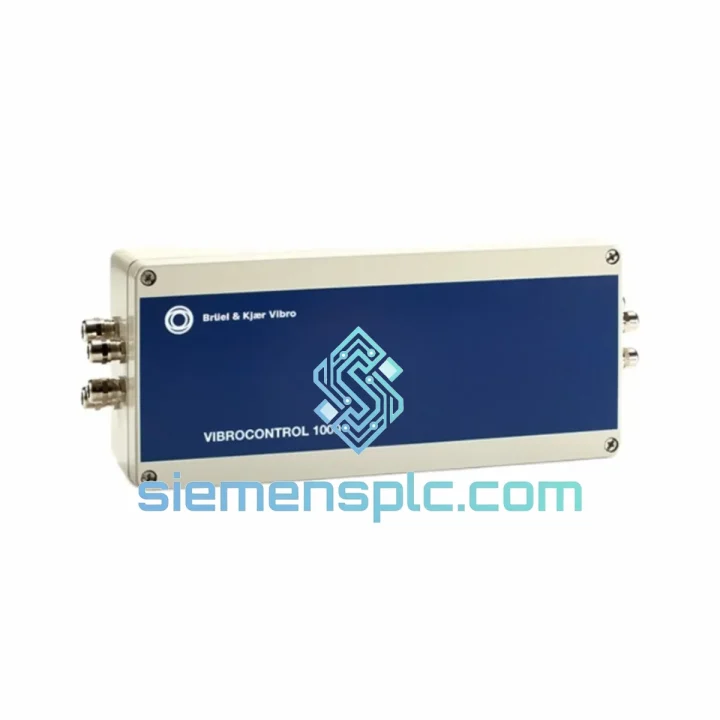
Request verified availability, condition, replacement risk review, packing options and courier lead time for VC-1100.
Click Request Quote and the part number is inserted into the inquiry form automatically.
Core fields for model confirmation and RFQ routing. Detailed product narrative remains below.
Every hour a critical rotating machine sits idle costs real money — whether it’s a steam turbine at a power plant, a compressor train in a petrochemical unit, or a high-speed pump in a water treatment facility. When the VC-1100 C11 bearing vibration sensor fails or goes out of calibration, the entire condition monitoring loop goes blind. You lose early-warning capability, protection relay inputs become unreliable, and your maintenance team is flying without instruments. We stock the B&K Vibro VC-1100 C11 specifically for this scenario: verified OEM hardware, ready to ship via DHL Express from Xiamen, China, with same-day dispatch on confirmed orders received before 14:00 CST.
This is not a catalogue listing. This is a field-ready replacement unit backed by engineers who understand what it means to have a turbine offline at 02:00 on a Sunday.
URGENT REQUIREMENT? Contact: [email protected] | WhatsApp: +86 18359268345
| Parameter | Value | Status |
|---|---|---|
| Manufacturer | Brüel & Kjær Vibro (B&K Vibro) | ✅ Ready to Ship |
| Part Number | VC-1100 C11 | ✅ In Stock |
| Sensor Type | Piezoelectric IEPE/ICP® Accelerometer | |
| Measurement Domain | Bearing-band vibration acceleration | |
| Output Signal | IEPE constant-current (2–10 mA excitation) | |
| Frequency Response | High-frequency bearing-band (application-specific per B&K Vibro datasheet) | |
| Mounting Style | C11 — stud mount / magnetic base adapter compatible | |
| Housing | 316L stainless steel, hermetically sealed | |
| Ingress Protection | IP67 | |
| Operating Temperature | –40 °C to +120 °C | |
| Connector Interface | MIL-C-5015 / M12 (variant-dependent — confirm before ordering) | |
| Compatible Monitoring Systems | VIBROCONTROL 8000, VC-8000 I/O cards, third-party IEPE-input CMS | |
| Compliance | CE, RoHS; ATEX zone-rated variants available on request | |
| Warranty | 12 months from dispatch date | ✅ Covered |
| Dispatch Lead Time | Same day (orders before 14:00 CST) / Next business day | ✅ Ready to Ship |
Field experience with the VC-1100 series reveals a consistent set of failure modes and replacement pitfalls. Address these before you install the new unit:
1. Confirm the fault is the sensor, not the cable or input card.
The most common misdiagnosis: the VC-1100 C11 gets condemned when the actual fault is a broken shield in the coaxial cable or a failed IEPE excitation circuit on the monitoring card. Before ordering a replacement sensor, measure the open-circuit voltage at the monitoring card input with the sensor disconnected. A healthy IEPE excitation rail should read +18 to +30 VDC. If it reads 0 V or fluctuates, the input card is the culprit, not the sensor.
2. Check for bias voltage shift — the silent failure mode.
A piezoelectric IEPE sensor that has suffered internal moisture ingress or connector corrosion will often still produce a signal, but the DC bias voltage drifts outside the nominal 8–12 VDC window. Your monitoring system may not flag this as a hard fault, but spectral data becomes unreliable. Measure bias voltage at the BNC/M12 output under normal excitation current. Values below 6 VDC or above 14 VDC indicate sensor degradation — replace immediately.
3. Mounting torque matters more than most engineers realize.
The C11 stud-mount configuration requires a specific torque value (refer to B&K Vibro installation manual for the exact figure — typically 5–8 Nm for M8 stud). Under-torqued sensors introduce a mechanical resonance artifact in the 1–3 kHz range that mimics early-stage bearing defect signatures. Over-torqued studs crack the sensor base and destroy the calibration. Use a calibrated torque wrench, not an impact driver.
4. Connector sealing — the field failure nobody documents.
The C11 variant uses a MIL-spec or M12 connector. In washdown environments or outdoor installations, connector ingress is the leading cause of premature sensor failure. When installing the replacement unit, apply a thin bead of silicone sealant around the cable entry point and verify the connector locking ring is fully engaged. Inspect the mating connector on the cable for pin corrosion before reconnecting.
5. Sensitivity matching after replacement.
The VC-1100 C11 has a nominal sensitivity value (mV/g) documented on its calibration certificate. If your monitoring system stores per-channel sensitivity values (as VIBROCONTROL 8000 does), update the channel configuration to match the new sensor’s certificate value. Failure to do this introduces a systematic gain error — your alarm thresholds will be calibrated to the wrong engineering unit scale.
6. Baseline re-establishment.
After installing the replacement sensor, run the machine at normal operating speed for a minimum of 30 minutes before accepting the new vibration baseline. Thermal expansion of the bearing housing affects the mechanical coupling between sensor and structure. Record a new reference spectrum and update your CMS trend database — do not compare post-replacement data against pre-failure baselines without accounting for the sensor change.
The VC-1100 C11 is not a laboratory instrument pressed into field service. It is designed from the ground up for continuous, unattended operation in environments that destroy lesser sensors within months.
The 316L stainless steel housing provides genuine corrosion resistance in chloride-rich atmospheres — coastal installations, offshore platforms, and chemical plant environments where standard 304-grade housings pit and fail within 18 months. The hermetic seal between the sensing element and the housing eliminates the moisture ingress path that kills most piezoelectric sensors in humid tropical or washdown environments.
Vibration resistance is inherent to the design: a sensor that measures vibration must itself be immune to the mechanical fatigue that vibration induces. The VC-1100 series uses a compression-mode piezoelectric stack with a pre-loaded seismic mass — a geometry that is mechanically stable under broadband random vibration and shock loads up to the sensor’s specified shock limit. This matters in compressor applications where pulsation-induced shock events are routine.
The operating temperature range of –40 °C to +120 °C covers the full envelope from arctic outdoor installations to bearing housings on high-speed machinery running at elevated temperatures. The IEPE output circuit maintains stable bias voltage and sensitivity across this range — unlike some lower-cost sensors that exhibit significant sensitivity drift above 80 °C.
EMC performance is a non-negotiable requirement in industrial environments with variable-frequency drives, arc furnaces, and high-current bus bars generating broadband electromagnetic interference. The coaxial cable configuration and the sensor’s low-impedance IEPE output provide inherent common-mode noise rejection that differential-input monitoring cards can exploit to deliver clean signals even in high-EMI switchrooms.
Our dispatch operation is based in Xiamen, China — a major international freight hub with direct DHL Express, FedEx International Priority, and UPS Worldwide Express connections to over 220 countries and territories. This is not a drop-shipping arrangement. Stock is physically held in our Xiamen warehouse, inspected before dispatch, and handed to the carrier the same day for confirmed orders received before 14:00 CST.
Typical transit times from Xiamen:
All shipments include real-time tracking from pickup to delivery. Export documentation — commercial invoice, packing list, and HS Code 9031.80 classification — is prepared by our logistics team and included with every shipment. For customers requiring DDP (Delivered Duty Paid) terms, we can arrange customs clearance and duty payment in most major markets — contact us before placing the order to confirm availability for your country.
For genuine emergency situations — plant shutdown, safety system offline, production line stopped — contact us via WhatsApp for priority handling. We will confirm stock, issue a proforma invoice, and coordinate same-day dispatch within 2 hours of payment confirmation.
📧 Email: [email protected]
📱 WhatsApp: +86 18359268345
🌐 Web: siemensplc.com
📍 Location: Xiamen, China
© 2026 siemensplc.com. All rights reserved.
We check the full part number, brand, series and visible nameplate information before quotation.
Sales confirms stock path, condition option, quantity and realistic lead time for export dispatch.
DHL, FedEx, UPS or buyer courier arrangements can be reviewed with packing requirements.
Similar brand or category products for fast comparison and multi-item RFQ lists.