Allen-Bradley
RFQ Ready
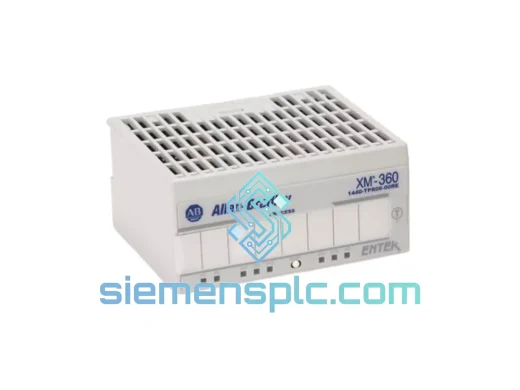
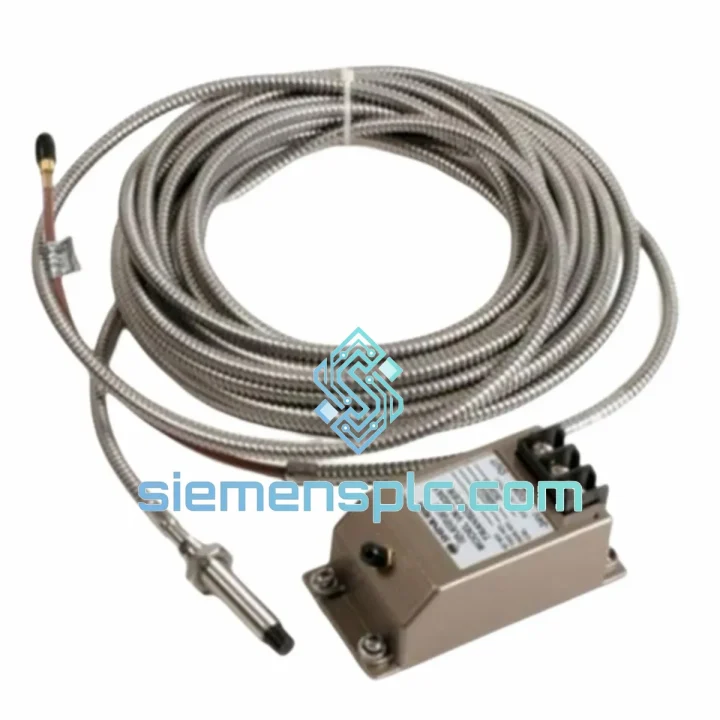
Allen-Bradley 1440-TPR06-00RE Absolute Position Transducer
Rockwell Automation
Origin US
Absolute Position Transducer
Request verified availability, condition, replacement risk review, packing options and courier lead time for VK-143P2.
Click Request Quote and the part number is inserted into the inquiry form automatically.
Core fields for model confirmation and RFQ routing. Detailed product narrative remains below.
The SHINKAWA VK-143P2 is a self-generating electromagnetic velocity transducer designed for continuous, real-time vibration monitoring of rotating and reciprocating machinery in heavy industrial process environments. Unlike piezoelectric accelerometers that require signal conditioning power, the VK-143P2 operates on the principle of electromagnetic induction: an internal permanent magnet and coil assembly converts mechanical velocity directly into a proportional voltage output, eliminating the need for external excitation at the sensor head. This passive architecture reduces wiring complexity in legacy DCS and PLC installations and simplifies intrinsically safe loop design in classified hazardous areas when paired with an appropriate IS barrier.
Deployed across power generation, petrochemical, pulp and paper, steel, and marine industries, the VK-143P2 is a recognized OEM-specification component within SHINKAWA Electric’s VK Series — a product line with decades of field validation on turbomachinery trains worldwide. Its stainless steel housing and hermetically sealed internal assembly provide reliable performance under sustained mechanical shock, high ambient temperature, and chemically aggressive atmospheres.
Real-time Stock & RFQ: [email protected] | WhatsApp: +86 18359268345
| Parameter | Specification |
|---|---|
| Manufacturer | SHINKAWA Electric Co., Ltd. |
| Part Number / SKU | VK-143P2 |
| Series | VK Series Velocity Transducer |
| Sensor Principle | Electromagnetic induction (self-generating, passive) |
| Measurement Axis | Single-axis; radial or axial per mounting orientation |
| Output Signal Type | Voltage proportional to vibration velocity (mV / mm·s⁻¹) |
| Frequency Response | 10 Hz – 1,000 Hz (–3 dB points; confirm with OEM datasheet) |
| Sensitivity | Refer to OEM calibration certificate; typical VK-series range 20–40 mV/mm·s⁻¹ |
| Mounting Interface | Threaded stud base (confirm thread specification with OEM datasheet) |
| Housing Material | Stainless steel, hermetically sealed |
| Connector / Cable Exit | Integral cable or connector per variant suffix (P2 designation) |
| Operating Temperature | –20 °C to +120 °C (confirm with OEM datasheet for specific variant) |
| Ingress Protection | IP65 minimum (confirm with OEM datasheet) |
| Weight | Approx. 500 g |
| Country of Origin | Japan |
| Applicable Standards | ISO 10816 / ISO 20816, ISO 7919, API 670, IEC 60068 |
| Warranty | 12 months from date of shipment (DOA replacement within 7 days) |
The VK-143P2 operates on a moving-coil electromagnetic transduction mechanism. A precision-wound coil is suspended within the field of a permanent magnet assembly fixed to the sensor housing. When the housing is bolted to a bearing housing or machine casing and the machine vibrates, the coil — held stationary by its own inertia relative to the vibrating magnet — generates an EMF directly proportional to the relative velocity between coil and magnet. This is a first-order physical relationship (Faraday’s law: E = Blv), meaning the output voltage is linearly proportional to vibration velocity without requiring any analog amplification stage at the sensor level.
EMC and Signal Integrity Design: The hermetically sealed stainless steel housing acts as a Faraday shield, attenuating external electromagnetic interference from motor drives, high-voltage bus bars, and RF sources common in industrial switchgear rooms. The coaxial or shielded cable exit (P2 suffix) further reduces common-mode noise pickup over long cable runs to the monitor panel. In installations where cable runs exceed 50 m, a low-impedance shielded twisted pair with drain wire grounded at the monitor end is recommended to maintain signal-to-noise ratio within ISO 10816 measurement accuracy requirements.
Mechanical Resonance Management: The internal spring-mass system of the VK-143P2 is tuned to place the mechanical resonance frequency well above the 1,000 Hz upper measurement limit, ensuring a flat frequency response across the entire specified band. This avoids amplitude errors near resonance that would distort overall vibration velocity (OVV) readings used for ISO 10816 alarm setpoint evaluation. The stainless steel housing provides sufficient mass and rigidity to prevent the sensor body itself from acting as a vibration amplifier when mounted on thin-walled structures.
Passive Architecture Advantages in Hazardous Areas: Because the VK-143P2 generates its own output voltage without requiring loop power, the intrinsic safety (IS) barrier design is simplified. The barrier need only clamp the output voltage and limit fault current — it does not need to supply a regulated excitation voltage to the sensor. This reduces the number of IS barrier channels required per monitoring loop and lowers the overall installed cost in ATEX Zone 1 or IECEx-classified installations.
Every SHINKAWA VK-143P2 unit supplied by siemensplc.com is sourced through verified, traceable supply channels with full documentation. Our pre-shipment process includes visual inspection of housing integrity, connector condition, and cable sheath; dimensional verification of the mounting thread; and continuity and insulation resistance checks on the coil winding. Units are shipped in original or equivalent anti-static, shock-absorbing packaging to prevent transit damage to the precision internal spring-mass assembly.
Documentation provided with each shipment includes a packing list with part number and serial number, country-of-origin declaration (Japan), and — where available — the OEM calibration certificate. Test certificates and material certificates can be requested at the time of order for projects requiring full material traceability per API 670 or plant QA procedures.
Logistics are managed from our Xiamen, China operations hub. Xiamen is a major international port city with direct air freight connections to all major global hubs and sea freight services to Southeast Asia, the Middle East, Europe, and the Americas. Standard export shipments are dispatched via DHL Express, FedEx International Priority, or UPS Worldwide, with tracking numbers issued on the day of dispatch. For large-volume orders, sea freight via FCL or LCL from Xiamen Port is available with full export customs clearance documentation. Typical air freight transit times: 3–5 business days to Europe, 2–4 business days to Southeast Asia, 5–7 business days to North America. Emergency same-day dispatch is available for in-stock units when orders are confirmed before 14:00 CST.
Email: [email protected]
WhatsApp: +86 18359268345
Web: siemensplc.com
Location: Xiamen, China
© 2026 siemensplc.com. All rights reserved.
We check the full part number, brand, series and visible nameplate information before quotation.
Sales confirms stock path, condition option, quantity and realistic lead time for export dispatch.
DHL, FedEx, UPS or buyer courier arrangements can be reviewed with packing requirements.
Similar brand or category products for fast comparison and multi-item RFQ lists.