Bently Nevada
RFQ Ready
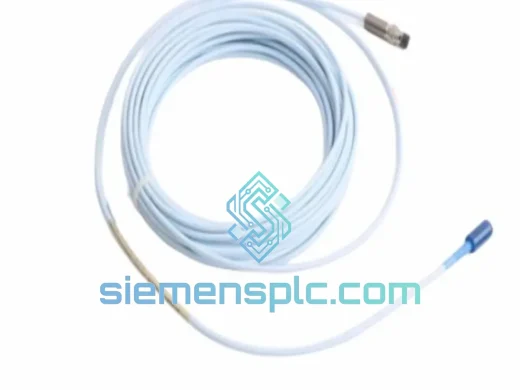
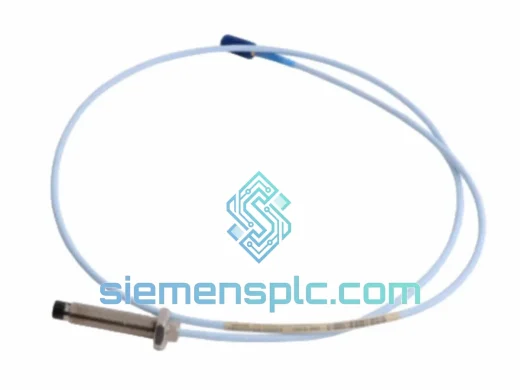
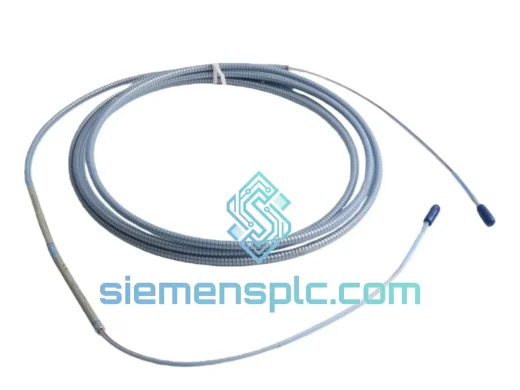
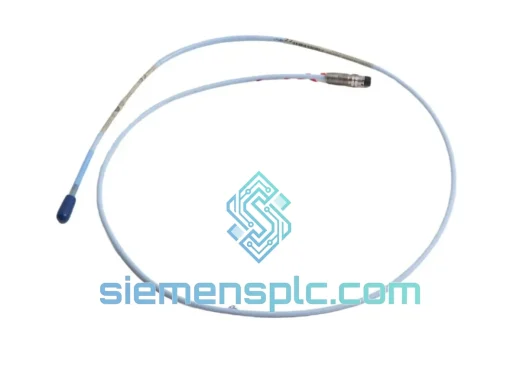
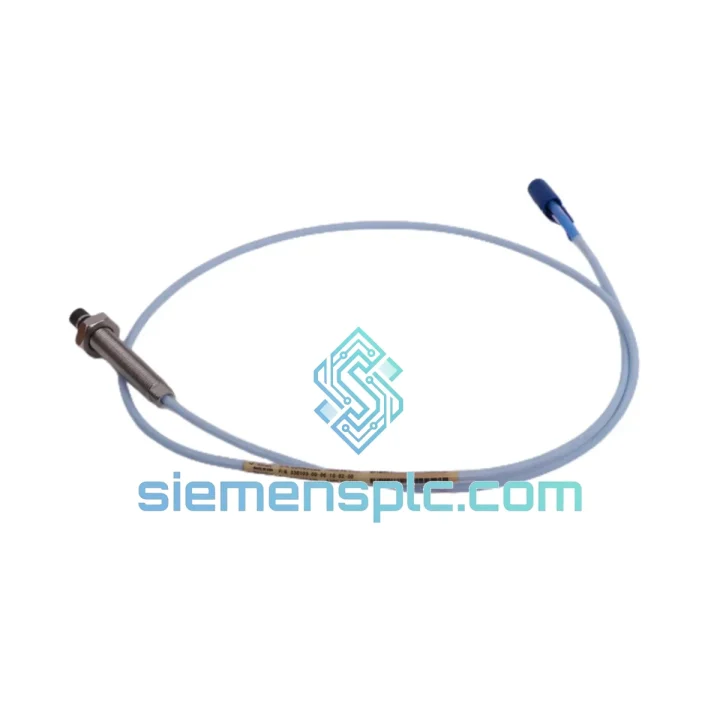
Bently Nevada 330196-05-30-10-00 Proximity Probe – 3300 XL ETR
3301
Origin US
Proximity Probe
Request verified availability, condition, replacement risk review, packing options and courier lead time for 330103-00-06-10-02-00.
Click Request Quote and the part number is inserted into the inquiry form automatically.
Core fields for model confirmation and RFQ routing. Detailed product narrative remains below.
Every minute a turbine, compressor, or critical rotating machine runs without a functioning proximity probe is a minute your machinery protection system is flying blind. Shaft radial vibration goes undetected. Axial displacement alarms go silent. The 3500 Series monitor throws a channel fault, and your operations team is staring at a red screen with no data. That is not a maintenance issue — that is a production emergency.
The Bently Nevada 330103-00-06-10-02-00 is the 8 mm eddy-current proximity probe at the core of the 3300 XL Proximity Transducer System — the global standard for API 670-compliant machinery protection. We stock it. We ship it from Xiamen. And we do it fast enough to matter when your plant is down.
URGENT REQUIREMENT? Contact: [email protected] | WhatsApp: +86 18359268345
| Parameter | Value |
|---|---|
| Part Number | 330103-00-06-10-02-00 |
| Brand | Bently Nevada (Baker Hughes) |
| Series | 3300 XL Proximity Transducer System |
| Probe Diameter | 8 mm |
| Thread | M10 × 1 |
| Integral Cable Length | 0.6 m |
| Sensitivity | 7.87 V/mm (200 mV/mil) nominal |
| Linear Range | 0.25 mm – 2.26 mm (10 – 89 mil) |
| Operating Temperature | –40°C to +177°C |
| Supply Voltage | –24 VDC (via proximitor) |
| Target Material | AISI 4140 or equivalent ferromagnetic alloy |
| Compliance | API 670, CE |
| Weight | ~150 g |
| Stock Status | ✅ Ready to Ship — Xiamen, China |
After ten years of field work on turbomachinery protection systems, these are the failure modes and replacement pitfalls that actually cost plants time and money:
1. Confirm the fault is the probe, not the cable or proximitor. Before pulling the probe, check the proximitor output voltage at the monitor terminal. A healthy 3300 XL system with an 8 mm probe and a 1.0 mm gap should read approximately –10.2 VDC. If you are seeing –24 VDC (open circuit) or 0 VDC (short), disconnect the extension cable at the proximitor and measure again. A –24 VDC reading with the cable disconnected points to a failed probe or broken integral cable — not the proximitor. This single check eliminates the most common misdiagnosis on site.
2. Gap setting is non-negotiable. The 330103-00-06-10-02-00 has a linear range of 0.25 mm to 2.26 mm. Standard installation gap for radial vibration on most turbomachinery is 1.0 mm ± 0.1 mm, corresponding to approximately –10.2 VDC output. Use a calibrated gap tool or feeler gauge — do not rely on thread count alone. After installation, verify the DC gap voltage at the monitor before returning the machine to service.
3. Thread engagement and torque. M10 × 1 thread. Minimum engagement depth in the probe holder: 10 mm. Torque to 5–7 N·m with medium-strength thread-locking compound (e.g., Loctite 243). Over-torquing cracks the probe body near the tip — a failure that does not show up immediately but causes intermittent signal dropout under vibration.
4. Extension cable system length. The 330103-00-06-10-02-00 has a 0.6 m integral cable. Total system cable length (probe integral + extension cable) must match the proximitor calibration — typically 5 m or 9 m total. Mixing cable lengths from different system configurations shifts sensitivity and DC bias, causing the monitor to report false vibration levels or gap faults. Confirm the extension cable part number before ordering.
5. Common fault codes on the 3500 monitor after probe replacement. If the 3500 rack shows a Not OK or channel fault immediately after installing a new probe: verify gap voltage is within the linear range; confirm the extension cable is fully seated at both connectors; check that the proximitor barrier (IS-rated installation) is not open-circuit; verify the monitor channel configuration matches the 8 mm probe calibration curve. A Danger alarm immediately at startup almost always means the gap is outside the linear range.
6. Target surface condition. Scratches, rust, or plating on the target area directly under the probe tip cause noise in the vibration signal. Before installing the replacement probe, inspect the shaft target zone. Surface roughness should be Ra ≤ 0.8 µm. If the shaft has been repaired or re-machined, verify the material is still AISI 4140 or equivalent — chrome plating or stainless steel inserts will detune the probe and invalidate the calibration.
The 3300 XL probe series was not designed for a clean lab. It was designed for the bearing housing of a 40 MW gas turbine running at 3,000 RPM in a tropical refinery. The 330103-00-06-10-02-00 reflects that design intent at every level.
The probe body is 316 stainless steel with a PEEK tip — a combination that resists corrosion from lube oil, process gas condensate, and cleaning solvents while maintaining dimensional stability across the full –40°C to +177°C operating range. The integral cable uses a fluoropolymer jacket rated for continuous hydrocarbon exposure, and the shielded construction rejects electromagnetic interference from VFDs, high-voltage bus bars, and adjacent motor windings — all present in the same cable trays on most industrial sites.
Vibration resistance is inherent in the M10 × 1 threaded mounting. Unlike clip-mounted or adhesive sensors, the threaded probe holder locks the probe body rigidly to the machine casing, preventing the micro-movement that causes fretting corrosion on connector pins and intermittent signal loss — the most insidious failure mode in vibration monitoring because it produces false alarms rather than clean faults.
In high-humidity environments — coastal plants, offshore platforms, tropical climates — the primary vulnerability is the connector interface between the integral cable and the extension cable. Apply dielectric grease to the connector pins at installation and re-inspect at every planned maintenance interval. This single practice eliminates the majority of humidity-related probe failures seen in the field.
We ship from Xiamen, China — a primary export hub with direct access to DHL, FedEx, and UPS international express networks. For urgent replacement orders, the process is straightforward: order confirmation and export documentation are completed same-day for orders received before 14:00 CST. Parts are packed in anti-static foam with a rigid outer carton, labeled with the full part number and your PO reference.
DHL Express and FedEx International Priority are our standard carriers for time-critical shipments. Transit times to Southeast Asia, the Middle East, and Europe run 2–4 business days from dispatch. North America typically adds one transit day. We prepare a full commercial invoice, packing list, and certificate of origin for every export shipment. For destinations requiring specific HS code documentation for industrial automation components, our logistics team handles the paperwork proactively — we have shipped to refineries, power plants, and offshore platforms in over 40 countries.
Tracking numbers are sent via email and WhatsApp within two hours of dispatch. If your plant is down and every hour counts, tell us when you contact us — we will prioritize your order accordingly.
📧 Email: [email protected]
📱 WhatsApp: +86 18359268345
🌐 Web: siemensplc.com
© 2026 siemensplc.com. All rights reserved.
We check the full part number, brand, series and visible nameplate information before quotation.
Sales confirms stock path, condition option, quantity and realistic lead time for export dispatch.
DHL, FedEx, UPS or buyer courier arrangements can be reviewed with packing requirements.
Similar brand or category products for fast comparison and multi-item RFQ lists.