Siemens
RFQ Ready
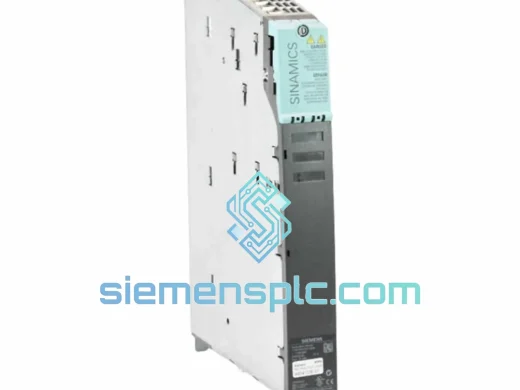
Siemens 6SL3210-1KE18-8UP1 AC Drive Power Module
SINAMICS
Origin DE
AC Drive Power Module
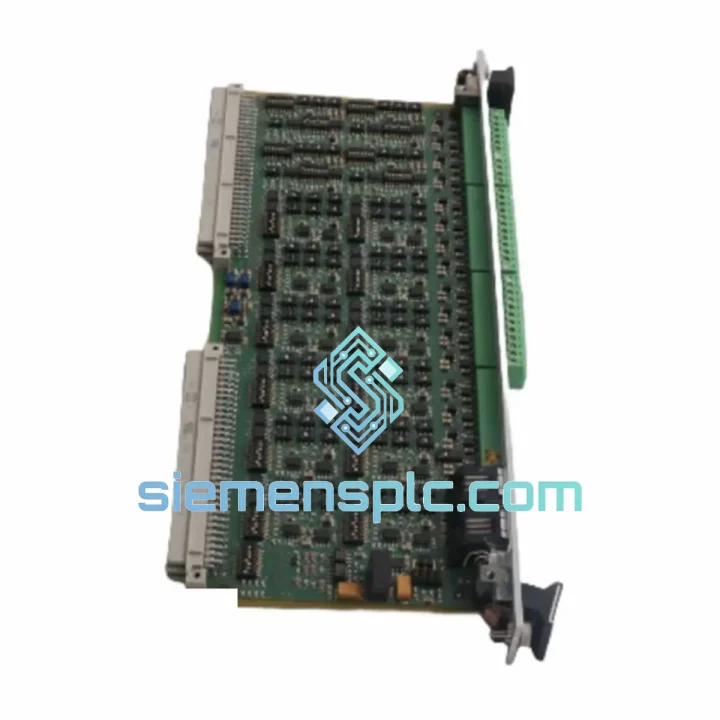
Request verified availability, condition, replacement risk review, packing options and courier lead time for 383VA21N1F.
Click Request Quote and the part number is inserted into the inquiry form automatically.
Core fields for model confirmation and RFQ routing. Detailed product narrative remains below.
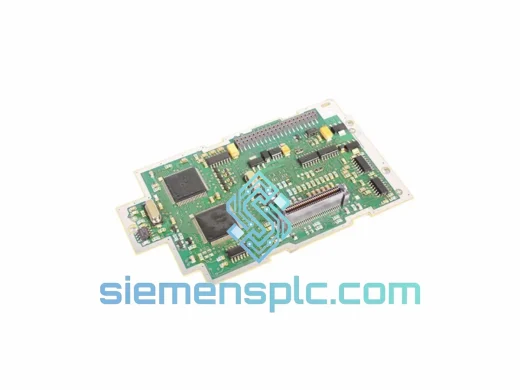
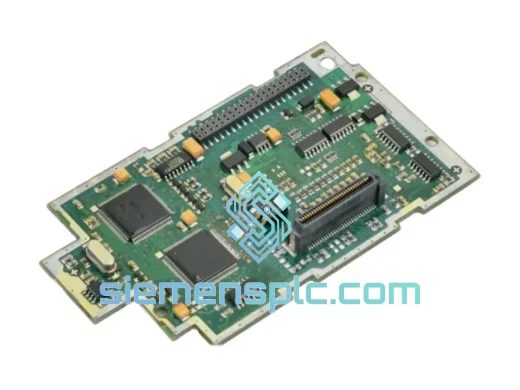
The Siemens 383VA21N1F is a control interface board engineered for deployment within Siemens SINAMICS and MASTERDRIVES variable-speed drive platforms. Its primary function is to serve as the signal-conditioning and communication bridge between the drive’s power electronics stage and the supervisory control layer — whether that layer is a SIMATIC S7 PLC, a PROFIBUS DP master, or a dedicated CNC controller. In closed-loop motion and process control applications, the board handles analog reference signal reception, digital I/O arbitration, and status feedback encoding, all within a deterministic scan cycle that the drive firmware can rely on without introducing latency jitter into the torque or speed regulation loop.
In practical terms, the 383VA21N1F occupies the interface slot of the drive chassis and operates as a real-time translator: it accepts setpoint commands from the fieldbus or hardwired terminals, conditions those signals to the internal drive bus voltage levels, and simultaneously returns diagnostic and operational status data upstream. This bidirectional data path is what allows the drive to participate in coordinated multi-axis motion sequences or process interlocks without requiring external signal conditioning hardware. The board’s onboard isolation circuitry ensures that transient voltages on the field wiring side — common in motor cable environments where dV/dt events can reach several kV/µs — do not propagate into the drive’s logic domain.
The 383VA21N1F is particularly well-suited to retrofit and maintenance scenarios in facilities where the original drive hardware must remain in service beyond its standard product lifecycle. Because the board conforms to the mechanical and electrical interface standard of its host drive family, it can be installed without firmware re-parameterization in most cases, preserving the existing drive configuration and reducing commissioning time to the physical swap and functional verification steps only.
Real-time Stock & RFQ: [email protected] | WhatsApp: +86 18359268345
| Parameter | Specification |
|---|---|
| Part Number | 383VA21N1F |
| Manufacturer | Siemens AG |
| Product Category | Control / Interface Board |
| Compatible Platform | SINAMICS, MASTERDRIVES drive families |
| Fieldbus Interface | PROFIBUS DP / hardwired terminal (platform-dependent) |
| Signal Isolation | Galvanic isolation between field terminals and logic domain |
| Operating Temperature | 0 °C to +55 °C (storage: −25 °C to +70 °C) |
| Humidity (non-condensing) | 5 % to 95 % RH |
| EMC Compliance | EN 61800-3 Category C2 / C3 |
| Mechanical Form Factor | Plug-in board, drive-family slot standard |
| Weight | Approx. 2,140 g (assembled with housing) |
| Country of Origin | Germany |
| Condition | Genuine OEM — New / Tested Surplus |
| Warranty | 12 months from shipment date |
| ESD Packaging | Anti-static bag + moisture barrier + foam-lined carton |
Galvanic Isolation Architecture. The 383VA21N1F implements transformer-coupled galvanic isolation at the boundary between the field terminal block and the board’s internal logic rail. This design choice is not cosmetic — in drive environments where motor cable capacitance and PWM switching events generate common-mode voltages that can exceed 1 kV peak, the isolation barrier prevents ground-loop currents from corrupting the analog reference signals or triggering spurious digital input transitions. The isolation impedance is maintained across the full operating temperature range, which is a non-trivial design constraint given the thermal cycling that occurs during drive load transients.
EMC Filtering on Signal Inputs. Each analog input channel on the board incorporates an RC low-pass filter with a cutoff frequency selected to attenuate switching-frequency interference (typically 2–16 kHz for IGBT-based drives) while preserving the bandwidth required for closed-loop speed or torque reference tracking. The filter components are surface-mounted with short trace lengths to minimize parasitic inductance, and the board layout routes analog and digital signal planes on separate copper layers with a ground plane interposed between them — a standard but correctly executed technique for mixed-signal PCB design in industrial environments.
Backplane Connector and Bus Arbitration. The board connects to the drive’s internal backplane via a high-density edge connector that carries both the low-voltage logic bus and the board’s power supply rails. The connector’s contact geometry is gold-plated to resist fretting corrosion — a failure mode that becomes significant in applications subject to vibration, such as compressor drives or mill motor controllers. The bus arbitration logic on the board ensures that it does not assert its data outputs until the drive firmware has completed its initialization sequence, preventing bus contention during power-up.
Diagnostic Register Architecture. The board exposes a set of status registers accessible via the drive’s internal communication bus. These registers encode fault conditions, signal-out-of-range events, and communication timeout flags in a structured bit-field format that the drive firmware maps directly to its fault code table. This means that a fault originating on the 383VA21N1F is surfaced to the operator panel and the fieldbus master with the same latency as a fault detected in the drive’s own power stage — typically within one firmware scan cycle of the fault condition occurring.
Every Siemens 383VA21N1F unit supplied by siemensplc.com is sourced through verified channels — authorized Siemens distribution, OEM-certified surplus, or factory-tested refurbished stock — and undergoes incoming inspection before dispatch. Inspection covers visual examination of the PCB and connector surfaces, continuity verification of the backplane connector contacts, and where test fixtures are available, functional verification of the board’s signal conditioning and communication paths.
Units are packaged in anti-static ESD bags sealed within moisture-barrier pouches, placed in foam-lined cartons dimensioned to prevent movement during transit. Batch and serial number records are retained for a minimum of three years, supporting quality audit traceability requirements in regulated industries such as power generation, oil and gas, and pharmaceutical manufacturing.
Dispatch is from Xiamen, China, with access to major international express carriers including DHL, FedEx, and UPS, as well as air freight consolidation services for larger orders. Standard express transit times to Europe and North America are 3–5 business days; Southeast Asia and Middle East destinations are typically 2–4 business days. Commercial invoice, packing list, and certificate of conformance are provided with each shipment. Import HS code documentation is available on request to support customs clearance in destination countries.
The 12-month warranty covers defects in materials and workmanship under normal operating conditions. Warranty claims are processed with a target response time of 48 hours from receipt of the defective unit, and replacement units are dispatched from stock where available to minimize production downtime.
Email: [email protected]
WhatsApp: +86 18359268345
Web: siemensplc.com
Location: Xiamen, China
© 2026 siemensplc.com. All rights reserved.
We check the full part number, brand, series and visible nameplate information before quotation.
Sales confirms stock path, condition option, quantity and realistic lead time for export dispatch.
DHL, FedEx, UPS or buyer courier arrangements can be reviewed with packing requirements.
Similar brand or category products for fast comparison and multi-item RFQ lists.