ABB
RFQ Ready
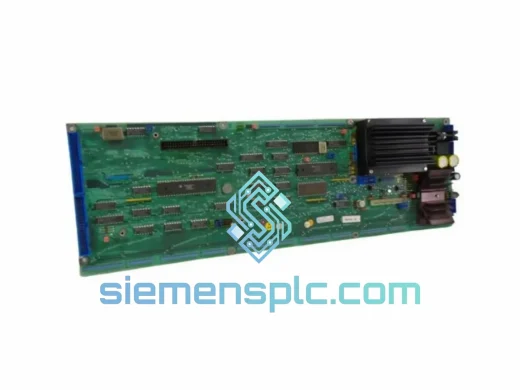
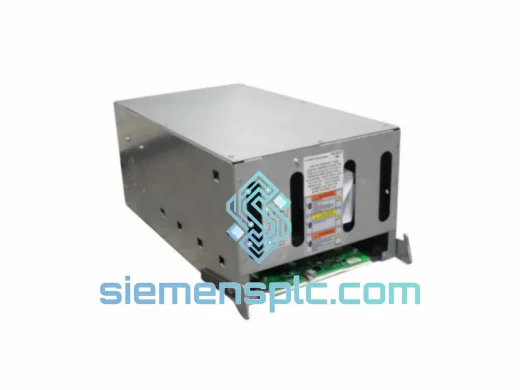
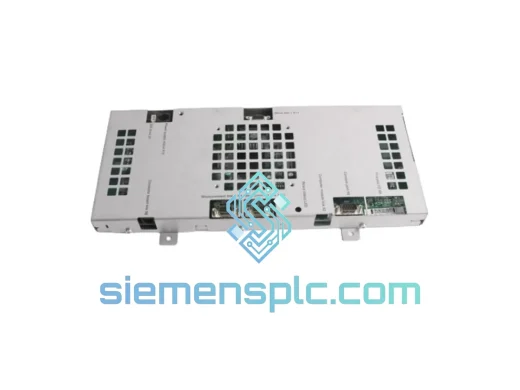
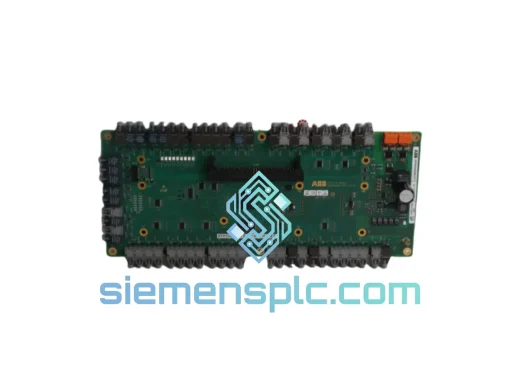
ABB 3BHE024855R0103 UFC921A103 DCS Interface Board
Symphony Plus
Origin SE
DCS Interface Board
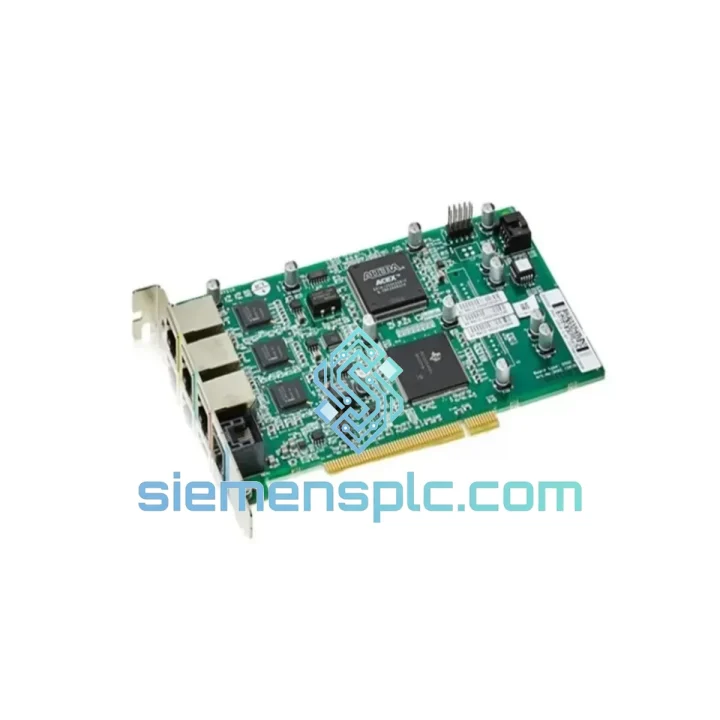
Request verified availability, condition, replacement risk review, packing options and courier lead time for 3BHB002483R0001 USC329AE01.
Click Request Quote and the part number is inserted into the inquiry form automatically.
Core fields for model confirmation and RFQ routing. Detailed product narrative remains below.
A tripped USC329AE01 doesn’t just kill one loop. It severs the operator’s command link to an entire process segment — and in a refinery, power station, or chemical plant running ABB Symphony Plus, that means your team is managing a live process with no feedback and no control authority. The clock starts the moment the fault alarm fires. At $10,000–$50,000 per hour of unplanned downtime in heavy process industries, the cost of waiting for a slow supply chain dwarfs the price of this module many times over.
We maintain verified stock of the ABB 3BHB002483R0001 USC329AE01 in Xiamen, China — not on order, not inbound, physically on the shelf. Our team handles emergency dispatch daily. If your order is confirmed before 14:00 CST, the module leaves the same day via DHL Express or FedEx International Priority. You get the AWB number within two hours of dispatch. That is the only promise that matters when your plant is down.
⚡ URGENT REQUIREMENT?
Contact: [email protected] | WhatsApp: +86 18359268345
| Manufacturer Part No. | 3BHB002483R0001 |
| Module Type Code | USC329AE01 |
| Brand | ABB |
| Platform | Symphony Plus (formerly Harmony) |
| Function | Operator Interface / Control Panel Module |
| Operating Voltage | 24 VDC (bus-powered) |
| Operating Temperature | 0°C to +60°C |
| Storage Temperature | -40°C to +70°C |
| Relative Humidity | 5%–95% RH, non-condensing |
| Communication Bus | Symphony Plus internal control bus |
| Mounting Style | Panel rack / DIN rail compatible |
| Country of Origin | Germany |
| Unit Weight | approx. 300 g |
| Warranty | 12 months from dispatch date |
| Stock Status | ✔ Ready to Ship — Xiamen Warehouse |
Replacing a USC329AE01 under pressure is where mistakes happen. The following sequence is drawn from real field experience — not the manual. Follow it and you avoid the callbacks.
Confirm the fault source before ordering. The USC329AE01 sits at the intersection of the operator display network and the Symphony Plus control bus. Before assuming the panel module is dead, rule out the obvious: check the 24 VDC supply rail feeding the rack, inspect the backplane connector for bent pins or corrosion, and pull the 800xA diagnostic log for the specific node address. Fault codes to look for: Panel Node Unreachable, Communication Timeout on Node [x], or a persistent red LED on the module front face with no self-test recovery after a power cycle. If you see any of these and the supply rail is clean, the module is your culprit.
Node addressing — the step most engineers skip. Legacy Symphony Plus installations migrated from Harmony retain physical DIP switch addressing on the rear PCB of the USC329AE01. Before removing the failed unit, photograph the switch bank. The replacement module ships in factory default state. If your system uses software node assignment via 800xA Hardware Configuration, the address will be pushed automatically on first boot — but if your installation uses hardware addressing, you must set the switches to match before insertion. A node address conflict will cause both the old address and the new module to drop off the bus simultaneously, which is a significantly worse situation than the original fault.
Firmware revision matching. Check the revision label on the failed module before it goes in the bin. The USC329AE01 firmware must be compatible with the AC800M controller firmware revision running in your system. ABB Symphony Plus enforces firmware compatibility checks at startup. A mismatch does not always produce a hard fault — sometimes it produces intermittent communication errors that are far harder to diagnose than a clean no-comms condition. If the replacement unit carries a lower firmware revision than the failed module, contact your ABB system integrator for the appropriate firmware file before commissioning.
Controlled shutdown is mandatory. The USC329AE01 is not a hot-swap module in most Symphony Plus rack configurations. Removing it under live bus conditions risks corrupting the node address table held in the controller’s non-volatile memory. Coordinate with your control room to place the affected segment in manual before pulling the module. This takes three minutes. Recovering a corrupted node table takes three hours.
Post-installation verification checklist:
Common fault codes and their meaning:
The ABB Symphony Plus hardware platform was not designed for a clean, air-conditioned server room. It was designed for the control room adjacent to a crude distillation unit, a gas turbine hall, or a kraft recovery boiler — environments where temperature swings, vibration, humidity, and electrical noise are daily operating conditions, not edge cases.
Mechanical robustness. The USC329AE01 PCB assembly uses conformal coating across all active components and mechanically secured edge connectors. The module is qualified to withstand sinusoidal vibration at 2g across the 10–150 Hz band — the frequency range generated by rotating machinery including centrifugal compressors, turbines, and large pump sets. Installations where the control cabinet is mounted on a mezzanine above rotating equipment are within the module’s design envelope.
Thermal performance. The 0°C to +60°C operating range accommodates the full spectrum of industrial control room conditions, from unheated substations in northern climates to tropical process plants without full HVAC. The module’s thermal design avoids electrolytic capacitors in high-stress positions — a deliberate choice that extends service life in environments with daily temperature cycling, where capacitor degradation is the primary long-term failure mechanism in competing hardware.
Moisture and contamination resistance. Coastal refineries, offshore platforms, and pulp mills operate in sustained high-humidity environments. The conformal coating on the USC329AE01 provides a physical barrier against moisture ingress, preventing the electrochemical migration and leakage currents that cause intermittent faults in unprotected boards. This is not a marketing claim — it is a measurable difference in mean time between failures in humid environments.
EMI/RFI immunity. Variable frequency drives, large motor starters, and arc welding equipment generate conducted and radiated interference that can corrupt data on unshielded control buses. The USC329AE01 meets IEC 61000-4 series immunity requirements across conducted immunity (IEC 61000-4-6), electrostatic discharge (IEC 61000-4-2), and radiated immunity (IEC 61000-4-3) test levels appropriate for industrial environments. Your control bus stays clean even when the plant floor is electrically hostile.
Every unit we dispatch is physically inspected — connectors, housing, PCB, and labeling — before packing. We do not ship modules with damaged connectors or missing labels into emergency replacement situations. If a unit does not pass our pre-dispatch inspection, it does not leave the warehouse.
Our dispatch facility is in Xiamen, Fujian Province — a primary export hub with direct access to international freight lanes operated by DHL Express, FedEx International Priority, and UPS Worldwide Express. Xiamen Gaoqi International Airport handles daily international freight departures to major hub airports in Frankfurt, Dubai, Singapore, Los Angeles, and Hong Kong, giving us same-day or next-flight-out capability for urgent shipments.
Our dispatch process:
Typical door-to-door transit times from Xiamen:
For sites with active production loss, tell us your urgency level when you contact us. We will pre-book freight on the next available departure and provide you with the flight details before the shipment leaves the building. Time-critical shipments are our standard, not our exception.
📧 Email: [email protected]
💬 WhatsApp: +86 18359268345
🌐 Web: siemensplc.com
© 2026 siemensplc.com. All rights reserved.
We check the full part number, brand, series and visible nameplate information before quotation.
Sales confirms stock path, condition option, quantity and realistic lead time for export dispatch.
DHL, FedEx, UPS or buyer courier arrangements can be reviewed with packing requirements.
Similar brand or category products for fast comparison and multi-item RFQ lists.