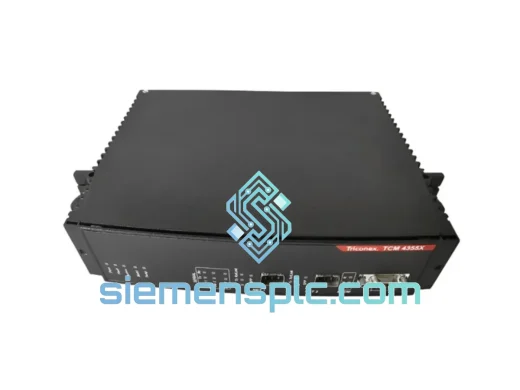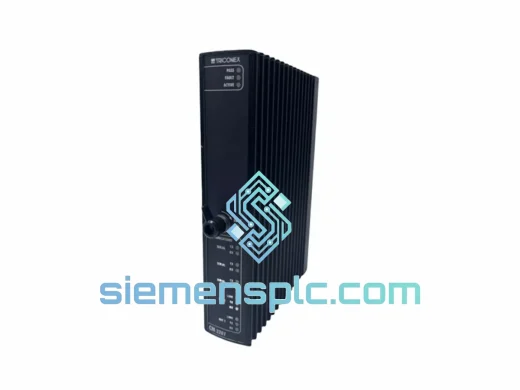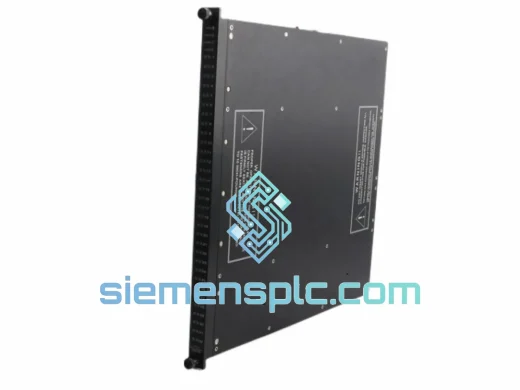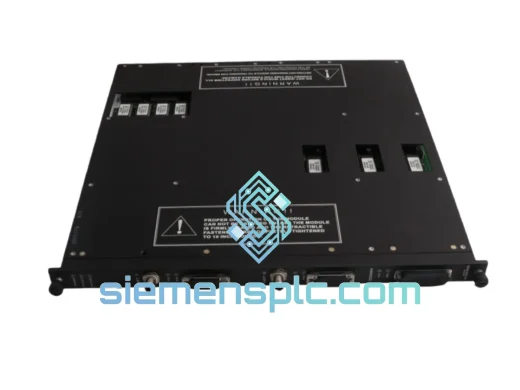
TRICONEX
RFQ Ready
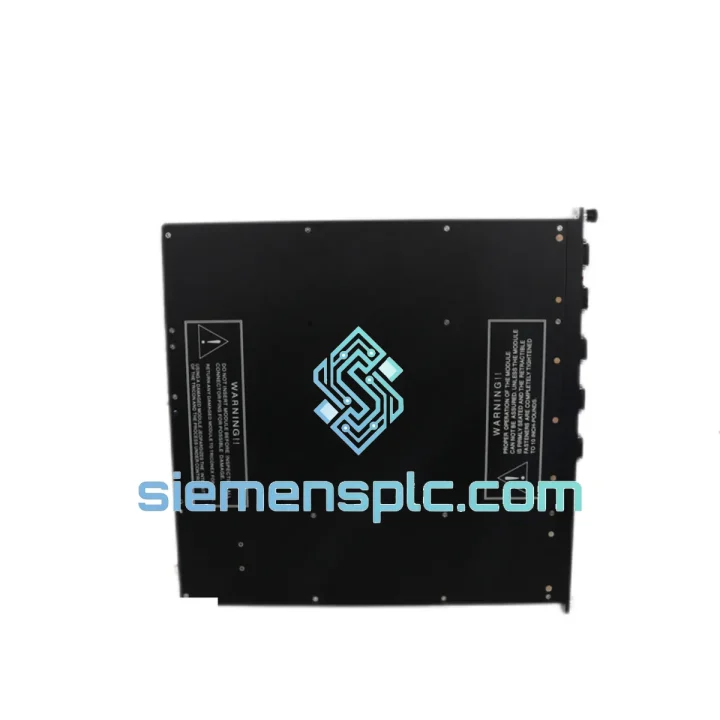
Triconex 4329G Safety Communication Module
Tricon
Origin US
Safety PLC Communication Module
Request verified availability, condition, replacement risk review, packing options and courier lead time for 4351B.
Click Request Quote and the part number is inserted into the inquiry form automatically.
Core fields for model confirmation and RFQ routing. Detailed product narrative remains below.
The TRICONEX 4351B is a dedicated communication module engineered for deployment within the Tricon Triple Modular Redundancy (TMR) safety controller platform. Its primary function within a safety instrumented system (SIS) is to maintain deterministic, high-integrity data exchange between the Tricon main processor and external networks, distributed I/O racks, peer controllers, and supervisory SCADA or DCS layers. In a TMR architecture, communication is not a peripheral concern — it is a structural requirement. The 4351B fulfills this requirement by operating across all three redundant legs of the Tricon backplane simultaneously, ensuring that no single communication path failure can interrupt the safety function.
Within the Tricon control loop, the 4351B sits at the intersection of the safety logic solver and the process field. Every diagnostic message, every process variable update, and every operator command must pass through this module with sub-millisecond determinism. The module’s internal arbitration logic continuously compares data frames across the three TMR channels, applying a 2-out-of-3 (2oo3) voting mechanism to detect and isolate corrupted or delayed data before it reaches the main processor. This hardware-level fault detection — not software polling — is what allows the Tricon platform to maintain SIL 3 integrity even under active communication faults.
The 4351B supports the Tricon Enhanced Intelligent Bus (EICB) backplane protocol, which provides a dedicated, time-slotted communication channel between modules. Unlike shared-bus architectures where communication contention can introduce latency jitter, the EICB assigns fixed time slots to each module, guaranteeing bounded worst-case response times. This is a critical design parameter for safety loops with tight process safety time (PST) requirements, such as high-integrity pressure protection systems (HIPPS) or emergency shutdown (ESD) valves where actuation must occur within defined millisecond windows.
Real-time Stock & RFQ: [email protected] | WhatsApp: +86 18359268345
| Parameter | Specification |
|---|---|
| Part Number / SKU | 4351B |
| Manufacturer | TRICONEX (Schneider Electric) |
| Platform | Tricon Triple Modular Redundancy (TMR) Safety System |
| Module Category | Communication Module |
| Backplane Interface | Enhanced Intelligent Communication Bus (EICB) |
| Redundancy Architecture | Triple Modular Redundancy (TMR) — 2oo3 voting |
| Safety Integrity Level | SIL 3 (IEC 61508 / IEC 61511 certified platform) |
| Operating Temperature | 0°C to +60°C (32°F to 140°F) |
| Storage Temperature | -40°C to +85°C |
| Relative Humidity | 5% to 95% non-condensing |
| Power Consumption | Per Tricon chassis power budget — consult system datasheet |
| EMC Compliance | IEC 61000-4 series (ESD, EFT, surge, conducted/radiated immunity) |
| Vibration Resistance | IEC 60068-2-6 (sinusoidal), IEC 60068-2-64 (random) |
| Shock Resistance | IEC 60068-2-27 |
| Chassis Compatibility | Tricon 7-slot and 15-slot main chassis |
| Hot-Swap Support | Yes — online module replacement without system shutdown |
| Diagnostic Coverage | Continuous self-test with fault annunciation to main processor |
| Weight | Approx. 2,900 g (module with housing) |
| Country of Origin | United States |
| Warranty | 12 months from date of shipment (siemensplc.com standard terms) |
The 4351B’s internal architecture reflects the fundamental design philosophy of the Tricon platform: fault tolerance must be implemented at the hardware layer, not compensated for at the software layer. Three independent communication sub-circuits — one per TMR leg — operate in parallel. Each sub-circuit maintains its own clock domain, data buffer, and error-detection logic. A dedicated hardware comparator block continuously cross-checks the output of all three sub-circuits on a frame-by-frame basis. When a discrepancy is detected in any single leg, the comparator isolates that leg from the voted output without interrupting data flow on the remaining two legs. This isolation occurs in hardware within microseconds, well below the threshold that would affect process safety time calculations.
The module’s EMC design addresses the harsh electromagnetic environment typical of oil and gas processing facilities and heavy industrial plants. The PCB layout employs a multi-layer ground plane strategy that provides a low-impedance return path for high-frequency transients, suppressing common-mode noise before it can couple into signal traces. Differential signaling is used on all inter-module communication lines, providing inherent rejection of common-mode interference. Transient voltage suppression (TVS) diodes are placed at all external interface points, clamping surge voltages to safe levels within nanoseconds — a critical protection mechanism in environments where switching of large inductive loads generates repetitive transient events.
The EICB backplane protocol implemented by the 4351B uses time-division multiplexing (TDM) with a fixed scan cycle. Each module slot is allocated a deterministic time window for data transmission, eliminating the possibility of bus contention or priority inversion that can occur in event-driven communication architectures. The protocol includes CRC-based frame integrity checking on every transmission, with automatic retransmission requests for frames that fail the integrity check. At the system level, this means that the communication latency seen by the main processor is bounded and predictable — a property that is essential for accurate process safety time analysis under IEC 61511.
Thermal management within the 4351B is handled through a combination of component selection and PCB thermal design. Power-dissipating components are mounted with thermal interface materials to the module’s aluminum housing, which acts as a passive heat spreader. The housing geometry is designed to promote natural convection airflow through the Tricon chassis, maintaining junction temperatures within rated limits at the maximum specified ambient of 60°C. This passive thermal approach eliminates the reliability risk associated with active cooling components such as fans, which have finite mechanical lifetimes and can introduce vibration into sensitive electronic assemblies.
Every TRICONEX 4351B unit supplied by siemensplc.com is sourced as genuine original equipment. Prior to dispatch, each module undergoes a structured inspection protocol: visual examination of the PCB, connector pins, and module housing for physical damage or evidence of counterfeit markings; verification of label authenticity against known TRICONEX part marking standards; and functional bench testing where applicable to confirm basic communication interface operation. Modules that do not pass inspection are quarantined and not offered for sale.
Shipping operations are managed from Xiamen, China — a major logistics hub with direct access to international air freight and sea freight services. Standard export documentation, including commercial invoice, packing list, and certificate of origin, is prepared for every shipment. For customers in regulated industries requiring additional documentation, test records and sourcing traceability documents are available upon request. Anti-static packaging with foam cushioning is used for all electronic modules to prevent electrostatic discharge (ESD) damage and mechanical shock during transit. Shipments are dispatched within 1–3 business days of order confirmation, with tracking information provided at the time of dispatch. Delivery to major industrial centers in Europe, the Middle East, Southeast Asia, and the Americas is typically achieved within 3–7 business days via express air freight.
All modules are covered by a 12-month warranty from the date of shipment. Warranty claims are handled directly by the siemensplc.com technical team, with replacement or credit issued upon verification of the reported fault. For safety-critical applications, customers are advised to retain the original packaging and documentation for the warranty period.
Email: [email protected]
WhatsApp: +86 18359268345
Web: siemensplc.com
Location: Xiamen, China
© 2026 siemensplc.com. All rights reserved.
We check the full part number, brand, series and visible nameplate information before quotation.
Sales confirms stock path, condition option, quantity and realistic lead time for export dispatch.
DHL, FedEx, UPS or buyer courier arrangements can be reviewed with packing requirements.
Similar brand or category products for fast comparison and multi-item RFQ lists.