Reliance Electric
RFQ Ready
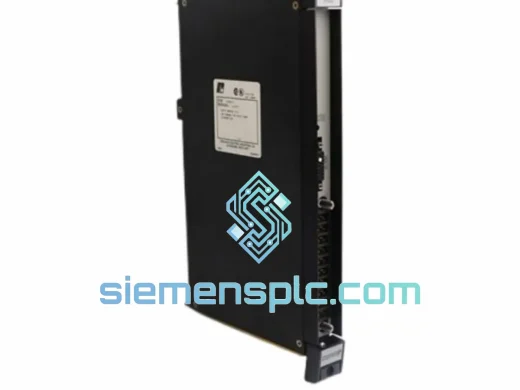
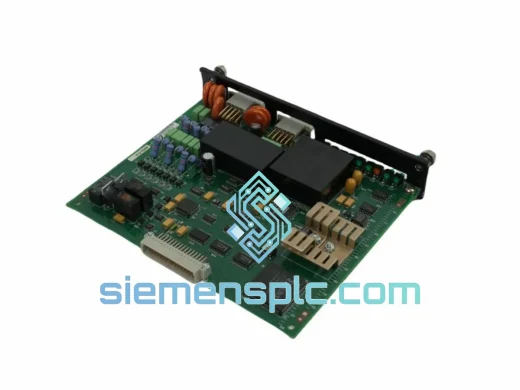
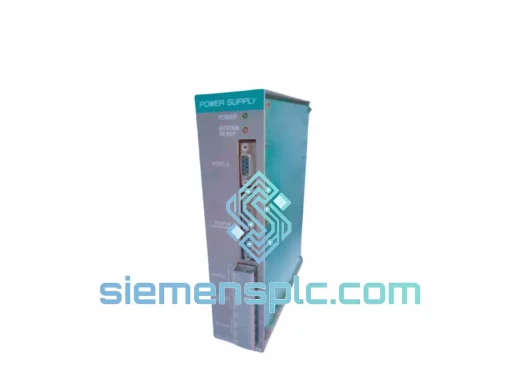
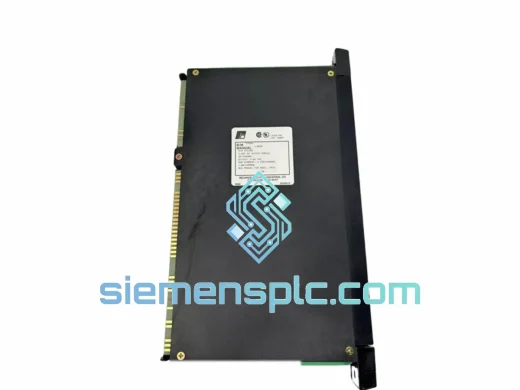
Reliance Electric 57C420 Digital Output Module
AutoMax
Origin US
Digital Output Module
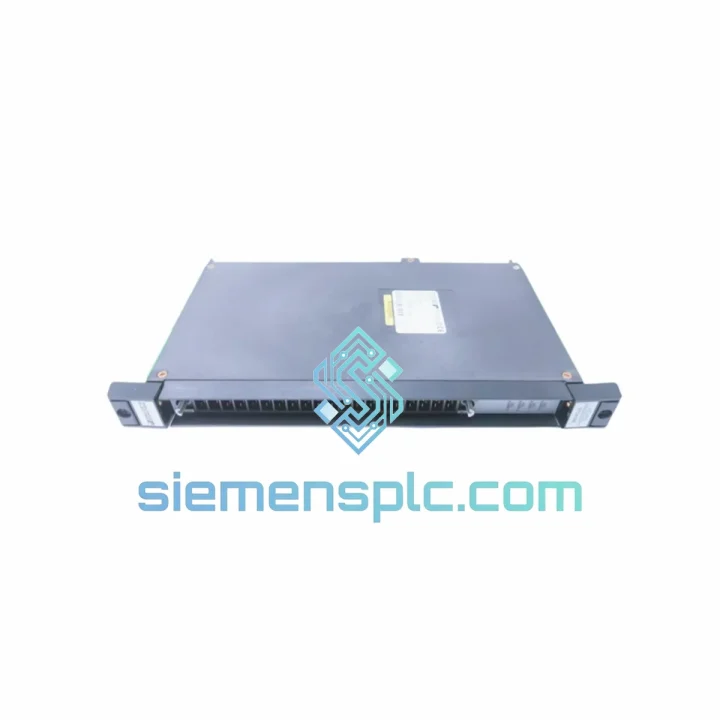
Request verified availability, condition, replacement risk review, packing options and courier lead time for 57C410A.
Click Request Quote and the part number is inserted into the inquiry form automatically.
Core fields for model confirmation and RFQ routing. Detailed product narrative remains below.
The 57C410A occupies a structurally critical position within the Reliance Electric AutoMax Distributed Control System: it is the terminal hardware layer between the controller’s deterministic scan engine and the physical field devices — contactors, solenoid valves, relay coils, and indicator loads — that execute process commands. Understanding its internal architecture is prerequisite to making sound procurement and lifecycle decisions for any AutoMax-based installation.
AutoMax was engineered as a rack-based, deterministic DCS platform for continuous-process and heavy-discrete industries. Its I/O bus operates on a fixed-cycle polling architecture, meaning the controller writes output states to each I/O module’s register at a defined scan interval. The 57C410A receives these register writes, latches the output states, and drives the corresponding field-side channels through its output stage. This architecture eliminates the asynchronous output jitter that plagues non-deterministic fieldbus implementations — a property that matters in applications such as rolling mill sequencing, winder tension control, and furnace zone switching, where output timing directly affects product quality and equipment safety.
Real-time Stock & RFQ: [email protected] | WhatsApp: +86 18359268345
| Part Number | 57C410A |
| Manufacturer | Reliance Electric (legacy brand, now Rockwell Automation heritage) |
| Module Classification | Digital Output Module |
| Platform | AutoMax DCS I/O Rack Family |
| Output Channel Type | Discrete digital (solid-state or relay output — confirm channel spec at inquiry) |
| Field-Side Isolation | Optical isolation barrier between logic backplane and field terminals |
| Backplane Interface | AutoMax proprietary I/O bus (fixed-cycle polling) |
| Form Factor | AutoMax rack-mount card, slot-keyed for I/O rack compatibility |
| Operating Temperature | 0 °C to +60 °C (per AutoMax platform specification) |
| Storage Temperature | -40 °C to +85 °C |
| Relative Humidity | 5% to 95% non-condensing |
| Weight | 920 g (approximate) |
| Country of Origin | United States |
| Condition Available | New surplus / Refurbished / Tested used (specify at inquiry) |
| Lead Time | In-stock units: 1–3 business days. Sourced units: 5–15 business days depending on global availability. Expedited options available — contact us directly. |
| Warranty | 12 months from date of shipment (siemensplc.com standard) |
| Documentation | OEM datasheet, wiring diagram, and certificate of conformance available on request |
The 57C410A’s internal design reflects the engineering philosophy of the AutoMax platform: prioritize determinism, field isolation, and long-term maintainability over feature density.
Optical Isolation Architecture: Each output channel group is separated from the logic-side backplane by an optocoupler stage. This galvanic isolation barrier serves two functions: it prevents field-side transients — inductive kickback from contactor coils, ground potential differences between field cabinets, and capacitive coupling from long cable runs — from propagating into the AutoMax backplane; and it allows the field-side wiring to operate at a different reference potential than the controller logic supply. In heavy industrial environments where field wiring may run hundreds of meters through electrically noisy cable trays, this isolation margin is not a design luxury — it is a reliability prerequisite.
Output Driver Stage: The output driver stage converts the logic-level signal from the optocoupler into a field-capable switching signal. Depending on the specific channel configuration of the 57C410A, this stage may employ solid-state switching (TRIAC or transistor output) or relay contact output. Solid-state outputs offer faster switching response and longer mechanical life; relay outputs provide true galvanic isolation at the contact level and compatibility with a wider range of field voltages. The driver stage includes transient suppression components to clamp inductive load kickback within the module, reducing stress on the optocoupler and extending module service life.
EMC Design Considerations: The PCB layout of AutoMax I/O modules follows a partitioned ground plane strategy: the logic-side ground (tied to the backplane reference) and the field-side ground (tied to the field terminal common) are physically separated on the board, with the isolation barrier crossing the partition boundary. This layout minimizes common-impedance coupling between the two domains. The card edge connector and backplane interface are designed to maintain signal integrity across the AutoMax I/O bus even in environments with significant conducted and radiated EMI — a design requirement for steel mill and mining applications where variable-frequency drives and large motor starters generate substantial electromagnetic interference.
Register Latch Mechanism: The 57C410A holds its output states in a local register that is updated by the controller during each scan cycle write. If the AutoMax controller detects a communication fault on the I/O bus, the module’s output behavior (hold last state vs. de-energize all outputs) is governed by the fault mode configuration set during system commissioning. This deterministic fault response is a key safety feature in process applications where uncontrolled output state changes during a controller fault could trigger hazardous conditions.
Every 57C410A unit processed through siemensplc.com undergoes a structured incoming inspection before dispatch. Visual inspection covers PCB condition, connector integrity, component markings, and housing for physical damage or counterfeit indicators. Label and date code verification cross-references the unit against known-good reference data for the 57C410A revision. Where test equipment is available, functional bench testing verifies power-on behavior and output channel response prior to shipment.
Units are shipped in anti-static bags with foam cushioning inside rigid outer cartons. Desiccant packs are included for ocean freight shipments. Original OEM packaging is preserved where available. A certificate of conformance and incoming inspection report are available on request for quality-critical procurement programs.
Logistics operations are based in Xiamen, China — a designated free-trade zone and one of China’s primary international cargo hubs. Xiamen Gaoqi International Airport handles direct freight connections to major hubs in Europe, North America, Southeast Asia, and the Middle East. Xiamen Port provides sea freight access for bulk or pallet shipments. Standard express shipments via DHL, FedEx, and UPS typically reach North American and European destinations within 3–5 business days from dispatch. Export documentation, commercial invoices, and customs declarations are prepared in compliance with Xiamen Customs regulations. Multi-currency payment is supported: USD, EUR, HKD, and CNY accepted via T/T bank transfer and major payment platforms.
Email: [email protected]
WhatsApp: +86 18359268345
Web: siemensplc.com
Location: Xiamen, China
© 2026 siemensplc.com. All rights reserved.
We check the full part number, brand, series and visible nameplate information before quotation.
Sales confirms stock path, condition option, quantity and realistic lead time for export dispatch.
DHL, FedEx, UPS or buyer courier arrangements can be reviewed with packing requirements.
Similar brand or category products for fast comparison and multi-item RFQ lists.