
Siemens
In Stock OK
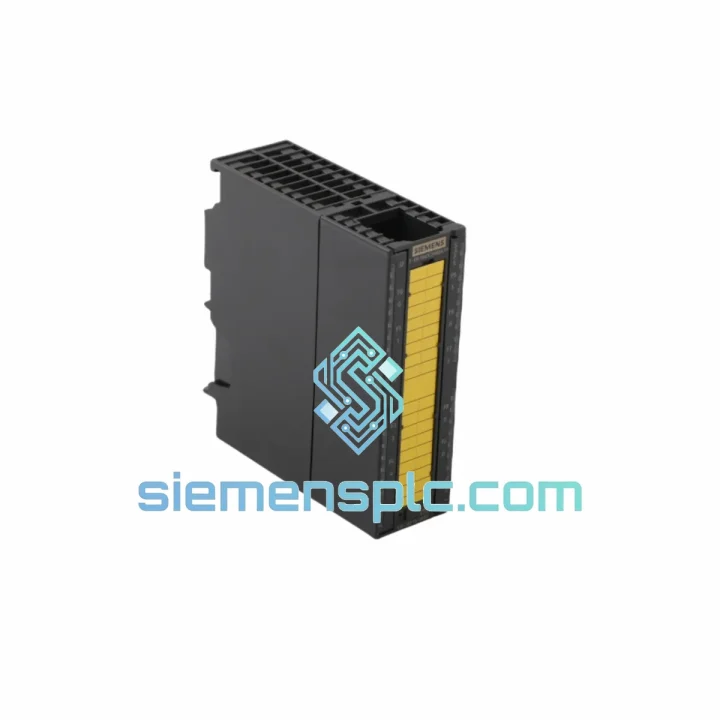
Siemens 6ES7326-2BF10-0AB0 Safety Digital Output Module – SM 326 F-DO
Request verified availability, condition, replacement risk review, packing options and courier lead time for 6ES7326-2BF10-0AB0.
BrandSiemens
Part Number6ES7326-2BF10-0AB0
ConditionAvailability Check
Lead TimeRFQ Confirmation
DocumentsDatasheet / photos by RFQ
ShippingExport packing available
Auto-filled RFQ
6ES7326-2BF10-0AB0
Click Request Quote and the part number is inserted into the inquiry form automatically.
- Reply by email: [email protected]
- WhatsApp / Tel: +86 18359268345
- Mon-Sat 9:00-18:00 GMT+8
Procurement Data
Key Product Information
Core fields for model confirmation and RFQ routing. Detailed product narrative remains below.
- Brand
- Siemens
- Primary Part Number
- 6ES7326-2BF10-0AB0
- Product Type
- Safety Digital Output Module
- Series / Family
- SIMATIC S7-300
- Country of Origin
- DE
- Catalog Category
- I/O Modules
- Operating Temp.
- 0 °C to +60 °C
- Warranty
- 12 months from date of shipment
Model confirmed for inquiry
6ES7326-2BF10-0AB0
Send quantity, destination and urgency. The RFQ form keeps this part number attached.
Request Quote
Product Overview
Siemens 6ES7326-2BF10-0AB0 SM 326 F-DO 8×24VDC/2A — Fail-Safe Output Stage for Safety-Critical Actuator Control
The 6ES7326-2BF10-0AB0 is a fail-safe digital output module (F-DO) belonging to the SM 326 family within Siemens SIMATIC S7-300 Safety Integrated. Its primary function in a safety control loop is to serve as the final command element between the F-CPU’s certified logic solver and field-level actuators — solenoid valves, contactors, safety relays, and motor starters — that must reach a defined safe state within a deterministic reaction time. Unlike standard digital output modules, the SM 326 F-DO participates actively in the safety function: it validates every output frame received over the backplane, monitors each channel’s electrical state against the commanded state, and autonomously forces all outputs to de-energized (safe) condition upon detection of any discrepancy, communication timeout, or internal hardware fault.
In process safety architectures governed by IEC 61511 and machine safety designs governed by ISO 13849-1, the output module is the most failure-consequential element in the safety instrumented function (SIF). The 6ES7326-2BF10-0AB0 addresses this by implementing dual-channel output driver topology with cross-monitoring, achieving a hardware fault tolerance of HFT = 1 and a safe failure fraction (SFF) that supports SIL 3 deployment in a single module without external redundancy hardware. For procurement engineers specifying safety output stages in chemical, oil & gas, power generation, automotive, and pharmaceutical facilities, this module eliminates the interposing relay tier that older architectures required, reducing panel footprint, wiring complexity, and potential failure points simultaneously.
Real-time Stock & RFQ: [email protected] | WhatsApp: +86 18359268345
Technical Parameters
| Order Number (MLFB) | 6ES7326-2BF10-0AB0 |
| Module Family | SM 326 F-DO, SIMATIC S7-300 Safety Integrated |
| Module Type | Fail-Safe Digital Output (F-DO) |
| Number of Output Channels | 8 (independently monitored) |
| Output Voltage | 24 VDC |
| Rated Output Current per Channel | 2 A |
| Aggregate Output Current (all 8 ch.) | 8 A max |
| Load Voltage Range (L+) | 20.4 – 28.8 VDC |
| Current Consumption from Backplane Bus | ≤ 100 mA at 5 VDC |
| Power Dissipation (typical) | 3.5 W |
| Short-Circuit Protection | Electronic, per channel; auto-reset after fault clearance |
| Overload Protection | Electronic current limiting per channel |
| Safety Integrity Level | SIL 3 per IEC 61508 / IEC 61511 |
| Performance Level | PL e per ISO 13849-1 |
| Safety Category (EN 954-1) | Category 4 |
| Hardware Fault Tolerance (HFT) | 1 (dual-channel internal architecture) |
| Backplane Bus Protocol | S7-300 backplane with PROFIsafe safety layer |
| Compatible F-CPUs | CPU 315F-2 PN/DP, CPU 317F-2 PN/DP, CPU 319F-3 PN/DP |
| Engineering Software | STEP 7 Safety Advanced V5.5+; TIA Portal Safety Advanced V13 SP2+ |
| Dimensions (W × H × D) | 40 × 125 × 120 mm |
| Weight | Approx. 320 g |
| Operating Temperature | 0 °C to +60 °C |
| Storage Temperature | −40 °C to +70 °C |
| Degree of Protection | IP 20 |
| Certifications | CE, UL, cUL, FM, ATEX Zone 2 |
| Country of Manufacture | Germany |
| Warranty | 12 months from date of shipment |
Hardware Logical Analysis
The internal architecture of the 6ES7326-2BF10-0AB0 is built around a dual-channel output driver topology. Each of the eight output channels is controlled by two independent semiconductor switches arranged in series — a configuration that ensures no single component failure can produce an unintended energized output. The two switch controllers are driven by separate microcontrollers within the module, each executing an independent watchdog cycle. Both controllers must agree on the commanded output state before either switch is permitted to close. This cross-comparison logic is the hardware implementation of the HFT = 1 requirement under IEC 61508.
EMC Design: The module’s output stage incorporates transient voltage suppression (TVS) diodes on each channel terminal, rated to clamp inductive load kickback from solenoid coils and contactor coils. The backplane interface uses optocoupler isolation between the 5 VDC backplane domain and the 24 VDC load domain, providing galvanic separation that prevents ground-loop interference from propagating into the F-CPU’s logic circuits. The PCB layout routes high-current output traces on the bottom copper layer, physically separated from the signal and communication traces on the top layer, reducing capacitive coupling between power and logic domains.
Watchdog and F-Monitoring Time: The module maintains an internal F-monitoring timer that is reset by each valid PROFIsafe frame received from the F-CPU. The F-monitoring time is configurable in STEP 7 Safety / TIA Portal Safety within the range defined by Siemens’ safety manual. If the timer expires — due to CPU fault, backplane communication error, or cable disconnection — the module’s output controllers independently force all channels to the de-energized state without waiting for a CPU command. This autonomous safe-state response is a hardware-level behavior, not a software routine, ensuring it executes even if the F-CPU’s operating system has faulted.
Channel-Level Diagnostics: Each output channel includes a feedback measurement circuit that reads the actual terminal voltage and compares it against the commanded state. A commanded ON channel that reads 0 V indicates a wire break or blown load fuse; a commanded OFF channel that reads 24 V indicates a welded switch or external voltage backfeed. Both conditions are classified as discrepancies, logged in the module’s diagnostic buffer, and reported to the F-CPU via the PROFIsafe data frame’s status bits. The F-CPU then executes the configured F-program response — typically passivating the affected channel and triggering an alarm in the HMI.
Redundancy Arbitration: In 1oo2 (one-out-of-two) redundant F-CPU configurations, two F-CPUs may address the same SM 326 F-DO module. The module’s backplane interface includes arbitration logic that accepts output frames from the active F-CPU and ignores frames from the standby CPU, preventing output contention. Switchover from active to standby F-CPU is transparent to the module’s output state, provided the switchover completes within the F-monitoring time window.
System Integration Benefits
- Elimination of Interposing Relay Panels: The 2 A per-channel rating is sufficient to drive the coils of most industrial contactors and solenoid valves directly, removing an entire tier of relay hardware from the safety loop. This reduces the bill of materials, eliminates relay contact wear as a failure mode, and decreases panel wiring density.
- Deterministic Safety Reaction Time: The combination of PROFIsafe frame-level CRC validation and the module’s autonomous watchdog ensures that the worst-case output response time from F-CPU fault detection to actuator de-energization is bounded and calculable for SIL verification reports. Engineers can use Siemens’ published PFHD values directly in SISTEMA or equivalent SIL calculation tools.
- Channel-Granular Diagnostic Transparency: Fault isolation is reported at the individual channel level, not at the module level. Maintenance personnel can identify a single failed output channel without shutting down the entire module or the associated F-CPU, enabling partial production continuity during fault investigation.
- Unified Engineering Environment: The module is parameterized entirely within STEP 7 Safety Advanced or TIA Portal Safety Advanced. No separate safety configuration tool, no proprietary handheld programmer, and no additional license beyond the standard Safety Advanced package is required. F-parameters are stored in the F-CPU and automatically downloaded to a replacement module during the acceptance test procedure.
- Hot-Swap Module Replacement: With appropriate F-CPU firmware versions, the SM 326 F-DO supports module replacement under power. The replacement module enters passivated state upon insertion, awaits the acceptance test confirmation from the operator via HMI or STEP 7, and then resumes normal safety operation. Downtime for module replacement is reduced to the duration of the acceptance test, typically under five minutes.
- ATEX Zone 2 Certification: The module carries ATEX certification for use in Zone 2 explosive atmospheres when installed in an appropriately rated enclosure. This extends the S7-300 F platform’s applicability to upstream oil & gas wellhead control panels and chemical plant junction boxes without requiring a separate Ex-rated output relay barrier.
- Scalable Safety Architecture: Multiple SM 326 F-DO modules can be installed in the same S7-300 rack alongside standard I/O modules and communication processors. The F-CPU manages both safety and standard I/O within a single rack, reducing the number of control cabinets required in a safety system and simplifying the overall system architecture.
- Long-Term Spare Parts Availability: The SIMATIC S7-300 platform has an established installed base across global process industries. Siemens maintains spare parts availability commitments for S7-300 hardware, and the 6ES7326-2BF10-0AB0 is stocked by authorized distributors worldwide, including siemensplc.com, ensuring replacement units are accessible without extended lead times during unplanned maintenance events.
Quality Assurance & Global Logistics
Every 6ES7326-2BF10-0AB0 unit supplied by siemensplc.com is sourced as genuine Siemens OEM hardware, manufactured at Siemens’ production facilities in Germany. Each module carries a factory-assigned serial number traceable through Siemens’ production records. Units are shipped in original Siemens anti-static packaging with tamper-evident seals intact. Batch certificates and factory test documentation are available upon request for customers with incoming inspection requirements.
Prior to dispatch, each unit undergoes a functional verification check on an in-house SIMATIC S7-300 test rack: backplane communication is confirmed, all eight output channels are exercised under resistive load, and the module’s diagnostic response to a simulated channel fault is verified. Units that do not pass this check are quarantined and not shipped.
Shipments originate from Xiamen, China, via DHL Express, FedEx International Priority, or UPS Worldwide Express, depending on destination and customer preference. Standard transit times are 3–5 business days to Europe and North America, 2–4 business days to Southeast Asia, and 5–7 business days to the Middle East and South America. All shipments include a commercial invoice, packing list, and certificate of origin. Export classification is confirmed prior to shipment; ECCN documentation is provided for customers in jurisdictions requiring import pre-clearance. A 12-month warranty from the date of shipment covers manufacturing defects and confirmed hardware failures under normal operating conditions.
Contact Information
Email: [email protected]
WhatsApp: +86 18359268345
Web: siemensplc.com
Location: Xiamen, China
© 2026 siemensplc.com. All rights reserved.
Ready to quote
[email protected]
Send This Part Number to Sales
RFQ workflow
Quality workflow ->
Confirmation Process
01Model confirmation
We check the full part number, brand, series and visible nameplate information before quotation.
02Availability reply
Sales confirms stock path, condition option, quantity and realistic lead time for export dispatch.
03Packing & courier
DHL, FedEx, UPS or buyer courier arrangements can be reviewed with packing requirements.
Continue sourcing
Browse full catalog ->
Related Automation Parts
Similar brand or category products for fast comparison and multi-item RFQ lists.
Siemens
RFQ Ready
Siemens 6ES7 315-2EH14-0AB0 CPU 315-2 PN/DP Module
SIMATIC S7-300
Origin DE
PLC CPU Module
Siemens
RFQ Ready
Siemens 6ES7315-2EH14-0AB0 CPU 315-2 PN/DP PLC Module
SIMATIC S7-300
Origin DE
PLC CPU Module
Siemens
RFQ Ready
Siemens 6ES7 321-1BL00-0AA0 Digital Input Module
SIMATIC S7-300
Origin DE
PLC Digital Input Module