Emerson
RFQ Ready
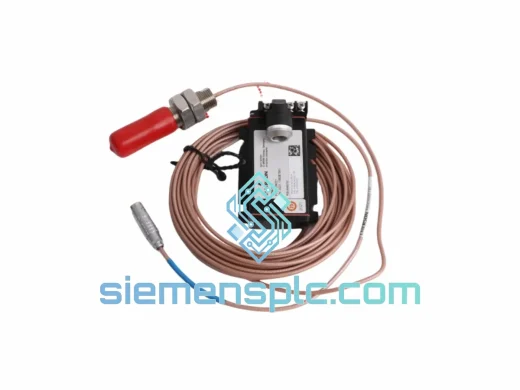
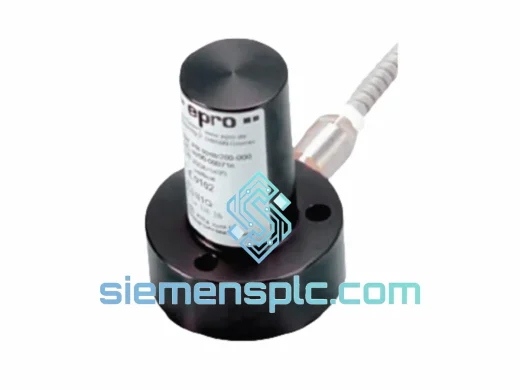
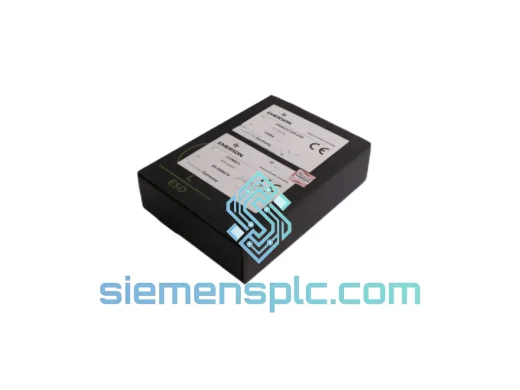
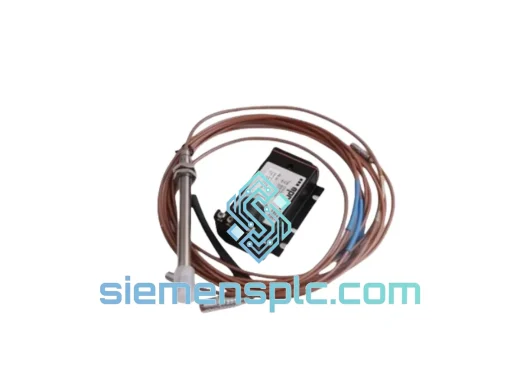
EMERSON PR6424/000-000 CON021 Eddy Current Sensor
Bently Nevada 3500 Series
Origin US
Eddy Current Proximity Sensor
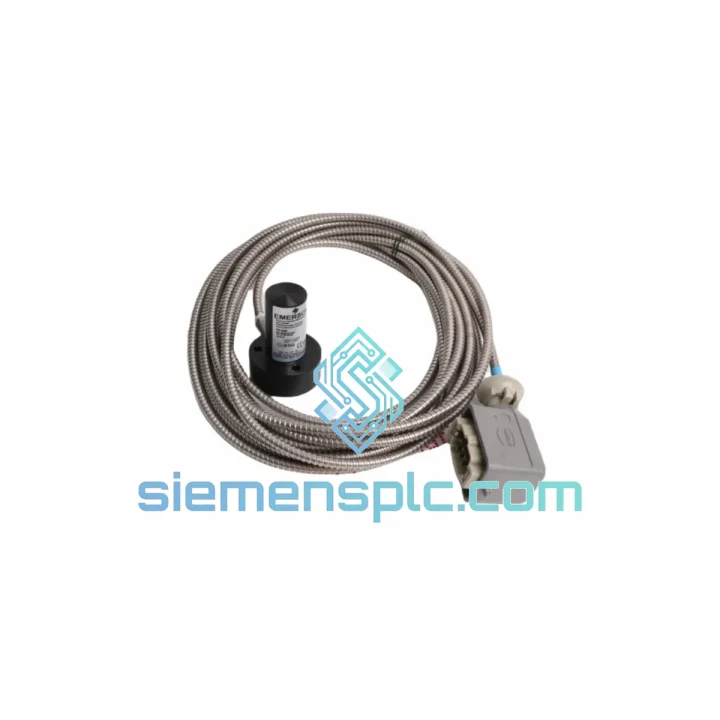
Request verified availability, condition, replacement risk review, packing options and courier lead time for PR9268/201-100.
Click Request Quote and the part number is inserted into the inquiry form automatically.
Core fields for model confirmation and RFQ routing. Detailed product narrative remains below.
The EMERSON PR9268/201-100 is a non-contact eddy-current proximity transducer produced under the Bently Nevada instrumentation portfolio, a division of EMERSON Automation Solutions. Its primary function within a rotating machinery protection architecture is to convert mechanical shaft displacement into a proportional, low-impedance DC voltage signal that feeds directly into a Proximitor® oscillator-demodulator module and, subsequently, into a 3500 Series or 3300 XL monitoring rack. The transducer operates continuously without physical contact with the rotating target, eliminating wear-related drift and enabling indefinite service life under normal operating conditions.
The part number suffix encodes two independent configuration parameters. The /201 designator specifies the probe body geometry and integral cable assembly: a standard 8 mm tip-diameter probe body with a 1-meter armored coaxial cable terminated at the probe-to-extension connector. The /100 designator defines the calibrated linear sensing range as 100 mil (2.54 mm), with the nominal operating gap centered at approximately −10.0 VDC output when powered by a −24 VDC Proximitor supply. The scale factor across this range is 200 mV/mil (7.87 V/mm), consistent with the Bently Nevada standard calibration used across the 3300 and 3500 platform families.
In a typical steam turbine, gas turbine, or centrifugal compressor train, the PR9268/201-100 is installed in a radial or axial orientation within a proximity probe bracket, observing the polished journal surface of the rotating shaft. The transducer output encodes both the static DC component — representing shaft centerline position relative to the bearing housing — and the dynamic AC component representing shaft vibration amplitude and frequency content. A single measurement channel therefore supports both position monitoring (e.g., detecting bearing wear or thermal bow) and vibration analysis (e.g., identifying sub-synchronous instability, synchronous imbalance, or blade-pass excitation) without additional transducers or signal conditioning hardware.
The frequency response of the PR9268/201-100 is flat from DC to 10,000 Hz (±3 dB), which is sufficient to resolve sub-synchronous phenomena at 0.43–0.48× running speed (oil whirl), synchronous response at 1×, and higher-order harmonics through at least the 10th order at 1,000 RPM — or through the 3rd order at 3,000 RPM — within a single channel. This bandwidth characteristic is a direct consequence of the eddy-current measurement principle: the carrier frequency generated by the Proximitor oscillator (nominally 1.0–1.5 MHz) is orders of magnitude above the mechanical frequencies of interest, so the demodulated output faithfully tracks shaft motion without phase lag or amplitude attenuation within the rated bandwidth.
The probe body is rated to IP67, providing complete protection against dust ingress and temporary immersion, which is relevant in bearing housing environments where oil mist, steam condensate, and periodic washdown are routine. The operating temperature range of −35°C to +177°C covers the full envelope of bearing housing temperatures encountered in both cryogenic service compressors and high-temperature steam turbine applications.
Real-time Stock & RFQ: [email protected] | WhatsApp: +86 18359268345
| Parameter | Specification |
|---|---|
| Part Number | PR9268/201-100 |
| Manufacturer | EMERSON (Bently Nevada) |
| Series | PR9268 |
| Transducer Type | Eddy-Current Non-Contact Proximity Probe |
| Calibrated Sensing Range | 100 mil (2.54 mm) |
| Scale Factor | 200 mV/mil (7.87 V/mm) nominal |
| Nominal Gap Voltage (mid-range) | −10.0 VDC |
| Frequency Response | DC to 10,000 Hz (±3 dB) |
| Supply Voltage | −24 VDC (via Proximitor module) |
| Output Impedance | <100 Ω |
| Probe Tip Diameter | 8 mm |
| Thread Size | M10 × 1.0 metric |
| Integral Cable Length | 1 meter (armored coaxial, /201 configuration) |
| Connector Interface | 3-pin MIL-spec coaxial (3300/3500 extension compatible) |
| Target Material (calibration basis) | AISI 4140 steel |
| Operating Temperature | −35°C to +177°C (probe body) |
| Ingress Protection | IP67 |
| Compliance Standards | API 670 4th Edition, CE, RoHS |
| Country of Origin | United States |
| Warranty | 12 months from date of shipment |
The measurement principle of the PR9268/201-100 is grounded in high-frequency eddy-current impedance modulation. The probe tip encloses a precision-wound coil that forms the inductive element of a resonant tank circuit driven by the Proximitor oscillator at a carrier frequency in the 1.0–1.5 MHz band. As the probe tip approaches a conductive ferromagnetic target, the alternating magnetic field penetrates the target surface to a depth governed by the skin effect — at 1 MHz, the skin depth in AISI 4140 steel is approximately 8 µm. Within this thin surface layer, circulating eddy currents are induced, generating a counter-magnetic field that reduces the effective inductance and increases the resistive loading of the probe coil. The Proximitor demodulates the resulting amplitude change of the tank circuit into a DC voltage proportional to the probe-to-target gap.
Triaxial Cable Shielding and Guard-Drive Architecture: The /201 integral cable employs a triaxial conductor arrangement. The center conductor carries the RF measurement signal. The intermediate shield is actively driven at the same potential as the center conductor by a unity-gain buffer within the Proximitor — this is the guard-drive topology. The outer shield is grounded to the Proximitor chassis. The guard-drive eliminates capacitive leakage current between the center conductor and the grounded outer shield along the cable length, which would otherwise appear as a parallel conductance that shifts the effective probe impedance and introduces a gap-dependent measurement error. In installations where cable runs pass through motor control centers or variable-frequency drive enclosures — environments with radiated EMI in the 2–150 kHz band — the guard-drive architecture maintains cable-induced measurement error below 0.5% of full scale without requiring additional shielding conduit.
Thermal Coefficient of Scale Factor: The probe coil is wound on a ceramic bobbin whose thermal expansion coefficient is matched to the titanium probe housing. This construction constrains the thermal sensitivity of the scale factor to less than ±0.05%/°C across the rated temperature range. During turbine startup, bearing housing temperatures can rise 80–100°C within 30 minutes; a thermally unstable probe would introduce a scale factor shift of several percent, potentially masking genuine shaft displacement changes or generating false alarm conditions. The ceramic-bobbin construction eliminates this error source without requiring temperature compensation circuitry in the signal chain.
Target Material Correction Factors: The /100 calibration is referenced to AISI 4140 steel. For non-standard target materials — Inconel 718 (electrical conductivity ≈ 0.8×10⁶ S/m vs. 4.0×10⁶ S/m for 4140 steel) or titanium alloys used in aerospace compressor shafts — the eddy-current penetration depth and induced current density differ, shifting the effective scale factor. EMERSON publishes documented correction multipliers for common alternative target materials, allowing the Proximitor gain to be adjusted without replacing the probe. This is particularly valuable in retrofit projects where the original shaft material specification is unavailable and field measurement of the actual scale factor is required for recertification.
Each EMERSON PR9268/201-100 unit dispatched from our Xiamen, China facility is sourced through verified supply channels and subjected to a structured pre-shipment inspection before release. Physical inspection covers label integrity, connector pin condition, cable armor continuity, and serial number traceability against manufacturer batch records. Electrical verification confirms probe coil DC resistance within the specified tolerance band and insulation resistance between the center conductor and outer shield exceeding 100 MΩ at 500 VDC test voltage.
Packaging follows anti-static and mechanical shock protection protocols: the probe tip is protected by a machined end cap, the cable is coiled to a minimum bend radius of 10× cable outer diameter, and the assembly is sealed in a moisture-barrier bag with silica gel desiccant before placement in a rigid foam-lined export carton. Export documentation includes a commercial invoice, packing list, certificate of origin, and HS code 9031.80 classification for customs clearance across the EU, USA, Southeast Asia, Middle East, and South America.
Standard dispatch lead time from confirmed order is 1–3 business days for in-stock units. Air freight via DHL Express or FedEx International Priority delivers to most destinations within 3–7 business days. Sea freight consolidation is available for multi-unit orders where transit time is not the primary constraint. End-to-end shipment tracking numbers are provided within 24 hours of dispatch.
📧 Email: [email protected]
📱 WhatsApp: +86 18359268345
🌐 Web: siemensplc.com
📍 Location: Xiamen, China
© 2026 siemensplc.com. All rights reserved.
We check the full part number, brand, series and visible nameplate information before quotation.
Sales confirms stock path, condition option, quantity and realistic lead time for export dispatch.
DHL, FedEx, UPS or buyer courier arrangements can be reviewed with packing requirements.
Similar brand or category products for fast comparison and multi-item RFQ lists.