Honeywell
RFQ Ready
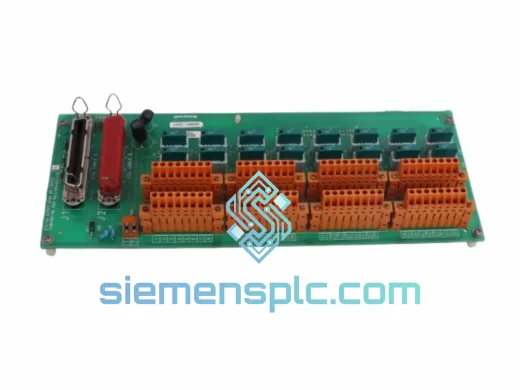
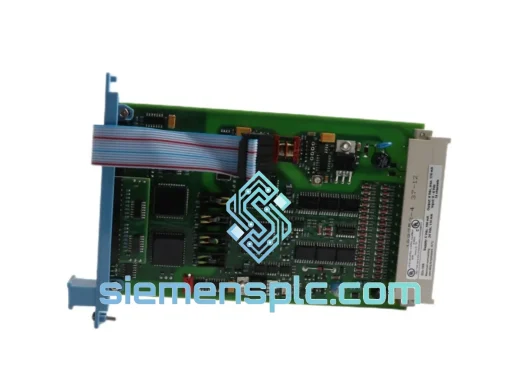
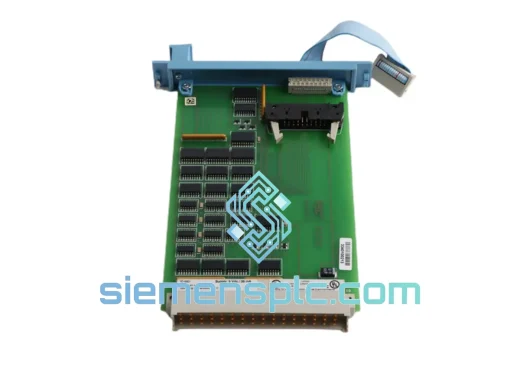
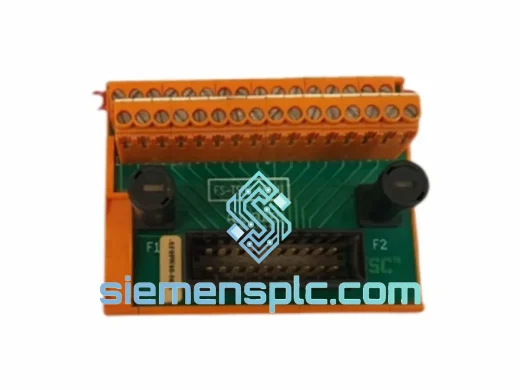
Honeywell FS-TSDI-16UNI Safety I/O Module
Safety Manager
Origin US
Safety I/O Module
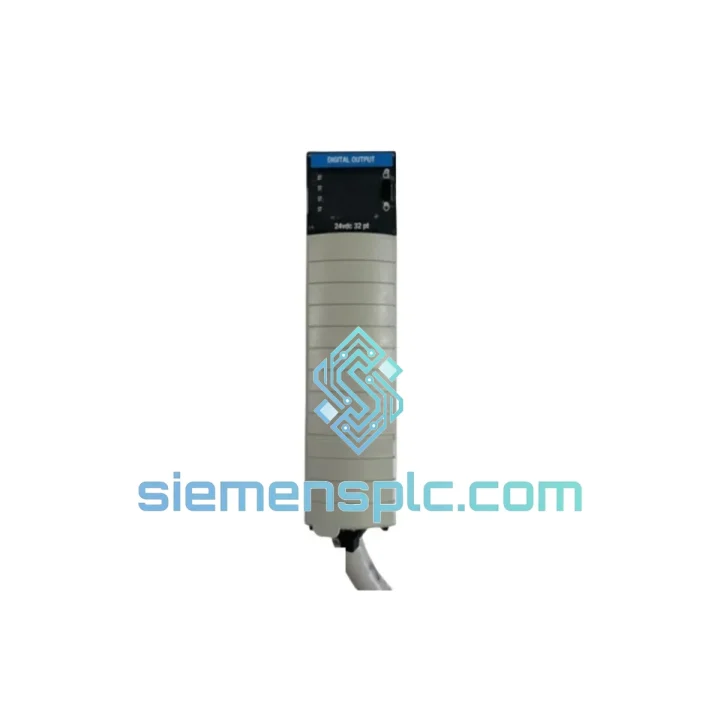
Request verified availability, condition, replacement risk review, packing options and courier lead time for TK-ODD321.
Click Request Quote and the part number is inserted into the inquiry form automatically.
Core fields for model confirmation and RFQ routing. Detailed product narrative remains below.
The TK-ODD321 occupies a well-defined position in the Honeywell Safety Manager (SM) I/O architecture: it is the high-density discrete output interface between the safety logic solver and field-mounted final control elements. In a Safety Instrumented System (SIS) designed to IEC 61511, the discrete output layer is the last active link in a safety instrumented function (SIF). Every solenoid valve de-energization, every motor starter trip command, every relay-driven actuator response passes through this module. Its electrical integrity, diagnostic coverage, and isolation architecture are therefore not peripheral concerns — they are the engineering core of the module’s value proposition.
The SM platform was architected to serve process industries where functional safety is a regulatory and operational imperative: oil and gas upstream and downstream, LNG terminals, petrochemical complexes, power generation, and offshore installations. The TK-ODD321 is a native I/O card for this platform, designed to slot into the SM I/O backplane chassis and communicate with the SM controller via the proprietary high-speed backplane bus. It delivers 32 discrete output channels in a single module footprint, reducing rack density requirements and lowering total installed cost in large-scale safety systems.
Real-time Stock & RFQ: [email protected] | WhatsApp: +86 18359268345
| Part Number / SKU | TK-ODD321 |
| Manufacturer | Honeywell Process Solutions |
| Platform | Safety Manager (SM) |
| Module Function | Discrete Output (DO) |
| Channel Count | 32 channels per module |
| Output Signal Type | Solid-state discrete (24 V DC) |
| Nominal Output Voltage | 24 V DC |
| Safety Integrity Level | SIL 2 (IEC 61508 certified) |
| Isolation Architecture | Optical isolation, channel-to-backplane |
| Backplane Interface | Honeywell Safety Manager proprietary I/O bus |
| Diagnostics | Continuous online self-test; fault reporting to SM controller |
| Operating Temperature | 0 °C to +60 °C |
| Storage Temperature | -40 °C to +85 °C |
| Relative Humidity | 5% to 95% RH, non-condensing |
| Module Weight | approx. 220 g |
| Certifications | IEC 61508 SIL 2, CE, UL (refer to Honeywell datasheet for full listing) |
| Country of Origin | USA |
| Warranty | 12 months against manufacturing defects |
The TK-ODD321’s hardware design reflects the constraints imposed by SIL 2 certification under IEC 61508. Three architectural decisions define its internal logic:
Optical Isolation Barrier: Each of the 32 output channels passes through a dedicated optocoupler stage positioned between the backplane logic domain and the field-side power domain. This galvanic separation serves two functions simultaneously. First, it prevents field-side transients — inductive kickback from solenoid coils, ground potential differences between field cabinets, or capacitive coupling from adjacent cable runs — from propagating into the backplane bus and corrupting the logic solver’s internal state. Second, it provides a defined electrical boundary that simplifies the module’s EMC compliance profile under EN 61000-4 series immunity tests. The isolation voltage rating ensures that common-mode disturbances within the field wiring harness do not induce false output states.
Continuous Diagnostic Coverage: The module implements a closed-loop diagnostic architecture. After each output command is issued by the SM controller, the module’s internal monitoring circuit reads back the actual channel state and compares it against the commanded state. Any discrepancy — a stuck-at-high fault, an open-circuit load, or a short-to-rail condition — is flagged as a diagnostic event and reported to the SM controller via the backplane bus within the module’s diagnostic test interval. This mechanism contributes directly to the module’s Diagnostic Coverage (DC) metric, which is a key parameter in the PFD (Probability of Failure on Demand) calculation for the overall SIF. Higher DC reduces the required proof test frequency, lowering lifecycle maintenance cost.
Backplane Bus Protocol Integrity: Communication between the SM controller and the TK-ODD321 occurs over the Safety Manager’s proprietary I/O backplane bus. This bus employs a deterministic, time-slotted communication protocol with CRC-based frame integrity checking. Each data frame transmitted to the output module includes a sequence counter and a checksum. The module validates both before executing any output state change. Frames failing integrity checks are discarded and the module holds its last valid output state, preventing spurious actuations from corrupted bus traffic. This behavior is consistent with the fail-safe design philosophy required for SIS applications.
EMC Design Posture: The module’s PCB layout follows shielded trace routing for the backplane interface signals, with ground plane segmentation separating the digital logic domain from the output driver domain. Decoupling capacitors are placed at each output driver stage to suppress high-frequency switching noise generated by solid-state output transitions. The module’s metal card frame provides additional shielding against radiated emissions from adjacent I/O cards in the same chassis.
Every TK-ODD321 unit supplied by siemensplc.com is sourced through verified industrial automation supply channels and subjected to a structured pre-shipment inspection protocol. Physical inspection covers label authenticity, connector pin integrity, PCB surface condition, and firmware revision marking. Units are cross-referenced against Honeywell’s published part number and revision documentation to confirm genuine provenance. Original Honeywell packaging and documentation are preserved where available. A certificate of conformance is available upon request for safety-critical procurement workflows requiring traceability records.
Logistics operations are managed from Xiamen, China — a major port city with direct access to DHL, FedEx, UPS, and SF Express international networks. In-stock units ship within 1–3 business days of order confirmation. Standard export documentation — commercial invoice, packing list, and certificate of origin — is prepared for each shipment to support customs clearance in destination countries. For volume orders, sea freight consolidation via Xiamen Port is available with competitive transit times to Southeast Asia, the Middle East, Europe, and the Americas. All shipments include full tracking and are insured against transit loss or damage.
Email: [email protected]
WhatsApp: +86 18359268345
Web: siemensplc.com
Location: Xiamen, China
© 2026 siemensplc.com. All rights reserved.
We check the full part number, brand, series and visible nameplate information before quotation.
Sales confirms stock path, condition option, quantity and realistic lead time for export dispatch.
DHL, FedEx, UPS or buyer courier arrangements can be reviewed with packing requirements.
Similar brand or category products for fast comparison and multi-item RFQ lists.