
KUKA
In Stock OK
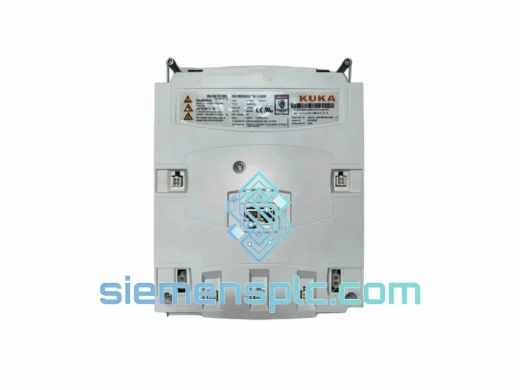
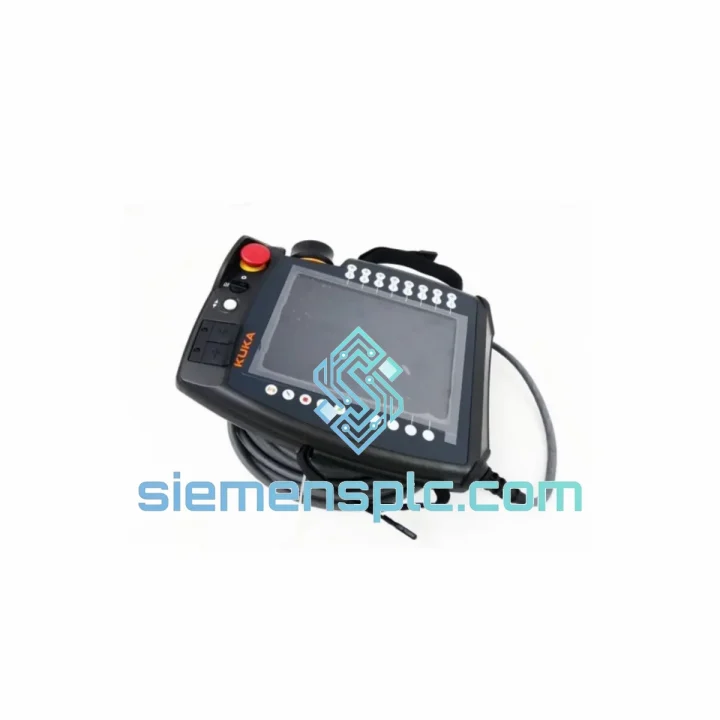
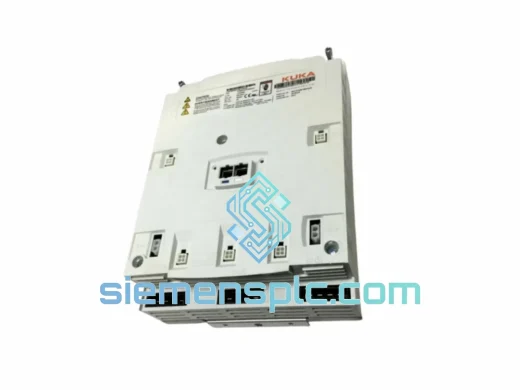
KUKA 00-291-556 00-130-547 00-163-784 Robot Controller – KR C2 Series
Request verified availability, condition, replacement risk review, packing options and courier lead time for 00-291-556.
BrandKUKA
Part Number00-291-556
ConditionAvailability Check
Lead TimeRFQ Confirmation
DocumentsDatasheet / photos by RFQ
ShippingExport packing available
Auto-filled RFQ
00-291-556
Click Request Quote and the part number is inserted into the inquiry form automatically.
- Reply by email: [email protected]
- WhatsApp / Tel: +86 18359268345
- Mon-Sat 9:00-18:00 GMT+8
Procurement Data
Key Product Information
Core fields for model confirmation and RFQ routing. Detailed product narrative remains below.
- Brand
- KUKA
- Primary Part Number
- 00-291-556
- Product Type
- Robot Controller
- Product Family
- Other series
- Country of Origin
- DE
- Catalog Category
- PLCs & Controllers
- Warranty
- 12 months from dispatch date
Model confirmed for inquiry
00-291-556
Send quantity, destination and urgency. The RFQ form keeps this part number attached.
Request Quote
Product Overview
KUKA 00-291-556 / 00-130-547 / 00-163-784 — KR C2 Cabinet Controller Assembly: Motion Authority and Safety Arbitration in Six-Axis Robotic Cells
The three-part assembly comprising KUKA part numbers 00-291-556 (C5 cabinet controller board), 00-130-547 (C2KCP2 teach pendant interface board), and 00-163-784 (C2 controller module) forms the computational core and safety arbitration layer of the KR C2 robot control cabinet. In a production robotic cell, this assembly is the single point of authority for real-time trajectory interpolation, multi-axis servo synchronization, operator interface management, and safety-state enforcement. The KR C2 platform executes motion control on a deterministic real-time kernel with a fixed servo cycle of 12 ms, simultaneously processing position feedback from up to six resolver channels through the onboard RDC (Resolver Digital Converter) subsystem. Each of the three modules carries a distinct functional responsibility: the 00-291-556 hosts the PC-based motion processor; the 00-130-547 manages the physical and logical KCP2 pendant link; and the 00-163-784 implements the dual-channel electronic safety circuit. Failure or degradation of any single module results in complete loss of motion authority — the robot cannot execute stored path programs, respond to upstream PLC handshake signals, or maintain safe-state relay outputs. Replacement decisions for these components are therefore maintenance-critical and require verified OEM provenance.
The KR C2 architecture was designed for continuous 24/7 industrial operation across automotive body-in-white, arc welding, material handling, and palletizing applications. Its PC-based control philosophy — running KUKA System Software (KSS) on a VxWorks real-time OS — separates trajectory computation from I/O polling at the kernel level, ensuring that fieldbus communication latency never introduces jitter into the servo update cycle. This architectural separation is what allows the KR C2 to maintain path repeatability of ±0.06 mm at rated TCP speed even when Profibus-DP or DeviceNet networks are operating at high utilization. The assembly supplied through siemensplc.com is sourced as genuine KUKA OEM hardware, inspected against KUKA’s serial number traceability database, and dispatched from Xiamen, China with full export documentation.
Real-time Stock & RFQ: [email protected] | WhatsApp: +86 18359268345
Technical Parameters
| Parameter | Specification |
|---|---|
| Part Numbers | 00-291-556 (C5 Cabinet Controller) / 00-130-547 (C2KCP2 Interface Board) / 00-163-784 (C2 Controller Module) |
| Brand | KUKA Robotics |
| Series | KR C2 |
| Component Classification | Robot Controller Cabinet Assembly — Motion Processor + Pendant Interface + Safety Module |
| Real-Time OS | VxWorks (Wind River) — deterministic kernel, non-preemptible motion thread |
| Servo Cycle Time | 12 ms (fixed, hardware-clocked) |
| Supported Axes | 6 primary robot axes + 2 external axes (coordinated motion) |
| Position Feedback | 6-channel resolver via RDC subsystem; 12-bit resolution per channel |
| Teach Pendant Interface | KCP2 via 00-130-547; RS-485 differential, 1.5 Mbit/s, hardware CRC per frame |
| Supply Voltage | 3-phase 400 V AC / 480 V AC ±10%, 50/60 Hz |
| Internal Control Voltage | 24 V DC (generated by cabinet PSU; not externally supplied) |
| Fieldbus Options | Profibus-DP (up to 12 Mbit/s), DeviceNet, Ethernet (option card dependent) |
| Safety Architecture | Dual-channel ESC (Electronic Safety Circuit) in 00-163-784; Category 0 stop ≤20 ms |
| Safety Standard Compliance | EN ISO 13849-1 PLd / EN 954-1 Category 3 / EN ISO 10218-1 |
| Path Repeatability | ±0.06 mm at rated TCP speed (KR C2 platform specification) |
| Operating Temperature | +5 °C to +45 °C (cabinet internal ambient) |
| Storage Temperature | −25 °C to +70 °C |
| Cabinet Protection Class | IP 54 |
| Compatible Robot Models | KUKA KR 6, KR 16, KR 30, KR 60, KR 125, KR 150, KR 200 (KR C2 platform) |
| Software Compatibility | KUKA System Software (KSS) 4.x / 5.x; backward-compatible program execution |
| Condition | New OEM / Tested Refurbished (specify at RFQ) |
| Origin | Germany (KUKA Augsburg manufacturing) |
| Warranty | 12 months from dispatch date |
Hardware Logical Analysis
The 00-291-556 C5 cabinet controller board is the primary computational node of the KR C2 architecture. It hosts a Pentium-class processor running the VxWorks real-time kernel, with the KUKA motion software executing in a dedicated non-preemptible thread at 12 ms periodicity. Unlike scan-based PLC architectures where the motion update interval is a function of total program scan time, the KR C2 motion kernel is clocked by a hardware timer interrupt — meaning servo cycle jitter is bounded at the hardware level, not the software scheduler level. This distinction is significant in high-speed arc welding or laser cutting applications where TCP velocity consistency directly affects weld bead geometry or cut edge quality.
The 00-130-547 C2KCP2 interface board manages the full-duplex RS-485 link between the cabinet backplane and the KCP2 teach pendant at 1.5 Mbit/s. Every data frame transmitted over this link carries a hardware-computed CRC checksum. The board’s receive logic discards any frame that fails CRC validation and requests retransmission within the same 12 ms servo cycle window — ensuring that corrupted operator inputs (caused by cable flex fatigue or connector oxidation) never propagate to the motion kernel as valid commands. This is particularly relevant during manual jogging operations near mechanical joint limits, where a single erroneous position increment could drive a joint into a hardware stop.
The 00-163-784 C2 controller module implements the Electronic Safety Circuit (ESC) — a dual-channel relay matrix that monitors E-stop inputs, safety gate contacts, and the KCP2 enabling switch simultaneously across two independent signal paths. The dual-channel design ensures that a single-point failure in any monitored safety input (open-circuit fault, short-circuit fault, or relay contact weld) is detected by cross-channel comparison logic within one monitoring cycle. Upon detection, the ESC commands a Category 0 stop — immediate removal of power from all servo drive enable lines — within 20 ms, compliant with EN ISO 10218-1 robot safety requirements. The module also generates the 24 V DC safety relay output signals used by peripheral equipment (conveyors, grippers, light curtains) to enter their own safe states in coordination with the robot stop.
EMC performance across the assembly is achieved through a layered shielding strategy. The cabinet enclosure is a continuously welded steel structure with copper bonding straps at all removable panel joints, maintaining a low-impedance ground plane that suppresses conducted emissions below CISPR 11 Class A limits. Servo drive PWM switching transients — typically in the 2–20 kHz range with harmonic content extending to several hundred kHz — are attenuated by ferrite-core line filters installed on each axis drive output. Resolver signal cables are routed in dedicated shielded conduits, physically separated from power cables by a minimum of 100 mm, preventing capacitive coupling of switching noise into the 2 kHz resolver excitation signal and the resulting position measurement error.
System Integration Benefits
- Hardware-clocked 12 ms servo cycle: Axis position updates are generated by a hardware timer interrupt, not a software scheduler. This bounds servo cycle jitter to sub-millisecond levels, enabling path repeatability of ±0.06 mm at rated TCP speed — a requirement for seam-tracking arc welding and precision assembly applications.
- Kernel-level I/O decoupling: Trajectory computation and fieldbus I/O polling execute in separate kernel threads with defined priority levels. Profibus-DP or DeviceNet network congestion cannot delay the motion update cycle, preserving path accuracy under high network utilization conditions.
- Structured fault code architecture: The KR C2 generates hierarchical fault codes displayed on the KCP2 pendant and logged in the controller’s internal event buffer. Fault codes identify the affected subsystem (motion kernel, safety circuit, fieldbus, I/O module) and the fault type (hardware fault, configuration error, communication timeout), allowing maintenance engineers to isolate faults to board level without external diagnostic equipment.
- Native dual-fieldbus support: Simultaneous Profibus-DP (12 Mbit/s) and DeviceNet connectivity allows the KR C2 to interface directly with both Siemens S7 PLC networks and Allen-Bradley ControlLogix networks without protocol gateway hardware, reducing network round-trip latency by one translation layer.
- Eight-axis coordinated motion: The controller supports 6 robot axes plus 2 external axes (linear track or rotary positioner) in fully coordinated motion — meaning the external axis motion is interpolated synchronously with the robot TCP path, not sequenced separately. This eliminates the need for a separate external axis controller in track-mounted robot installations.
- Integrated dual-channel safety circuit: The 00-163-784 ESC module handles E-stop, safety gate, and enabling switch monitoring internally, eliminating the need for an external safety relay module for basic safety functions. This reduces cabinet wiring complexity and removes a potential failure point from the safety circuit.
- KSS backward program compatibility: Controllers running KSS 5.x execute robot programs written under KSS 4.x without modification. Existing program libraries — including complex multi-step welding sequences or palletizing patterns — are preserved across controller replacement, eliminating reprogramming cost and production downtime for program validation.
- Thermostat-controlled forced-air cooling: The cabinet cooling system activates at 35 °C internal ambient and maintains PCB junction temperatures below manufacturer-rated maximums during continuous 24/7 operation. This thermal management strategy directly extends the service life of electrolytic capacitors on the controller boards — components whose failure rate increases exponentially with operating temperature above rated values.
- KUKA.OfficeLite offline programming compatibility: The KR C2 is fully supported by KUKA’s offline simulation environment, allowing new robot programs to be developed, simulated, and cycle-time-optimized on a PC before upload to the physical controller. This reduces live robot programming time and the associated production interruption.
Quality Assurance & Global Logistics
All KUKA 00-291-556, 00-130-547, and 00-163-784 units supplied through siemensplc.com undergo a structured incoming inspection before dispatch. Physical inspection covers connector pin integrity (checking for bent, corroded, or recessed contacts), PCB surface condition (solder joint integrity, component seating, absence of thermal damage or electrolyte leakage), and label traceability — each unit’s serial number is cross-referenced against KUKA’s manufacturing records where database access permits. Electrolytic capacitors on boards with known service history are spot-checked for ESR (equivalent series resistance) values against manufacturer datasheets, as elevated ESR is the primary early indicator of capacitor degradation in industrial controller boards operating at elevated ambient temperatures.
Packaging follows IEC 60068-2-27 mechanical shock protection guidelines. Each board or module is sealed in a conductive anti-static ESD bag (surface resistance <10⁹ Ω per IEC 61340-5-1), cushioned in 50 mm cross-linked polyethylene foam, and enclosed in a double-wall corrugated export carton rated for 32 ECT (Edge Crush Test). For multi-board shipments, individual foam-separated compartments prevent board-to-board contact during transit. Each shipment includes a commercial invoice, detailed packing list, and incoming inspection record. Certificate of origin and EUR.1 movement certificates are available on request for EU import duty preference under applicable trade agreements.
Logistics operations are based in Xiamen, China — a tier-1 export hub with direct access to DHL Express, FedEx International Priority, UPS Worldwide Express, and TNT Economy Express networks. Standard express delivery reaches destinations in Western Europe, North America, Southeast Asia, and the Middle East within 3–5 business days from dispatch. For line-down emergencies where robot downtime is accumulating production loss, same-day dispatch is available for orders confirmed before 15:00 CST, subject to stock availability. All shipments are tracked end-to-end with proactive status notifications provided to the buyer at key transit milestones.
A 12-month warranty covers all supplied units against manufacturing defects and functional failure under normal operating conditions as defined by KUKA’s installation and operating manual. Warranty claims are processed within 5 business days of receipt of the returned unit at our Xiamen facility, with replacement dispatch or credit note issued accordingly. Units returned under warranty are re-inspected and test-verified before any replacement decision is made.
Contact Information
Email: [email protected]
WhatsApp: +86 18359268345
Web: siemensplc.com
Location: Xiamen, China
© 2026 siemensplc.com. All rights reserved.
{
“@context”: “https://schema.org”,
“@type”: “Product”,
“name”: “KUKA 00-291-556 00-130-547 00-163-784 KR C2 Cabinet Controller Assembly”,
“description”: “Genuine KUKA KR C2 series robot controller assembly: 00-291-556 C5 cabinet controller, 00-130-547 C2KCP2 teach pendant interface board, 00-163-784 C2 safety module. 12 ms servo cycle, 8-axis coordinated motion, EN ISO 13849-1 PLd dual-channel safety compliance.”,
“sku”: “00-291-556 / 00-130-547 / 00-163-784”,
“brand”: {“@type”: “Brand”, “name”: “KUKA”},
“manufacturer”: {“@type”: “Organization”, “name”: “KUKA Robotics GmbH”, “address”: {“@type”: “PostalAddress”, “addressLocality”: “Augsburg”, “addressCountry”: “DE”}},
“category”: “Robot Controller”,
“offers”: {
“@type”: “Offer”,
“seller”: {“@type”: “Organization”, “name”: “siemensplc.com”, “address”: {“@type”: “PostalAddress”, “addressLocality”: “Xiamen”, “addressCountry”: “CN”}},
“availability”: “https://schema.org/InStock”,
“priceCurrency”: “USD”,
“url”: “https://siemensplc.com”
}
}
Ready to quote
[email protected]
Send This Part Number to Sales
RFQ workflow
Quality workflow ->
Confirmation Process
01Model confirmation
We check the full part number, brand, series and visible nameplate information before quotation.
02Availability reply
Sales confirms stock path, condition option, quantity and realistic lead time for export dispatch.
03Packing & courier
DHL, FedEx, UPS or buyer courier arrangements can be reviewed with packing requirements.
Continue sourcing
Browse full catalog ->
Related Automation Parts
Similar brand or category products for fast comparison and multi-item RFQ lists.
KUKA
RFQ Ready
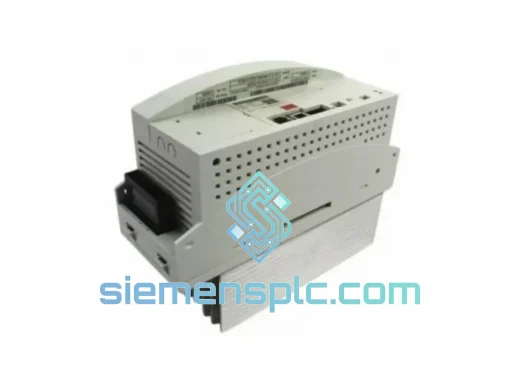
KUKA KSP 600 3X4000-160-154 Servo Drive Module
KR C4 Replacement
Origin DE
Servo Drive Module
KUKA
RFQ Ready
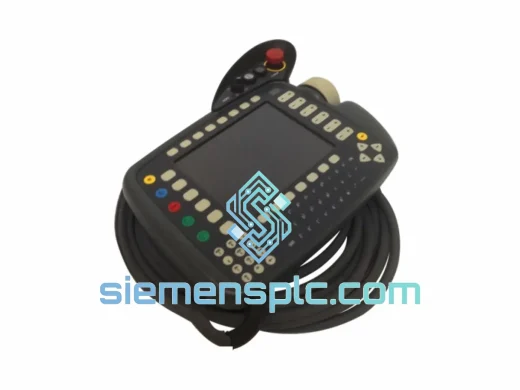
KUKA KRC4RDC 00-200-655 Robot Drive Controller – KRC4 Series
KRC4 Series
Origin DE
Robot Drive Controller
KUKA
RFQ Ready
KUKA KPP 600-20 2X40 Controller Drive Power Supply – KR C4 Series
Origin DE
Controller Drive Power Supply