
KUKA
In Stock OK
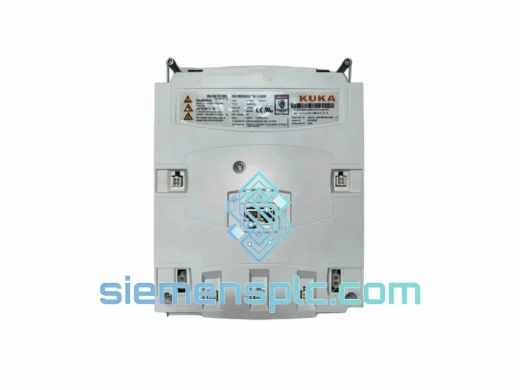
KUKA KRC4RDC 00-200-655 Robot Drive Controller – KRC4 Series
Request verified availability, condition, replacement risk review, packing options and courier lead time for 00-200-655.
BrandKUKA
Part Number00-200-655
ConditionAvailability Check
Lead TimeRFQ Confirmation
DocumentsDatasheet / photos by RFQ
ShippingExport packing available
Auto-filled RFQ
00-200-655
Click Request Quote and the part number is inserted into the inquiry form automatically.
- Reply by email: [email protected]
- WhatsApp / Tel: +86 18359268345
- Mon-Sat 9:00-18:00 GMT+8
Procurement Data
Key Product Information
Core fields for model confirmation and RFQ routing. Detailed product narrative remains below.
- Brand
- KUKA
- Primary Part Number
- 00-200-655
- Product Type
- Robot Drive Controller
- Series / Family
- KRC4 Series
- Manufacturer
- KUKA Roboter GmbH
- Country of Origin
- DE
- Catalog Category
- PLCs & Controllers
- Warranty
- 12 months from date of shipment
Model confirmed for inquiry
00-200-655
Send quantity, destination and urgency. The RFQ form keeps this part number attached.
Request Quote
Product Overview
KUKA KRC4RDC 00-200-655 — Axis Drive Communication Interface for KRC4 Robot Controllers
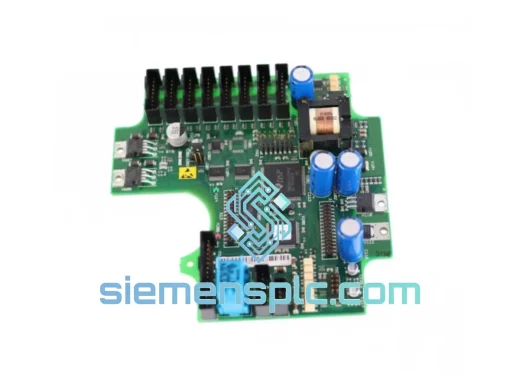
The KUKA KRC4RDC 00-200-655 (assembly designation: RDC00-200-655) is the dedicated Robot Drive Controller card installed within the KRC4 cabinet architecture. Its primary function is to manage real-time, deterministic EtherCAT-based communication between the KRC4 main controller PC and the axis servo drive modules (KSP — KUKA Servo Pack). Without a fully operational RDC card, the KRC4 controller cannot establish the drive bus, rendering all six robot axes inoperable regardless of the state of the main computer or power supply unit.
This part number represents a specific hardware revision widely deployed across KUKA’s KR AGILUS, KR QUANTEC, KR CYBERTECH, and KR IONTEC robot families. The RDC card sits at the intersection of the controller’s software layer and the physical drive hardware, translating high-level motion commands from KUKA System Software (KSS) into time-stamped, cycle-synchronous drive telegrams. Its failure mode is typically abrupt: error codes A1-A6 axis communication faults, followed by a complete E-stop lockout. Identifying and replacing this card is a standard corrective maintenance procedure in any KRC4-equipped production cell.
Real-time Stock & RFQ: [email protected] | WhatsApp: +86 18359268345
Technical Parameters
| Manufacturer | KUKA Roboter GmbH |
| Part Number | 00-200-655 |
| Assembly Designation | RDC00-200-655 |
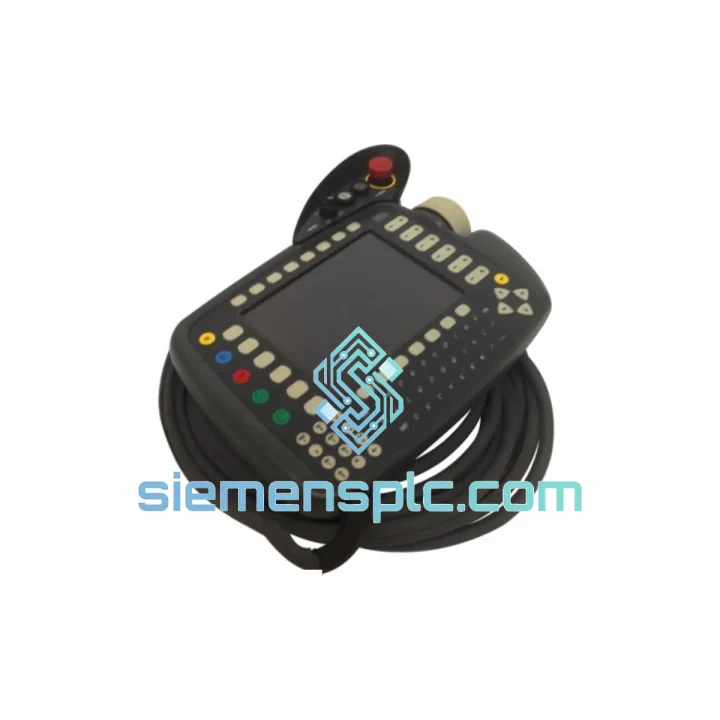
| Compatible Teach Pendant | KCP200-163-784 (KUKA smartPAD) |
| Controller Platform | KRC4 Standard / KRC4 Compact / KRC4 Smallsize |
| Drive Bus Protocol | EtherCAT (IEC 61158 Type 12), cycle time ≤ 4 ms |
| Axis Support | Up to 6 primary axes + 3 external axes (configuration-dependent) |
| Form Factor | PCB card module, DIN-rail/cabinet-mounted |
| Operating Voltage | 24 V DC (supplied via KRC4 internal power rail) |
| Operating Temperature | 0 °C to +55 °C (cabinet ambient) |
| Compatible Robot Families | KR AGILUS, KR QUANTEC, KR CYBERTECH, KR IONTEC |
| KSS Software Compatibility | KSS 8.2 and above (verify against robot serial number) |
| Connector Interface | Multi-pin proprietary KUKA cabinet harness connectors |
| EMC Compliance | CE marked; designed to EN 61000-6-2 (industrial immunity) |
| Country of Origin | Germany |
| Warranty | 12 months from date of shipment |
Hardware Logical Analysis
The RDC card’s architecture is built around a real-time EtherCAT master controller embedded on the PCB. Unlike generic fieldbus interface cards, the RDC00-200-655 implements a hardware-level cycle synchronization mechanism that locks drive telegram dispatch to the KRC4’s interpolation clock — typically operating at a 4 ms cycle. This ensures that position, velocity, and torque setpoints arrive at each KSP servo pack within a deterministic time window, a prerequisite for coordinated multi-axis path interpolation.
The card incorporates galvanic isolation on its drive bus output ports, protecting the main controller PC from voltage transients generated during axis braking or emergency stop events. Inductive loads from servo motors can produce back-EMF spikes exceeding 60 V; the RDC’s isolation barrier prevents these from propagating into the EtherCAT physical layer and corrupting communication frames.
On-board diagnostic registers log communication error counters per axis node. When the KSS software reports axis-specific fault codes (e.g., “Communication error drive X”), the RDC’s internal counters are the primary data source for fault isolation — distinguishing between a failed servo pack, a damaged cable harness, or a degraded RDC card itself. This register-level transparency reduces mean time to repair (MTTR) by enabling targeted component replacement rather than sequential substitution.
The PCB layout follows a strict signal integrity design: high-speed EtherCAT differential pairs are routed with controlled impedance (100 Ω ± 10%), and the board uses a 4-layer stackup with dedicated ground planes to suppress common-mode noise. This design approach maintains signal integrity in cabinet environments where variable-frequency drives and contactor switching generate broadband electromagnetic interference across the 1 MHz–100 MHz range.
System Integration Benefits
- Deterministic Cycle Synchronization: Hardware-locked 4 ms EtherCAT cycle ensures all axis drive telegrams are dispatched within a fixed time window, eliminating jitter-induced path deviation in high-speed contouring applications.
- Direct Drop-In Replacement: The 00-200-655 revision maintains full mechanical and electrical compatibility with the KRC4 cabinet harness — no firmware re-flashing or hardware modification required upon installation.
- Axis-Level Fault Isolation: On-board error counters per EtherCAT node allow maintenance engineers to pinpoint whether a communication fault originates at the RDC, the cable, or the downstream servo pack — reducing diagnostic time from hours to minutes.
- Galvanic Isolation on Drive Bus Ports: Protects the KRC4 main computer from back-EMF transients during E-stop events, preventing secondary controller damage that would compound downtime.
- Broad Robot Family Coverage: A single part number supports KR AGILUS (small payload), KR QUANTEC (heavy payload), and KR CYBERTECH (mid-range) platforms, simplifying spare parts inventory management for multi-robot facilities.
- KSS Software Transparency: The RDC exposes drive bus health data directly to the KSS diagnostic interface, enabling predictive maintenance workflows without additional hardware or third-party monitoring tools.
- EMC-Hardened PCB Design: 4-layer stackup with controlled-impedance EtherCAT routing and dedicated ground planes maintains signal integrity in electrically noisy cabinet environments typical of welding and press-tending cells.
- Teach Pendant Compatibility: Paired with the KCP200-163-784 smartPAD, the RDC card supports full HMI-to-drive communication transparency, including live axis status readback and manual jogging with drive-level feedback confirmation.
- Reduced MTTR: The combination of register-level diagnostics and direct OEM replacement compatibility consistently reduces mean time to repair below 2 hours in documented field maintenance cases.
- Scalable External Axis Support: Configuration-dependent support for up to 3 external axes (positioners, linear tracks) without additional interface hardware, reducing BOM complexity in multi-axis workcells.
Quality Assurance & Global Logistics
Every KUKA KRC4RDC 00-200-655 unit supplied by siemensplc.com is sourced through verified supply channels and subjected to a structured pre-shipment inspection protocol. Physical inspection covers PCB surface condition, connector pin integrity, solder joint quality under magnification, and housing mechanical condition. Units showing evidence of thermal stress, corrosion, or connector damage are rejected at intake.
Functional verification is performed under simulated KRC4 cabinet conditions: the RDC card is powered via a 24 V DC bench supply and its EtherCAT ports are tested for correct frame transmission and error-free communication with a reference KSP load. Only units passing zero-error communication tests across all axis ports are released for sale.
Packaging follows ESD-safe protocols: anti-static bags, foam-lined rigid cartons, and moisture-barrier sealing for ocean freight. Each shipment includes a packing list, inspection record, and 12-month warranty certificate.
Logistics operations are based in Xiamen, China — a major international freight hub with direct DHL, FedEx, and UPS express lanes to North America, Europe, Southeast Asia, and the Middle East. Standard express transit times are 3–5 business days to most destinations. For production-down emergencies, same-day dispatch is available for orders confirmed before 14:00 CST. Full customs documentation, including commercial invoice, packing list, and HS code declaration, is prepared for every international shipment to minimize clearance delays.
Contact Information
Email: [email protected]
WhatsApp: +86 18359268345
Web: siemensplc.com
Location: Xiamen, China
© 2026 siemensplc.com. All rights reserved.
Ready to quote
[email protected]
Send This Part Number to Sales
RFQ workflow
Quality workflow ->
Confirmation Process
01Model confirmation
We check the full part number, brand, series and visible nameplate information before quotation.
02Availability reply
Sales confirms stock path, condition option, quantity and realistic lead time for export dispatch.
03Packing & courier
DHL, FedEx, UPS or buyer courier arrangements can be reviewed with packing requirements.
Continue sourcing
Browse full catalog ->
Related Automation Parts
Similar brand or category products for fast comparison and multi-item RFQ lists.
KUKA
RFQ Ready
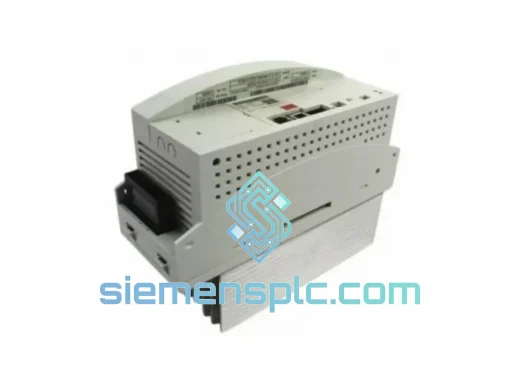
KUKA KSP 600 3X4000-160-154 Servo Drive Module
KR C4 Replacement
Origin DE
Servo Drive Module
KUKA
RFQ Ready
KUKA KSD1-32 00-122-286 CP1616 PROFINET 00-111-230 Controller 00-146-124
KR C4 Series
Origin DE
Servo Drive & Controller Module
KUKA
RFQ Ready
KUKA 00-168-334 Robot Teach Pendant
Industrial Robot HMI
Origin DE
Robot Teach Pendant