ABB
In Stock OK
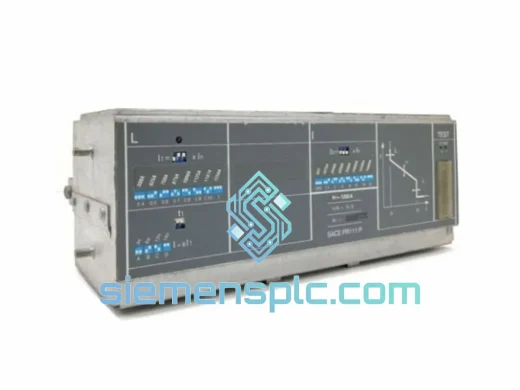
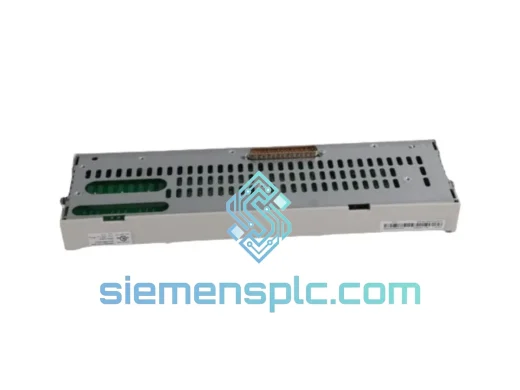
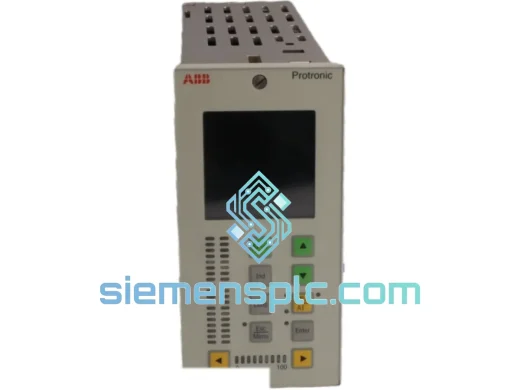
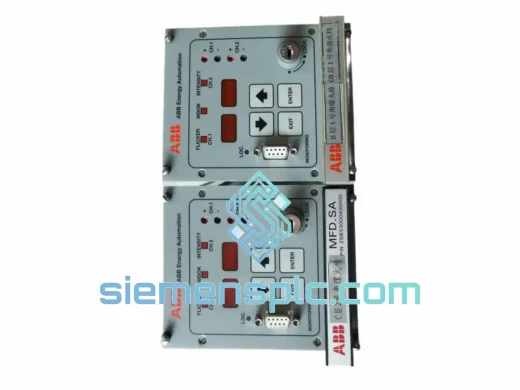
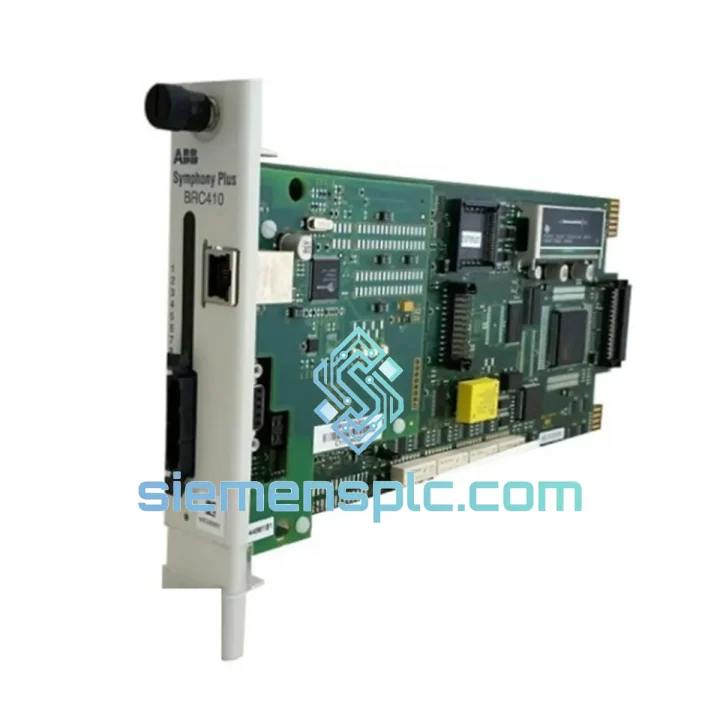
ABB SPBRC410 DCS Control Processor
Request verified availability, condition, replacement risk review, packing options and courier lead time for SPBRC410 BRC410 SPBRC41000000.
BrandABB
Part NumberSPBRC410 BRC410 SPBRC41000000
ConditionAvailability Check
Lead TimeRFQ Confirmation
DocumentsDatasheet / photos by RFQ
ShippingExport packing available
Auto-filled RFQ
SPBRC410 BRC410 SPBRC41000000
Click Request Quote and the part number is inserted into the inquiry form automatically.
- Reply by email: [email protected]
- WhatsApp / Tel: +86 18359268345
- Mon-Sat 9:00-18:00 GMT+8
Procurement Data
Key Product Information
Core fields for model confirmation and RFQ routing. Detailed product narrative remains below.
- Brand
- ABB
- Primary Part Number
- SPBRC410 BRC410 SPBRC41000000
- Product Type
- DCS Control Processor
- Product Family
- Other series
- Manufacturer
- ABB
- Country of Origin
- SE
- Catalog Category
- PLCs & Controllers
Model confirmed for inquiry
SPBRC410 BRC410 SPBRC41000000
Send quantity, destination and urgency. The RFQ form keeps this part number attached.
Request Quote
Product Overview
ABB SPBRC410 — Stop the Bleed: Get Your DCS Back Online Before the Next Shift
It’s 02:17. Your DCS console is throwing BRC FAULT alarms. The SPBRC410 in Rack 3 is dead — no heartbeat, no peer sync, no recovery. Your standby unit never cut over because the redundancy link was already degraded. The refinery column is drifting. Every minute you spend waiting for a part is money leaving the plant.
This is exactly the scenario the SPBRC410 was designed to prevent — and exactly why having a verified, tested replacement on the shelf matters. We stock the ABB SPBRC410 (cross-referenced as BRC410 and SPBRC41000000) and ship same-day from Xiamen via DHL Express. Your downtime window is the only thing we’re racing against.
URGENT REQUIREMENT? Contact: [email protected] | WhatsApp: +86 18359268345
Quick Technical Datasheet
| Parameter | Value |
|---|---|
| Manufacturer | ABB |
| Full Part Number | SPBRC410 / BRC410 / SPBRC41000000 |
| Series | S+ Series (Advant / MOD 300 successor) |
| Module Class | Base Regulatory Controller (BRC) |
| Form Factor | S+ Series backplane rack-mount |
| Redundancy Mode | Hot-standby 1:1 (primary / standby) |
| Communication Bus | S+ Series proprietary backplane + peer-to-peer redundancy link |
| Operating Temp | 0°C to +60°C (per ABB S+ installation spec) |
| Humidity | 5% to 95% RH non-condensing |
| Weight | Approx. 400 g |
| Firmware | Compatible with ABB S+ EWS; version disclosed pre-shipment |
| Condition | New surplus / Tested refurbished (stated per order) |
| Stock Status | ✔ Ready to Ship — Xiamen warehouse |
Troubleshooting & Replacement Tips
Common failure signatures for a dying SPBRC410:
- BRC FAULT / CONTROLLER OFFLINE alarm on the S+ operator station — the processor has lost its scan cycle or failed self-diagnostics at boot.
- Redundancy sync loss — the standby BRC reports “SYNC FAIL” or “PEER COMM LOST” before the primary fails, leaving you with no hot-standby coverage.
- Intermittent loop dropouts — regulatory loops randomly going to manual or last-value hold, often caused by a degraded processor clock or corrupted RAM.
- EWS communication timeout — the engineering workstation can no longer download or upload the control strategy, even though the backplane appears powered.
- Watchdog reset loops — the BRC repeatedly reboots every 30–90 seconds, visible as cyclical alarm floods on the console.
Replacement procedure — field-tested sequence:
- Confirm standby state: Before pulling the primary, verify the standby SPBRC410 is in STANDBY-READY state, not STANDBY-FAULT. If both are faulted, you are in a full-redundancy-loss scenario — proceed with caution and notify the control room.
- Force manual on critical loops: Place all regulatory loops under the failed BRC into manual mode from the operator station before physical removal. Do not rely on last-value hold for safety-critical loops.
- Check firmware revision: The replacement SPBRC410 must match or be compatible with the firmware revision of the surviving standby unit. Mismatched firmware versions will prevent peer synchronization. We disclose the firmware version of every unit we ship — confirm this before installation.
- Backplane slot addressing: The SPBRC410 does not use DIP switch addressing for its slot position — slot assignment is managed by the S+ Series backplane hardware and the EWS configuration. Ensure the replacement is seated in the identical physical slot as the failed unit.
- Cold insertion: The S+ Series backplane supports hot-insertion for I/O modules, but for BRC replacement in a non-redundant or full-fault scenario, power down the affected rack segment before insertion to avoid backplane bus contention.
- Post-insertion diagnostics: After seating the replacement, observe the front-panel LEDs: RUN (green steady), FAULT (off), SYNC (flashing during peer synchronization). Allow 60–120 seconds for full peer sync before returning loops to auto.
- EWS download verification: Connect the engineering workstation and perform a “Compare” operation to verify the loaded control strategy matches the reference configuration. Do not assume the replacement unit retained the previous program — always verify.
- Redundancy test: Once the replacement is in RUN state and peer-synced, perform a controlled switchover test (if process conditions permit) to confirm bumpless transfer before closing out the work order.
Configuration notes specific to SPBRC410: The BRC410 platform does not support automatic self-addressing of I/O modules in the same way as newer DCS generations. After replacement, verify that all I/O module addresses in the EWS configuration match the physical rack layout. Any I/O module that was added or moved since the last EWS backup will need to be reconciled manually.
Reliability in Harsh Conditions
The ABB S+ Series was engineered for continuous-process industries where the control system runs 24/7/365 in environments that would destroy consumer-grade electronics within weeks. The SPBRC410 reflects that design philosophy at the component level.
Vibration resistance: Rack-mounted in steel cabinets bolted to concrete plinths in compressor houses and turbine halls, the SPBRC410’s PCB layout and component selection account for sustained low-frequency vibration from rotating machinery. Conformal coating on the PCB protects solder joints from micro-fracture propagation over years of mechanical stress.
Thermal management: Operating continuously at ambient temperatures up to 60°C, the processor’s thermal design relies on convective airflow through the rack — not active cooling fans that can fail. The component derating margins built into the S+ Series design mean the SPBRC410 runs well within its thermal envelope even in poorly ventilated cabinets during summer shutdowns.
Humidity and contamination: In coastal petrochemical plants, offshore platforms, and tropical process facilities, humidity and airborne contaminants are constant threats. The conformal coating applied to SPBRC410 boards provides a barrier against condensation, salt fog, and process gas ingress — the same reason these modules survive decades in environments that corrode unprotected electronics within months.
Power supply transient immunity: Industrial power rails are noisy. The SPBRC410’s onboard power conditioning handles the voltage spikes, sags, and high-frequency noise that are routine in plants with large motor drives and switchgear operating nearby. The module will not reset or corrupt its program memory from the kind of power transients that are normal in a heavy industrial environment.
Every unit we ship has been inspected and functionally tested. We do not ship modules that have visible corrosion, damaged connectors, or failed power-on self-test. Firmware version is recorded and disclosed. ESD-safe handling and anti-static packaging are standard — not optional.
Global Express Logistics
Our warehouse is located in Xiamen, Fujian Province — one of China’s primary export hubs with direct access to international freight lanes via Xiamen Gaoqi International Airport and Xiamen Port. This geography is not accidental: it means your replacement SPBRC410 can be in the hands of DHL Express or FedEx International Priority within hours of order confirmation.
Typical transit times from Xiamen:
- Southeast Asia (Singapore, Thailand, Malaysia, Indonesia): 2–3 business days via DHL Express
- Middle East (UAE, Saudi Arabia, Kuwait, Qatar): 3–4 business days via FedEx International Priority
- Europe (Germany, Netherlands, UK, France): 3–5 business days via DHL Express Worldwide
- North America (USA, Canada): 4–6 business days via FedEx International Priority
- South America (Brazil, Chile, Colombia): 5–7 business days via DHL Express
- Australia / New Zealand: 3–5 business days via DHL Express
Our logistics process: Order confirmed → unit pulled from shelf and re-inspected → packed in anti-static bag, foam-lined carton, and outer shipping box → commercial invoice and packing list prepared → shipment booked with DHL/FedEx → tracking number sent to you within 4 hours of dispatch. For orders placed before 14:00 CST, same-day dispatch is standard. Emergency orders placed after cutoff are handled case-by-case — contact us directly on WhatsApp for real-time coordination.
Export documentation: We handle all export paperwork including commercial invoice, packing list, and certificate of origin. For destinations requiring import permits or specific HS code declarations for industrial automation components, our logistics team has handled these routes before and will advise proactively.
Customs clearance: We declare goods accurately and completely. We do not under-declare values or misclassify goods to reduce duties — practices that create customs holds and delays that defeat the entire purpose of express shipping. Accurate documentation means your shipment clears customs without intervention.
Contact Information
Email: [email protected]
WhatsApp: +86 18359268345
Web: siemensplc.com
© 2026. All rights reserved.
Ready to quote
[email protected]
Send This Part Number to Sales
RFQ workflow
Quality workflow ->
Confirmation Process
01Model confirmation
We check the full part number, brand, series and visible nameplate information before quotation.
02Availability reply
Sales confirms stock path, condition option, quantity and realistic lead time for export dispatch.
03Packing & courier
DHL, FedEx, UPS or buyer courier arrangements can be reviewed with packing requirements.
Continue sourcing
Browse full catalog ->
Related Automation Parts
Similar brand or category products for fast comparison and multi-item RFQ lists.