ABB
RFQ Ready
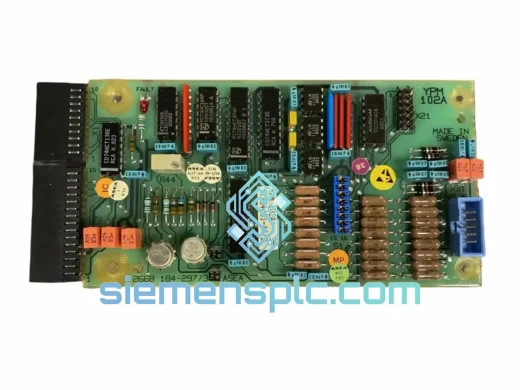
ABB YPM102A YT204001-AA Analog Output Module – AC 800M S800 I/O
S800
Origin SE
Analog Output Module
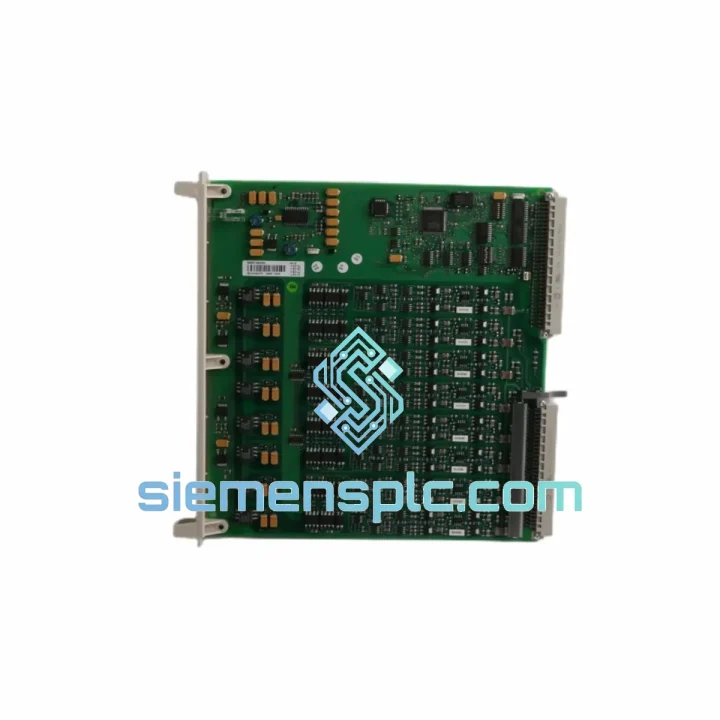
Request verified availability, condition, replacement risk review, packing options and courier lead time for 3BSE018293R1 DSAO 120A.
Click Request Quote and the part number is inserted into the inquiry form automatically.
Core fields for model confirmation and RFQ routing. Detailed product narrative remains below.
In continuous process control, the analog output stage is the final authority between a controller’s computed setpoint and the physical response of a field actuator. A valve positioner, variable-speed drive, or electro-pneumatic transducer receives its command exclusively through this signal path. The ABB 3BSE018293R1, designated DSAO 120A, is the analog output board engineered for ABB’s S800 I/O platform — the distributed I/O architecture deployed alongside AC 800M and Advant OCS process controllers in oil & gas, power generation, pulp & paper, and chemical processing facilities worldwide.
The DSAO 120A is not a peripheral accessory. It is a load-bearing component of the control loop. Each output channel drives a 4–20 mA current signal or a 0–10 V voltage signal to field instruments, maintaining the commanded value with high linearity and low drift across the full operating temperature range. The module interfaces with the S800 ModuleBus backplane, receiving setpoint data from the AC 800M controller via the cluster modem or optical ModuleBus interface, and converting that data to a conditioned analog output with deterministic latency. Loss of this module means loss of actuator authority — a condition that, in a live process, demands immediate replacement with a verified, specification-compliant unit.
Real-time Stock & RFQ: [email protected] | WhatsApp: +86 18359268345
| Parameter | Specification |
|---|---|
| Part Number | 3BSE018293R1 |
| Module Designation | DSAO 120A |
| Manufacturer | ABB (Asea Brown Boveri) |
| Platform Compatibility | ABB S800 I/O System (AC 800M / Advant OCS) |
| Module Type | Analog Output Board |
| Output Signal Type | 4–20 mA current / 0–10 V voltage (channel-configurable) |
| Number of Output Channels | 8 channels |
| Output Resolution | 12-bit DAC per channel |
| Output Accuracy | ±0.1% of full scale (at 25°C reference) |
| Channel Isolation | Galvanic isolation per channel group; 500 V AC test voltage |
| Load Impedance (Current Mode) | 0–750 Ω |
| Supply Voltage | 24 V DC (via S800 I/O bus) |
| Power Consumption | ≤ 4.5 W (fully loaded) |
| Operating Temperature | 0°C to +55°C |
| Storage Temperature | −25°C to +70°C |
| Relative Humidity | 5–95% RH, non-condensing |
| EMC Compliance | EN 61000-4 series; IEC 61131-2 |
| Degree of Protection | IP20 (module body) |
| Module Weight | 340 g |
| Backplane Interface | S800 ModuleBus (optical or electrical cluster modem) |
| Certifications | CE, UL, cUL (per ABB S800 platform certification) |
| Warranty | 12 months from shipment date |
The DSAO 120A implements a per-channel digital-to-analog conversion architecture using 12-bit DAC devices, each driven by a dedicated output register updated on every ModuleBus scan cycle. The ModuleBus protocol, operating at a fixed scan rate determined by the AC 800M controller configuration, writes new setpoint values to the module’s internal register map. The DAC latches the value and drives the output stage — a precision voltage-to-current converter for 4–20 mA mode, or a buffered voltage amplifier for 0–10 V mode — within one scan cycle of receipt. This deterministic update path is fundamental to closed-loop control: the controller’s PID output reaches the actuator without jitter or queuing delay.
Channel isolation is implemented at the group level using DC-DC converter isolation for the output power rail and optocoupler barriers on the data path. This architecture breaks ground loops between the controller chassis ground and the field wiring common, a critical requirement in industrial environments where field cable runs may span hundreds of meters across multiple grounding zones. The isolation barrier is rated at 500 V AC test voltage, providing adequate margin against transient overvoltages induced by nearby switching equipment, motor starts, or lightning events on exposed cable runs.
The output current driver circuit is a closed-loop transconductance amplifier: it continuously monitors the actual output current via a sense resistor and corrects the drive voltage to maintain the commanded current regardless of load impedance variation within the specified 0–750 Ω range. This feedback topology eliminates the output error that would otherwise result from cable resistance variation, connector oxidation, or instrument input impedance drift over time — a common failure mode in open-loop output designs.
EMC hardening on the DSAO 120A follows IEC 61000-4 series test criteria. The PCB layout routes high-frequency switching nodes away from the analog signal paths, and the output lines are filtered with common-mode chokes at the module connector to suppress conducted emissions onto field wiring. The module housing provides shielding continuity when seated in the S800 I/O station, and the backplane connector ground pins establish a low-impedance chassis bond that forms part of the station’s overall EMC enclosure.
Fault detection logic monitors each output channel for open-circuit and short-circuit conditions. An open-circuit fault — detected when the output current falls below the minimum threshold despite maximum drive — and a short-circuit fault — detected when the drive voltage saturates without achieving the commanded current — are both reported to the AC 800M controller via the ModuleBus status word. The controller can then execute a configured fault response: hold last value, drive to a safe state, or trigger an alarm. This diagnostic transparency is essential for process safety and reduces mean time to repair by pinpointing the fault to the specific channel and module without requiring manual signal tracing.
Every ABB 3BSE018293R1 unit supplied by siemensplc.com is sourced through verified supply channels and subjected to a structured incoming inspection protocol before dispatch. Physical inspection covers connector pin integrity, PCB surface condition, component seating, and label authenticity against ABB’s current part marking standards. Functional units undergo powered verification: the module is seated in an S800 I/O test station, the ModuleBus communication link is established, and each output channel is commanded through its full range while the output signal is measured against the specified accuracy limits. Only units that pass both physical and functional inspection are released for sale.
Units are packaged in anti-static bags, placed in foam-lined cartons, and sealed with tamper-evident tape. Each shipment includes a packing list with the unit’s inspection record and a 12-month warranty certificate. Export documentation — commercial invoice, packing list, and certificate of origin — is prepared in compliance with the destination country’s import requirements.
Logistics operations are managed from Xiamen, China, a major international port city with direct access to DHL, FedEx, UPS, and TNT express networks. Standard express delivery to Europe, North America, Southeast Asia, and the Middle East is achieved within 3–7 business days from shipment date. For urgent plant maintenance requirements, same-day dispatch is available for orders confirmed before 14:00 CST. Air freight and sea freight options are available for bulk orders. All shipments are tracked end-to-end, with tracking numbers provided to the buyer within 24 hours of dispatch.
Email: [email protected]
WhatsApp: +86 18359268345
Web: siemensplc.com
Location: Xiamen, China
© 2026 siemensplc.com. All rights reserved.
We check the full part number, brand, series and visible nameplate information before quotation.
Sales confirms stock path, condition option, quantity and realistic lead time for export dispatch.
DHL, FedEx, UPS or buyer courier arrangements can be reviewed with packing requirements.
Similar brand or category products for fast comparison and multi-item RFQ lists.