ABB
RFQ Ready
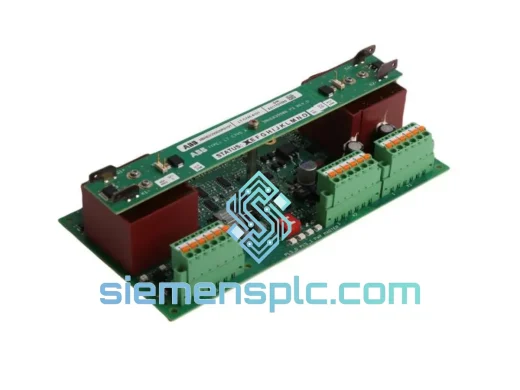
ABB HAC807B102 Analog Input Termination Unit – AC800M Series
AC800M
Origin SE
Analog Input Termination Unit
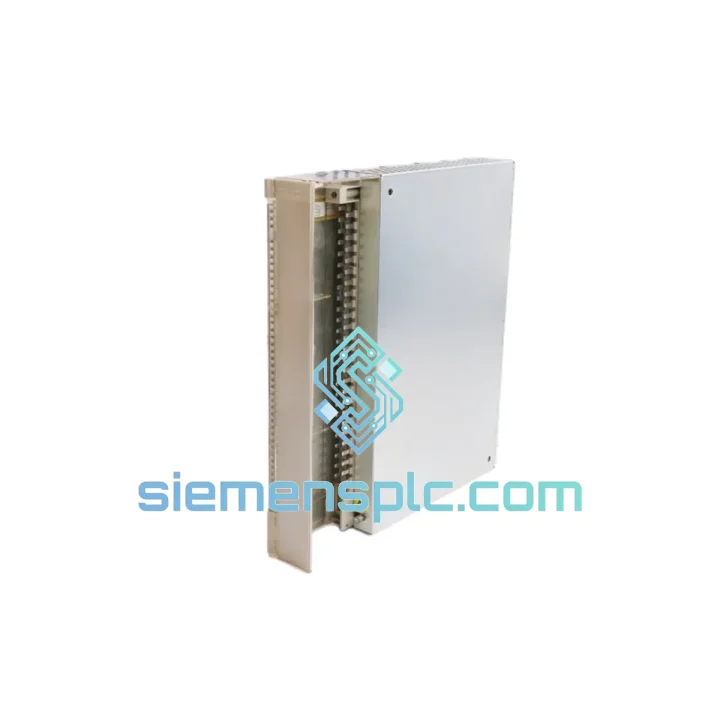
Request verified availability, condition, replacement risk review, packing options and courier lead time for AO650 3BHT300051R1.
Click Request Quote and the part number is inserted into the inquiry form automatically.
Core fields for model confirmation and RFQ routing. Detailed product narrative remains below.
Your AC800M DCS just threw an analog output fault. The control valve is frozen. The loop is dead. Production is hemorrhaging cash at whatever your plant’s hourly downtime rate is — and you already know it’s not a small number. The AO650 3BHT300051R1 is the exact module you need, and we have it on the shelf in Xiamen right now. Not in a warehouse queue. Not on a 12-week lead time from the OEM. Ready to ship today.
We’ve handled enough emergency callouts to know that the difference between a 6-hour fix and a 3-day nightmare is almost always logistics. You diagnose fast. You know what you need. The bottleneck is getting the part in your hands. That’s the only problem we exist to solve.
⚡ URGENT REQUIREMENT?
Contact: [email protected] | WhatsApp: +86 18359268345
| Parameter | Specification | Status |
|---|---|---|
| Part Number | 3BHT300051R1 | ✅ Ready to Ship |
| Model | AO650 | |
| Manufacturer | ABB | |
| Module Type | Analog Output (AO) | |
| Channels | 8 independent channels | |
| Output Signal | 4–20 mA / 0–10 V DC (per-channel configurable) | |
| Resolution | 16-bit DAC | |
| Accuracy | ±0.1% of full scale @ 25°C | |
| Max Load (Current) | ≤ 750 Ω | |
| Min Load (Voltage) | ≥ 2 kΩ | |
| Bus Interface | S800 I/O Bus | |
| Compatible Controllers | AC800M PM851 / PM856 / PM860 / PM864 / PM866 | |
| Supply Voltage | 24 V DC via S800 backplane | |
| Power Draw | ≤ 4.5 W | |
| Operating Temp | 0°C to +55°C | |
| Storage Temp | −40°C to +70°C | |
| Humidity | 5–95% RH, non-condensing | |
| Protection Rating | IP20 | |
| Hot-Swap | Yes (redundant AC800M config) | |
| Galvanic Isolation | Channel-to-bus | |
| Certifications | CE, UL, cUL, ATEX Zone 2 | |
| Firmware Requirement | Control Builder M 5.x and above | |
| Hardware Revision | R1 | |
| Dimensions | ~40 × 130 × 100 mm | |
| Weight | ~0.35 kg | |
| Origin | China (Xiamen stocked) | ✅ In Stock |
Common failure signatures that point to a dead AO650:
Step-by-step replacement procedure (field-tested):
Configuration notes that catch people out:
The AO650 was not designed for a climate-controlled server room. It was designed for the kind of environments where your boots get dirty and the cabinet door hasn’t been properly sealed since 2019. ABB built the S800 I/O series to operate continuously in conditions that would kill consumer-grade electronics inside a week.
The module’s onboard DAC circuitry is mounted on a conformal-coated PCB that resists moisture ingress and condensation — a real concern in coastal chemical plants and offshore platforms where humidity swings are extreme. The S800 bus connector uses gold-plated contacts that maintain reliable electrical continuity even after years of thermal cycling that would oxidize standard tin contacts.
Vibration tolerance is validated to IEC 60068-2-6 standards — the module can handle the continuous low-frequency vibration present in compressor houses and pump stations without developing the intermittent contact faults that plague cheaper I/O hardware. The mechanical locking mechanism on the S800 bus rail prevents the module from walking out of its slot under sustained vibration, which is a failure mode we’ve seen on competing platforms.
Operating temperature ceiling of +55°C means the AO650 can run in cabinets that are not air-conditioned — common in remote pump stations and outdoor substations in hot climates. The module’s power dissipation of ≤ 4.5 W keeps self-heating minimal, which matters when you’re stacking multiple I/O modules in a tight rack with limited airflow.
Storage temperature range of −40°C to +70°C means the spare unit sitting in your maintenance storeroom through a harsh winter is not going to be damaged before you need it. This is not a trivial specification — we’ve seen modules from other manufacturers fail on first power-up after cold storage because the electrolytic capacitors on the power supply section were stressed by thermal contraction.
Our warehouse is in Xiamen, China — one of the most logistics-efficient cities on the Chinese coast, with direct access to DHL, FedEx, and UPS international hubs. When you confirm an order before 3:00 PM CST, the module ships the same day. No exceptions, no “we’ll try our best.”
Typical transit times from Xiamen:
Every shipment includes a full commercial invoice, packing list, and certificate of origin — the documentation your customs broker needs to clear the shipment without delays. For customers in countries with specific import requirements (e.g., India IGST, Brazil ICMS), we can provide additional documentation on request. We’ve shipped to 60+ countries and we know what each customs authority wants to see.
The AO650 is packed in anti-static ESD shielding bags inside a rigid foam-lined carton. The DAC circuitry is sensitive to electrostatic discharge — we don’t cut corners on packaging because a module damaged in transit is a problem for everyone. If a shipment arrives damaged, we replace it. That’s the policy, no negotiation required.
Tracking numbers are sent via email within 2 hours of dispatch. For urgent shipments, we can provide the AWB number via WhatsApp so you can monitor the shipment in real time and coordinate with your local customs broker proactively.
📧 Email: [email protected]
📱 WhatsApp: +86 18359268345
🌐 Web: siemensplc.com
© 2026 siemensplc.com. All rights reserved.
We check the full part number, brand, series and visible nameplate information before quotation.
Sales confirms stock path, condition option, quantity and realistic lead time for export dispatch.
DHL, FedEx, UPS or buyer courier arrangements can be reviewed with packing requirements.
Similar brand or category products for fast comparison and multi-item RFQ lists.