ABB
In Stock OK
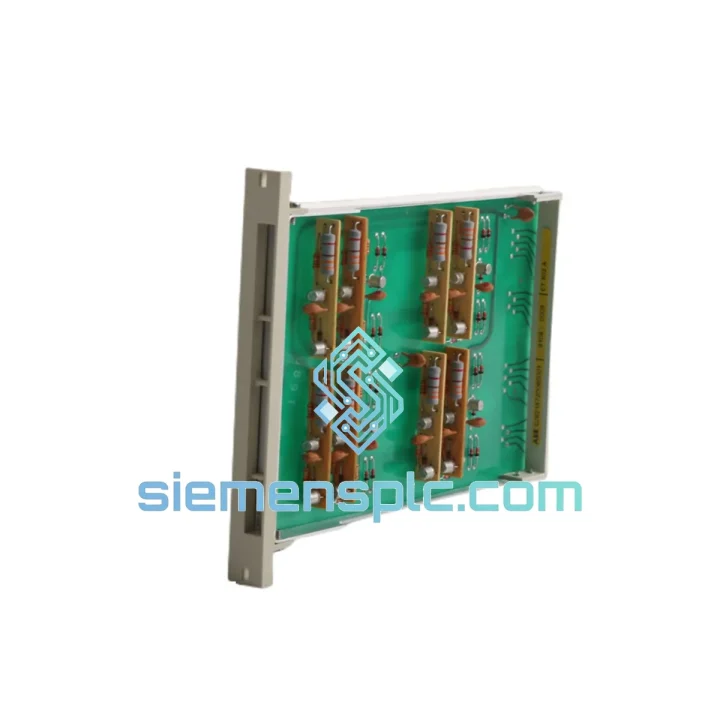
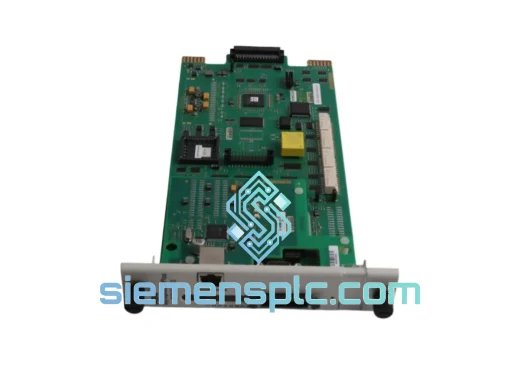
ABB CT302A GJR2167200R0001 PC Board Control Card – AC500 DCS
Request verified availability, condition, replacement risk review, packing options and courier lead time for CT302A GJR2167200R0001.
BrandABB
Part NumberCT302A GJR2167200R0001
ConditionAvailability Check
Lead TimeRFQ Confirmation
DocumentsDatasheet / photos by RFQ
ShippingExport packing available
Auto-filled RFQ
CT302A GJR2167200R0001
Click Request Quote and the part number is inserted into the inquiry form automatically.
- Reply by email: [email protected]
- WhatsApp / Tel: +86 18359268345
- Mon-Sat 9:00-18:00 GMT+8
Procurement Data
Key Product Information
Core fields for model confirmation and RFQ routing. Detailed product narrative remains below.
- Brand
- ABB
- Primary Part Number
- CT302A GJR2167200R0001
- Product Type
- PC Board Control Card
- Series / Family
- AC500
- Manufacturer
- ABB
- Country of Origin
- SE
- Catalog Category
- Communication
- Operating Temp.
- 0°C to +60°C
- Humidity
- 5%–95% RH, non-condensing
- Warranty
- 12 months from date of shipment
Model confirmed for inquiry
CT302A GJR2167200R0001
Send quantity, destination and urgency. The RFQ form keeps this part number attached.
Request Quote
Product Overview
ABB CT302A GJR2167200R0001 – Backplane Interface Control Card for AC500 / DCS Distributed Automation Networks
The ABB CT302A, referenced under part number GJR2167200R0001, is a dedicated PC board control card engineered for signal arbitration and control-plane communication within ABB’s AC500 programmable controller and DCS distributed control architectures. Its primary function is to serve as the logical bridge between the central processing unit and field-side I/O termination assemblies, managing deterministic data exchange across the internal backplane bus at cycle times consistent with hard real-time control requirements.
Unlike generic interface boards, the CT302A is designed around ABB’s proprietary backplane protocol, which enforces slot-addressed, token-based communication to eliminate bus contention in multi-module rack configurations. Each control card occupies a defined slot address and participates in the rack’s cyclic polling sequence, ensuring that signal latency from field input to controller memory remains bounded and predictable — a non-negotiable requirement in closed-loop process control applications such as combustion management, turbine governor control, and reactor temperature regulation.
The board’s signal conditioning layer handles both analog and digital I/O pathways depending on the specific rack configuration. Analog channels pass through a 16-bit successive approximation ADC front end with hardware-level anti-aliasing filters, providing a conversion accuracy of ±0.05% of full scale under rated thermal conditions. Digital I/O lines are buffered through 74HC-series logic with Schmitt-trigger inputs, providing a noise immunity margin of 0.3 × VCC — sufficient for operation in environments with conducted interference up to Level 3 per IEC 61000-4-4.
The CT302A’s PCB substrate is manufactured to IPC Class 3 standards, with a minimum copper weight of 2 oz/ft² on power planes and controlled impedance traces on high-speed signal layers. Conformal coating is applied to the assembled board to IPC-CC-830B specification, providing protection against condensation, industrial particulates, and mild chemical vapors encountered in process plant environments. The board operates continuously within an ambient temperature range of 0°C to +60°C, with storage tolerance extending to -40°C / +85°C.
Electromagnetic compatibility is addressed at the hardware level through a multi-layer ground plane architecture that provides a low-impedance return path for high-frequency transients. Ferrite bead filters are placed on all external connector pins, and TVS diode arrays clamp ESD events to within JEDEC Class 2 (2 kV HBM) tolerance. The board has been validated to EN 61131-2 for PLC hardware and meets the EMC immunity requirements of IEC 61000-6-2 for industrial environments.
Replacement of a failed CT302A in an installed rack requires no firmware re-flashing under standard configurations. The module’s identity is established through hardware slot addressing, and the host CPU re-initializes the card’s parameter set from non-volatile memory on the next power cycle. This characteristic reduces mean time to repair (MTTR) in field replacement scenarios to under 30 minutes for a trained technician, a significant operational advantage in continuous-process industries where unplanned downtime carries direct production cost.
Real-time Stock & RFQ: [email protected] | WhatsApp: +86 18359268345
Technical Parameters
| Manufacturer | ABB |
| Part Number | CT302A |
| Reference Number | GJR2167200R0001 |
| Module Classification | PC Board Control Card |
| Platform | ABB AC500 / DCS Series |
| ADC Resolution | 16-bit SAR |
| Analog Accuracy | ±0.05% of full scale |
| Digital I/O Logic Standard | 74HC with Schmitt-trigger input |
| Noise Immunity (Digital) | 0.3 × VCC per IEC 61000-4-4 Level 3 |
| PCB Standard | IPC Class 3, 2 oz/ft² copper |
| Conformal Coating | IPC-CC-830B |
| Operating Temperature | 0°C to +60°C |
| Storage Temperature | -40°C to +85°C |
| Humidity | 5%–95% RH, non-condensing |
| ESD Protection | JEDEC Class 2 (2 kV HBM) |
| EMC Immunity | IEC 61000-6-2, EN 61131-2 |
| Net Weight | 140 g |
| Country of Origin | Germany |
| Warranty | 12 months from date of shipment |
Hardware Logical Analysis
The CT302A’s internal architecture is structured around three functional layers: the backplane interface layer, the signal conditioning layer, and the supervisory logic layer.
The backplane interface layer implements ABB’s slot-addressed token-passing protocol. A dedicated CPLD (Complex Programmable Logic Device) manages bus arbitration, ensuring that only one module drives the backplane data lines at any given clock cycle. This eliminates the bus contention faults that can corrupt process data in multi-drop architectures. The CPLD also implements watchdog supervision: if the host CPU fails to poll the CT302A within a configurable timeout window (typically 100 ms), the card asserts a hardware fault signal on the backplane, triggering a controlled shutdown sequence rather than allowing the control loop to continue with stale data.
The signal conditioning layer uses a differential input topology on analog channels, with a common-mode rejection ratio (CMRR) of ≥80 dB at 50/60 Hz. This is critical in industrial environments where ground potential differences between field instruments and the control cabinet can introduce common-mode noise voltages of several volts. The differential front end rejects this noise before it reaches the ADC, preserving measurement integrity without requiring isolated power supplies on every channel.
The supervisory logic layer monitors supply rail voltages (+5 V, +3.3 V) and board temperature via an on-board thermal sensor. Out-of-tolerance conditions are logged to a non-volatile fault register accessible via the backplane diagnostic channel, providing maintenance personnel with a timestamped fault history without requiring physical access to the card during operation. This design supports predictive maintenance workflows by surfacing thermal stress events before they result in functional failure.
EMC hardening is implemented through a combination of a continuous ground plane on Layer 2 of the PCB stack, ferrite beads on all I/O connector pins, and TVS diode arrays at the board boundary. The ground plane provides a low-inductance return path that limits the peak voltage of fast transients (rise time <1 ns) to levels below the logic threshold of on-board ICs, preventing spurious state changes during ESD or surge events.
System Integration Benefits
- Deterministic Cycle Time: Token-based backplane arbitration enforces a fixed worst-case latency from field input to controller memory, enabling control loop tuning with a known and stable sample period — essential for PID loops with process time constants below 500 ms.
- Zero-configuration Slot Replacement: Hardware slot addressing means the host CPU automatically identifies and initializes a replacement CT302A on power-up, eliminating manual address configuration and reducing the risk of commissioning errors during emergency maintenance.
- Diagnostic Transparency: The on-board fault register provides a timestamped log of supply rail deviations and thermal events, accessible via the standard ABB diagnostic channel without interrupting process operation.
- High Analog Fidelity: 16-bit resolution with ±0.05% accuracy supports precise measurement of process variables such as flow, pressure, and temperature, reducing the need for field-side signal conditioning hardware.
- Robust Noise Rejection: Differential analog inputs with ≥80 dB CMRR at line frequency eliminate the need for isolated barriers on most standard 4–20 mA field loops, simplifying panel wiring and reducing BOM cost.
- Conformal Coating Durability: IPC-CC-830B coating extends board service life in environments with humidity cycling, condensation risk, or airborne particulates — common in food processing, water treatment, and outdoor enclosure applications.
- Watchdog-enforced Safety: Hardware watchdog on the backplane interface ensures that a CPU communication failure results in a defined safe-state output rather than a frozen last-value condition, supporting SIL-rated control loop designs.
- Backward Compatibility: The CT302A maintains electrical and protocol compatibility with earlier AC500 and DCS rack generations, allowing direct substitution without rack modification or firmware upgrade in the majority of installed configurations.
- Predictive Maintenance Support: Thermal sensor data and fault history enable condition-based maintenance scheduling, reducing unplanned outages by identifying degrading boards before functional failure occurs.
- Reduced MTTR: Combined effect of zero-configuration replacement and on-board diagnostics reduces mean time to repair in field scenarios to under 30 minutes, directly limiting production loss during unplanned stoppages.
Quality Assurance & Global Logistics
Every CT302A GJR2167200R0001 unit dispatched from our Xiamen facility is sourced through verified industrial supply channels with full part traceability. Incoming units are subject to a multi-stage inspection protocol: visual examination of PCB markings, component date codes, and solder joint quality; functional bench verification against ABB’s published electrical parameters; and ESD-safe handling throughout the receiving, storage, and packing process.
Units are packed in anti-static bags sealed within foam-lined cartons, with desiccant packs included for long-haul ocean freight consignments. Export documentation — including commercial invoice, packing list, and certificate of conformance — is prepared to the standards required by customs authorities in the EU, North America, Southeast Asia, and the Middle East, ensuring clearance without delay.
Dispatch from Xiamen, China typically occurs within 1–3 business days of order confirmation for standard quantities. Express air freight via DHL, FedEx, or UPS is available for urgent requirements, with transit times of 3–5 business days to most major industrial hubs globally. Bulk orders are assessed individually for lead time and freight mode optimization. A 12-month warranty covers all units against manufacturing defects and functional failure under rated operating conditions.
Contact Information
Email: [email protected]
WhatsApp: +86 18359268345
Web: siemensplc.com
Location: Xiamen, China
© 2026 siemensplc.com. All rights reserved.
Ready to quote
[email protected]
Send This Part Number to Sales
RFQ workflow
Quality workflow ->
Confirmation Process
01Model confirmation
We check the full part number, brand, series and visible nameplate information before quotation.
02Availability reply
Sales confirms stock path, condition option, quantity and realistic lead time for export dispatch.
03Packing & courier
DHL, FedEx, UPS or buyer courier arrangements can be reviewed with packing requirements.
Continue sourcing
Browse full catalog ->
Related Automation Parts
Similar brand or category products for fast comparison and multi-item RFQ lists.
ABB
RFQ Ready
ABB SPBRC410 PLC Communication Controller
AC500
Origin SE
PLC Communication Controller