ABB
In Stock OK
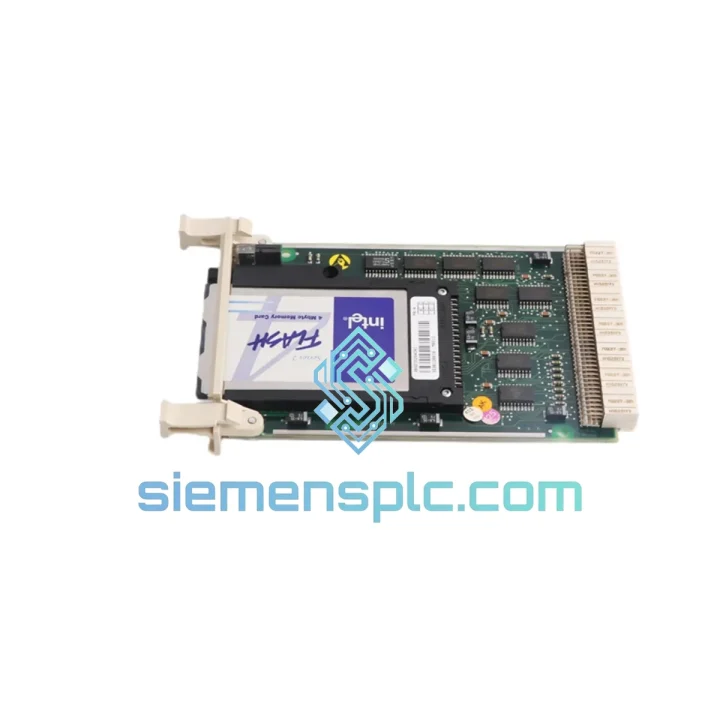
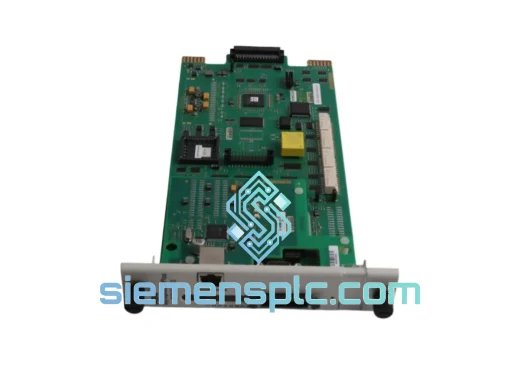
ABB MB510 3BSE002540R1 Program Card Interface Module – AC500 Series
Request verified availability, condition, replacement risk review, packing options and courier lead time for MB510 3BSE002540R1.
BrandABB
Part NumberMB510 3BSE002540R1
ConditionAvailability Check
Lead TimeRFQ Confirmation
DocumentsDatasheet / photos by RFQ
ShippingExport packing available
Auto-filled RFQ
MB510 3BSE002540R1
Click Request Quote and the part number is inserted into the inquiry form automatically.
- Reply by email: [email protected]
- WhatsApp / Tel: +86 18359268345
- Mon-Sat 9:00-18:00 GMT+8
Procurement Data
Key Product Information
Core fields for model confirmation and RFQ routing. Detailed product narrative remains below.
- Brand
- ABB
- Primary Part Number
- MB510 3BSE002540R1
- Product Type
- PLC Module
- Series / Family
- AC500
- Manufacturer
- ABB
- Country of Origin
- SE
- Catalog Category
- Communication
- Operating Temp.
- 0 °C to +60 °C
- Warranty
- 12 months against manufacturing defects
Model confirmed for inquiry
MB510 3BSE002540R1
Send quantity, destination and urgency. The RFQ form keeps this part number attached.
Request Quote
Product Overview
ABB MB510 3BSE002540R1 – Program Card Interface Module for AC500 PLC Control Architecture
The ABB MB510, carrying part number 3BSE002540R1, is a dedicated program card interface module engineered for integration within the ABB AC500 programmable logic controller family. Its primary function within a control loop is to provide a deterministic, hardware-managed pathway between the CPU’s internal memory bus and external non-volatile storage media — specifically SD and CompactFlash cards — enabling firmware staging, program backup, and rapid restore operations without interrupting the CPU’s scan cycle. In process-critical environments where mean time to repair (MTTR) is a key performance indicator, the MB510 reduces recovery time from a controller fault to a matter of minutes rather than hours, since a pre-loaded program card can be inserted and the CPU re-initialized without requiring a laptop or engineering workstation on-site.
Within the AC500 backplane architecture, the MB510 occupies a dedicated slot adjacent to the CPU module and communicates via the internal S-Bus (System Bus), a synchronous serial bus operating at a fixed clock rate that ensures data integrity during read/write cycles. The module does not participate in the I/O scan cycle and therefore imposes zero latency on the deterministic task execution of the CPU. This architectural separation is a deliberate design choice: memory management operations are isolated from real-time control tasks, preventing any card access event from introducing jitter into time-critical PID loops or motion sequences.
The MB510 is fully supported under ABB Automation Builder 1.x and 2.x, the IEC 61131-3 compliant engineering environment for the AC500 platform. Program upload, download, and compare operations can be initiated directly from the software IDE, with the module presenting the card as a standard file system volume. This compatibility extends to online firmware update procedures, where the module acts as the staging medium for CPU firmware images, allowing field engineers to update controller firmware without removing the CPU from the panel.
Real-time Stock & RFQ: [email protected] | WhatsApp: +86 18359268345
Technical Parameters
| Parameter | Value |
|---|---|
| Manufacturer | ABB |
| Model / SKU | MB510 |
| Part Number | 3BSE002540R1 |
| Module Category | Program Card Interface Module |
| Compatible PLC Series | ABB AC500 (PM5xx, PM5xxV2, PM5xxV3) |
| Internal Bus Interface | S-Bus (synchronous serial, backplane-mounted) |
| Supported Media Types | SD Card, CompactFlash (ABB-certified variants) |
| Operating Voltage | 3.3 V DC (supplied via backplane) |
| Operating Temperature | 0 °C to +60 °C |
| Storage Temperature | −25 °C to +70 °C |
| Relative Humidity | 5 % to 95 % (non-condensing) |
| Degree of Protection | IP20 (panel-mounted) |
| Mounting | DIN rail via AC500 backplane slot |
| Module Weight | 140 g |
| Dimensions (W × H × D) | Conforms to AC500 single-slot form factor |
| EMC Compliance | EN 61000-6-2 (immunity), EN 61000-6-4 (emission) |
| Safety / Approvals | CE, UL, cUL, RoHS 2 |
| Software Compatibility | ABB Automation Builder 1.x / 2.x |
| Warranty | 12 months against manufacturing defects |
| Country of Origin | Germany |
Hardware Logical Analysis
The MB510’s internal architecture centers on a dedicated memory controller ASIC that manages the physical layer protocol between the AC500 backplane S-Bus and the card slot’s electrical interface. This separation of concerns — a discrete controller rather than a CPU-integrated peripheral — means the module handles all card initialization, sector addressing, and error correction (ECC) logic autonomously. The CPU is presented with a simple block-transfer interface; it issues a read or write command with a logical address, and the MB510’s controller handles all low-level media management transparently.
EMC Design: The module’s PCB layout follows a strict ground-plane partitioning strategy. The digital logic section (S-Bus interface, ASIC, firmware ROM) is electrically isolated from the card slot section via a split ground plane with a single-point star connection. This prevents high-frequency switching noise from the card’s flash memory write cycles from coupling into the backplane bus. Ferrite beads are placed on all power supply lines entering the card slot section, providing common-mode noise suppression across the 1 MHz–100 MHz frequency range — the primary concern in panel environments with variable-frequency drives (VFDs) and contactors operating in close proximity.
Write Protection Logic: The MB510 implements a hardware write-protect state machine that monitors the physical write-protect switch position on SD cards. When write protection is asserted, the module’s controller blocks all write commands at the hardware level before they reach the media, independent of any software-level permission settings. This provides a deterministic, non-bypassable mechanism for protecting golden firmware images stored on the card during normal operation.
Power Sequencing: On backplane power-up, the MB510 follows a defined initialization sequence: it waits for the S-Bus clock to stabilize (typically within 50 ms of backplane power-on), then performs a card presence detection cycle, reads the card’s CID (Card Identification) register, and reports card status to the CPU via a dedicated status register on the S-Bus. This sequenced initialization prevents the CPU from attempting to access the card before the media is ready, eliminating a class of race-condition faults that can occur in systems where memory interfaces are initialized concurrently with the CPU boot sequence.
System Integration Benefits
- Zero scan-cycle impact: The MB510 operates on a separate S-Bus segment from the I/O bus. Card read/write operations are handled asynchronously relative to the CPU task scheduler, ensuring that a 10 MB program download to the card does not introduce any measurable jitter into 1 ms cyclic tasks.
- Deterministic program restore: A pre-loaded SD card inserted into the MB510 allows the AC500 CPU to boot directly from card-resident firmware and program data. In a cold-start scenario following a CPU replacement, the system can reach a running state in under 90 seconds without any external engineering tool connection.
- Firmware staging without downtime: New CPU firmware images can be written to the card while the controller is in RUN mode. The firmware is activated only on the next controlled restart, allowing maintenance windows to be planned rather than forced.
- Diagnostic transparency: The module exposes a set of status bits on the S-Bus that are readable by the CPU application program via standard function blocks. These bits report card presence, write-protect state, read/write activity, and error flags — all of which can be mapped to HMI displays or SCADA systems for real-time media health monitoring.
- Version control at the hardware level: Each program card can carry a user-defined label file alongside the PLC program. This allows field technicians to verify the program version stored on the card by reading the label file via the Automation Builder IDE before initiating a download, preventing accidental overwrite of a known-good program with an incorrect version.
- Redundancy architecture support: In AC500 redundant CPU configurations, the MB510 can be used to synchronize program versions across primary and standby CPUs by providing a common reference medium. Both CPUs can read from the same card (in read-only mode) during initial commissioning to ensure program consistency before the redundancy handshake is established.
- Reduced spare-parts complexity: A single MB510 module paired with a set of pre-programmed SD cards can serve as the recovery mechanism for an entire fleet of identical AC500-based machines. This consolidates the spare-parts inventory requirement from one CPU per machine to one MB510 plus N cards — a significant reduction in capital tied up in spare parts for large installations.
- IEC 62443 alignment: The hardware write-protect mechanism on the MB510 supports the implementation of change-management controls required under IEC 62443-3-3 (System Security Requirements). By physically write-protecting the card containing the validated program, operators can enforce a policy that prevents unauthorized program modification at the hardware level, independent of software access controls.
Quality Assurance & Global Logistics
Every ABB MB510 3BSE002540R1 unit supplied by siemensplc.com is sourced through verified industrial distribution channels with full traceability to ABB’s manufacturing records. Pre-shipment inspection covers visual examination of the module housing and connector pins, label verification against ABB’s part number database, and functional power-on testing where applicable. Units are packed in anti-static bags with humidity indicator cards, placed in foam-lined cartons rated for international air freight handling (ISTA 2A compliant).
Shipments originate from our warehouse in Xiamen, China. Xiamen is a designated free-trade zone port with direct air freight connections to major logistics hubs in Europe (Frankfurt, Amsterdam), North America (Los Angeles, Chicago), Southeast Asia (Singapore, Kuala Lumpur), and the Middle East (Dubai). Standard export documentation — commercial invoice, packing list, certificate of origin, and HS code declaration (8537.10) — is prepared for every international shipment. For customers in regions requiring additional import documentation (e.g., EUR.1 movement certificates, FORM A GSP certificates), these can be arranged upon request at the time of order.
Typical transit times: 3–5 business days to Europe and North America via DHL Express or FedEx International Priority; 2–3 business days to Southeast Asia and the Middle East. Expedited same-day dispatch is available for orders confirmed before 14:00 CST. A 12-month warranty against manufacturing defects is provided on all units. Warranty claims are processed with a target response time of 48 hours, and replacement units are dispatched from Xiamen stock upon claim approval.
Contact Information
Email: [email protected]
WhatsApp: +86 18359268345
Web: siemensplc.com
Location: Xiamen, China
© 2026 siemensplc.com. All rights reserved.
Ready to quote
[email protected]
Send This Part Number to Sales
RFQ workflow
Quality workflow ->
Confirmation Process
01Model confirmation
We check the full part number, brand, series and visible nameplate information before quotation.
02Availability reply
Sales confirms stock path, condition option, quantity and realistic lead time for export dispatch.
03Packing & courier
DHL, FedEx, UPS or buyer courier arrangements can be reviewed with packing requirements.
Continue sourcing
Browse full catalog ->
Related Automation Parts
Similar brand or category products for fast comparison and multi-item RFQ lists.
ABB
RFQ Ready
ABB SPBRC410 PLC Communication Controller
AC500
Origin SE
PLC Communication Controller