ABB
In Stock OK
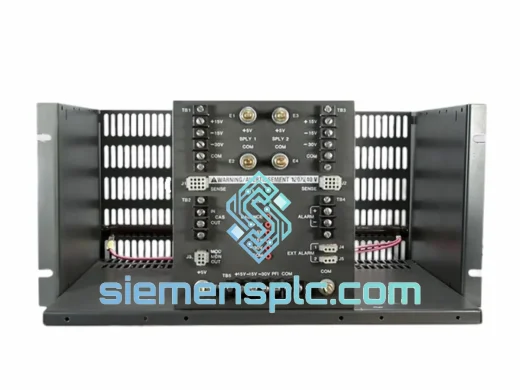
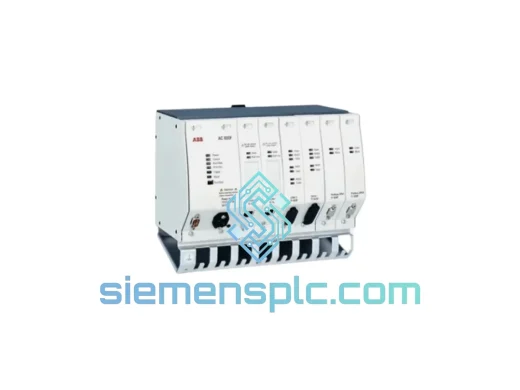
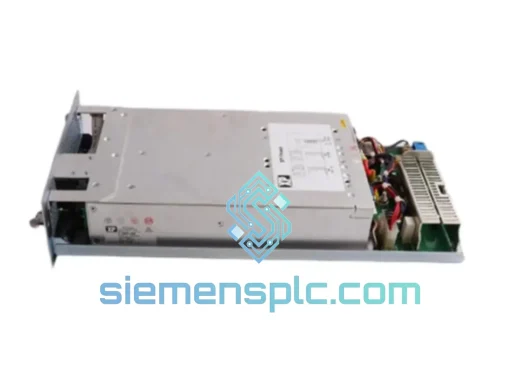
ABB PHARPS32200000 Power Supply Module – AC500 Series
Request verified availability, condition, replacement risk review, packing options and courier lead time for PHARPS32200000.
BrandABB
Part NumberPHARPS32200000
ConditionAvailability Check
Lead TimeRFQ Confirmation
DocumentsDatasheet / photos by RFQ
ShippingExport packing available
Auto-filled RFQ
PHARPS32200000
Click Request Quote and the part number is inserted into the inquiry form automatically.
- Reply by email: [email protected]
- WhatsApp / Tel: +86 18359268345
- Mon-Sat 9:00-18:00 GMT+8
Procurement Data
Key Product Information
Core fields for model confirmation and RFQ routing. Detailed product narrative remains below.
- Brand
- ABB
- Primary Part Number
- PHARPS32200000
- Product Type
- Power Supply Module
- Series / Family
- AC500
- Manufacturer
- ABB
- Country of Origin
- SE
- Catalog Category
- Power Supplies
- Operating Temp.
- -25 °C to +60 °C
- Warranty
- 12 months from date of shipment
- Compliance
- CE, RoHS, IEC 61131-2, UL 508
Model confirmed for inquiry
PHARPS32200000
Send quantity, destination and urgency. The RFQ form keeps this part number attached.
Request Quote
Product Overview
ABB PHARPS32200000 — Dedicated 24 VDC Power Supply Module for AC500 PLC Backplane Architecture
The PHARPS32200000 is a factory-configured power supply module designed exclusively for ABB’s AC500 programmable logic controller platform. Its primary function is to deliver a regulated, low-ripple 24 VDC bus to the AC500 backplane, sustaining deterministic power delivery to CPU modules, distributed I/O racks, and communication interface cards under continuous industrial load. Unlike generic DIN-rail power supplies, the PHARPS32200000 integrates directly into the AC500 mechanical and electrical bus structure, eliminating external wiring between the PSU output terminals and the backplane power rails — a design decision that reduces impedance discontinuities and simplifies panel layout in space-constrained enclosures.
The module is rated for a continuous output current of 10 A at 24 VDC, yielding a nominal output power of 240 W. Input voltage acceptance spans 100–240 VAC at 47–63 Hz, making the unit compatible with both 110 V North American grid standards and 230 V European and Asian industrial supplies without hardware modification. Internal power factor correction (PFC) circuitry maintains a power factor above 0.95 across the rated load range, reducing reactive current demand on facility distribution panels.
Real-time Stock & RFQ: [email protected] | WhatsApp: +86 18359268345
Technical Parameters
| Parameter | Value |
|---|---|
| Manufacturer | ABB |
| Part Number | PHARPS32200000 |
| Product Series | AC500 |
| Module Type | Backplane-Integrated Power Supply |
| Nominal Output Voltage | 24 VDC |
| Rated Output Current | 10 A |
| Rated Output Power | 240 W |
| Input Voltage Range | 100–240 VAC, single-phase |
| Input Frequency | 47–63 Hz |
| Power Factor (at full load) | > 0.95 |
| Output Voltage Ripple | < 50 mV peak-to-peak |
| Efficiency (at full load) | ≥ 91% |
| Inrush Current Limiting | NTC thermistor-based soft-start |
| Overload Protection | Hiccup mode, auto-recovery |
| Short-Circuit Protection | Fold-back current limiting |
| Overvoltage Protection | Hardware OVP latch, 28–32 VDC trip |
| Operating Temperature | -25 °C to +60 °C |
| Storage Temperature | -40 °C to +85 °C |
| Relative Humidity | 5–95%, non-condensing |
| Degree of Protection | IP20 (module body) |
| Mounting | AC500 backplane slot (direct bus engagement) |
| Weight | Approx. 5,200 g (with packaging) |
| Compliance | CE, RoHS, IEC 61131-2, UL 508 |
| Warranty | 12 months from date of shipment |
Hardware Logical Analysis
The PHARPS32200000 employs a full-bridge LLC resonant converter topology operating at a fixed switching frequency near the resonant point of the LC tank circuit. This approach achieves zero-voltage switching (ZVS) on the primary-side MOSFETs across the majority of the load range, substantially reducing switching losses and the associated high-frequency conducted emissions that would otherwise propagate onto the AC input line and the DC output bus. The consequence for system designers is a measurably cleaner power rail — output ripple remains below 50 mV peak-to-peak even at full 10 A load, which is critical for analog I/O modules sharing the same backplane bus where millivolt-level noise can corrupt 4–20 mA signal conditioning circuits.
EMC performance is addressed at three layers. First, a two-stage common-mode and differential-mode input filter attenuates conducted emissions to CISPR 11 Class A limits before the rectifier bridge. Second, the LLC topology’s inherent soft-switching behavior suppresses radiated emissions from the transformer and output rectifier diodes. Third, the output stage incorporates a π-filter with low-ESR polymer capacitors, providing a low-impedance path for high-frequency noise currents generated by downstream switching loads on the backplane.
The backplane bus connector uses a gold-plated, spring-loaded contact array rated for a minimum of 100 insertion cycles. Contact resistance is specified below 5 mΩ per pin at rated current, ensuring that voltage drop across the connector interface remains below 50 mV at 10 A — well within the tolerance budget of the AC500 CPU’s internal voltage regulator input range. The mechanical locking mechanism provides a positive retention force of approximately 30 N, preventing unintentional disconnection under vibration profiles up to IEC 60068-2-6 (10–150 Hz, 1 g).
Thermal management relies on copper heat-spreading layers within the PCB stack and a finned aluminum heatsink bonded to the primary-side switching devices. Forced-air cooling is not required at ambient temperatures up to 50 °C at full load; above 50 °C, a linear derating curve applies, reducing maximum output current by approximately 2.5% per degree Celsius to 60 °C. This derating characteristic must be accounted for in thermal calculations for enclosures with restricted airflow.
System Integration Benefits
- Deterministic bus voltage stability: Output regulation holds within ±1% of 24 VDC from no-load to full load, ensuring CPU clock circuits and SRAM retention voltages remain within specification regardless of dynamic load steps caused by I/O module switching events.
- Reduced panel wiring complexity: Direct backplane engagement eliminates the external 24 VDC wiring run between a standalone PSU and the AC500 rack, removing a potential failure point and reducing panel assembly labor by an estimated 15–20 minutes per rack.
- Unified diagnostic visibility: The module exposes power-good and fault status signals to the AC500 CPU via the backplane diagnostic bus. Engineers can read PSU status, output voltage, and load current directly from the CPU’s diagnostic buffer using standard IEC 61131-3 function blocks — no additional field wiring or analog input channels required.
- Redundancy-ready architecture: Two PHARPS32200000 units can be operated in parallel on a single AC500 backplane using the optional redundancy coupling module. The active current-sharing algorithm distributes load within ±5% between units, and a single-unit failure triggers a CPU-level alarm within one PLC scan cycle without interrupting process output.
- Wide-range AC input for global deployment: The 100–240 VAC universal input eliminates the need for site-specific transformer taps or separate PSU SKUs when deploying identical control panels across facilities in North America, Europe, and Asia-Pacific.
- Soft-start inrush control: NTC thermistor-based inrush limiting caps peak inrush current to approximately 30 A for less than 5 ms at cold start, preventing nuisance tripping of upstream MCBs sized for steady-state load.
- Long-term capacitor reliability: The output filter uses 105 °C-rated polymer electrolytic capacitors with a specified lifetime of 10,000 hours at maximum rated temperature. At a typical operating temperature of 40 °C, the Arrhenius derating model projects capacitor service life exceeding 80,000 hours — consistent with a 10-year maintenance interval.
- Functional safety prerequisites: The module’s overvoltage protection latch and fold-back short-circuit protection are hardware-implemented, independent of firmware. This characteristic supports SIL 2 system architectures where power supply faults must be detected and contained without reliance on software watchdog mechanisms.
Quality Assurance & Global Logistics
Every PHARPS32200000 unit dispatched from our Xiamen facility is a genuine ABB original component, sourced through verified industrial supply channels. Each unit undergoes a pre-shipment inspection protocol that includes visual examination of housing, label, and connector integrity; verification of date code and serial number traceability against ABB’s published batch documentation; and a powered functional check confirming output voltage within the ±1% regulation band under a representative resistive load.
Packaging follows ABB’s OEM specification: anti-static inner bag, foam-lined cardboard carton, and outer corrugated shipping box rated for international air freight handling. For sea freight shipments, additional moisture-barrier desiccant packs are included. Export documentation — commercial invoice, packing list, certificate of origin, and HS code declaration (HS 8537.10) — is prepared for every international order to facilitate customs clearance at destination ports.
Standard dispatch from Xiamen is within 2–3 business days of order confirmation for in-stock units. International express delivery via DHL Express or FedEx International Priority reaches most destinations in Europe, North America, Southeast Asia, and the Middle East within 3–5 business days of dispatch. Bulk orders exceeding 20 units can be consolidated for sea freight via Xiamen Port, with transit times of 18–25 days to European ports and 12–18 days to US West Coast ports. All shipments are fully insured and tracked from dispatch to delivery confirmation. A 12-month warranty covers all units against manufacturing defects from the date of shipment.
Contact Information
Email: [email protected]
WhatsApp: +86 18359268345
Web: siemensplc.com
Location: Xiamen, China
© 2026 siemensplc.com. All rights reserved.
Ready to quote
[email protected]
Send This Part Number to Sales
RFQ workflow
Quality workflow ->
Confirmation Process
01Model confirmation
We check the full part number, brand, series and visible nameplate information before quotation.
02Availability reply
Sales confirms stock path, condition option, quantity and realistic lead time for export dispatch.
03Packing & courier
DHL, FedEx, UPS or buyer courier arrangements can be reviewed with packing requirements.
Continue sourcing
Browse full catalog ->
Related Automation Parts
Similar brand or category products for fast comparison and multi-item RFQ lists.
ABB
RFQ Ready
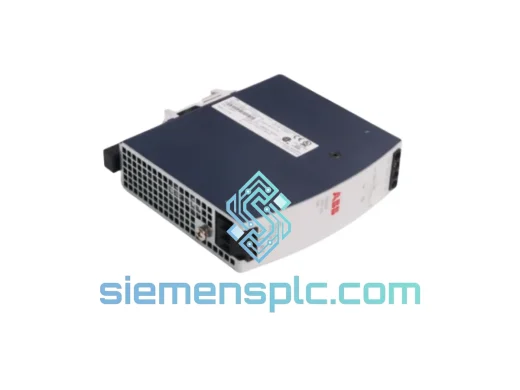
ABB PHARPS03000000 Power Supply Module – AC500 Series
AC500
Origin SE
Power Supply Module