ABB
RFQ Ready
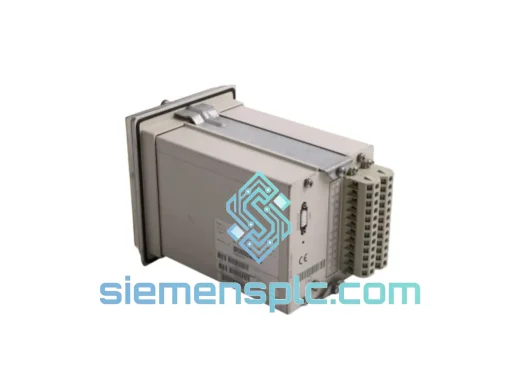
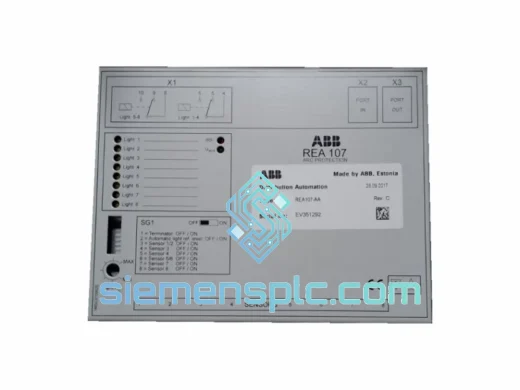
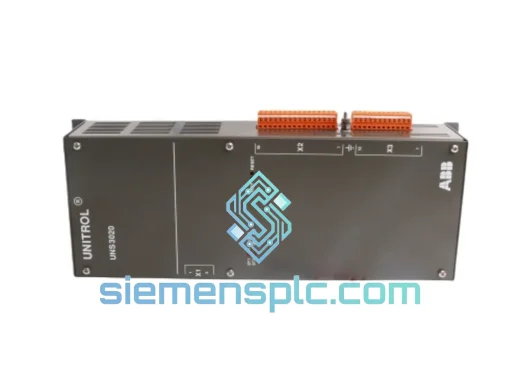
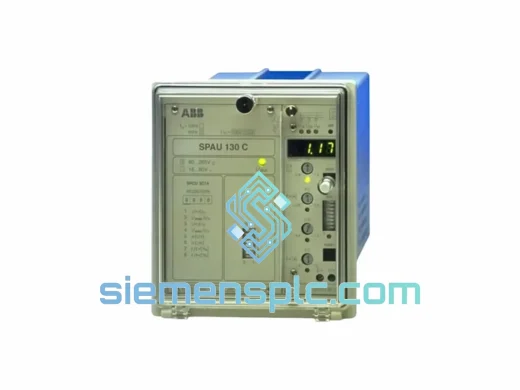
ABB SPAU130C-AA Voltage Protection Relay
SPAU 130 Series
Origin SE
Voltage Protection Relay
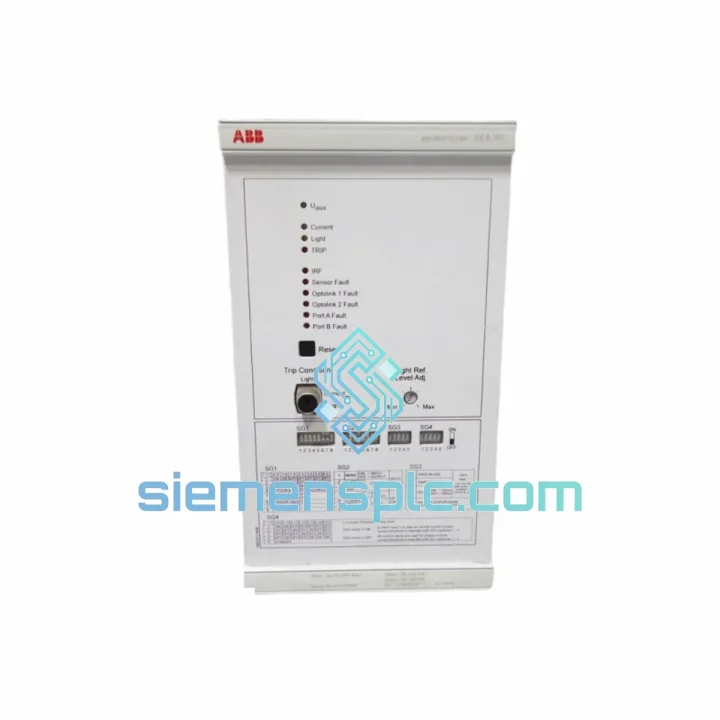
Request verified availability, condition, replacement risk review, packing options and courier lead time for REA101-AA.
Click Request Quote and the part number is inserted into the inquiry form automatically.
Core fields for model confirmation and RFQ routing. Detailed product narrative remains below.
A failed arc flash protection relay is not a maintenance event — it is a production crisis. The moment your REA101-AA goes offline, your switchgear panel is unprotected, your safety interlock chain is broken, and your operations team is staring at a locked-out breaker with no clear timeline for restoration. Standard distributor lead times of 8 to 16 weeks are not a solution. They are a liability.
We hold verified stock of the ABB REA101-AA at our Xiamen dispatch facility. Confirmed orders placed before 14:00 CST ship the same business day in original ABB factory packaging — seals intact, test documentation included, commercial invoice pre-formatted for customs clearance. Your replacement relay is moving toward your site while your procurement team is still drafting the purchase order through conventional channels.
Every unit is 100% genuine ABB REA100 series hardware. No refurbished boards. No rebranded substitutes. No grey-market risk. Full traceability documentation is available on request for maintenance records, insurance audits, and regulatory compliance files.
URGENT REQUIREMENT? Contact: [email protected] | WhatsApp: +86 18359268345
| Parameter | Specification | Status |
|---|---|---|
| Part Number | REA101-AA | ✔ Ready to Ship |
| Manufacturer | ABB | 100% Original |
| Series | REA100 | — |
| Function | Arc Flash Detection & Protection Relay | — |
| Detection Principle | Optical (point sensor / fiber loop) + overcurrent supervision | — |
| Arc Detection Time | < 1 ms | — |
| Total Trip Time | < 10 ms (relay + breaker combined) | — |
| Sensor Inputs | Up to 3 × RESH point sensors or RELF fiber loop | — |
| Current Input | 1 A / 5 A selectable via terminal block jumper | — |
| Auxiliary Supply | 24–250 V DC / 100–240 V AC | — |
| Trip Output Relays | 2 × NO/NC configurable | — |
| Communication | RS-485 / Modbus RTU (optional) | — |
| Mounting | DIN rail or panel mount | — |
| Operating Temperature | −10 °C to +55 °C | — |
| Enclosure Protection | IP40 (front panel) | — |
| Compliance Standards | IEC 60255, IEC 62271 | — |
| Country of Origin | Germany | — |
| Unit Weight | ~2,040 g (with accessories) | — |
| Dispatch Location | Xiamen, China | ✔ Same-Day Dispatch |
Field experience with the REA100 series consistently shows that roughly 35–40% of relay replacements are unnecessary. The actual fault is upstream — in the sensor circuit, the auxiliary supply wiring, or the CT ratio configuration. Before you pull the REA101-AA, run this diagnostic sequence. It takes under 30 minutes and prevents you from commissioning a new relay into the same fault condition that took out the last one.
Step 1 — Isolate the sensor circuit first. Disconnect all RESH or RELF sensor inputs at the relay terminal block. Bridge the sensor terminals with the factory test plug or a short jumper. Initiate the front-panel self-test. If the relay passes with sensors isolated, the fault is in the sensor circuit — cracked RESH sensor head, kinked fiber loop, or corroded sensor wiring — not the relay itself. This single step eliminates the most common misdiagnosis in the field.
Step 2 — Verify auxiliary supply at the relay terminals, not at the bus. The REA101-AA accepts a wide supply range, but a corroded fuse holder or undertorqued terminal creates a voltage drop that causes intermittent resets and false SUPPLY LED faults. Measure directly at the relay supply terminals under load. More than 5% below nominal means a wiring inspection is required before condemning the relay.
Step 3 — Recalculate the overcurrent pickup threshold. The REA101-AA uses dual-criteria logic: simultaneous optical detection AND overcurrent above the set threshold. If the overcurrent pickup is set too low relative to your CT ratio, load inrush can satisfy the current criterion while a stray light source satisfies the optical criterion — producing nuisance trips. Recalculate: I(pickup secondary) = I(fault primary) ÷ CT ratio × 0.5. Adjust the rotary switch on the relay front panel accordingly.
Replacement configuration checklist:
LED fault code reference:
Switchgear rooms are not server rooms. They run hot, damp, and dirty — and the protection relay inside them must perform correctly on the first demand, regardless of what the environment has subjected it to over years of continuous service. The REA101-AA is built for that operating reality, not for a controlled laboratory benchmark.
The PCB assembly carries conformal coating as standard — a measurable barrier against the condensation cycles and corrosive atmospheres found in coastal chemical plants, pulp mills, and mining operations where humidity swings between 20% and 95% RH within a single shift. Units installed in tropical switchgear rooms without air conditioning have maintained calibration and response time across multi-year service intervals without intervention or recalibration.
Vibration performance is validated to IEC 60255-21-1 Class 1, covering the continuous mechanical stress of compressor stations, pump rooms, and heavy press lines where floor vibration loosens terminal screws and fatigues PCB solder joints on lesser hardware. Offshore platform installations operating in salt spray, constant motion, and baseline humidity have demonstrated service lives exceeding five years without recalibration.
The operating temperature range of −10 °C to +55 °C handles unheated substations in northern European winters and non-air-conditioned switchgear rooms in Southeast Asian and Middle Eastern climates. The wide auxiliary supply input range eliminates sensitivity to voltage transients during large motor starting events — a documented cause of nuisance resets in relays with narrower supply tolerances.
The optical detection circuit contains no moving parts and no contact wear mechanism. Unlike electromechanical relays that degrade measurably with each operation, the REA101-AA optical sensor maintains consistent sub-millisecond response throughout the product lifecycle. The REA100 series carries a published MTBF exceeding 100,000 hours under rated operating conditions — a figure backed by accumulated field hours from a relay series in continuous production and service since the early 2000s.
Our dispatch warehouse is located in Xiamen, Fujian — one of China’s primary international freight hubs with direct DHL Express and FedEx Priority lanes to every major industrial region worldwide. When your plant is down, logistics speed is not a convenience — it is the only variable still within your control.
Typical express transit times from Xiamen:
Orders confirmed before 14:00 CST ship the same business day. The relay leaves in original ABB packaging with factory seals intact, accompanied by the test report, installation manual, and a commercial invoice pre-formatted for customs clearance. We classify the shipment under HS code 8536.49 and prepare all export documentation — your receiving team does not handle paperwork on arrival.
Tracking numbers are issued within 2 hours of dispatch. For destinations with complex import duty structures — Brazil, India, and similar markets — we advise on DAP versus DDP terms before shipment to prevent customs holds that extend your downtime beyond the transit time itself.
For planned maintenance programs requiring 5 or more units, sea freight consolidation from Xiamen to major ports reduces per-unit logistics cost significantly, with 7–14 day transit to European and North American ports. Contact us to discuss blanket order arrangements and consignment stock options for high-reliability maintenance programs.
Email: [email protected]
WhatsApp: +86 18359268345
Web: siemensplc.com
© 2026. All rights reserved.
We check the full part number, brand, series and visible nameplate information before quotation.
Sales confirms stock path, condition option, quantity and realistic lead time for export dispatch.
DHL, FedEx, UPS or buyer courier arrangements can be reviewed with packing requirements.
Similar brand or category products for fast comparison and multi-item RFQ lists.