
ABB
In Stock OK
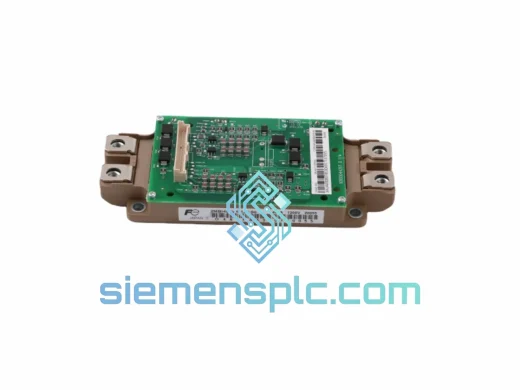
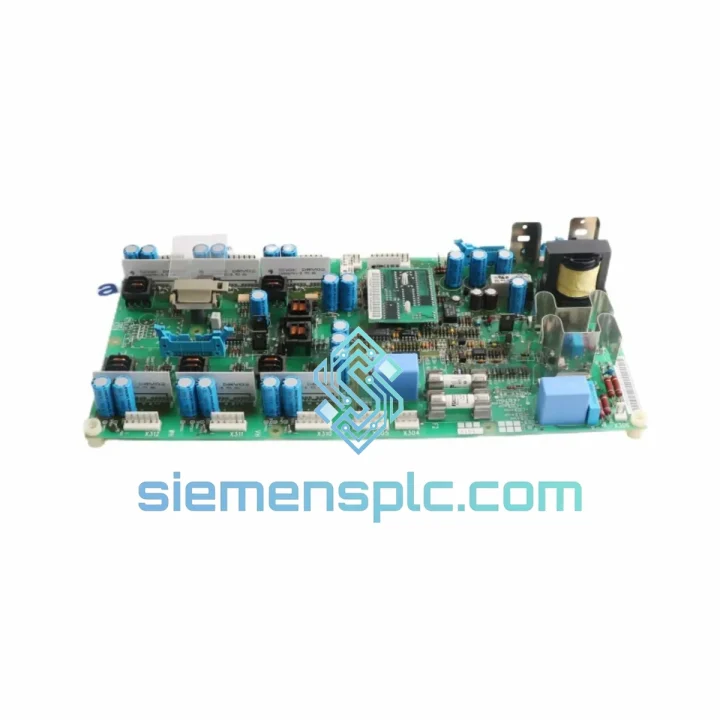
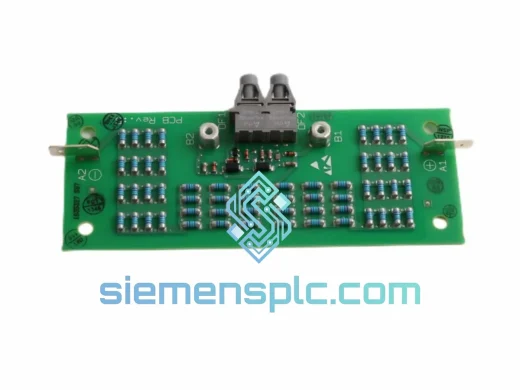
ABB SNAT7261INT Drive Interface Board – ACS800 Series
Request verified availability, condition, replacement risk review, packing options and courier lead time for SNAT7261INT.
BrandABB
Part NumberSNAT7261INT
ConditionAvailability Check
Lead TimeRFQ Confirmation
DocumentsDatasheet / photos by RFQ
ShippingExport packing available
Auto-filled RFQ
SNAT7261INT
Click Request Quote and the part number is inserted into the inquiry form automatically.
- Reply by email: [email protected]
- WhatsApp / Tel: +86 18359268345
- Mon-Sat 9:00-18:00 GMT+8
Procurement Data
Key Product Information
Core fields for model confirmation and RFQ routing. Detailed product narrative remains below.
- Brand
- ABB
- Primary Part Number
- SNAT7261INT
- Product Type
- Drive Interface Board
- Series / Family
- S800
- Manufacturer
- ABB Ltd.
- Country of Origin
- SE
- Catalog Category
- Motor Drives
- Operating Temp.
- −10 °C to +55 °C (drive ambient per IEC 60068-2)
- Warranty
- 12 months from date of shipment
Model confirmed for inquiry
SNAT7261INT
Send quantity, destination and urgency. The RFQ form keeps this part number attached.
Request Quote
Product Overview
ABB SNAT7261INT — Main Interface Board for ACS800 Variable Frequency Drives
The ABB SNAT7261INT functions as the primary signal-routing and I/O arbitration board within the ACS800 series variable frequency drive platform. Positioned between the RDCU drive control unit and the AINT power interface layer, this board manages the bidirectional transfer of analog references, digital command signals, and internal diagnostic data across the drive’s internal backplane. Its failure directly interrupts the control loop, making it one of the highest-priority field-replaceable units in any ACS800 installation.
Unlike peripheral expansion boards, the SNAT7261INT carries deterministic timing constraints: all signal paths it manages must resolve within the drive’s 200 µs base execution cycle. The board’s internal routing logic is implemented in hardware rather than firmware, which eliminates software-induced latency and ensures consistent signal propagation regardless of drive load state.
This unit is sourced as genuine ABB OEM stock and ships from our warehouse in Xiamen, China with full traceability documentation. Each board is individually inspected before dispatch.
Real-time Stock & RFQ: [email protected] | WhatsApp: +86 18359268345
Technical Parameters
| Part Number | SNAT7261INT |
| Manufacturer | ABB Ltd. |
| Compatible Platform | ABB ACS800 Series VFD (all frame sizes using RDCU control unit) |
| Board Classification | Main Interface Board (INT layer) |
| Primary Function | Analog/digital signal routing; control-to-power backplane arbitration |
| Signal Execution Cycle | Synchronised to ACS800 base cycle (200 µs typical) |
| Operating Temperature | −10 °C to +55 °C (drive ambient per IEC 60068-2) |
| Storage Temperature | −40 °C to +70 °C |
| Relative Humidity | 5–95 % RH, non-condensing |
| Mounting Interface | Internal chassis rail; direct-mate connector to RDCU and AINT boards |
| PCB Construction | Multi-layer FR4, conformal-coat eligible |
| Weight | 880 g |
| EMC Compliance | IEC 61800-3 Category C2/C3 |
| Safety Standard | IEC 61800-5-1; CE marked |
| Warranty | 12 months from date of shipment |
Hardware Logical Analysis
The SNAT7261INT occupies the interface layer (INT) in ABB’s three-tier ACS800 control architecture: the RDCU control unit sits above it, and the AINT power interface board sits below. This layered topology is deliberate — it isolates high-voltage switching transients generated by the IGBT power stage from the low-level signal processing performed by the RDCU. The SNAT7261INT acts as the galvanic and logical boundary between these two domains.
Opto-isolation and EMC Architecture: Signal lines crossing from the power domain to the control domain pass through opto-isolators rated for a minimum of 2.5 kV RMS isolation voltage. This prevents common-mode noise — generated by IGBT switching at frequencies typically between 3 kHz and 12 kHz — from coupling into the RDCU’s analog input channels. The board’s ground plane is split, with the power-side and control-side grounds joined at a single star point to suppress ground loop currents that would otherwise introduce measurement error into speed and torque reference signals.
Signal Conditioning: Analog reference signals (speed setpoint, torque limit, PID feedback) enter the board through differential input receivers with a common-mode rejection ratio (CMRR) exceeding 60 dB at 50/60 Hz. This is particularly relevant in installations where signal cables run parallel to motor power cables over distances greater than 10 metres — a common layout in paper mill and steel plant environments where the SNAT7261INT is frequently deployed.
Digital I/O Arbitration: The board manages discrete digital inputs (DI) and outputs (DO) used for run/stop commands, fault acknowledgement, and external interlock signals. Each DI channel includes a hardware debounce filter with a configurable time constant, preventing false triggering from contact bounce in relay-based control circuits. DO channels are driven by open-collector transistor outputs rated for 24 VDC / 100 mA, compatible with standard PLC sink/source input modules.
Backplane Communication: Internal communication between the SNAT7261INT and the RDCU uses a proprietary high-speed serial link operating at a fixed baud rate synchronised to the drive’s PWM carrier frequency. This synchronisation ensures that control data updates are phase-aligned with the IGBT switching cycle, eliminating the sub-cycle timing jitter that would otherwise degrade torque ripple performance in tension-controlled winding applications.
Fault Detection Logic: The board includes hardware watchdog circuitry that monitors the integrity of the RDCU communication link. If the link is absent for more than two consecutive base cycles, the board asserts a hardware fault signal that forces the drive into a safe-torque-off (STO) state independent of firmware execution. This hardware-level response is faster than any software fault handler and is the mechanism behind ACS800 fault codes FF52 and FF61.
System Integration Benefits
- Deterministic Control Loop Closure: By handling all I/O arbitration in hardware, the SNAT7261INT removes variable software scheduling delays from the signal path, enabling the ACS800’s direct torque control (DTC) algorithm to operate at its rated 40 µs torque response time.
- Plug-Compatible Field Replacement: The board uses a standardised direct-mate connector footprint across all ACS800 frame sizes that employ the RDCU control unit. Replacement requires no rewiring, no parameter re-entry, and no firmware flashing in the majority of installations — reducing mean time to repair (MTTR) to under 30 minutes for a trained technician.
- Diagnostic Transparency: The board routes internal diagnostic signals — DC bus voltage, heatsink temperature, IGBT gate status — to the RDCU’s monitoring registers, making them visible in the drive’s parameter set (Group 03 and Group 09 in standard ACS800 firmware). This eliminates the need for external measurement equipment during routine condition monitoring.
- Noise-Immune Analog Inputs: Differential input architecture with >60 dB CMRR ensures accurate speed and torque references even in high-noise environments such as thyristor rectifier rooms and large motor control centres (MCCs).
- Hardware-Level STO Integration: The board’s watchdog-driven STO assertion is compatible with IEC 62061 SIL 2 safety architectures when used with the ACS800’s optional safety relay module, supporting machinery directive compliance without external safety PLCs.
- Multi-Fieldbus Readiness: The SNAT7261INT’s I/O routing layer is fieldbus-agnostic. It operates identically whether the drive is configured for PROFIBUS-DP, DeviceNet, Modbus RTU, or EtherNet/IP via the RDCU’s optional fieldbus adapter slot, preserving investment when communication infrastructure is upgraded.
- Thermal Stability: The board’s operating temperature range of −10 °C to +55 °C covers the full ambient envelope of the ACS800 drive cabinet, including installations in unheated outdoor enclosures in temperate climates and air-conditioned control rooms in tropical regions.
- Long-Term Parts Availability: As a discrete field-replaceable unit, the SNAT7261INT extends the serviceable life of ACS800 drives beyond the point at which complete drive replacement would otherwise be required, protecting capital investment in installed drive infrastructure.
Quality Assurance & Global Logistics
Every ABB SNAT7261INT unit dispatched from our Xiamen facility undergoes a structured pre-shipment process. Visual inspection covers PCB surface condition, connector pin integrity, solder joint quality, and component seating. Functional verification confirms power-on behaviour and signal path continuity using a drive-compatible test fixture. Units sourced as new OEM stock are verified against ABB’s original packaging and label specifications before acceptance into inventory.
Packaging follows IEC 61340-5-1 ESD protection requirements: boards are sealed in anti-static shielding bags, cushioned with conductive foam, and boxed in double-wall corrugated cartons rated for international air freight handling. Each shipment includes a packing list, inspection record, and — where applicable — original ABB documentation.
From our Xiamen warehouse, we ship to industrial customers across Southeast Asia, the Middle East, Europe, and the Americas. Standard air freight transit times are 3–7 business days to most destinations. Express courier options (DHL, FedEx, UPS) are available for urgent requirements. All shipments are fully insured and tracked from dispatch to delivery confirmation.
A 12-month warranty covers every unit against manufacturing defects and functional failure under normal operating conditions. Warranty claims are processed with a target response time of 48 hours from fault report receipt.
Contact Information
Email: [email protected]
WhatsApp: +86 18359268345
Web: siemensplc.com
Location: Xiamen, China
© 2026 siemensplc.com. All rights reserved.
Ready to quote
[email protected]
Send This Part Number to Sales
RFQ workflow
Quality workflow ->
Confirmation Process
01Model confirmation
We check the full part number, brand, series and visible nameplate information before quotation.
02Availability reply
Sales confirms stock path, condition option, quantity and realistic lead time for export dispatch.
03Packing & courier
DHL, FedEx, UPS or buyer courier arrangements can be reviewed with packing requirements.
Continue sourcing
Browse full catalog ->
Related Automation Parts
Similar brand or category products for fast comparison and multi-item RFQ lists.
ABB
RFQ Ready
ABB SDCS-UCM-1 3ADT220090R0008 Excitation Control Board
S800
Origin SE
DC Drive Control Module
ABB
RFQ Ready
ABB SDCS-PIN-51-COAT 3ADT220090R0006 DC Drive Control Card
S800
Origin SE
DC Drive Control Card