ABB
RFQ Ready
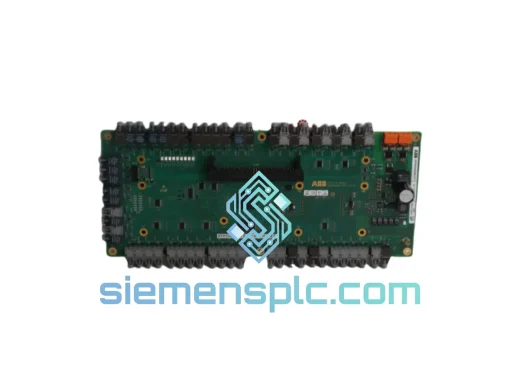
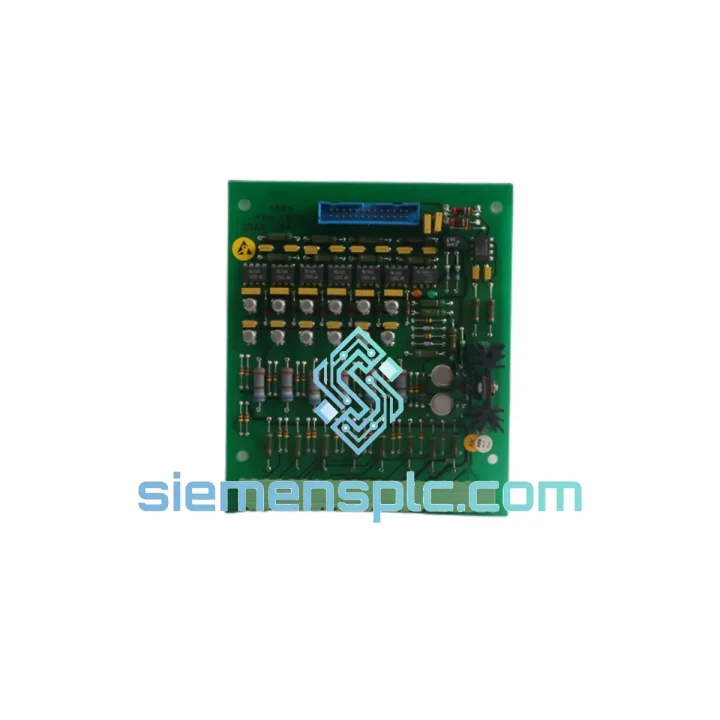
ABB 3BHE024855R0103 UFC921A103 DCS Interface Board
Symphony Plus
Origin SE
DCS Interface Board
Request verified availability, condition, replacement risk review, packing options and courier lead time for YXM187D 3ASD510001C16.
Click Request Quote and the part number is inserted into the inquiry form automatically.
Core fields for model confirmation and RFQ routing. Detailed product narrative remains below.
Within a Symphony Plus distributed control system, the controller module is the singular point where engineering logic becomes physical output. The ABB YXM187D, carrying hardware reference 3ASD510001C16, occupies that position: it is the node that owns the execution context for every IEC 61131-3 function block assigned to it, enforces the configured scan period without drift, and maintains a coherent data image with field I/O modules across the Symphony Plus backplane bus. No upstream supervisor arbitrates its control decisions on a cycle-by-cycle basis — the YXM187D executes autonomously within its assigned loop set, reporting status upward while acting downward without latency introduced by inter-node negotiation.
The architectural significance of this autonomy becomes apparent under fault conditions. Because each YXM187D holds an independent execution context, a hardware failure on one node does not propagate control disruption to adjacent nodes on the same backplane. The failure boundary is the module itself. This containment property is not a software feature — it is a consequence of the physical partitioning of program memory, data memory, and backplane bus access between independent controller nodes. Engineers designing high-availability process sections can assign critical loops to dedicated YXM187D nodes, ensuring that a single module failure produces a predictable, bounded process impact rather than a system-wide control interruption.
The processor inside the YXM187D runs under a fixed-priority preemptive real-time kernel. The control scan task holds the highest scheduling priority. All background processes — diagnostic data aggregation, communication retry handling, memory integrity verification — execute at lower priority levels and are preempted without delay when the scan deadline approaches. In practice, this means the scan cycle completes within its configured window regardless of the volume of diagnostic traffic or the state of the communication subsystem. For processes where a 40–80 ms deviation in PID execution timing produces measurable derivative overshoot or integrator windup — combustion control, compressor surge protection, reactor temperature regulation — this scheduling discipline is the baseline requirement for stable operation, not an optional enhancement.
The backplane interface on the YXM187D uses a dual-channel bus architecture that separates process data traffic from diagnostic and health-monitoring traffic at the physical layer. I/O updates and control outputs traverse the process data channel; processor load metrics, memory utilization counters, communication error tallies, and supply voltage readings traverse the diagnostic channel. Neither channel competes with the other for bandwidth. An engineer monitoring module health from an ABB Operate IT or System 800xA station receives continuous, real-time visibility into YXM187D operating parameters without any polling overhead on the control data path. This separation is implemented in hardware, not managed by software arbitration, which means it remains effective even when the module is operating at high processor utilization.
Galvanic isolation at the backplane interface prevents fault propagation in both directions. A power supply failure or internal short circuit on the YXM187D cannot inject electrical disturbances onto the backplane bus and affect adjacent I/O modules or the system power rail. Conversely, transient disturbances on the backplane — generated by adjacent modules switching high-current loads or by conducted emissions from variable-frequency drives in the same cabinet — cannot couple into the YXM187D logic circuitry through the bus interface. This isolation boundary is a passive hardware feature that remains effective regardless of firmware state.
IEC 61131-3 compliance across the Symphony Plus platform means application programs developed on one YXM187D generation execute without modification on a replacement unit. A module swap-out does not require recompilation, re-parameterization, or re-commissioning of the control application. The replacement unit, loaded with the same application image, resumes execution from the last synchronized data state when paired with a hot-standby redundant controller — or from a defined initial state on a cold restart — minimizing process upset duration during both planned maintenance and unplanned failure recovery.
This unit ships as genuine ABB OEM hardware from our Xiamen, China facility. Pre-shipment verification includes physical inspection of part number labels, connector pin integrity, and housing condition, followed by backplane communication testing against OEM-compatible test equipment. Serial numbers are recorded in shipment documentation for full traceability from our facility to the installation site.
Real-time Stock & RFQ: [email protected] | WhatsApp: +86 18359268345
| Parameter | Specification |
|---|---|
| Manufacturer | ABB |
| Part Number | YXM187D |
| Hardware Reference | 3ASD510001C16 |
| Platform | Symphony Plus DCS |
| Module Role | IEC 61131-3 Execution-Layer Controller Node |
| Supported Languages | Function Block Diagram (FBD), Structured Text (ST), Ladder Diagram (LD) |
| Backplane Interface | Dual-channel high-speed parallel bus (process data + diagnostics) |
| Redundancy Architecture | Hot-standby pair with hardware-arbitrated switchover |
| Switchover Latency | Sub-second (hardware fault detection triggered) |
| Operating Temperature | 0 °C to +60 °C |
| Storage Temperature | −40 °C to +85 °C |
| Relative Humidity | 5% – 95% RH, non-condensing |
| EMC Compliance | IEC 61000 series; CE marked |
| Backplane Isolation | Galvanic isolation between logic circuitry and bus drivers |
| Memory Architecture | Physically partitioned program memory and data memory |
| Watchdog Timer | Hardware watchdog with configurable timeout; forces controlled reset on scan-cycle failure |
| Module Weight | 640 g |
| Country of Origin | Germany |
| Warranty | 12 months from dispatch date |
| Supply Condition | New OEM / Tested Refurbished (specify at RFQ) |
Preemptive Real-Time Kernel Scheduling: The YXM187D’s control scan task is assigned the highest fixed priority in the kernel scheduler. Background tasks — including diagnostic data collection, communication retry queues, and memory scrub routines — are preempted without negotiation when the scan deadline window opens. This architecture eliminates the failure mode where a burst of diagnostic traffic or a communication retry storm extends the scan period and introduces derivative transients in PID output chains. Scan-cycle jitter is bounded by the kernel’s preemption latency, not by the volume of concurrent background activity.
PCB-Level EMC Hardening: The board layout segments the ground plane between the digital processing section and the backplane interface circuitry, reducing capacitive coupling of switching noise from the bus drivers into the processor core. Differential signaling on the backplane bus provides common-mode noise rejection — a practical requirement in motor control centers and switchgear rooms where variable-frequency drives generate conducted emissions in the 150 kHz–30 MHz range that corrupt single-ended bus signals. Ferrite bead filtering on the module’s power supply input rails attenuates high-frequency switching noise from adjacent modules sharing the same backplane power distribution network.
Hardware Memory Protection: Program memory and data memory are physically partitioned on separate address spaces with hardware access controls. A runaway write in the data segment — caused by a software fault, stack overflow, or corrupted pointer — cannot overwrite the application image in program memory. This protection prevents the failure mode where a data corruption event produces unpredictable control behavior that is difficult to distinguish from a hardware fault during post-incident analysis. The hardware watchdog timer provides a second layer of protection: if the processor fails to complete the scan cycle within the configured timeout window, the watchdog forces a controlled module reset, preventing a hung processor from holding field outputs at their last commanded state indefinitely.
Hardware-Arbitrated Redundancy Switchover: In a hot-standby redundant pair, the active YXM187D synchronizes its data memory image to the standby unit at the end of each scan cycle over a dedicated redundancy link that is electrically separate from the backplane data bus. Switchover is triggered by hardware fault detection logic — not by a software polling routine on the active module. This distinction is operationally significant: a software fault that corrupts the active module’s execution context cannot simultaneously prevent the hardware fault detection circuit from issuing the switchover signal. Switchover latency is bounded by the hardware detection and arbitration time, not by software response time.
Dual-Channel Backplane Bus Architecture: The physical separation of process data and diagnostic traffic onto independent bus channels eliminates bandwidth contention between control-critical and monitoring functions. Under high I/O update rates, the process data channel operates at full throughput without being throttled by diagnostic polling requests from the engineering station. This architecture also simplifies fault isolation: a communication error on the diagnostic channel does not affect process data integrity, and vice versa, allowing maintenance personnel to distinguish between a monitoring system fault and a control data fault without ambiguity.
Each ABB YXM187D 3ASD510001C16 unit dispatched from our Xiamen, China facility passes a structured pre-shipment verification sequence. Physical inspection confirms part number label integrity, connector pin condition, housing integrity, and the absence of corrosion, mechanical damage, or evidence of prior unauthorized repair. Backplane communication testing verifies correct initialization response and data exchange behavior using OEM-compatible test equipment. Serial numbers are recorded and included in shipment documentation, providing end-to-end traceability from our facility to the installation site.
Packaging uses anti-static shielding bags with desiccant inserts, enclosed in foam-lined export cartons rated for international air freight handling standards. Standard export documentation — commercial invoice, packing list, and certificate of origin — accompanies every shipment. Additional documents including FORM E (ASEAN preferential tariff), EUR.1 movement certificate, or material compliance declarations are available on request at the RFQ stage.
Shipping is available via DHL Express, FedEx International Priority, and UPS Worldwide Expedited, with typical transit times of 3–7 business days to major industrial destinations across Europe, North America, Southeast Asia, the Middle East, and Australia. Sea freight consolidation is available for multi-unit orders where lead time permits. All shipments include full tracking and cargo insurance. The 12-month warranty against manufacturing defects covers repair or replacement, with a targeted return turnaround of 10 business days from receipt at our Xiamen facility.
Email: [email protected]
WhatsApp: +86 18359268345
Web: siemensplc.com
Location: Xiamen, China
© 2026. All rights reserved.
We check the full part number, brand, series and visible nameplate information before quotation.
Sales confirms stock path, condition option, quantity and realistic lead time for export dispatch.
DHL, FedEx, UPS or buyer courier arrangements can be reviewed with packing requirements.
Similar brand or category products for fast comparison and multi-item RFQ lists.