
ABB
In Stock OK
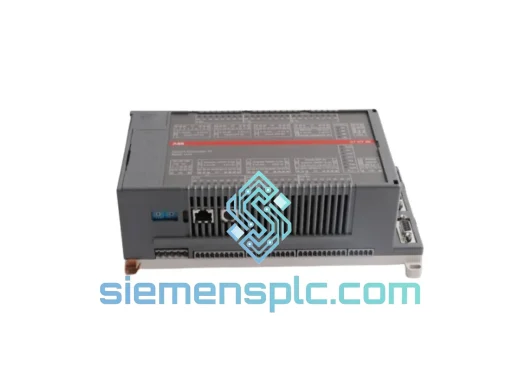
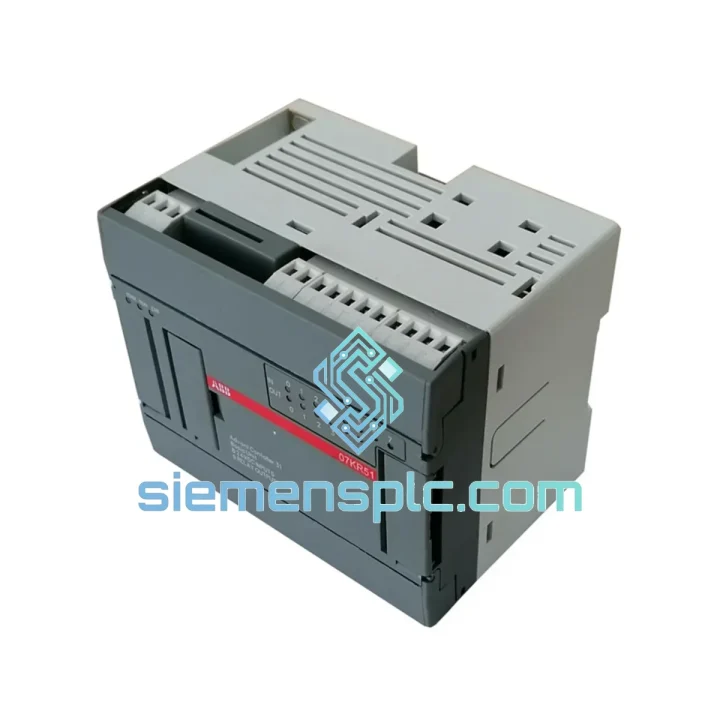
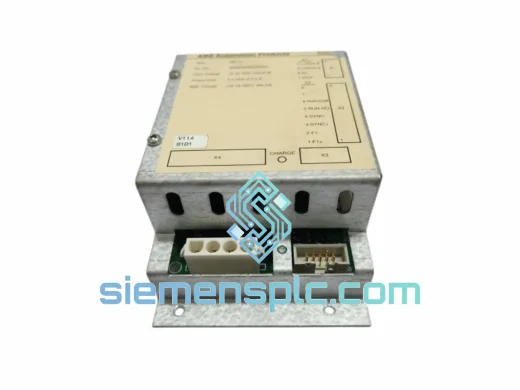
ABB 07KR51 AC31 Basic Processing Unit
Request verified availability, condition, replacement risk review, packing options and courier lead time for 07KR51.
BrandABB
Part Number07KR51
ConditionAvailability Check
Lead TimeRFQ Confirmation
DocumentsDatasheet / photos by RFQ
ShippingExport packing available
Auto-filled RFQ
07KR51
Click Request Quote and the part number is inserted into the inquiry form automatically.
- Reply by email: [email protected]
- WhatsApp / Tel: +86 18359268345
- Mon-Sat 9:00-18:00 GMT+8
Procurement Data
Key Product Information
Core fields for model confirmation and RFQ routing. Detailed product narrative remains below.
- Brand
- ABB
- Primary Part Number
- 07KR51
- Product Type
- PLC CPU Module
- Series / Family
- Advant
- Manufacturer
- ABB
- Country of Origin
- SE
- Catalog Category
- PLCs & Controllers
- Operating Temp.
- 0°C to +55°C
Model confirmed for inquiry
07KR51
Send quantity, destination and urgency. The RFQ form keeps this part number attached.
Request Quote
Product Overview
ABB 07KR51 Down? Every Minute Costs Money — We Ship Same Day from Xiamen
Your AC31 node is dead. The line is stopped. Maintenance is standing by and the shift supervisor is already on the phone. You need a 07KR51 — not next week, not in three days. Today.
We stock the ABB 07KR51 Basic Processing Unit for exactly this scenario. Units are bench-tested, firmware-logged, and sitting on the shelf in Xiamen. DHL Express and FedEx International Priority pick up daily. From the moment you confirm your order, we move. Most customers in Southeast Asia and the Middle East have the part in hand within 48–72 hours. Europe and North America: 3–5 business days door to door.
Don’t gamble on an untested pull. Every unit we ship has passed a 4-point functional check: power-on self-test, CS31 bus initialization, RAM read/write verification via 907 PC331, and hardware revision logging. You get a part that works — not a part that looks like it works.
⚡ URGENT REQUIREMENT? Contact: [email protected] | WhatsApp: +86 18359268345
Quick Technical Datasheet
| Parameter | Specification |
|---|---|
| Part Number | 07KR51 |
| Manufacturer | ABB |
| Series | Advant Controller 31 (AC31) |
| Module Type | Basic Processing Unit (CPU) |
| Supply Voltage | 24 V DC (18–30 V DC range) |
| Program Memory | 32 KB RAM (battery-backed) + 32 KB EPROM |
| Data Memory | 16 KB |
| Scan Cycle | 0.8 ms / 1K Boolean instructions |
| Onboard I/O | 16 DI / 8 DO |
| Max Expandable I/O | 512 DI/DO + 128 AI/AO via CS31 bus |
| Communication | CS31 bus master + RS-232 programming port |
| Operating Temperature | 0°C to +55°C |
| Protection Rating | IP20 |
| Certifications | CE, UL 508 |
| Country of Origin | Germany |
| Stock Status | ✅ Ready to Ship — Xiamen, China |
Troubleshooting & Replacement Tips
Fifteen years of field calls on AC31 systems teach you the same lessons over and over. Here’s what actually matters when you’re swapping a 07KR51 under pressure:
1. Battery First — Always
The 07KR51 uses a lithium backup battery (3.6 V, Tadiran TL-5902 or equivalent) to retain the application program in RAM. If the replacement unit has been in storage for more than 2 years, assume the battery is marginal. Before you load the program, check the BAT LED. If it’s flashing or amber, swap the battery before powering up — otherwise you risk a mid-commissioning RAM corruption that will cost you another hour.
2. CS31 Bus Address — Don’t Skip This
The 07KR51 is the CS31 bus master. It does not have a node address itself, but every remote I/O module on the CS31 bus has a hardware address set via DIP switches on the module face. When you install the new CPU, the bus master will poll all configured addresses. If any remote module’s DIP switch address doesn’t match the address configured in the 907 PC331 project, you’ll get a CS31 bus fault (ERR LED on, RUN LED off) within the first scan cycle. Pull the I/O list from the original project file before you start. Verify every remote module address physically before you attempt a RUN.
3. Firmware Revision Matching
ABB released multiple firmware revisions of the 07KR51 across its production life. Revision mismatches between the CPU firmware and the 907 PC331 project version can cause subtle issues: incorrect analog scaling, unexpected timer behavior, or CS31 bus timing errors that only appear under load. Always check the hardware revision label on the module (printed on the side housing) and compare it against the firmware version logged in your 907 PC331 project properties. If they don’t match, contact ABB technical support for a firmware compatibility matrix before commissioning.
4. Common Fault Codes You’ll See
- ERR LED solid red, RUN LED off: Hardware fault or failed power-on self-test. Check 24 V DC supply voltage at the module terminals (must be within 18–30 V DC). If voltage is correct, the CPU module itself has failed — replace it.
- ERR LED flashing, RUN LED on: CS31 bus communication error. One or more remote I/O modules are not responding. Check DIP switch addresses, cable continuity, and bus termination resistors at both ends of the CS31 cable.
- STOP LED on, no ERR: CPU is in STOP mode — program is not executing. This is normal after a cold start if the CPU is configured for STOP-on-startup. Use 907 PC331 to issue a RUN command, or check the hardware RUN/STOP switch position on the module face.
- BAT LED flashing: Battery voltage low. Replace the backup battery immediately. The program is still intact, but will be lost on the next power cycle if the battery is not replaced.
- All LEDs off with 24 V DC applied: Internal fuse blown or power supply module (07KP62/07KP63) failure. Check the power supply module first before condemning the CPU.
5. Program Backup Before You Touch Anything
If the original CPU is still partially functional (any LED activity), connect 907 PC331 via RS-232 and attempt an online upload of the current program before pulling the module. Even a corrupted upload is better than nothing — it gives you a reference for the I/O configuration and CS31 node list. If the CPU is completely dead, locate the last archived project file on the engineering workstation. If no backup exists, you’re rebuilding from scratch — which is why we always tell customers: back up your program to EPROM and to a PC after every commissioning change.
Reliability in Harsh Conditions
The AC31 platform was engineered for the environments where PLCs go to die. The 07KR51 has been deployed in crude oil pump stations in the Middle East where ambient temperatures inside the panel regularly hit 50°C. It runs in hydroelectric dam gate control rooms where humidity is near-constant at 90% RH. It operates in steel mill auxiliary panels where the vibration from rolling mill drives would shake a lesser module loose from its backplane connector within months.
The design choices that make this possible are deliberate: the battery-backed RAM is mounted on a separate daughterboard isolated from the main PCB thermal mass, reducing thermal cycling stress on the solder joints. The CS31 bus transceiver uses differential signaling with hardware-level noise rejection, which is why it maintains communication integrity in environments saturated with VFD switching noise and high-voltage bus transients. The screw-terminal I/O connectors are rated for 500 mating cycles and maintain contact force under the vibration profiles defined in IEC 60068-2-6.
Units we ship have been inspected for exactly the failure modes that harsh environments produce: corroded terminal blocks, cracked PCB traces from thermal cycling, degraded electrolytic capacitors in the power conditioning circuit, and battery holder contact oxidation. If a unit doesn’t pass our bench test, it doesn’t ship. That’s not a marketing statement — it’s the only way we maintain a zero-DOA record with our industrial customers.
Global Express Logistics
Our warehouse is located in Xiamen, Fujian Province — one of China’s primary export hubs with direct access to DHL, FedEx, and UPS international gateways. This is not a drop-ship operation. Stock is physically on our shelf, not at a supplier’s warehouse three cities away.
Standard Dispatch Process:
- Order confirmed before 14:00 CST: Same-day dispatch via DHL Express or FedEx International Priority.
- Order confirmed after 14:00 CST: Next business day dispatch.
- Packaging: Anti-static bag, foam-lined carton, fragile labeling. The module arrives in the same condition it left our bench.
- Documentation: Commercial invoice, packing list, and Certificate of Origin included with every shipment. HS Code 8537.10 declared for customs clearance.
- Tracking: AWB number provided within 2 hours of dispatch. Real-time tracking link sent via email and WhatsApp.
Typical Transit Times (from Xiamen):
- Southeast Asia (SG, MY, TH, ID): 1–2 business days
- Middle East (AE, SA, QA): 2–3 business days
- Europe (DE, NL, FR, UK): 3–5 business days
- North America (US, CA): 3–5 business days
- South America (BR, CL, AR): 5–7 business days
- Africa (ZA, NG, EG): 4–6 business days
For genuinely critical shutdowns, we can arrange same-day courier handoff to the DHL Express international gateway at Xiamen Gaoqi International Airport. Contact us via WhatsApp for time-critical coordination — that channel is monitored 7 days a week.
Contact Information
📧 Email: [email protected]
💬 WhatsApp: +86 18359268345
🌐 Web: siemensplc.com
© 2026 siemensplc.com. All rights reserved.
Ready to quote
[email protected]
Send This Part Number to Sales
RFQ workflow
Quality workflow ->
Confirmation Process
01Model confirmation
We check the full part number, brand, series and visible nameplate information before quotation.
02Availability reply
Sales confirms stock path, condition option, quantity and realistic lead time for export dispatch.
03Packing & courier
DHL, FedEx, UPS or buyer courier arrangements can be reviewed with packing requirements.
Continue sourcing
Browse full catalog ->
Related Automation Parts
Similar brand or category products for fast comparison and multi-item RFQ lists.
ABB
RFQ Ready
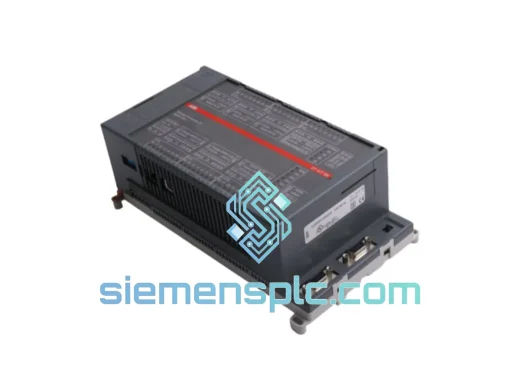
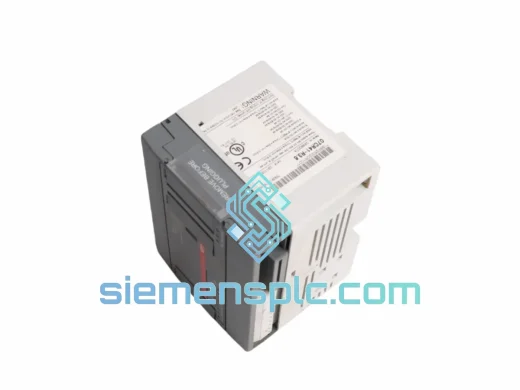
ABB SB822 3BSC760019E1 PLC Backup Battery – Advant Controller 31
Advant
Origin SE
PLC Backup Battery