
ABB
In Stock OK
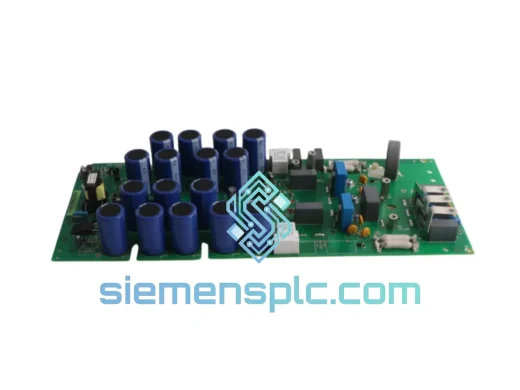
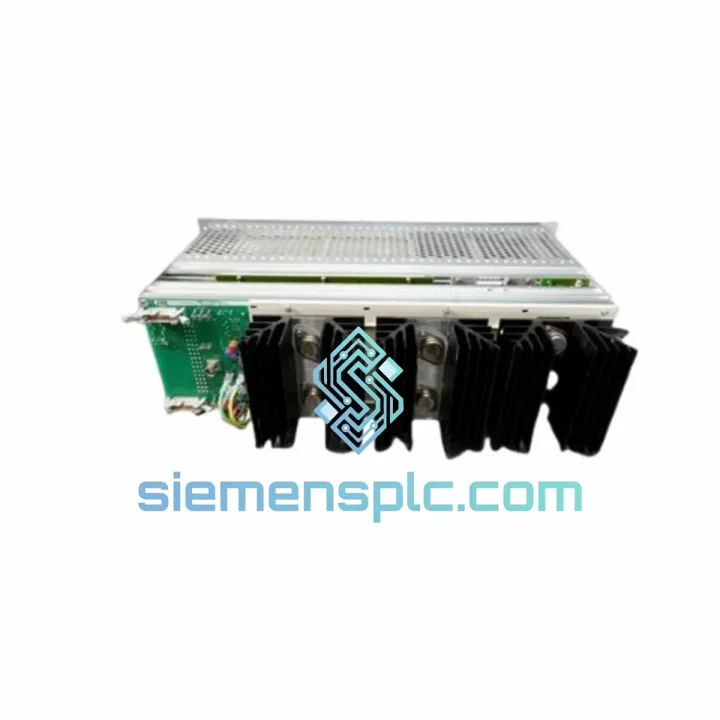
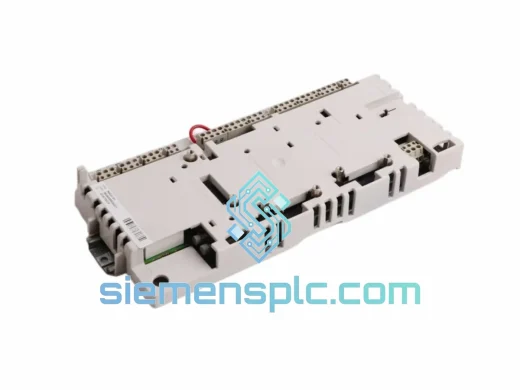
ABB UNS0024B HEIR318072R0002 Drive Monitoring Module – ACS Series
Request verified availability, condition, replacement risk review, packing options and courier lead time for UNS0024B HEIR318072R0002.
BrandABB
Part NumberUNS0024B HEIR318072R0002
ConditionAvailability Check
Lead TimeRFQ Confirmation
DocumentsDatasheet / photos by RFQ
ShippingExport packing available
Auto-filled RFQ
UNS0024B HEIR318072R0002
Click Request Quote and the part number is inserted into the inquiry form automatically.
- Reply by email: [email protected]
- WhatsApp / Tel: +86 18359268345
- Mon-Sat 9:00-18:00 GMT+8
Procurement Data
Key Product Information
Core fields for model confirmation and RFQ routing. Detailed product narrative remains below.
- Brand
- ABB
- Primary Part Number
- UNS0024B HEIR318072R0002
- Product Type
- Drive Monitoring Module
- Series / Family
- S800
- Manufacturer
- ABB Ltd.
- Country of Origin
- SE
- Catalog Category
- Motor Drives
- Operating Temp.
- 0 °C to +55 °C (ambient, forced-air cooled enclosure)
- Warranty
- 12 months from date of dispatch
Model confirmed for inquiry
UNS0024B HEIR318072R0002
Send quantity, destination and urgency. The RFQ form keeps this part number attached.
Request Quote
Product Overview
ABB UNS0024B (HEIR318072R0002) — Conduction Monitoring Module for ACS Series AC Drives
The ABB UNS0024B, catalogued under internal reference HEIR318072R0002, is a dedicated conduction monitoring module engineered for integration within ABB’s ACS-series variable frequency drive platforms. Its primary function is continuous ground-fault and insulation-resistance surveillance of the motor winding circuit, providing the drive control unit with real-time diagnostic data that enables predictive fault isolation before thermal or electrical damage propagates to connected machinery.
In a closed-loop motor control architecture, the UNS0024B occupies the option slot of the ACS800 drive frame and communicates via the drive’s internal DDCS (Distributed Drive Control System) fiber-optic ring. This architecture decouples the monitoring signal path from the main power bus, eliminating ground-loop interference that would otherwise corrupt low-level insulation resistance measurements in high-voltage inverter environments. The module continuously injects a low-frequency test signal into the motor circuit and measures the return impedance, comparing it against configurable threshold registers in the drive’s parameter set. When measured insulation resistance drops below the programmed limit — typically expressed in kΩ — the module asserts a fault word bit that the drive’s main control board reads on the next scan cycle, triggering a configurable response: warning, fault trip, or external relay output.
This architecture is particularly relevant in continuous-process industries — pulp and paper, petrochemical, water treatment, and heavy metals — where unplanned motor failures carry disproportionate downtime costs. By integrating conduction monitoring at the drive level rather than relying on external insulation testers, maintenance intervals can be extended from fixed-schedule to condition-based, reducing unnecessary motor pull-outs and associated labor costs.
Real-time Stock & RFQ: [email protected] | WhatsApp: +86 18359268345
Technical Parameters
| Parameter | Value / Specification |
|---|---|
| Manufacturer | ABB Ltd. |
| Part Number | UNS0024B |
| ABB Reference | HEIR318072R0002 |
| Module Function | Motor Winding Conduction & Insulation Resistance Monitoring |
| Compatible Drive Series | ACS800 (confirmed); ACS880 (verify firmware rev.) |
| Communication Interface | DDCS fiber-optic ring (internal drive bus) |
| Measurement Method | Low-frequency AC injection, impedance return analysis |
| Insulation Threshold Range | Configurable via drive parameter set (kΩ) |
| Fault Output | Drive fault word bit assertion; optional relay output |
| Mounting | Option slot, ACS800 drive frame (R7 / R8 verified) |
| Operating Temperature | 0 °C to +55 °C (ambient, forced-air cooled enclosure) |
| Storage Temperature | −40 °C to +70 °C |
| Relative Humidity | ≤ 95 % RH, non-condensing |
| Weight | 420 g |
| Certifications | CE (verify current revision with ABB documentation) |
| Warranty | 12 months from date of dispatch |
Hardware Logical Analysis
The UNS0024B’s signal chain begins at the measurement injection transformer, which is galvanically isolated from both the drive’s DC bus and the module’s logic supply. This three-way isolation — measurement circuit, power bus, and control logic — is the foundational EMC design decision that allows the module to operate reliably in the high-dV/dt environment generated by IGBT switching at carrier frequencies of 3–12 kHz. Without this isolation topology, common-mode noise coupled through stray capacitance between the motor cable shield and the measurement circuit would saturate the ADC input, rendering insulation readings unreliable.
The measurement signal itself is injected at a frequency selected to fall outside the dominant harmonic spectrum of the PWM output — typically in the 1–10 Hz range — so that the return signal can be extracted by a narrow-band digital filter without interference from switching harmonics. The filtered return signal is digitized by a 12-bit ADC and processed by the module’s onboard microcontroller, which applies a moving-average algorithm over a configurable window to suppress transient noise from motor switching events or cable capacitance discharge.
The DDCS interface uses plastic optical fiber (POF) at 10 Mbit/s, which provides inherent galvanic isolation between the module and the drive’s main control board. This eliminates the ground-potential difference problem that plagues RS-485 or CAN-based monitoring systems in multi-drive installations where drive frames may be at different earth potentials. The fiber link also provides immunity to the radiated EMI generated by the drive’s own power stage, which can reach field strengths of 10–30 V/m at 1 m distance in unshielded installations.
The module’s firmware implements a dual-threshold alarm structure: a warning threshold set at approximately 150 % of the trip threshold, and a hard trip threshold. This hysteresis band prevents nuisance tripping caused by temporary insulation degradation from moisture condensation during startup, while still ensuring that progressive insulation failure — characterized by a monotonically decreasing resistance trend — triggers a controlled shutdown before a phase-to-ground fault develops.
System Integration Benefits
- Deterministic fault detection latency: The DDCS ring scan cycle is synchronized with the drive’s main control task, ensuring that a fault word assertion from the UNS0024B is read within one control cycle (typically 1–2 ms), enabling sub-10 ms fault response without relying on external PLC polling.
- Condition-based maintenance enablement: Continuous insulation resistance trending, logged via the drive’s parameter history or an external SCADA system, provides the data foundation for CBM programs, reducing motor replacement frequency by 20–40 % in documented industrial deployments.
- No external wiring to motor terminals: The measurement injection is performed through the drive’s output terminals, eliminating the need for additional measurement cables to the motor junction box — a significant installation cost reduction in multi-motor installations.
- Configurable response logic: The fault response — warning only, controlled ramp-down, or immediate trip — is set via standard ABB drive parameters, allowing the module to be adapted to process criticality without hardware modification.
- Compatibility with ABB DriveAP and DriveWindow: The module’s status and measurement data are accessible through ABB’s standard PC tools, enabling remote diagnostics and parameter adjustment without physical access to the drive cabinet.
- Reduced insurance and compliance risk: Continuous insulation monitoring satisfies the requirements of IEC 60364-6 and IEC 61557-8 for insulation monitoring in IT-earthed systems, supporting compliance documentation for industrial facility audits.
- Scalable to multi-drive architectures: In ACS800 multi-drive configurations, each drive frame can host an independent UNS0024B, with fault data aggregated at the master control unit via the DDCS ring — no additional fieldbus infrastructure required.
- Minimal commissioning overhead: The module is recognized automatically by the ACS800 firmware upon insertion into the option slot; threshold parameters are set via the standard drive parameter interface, with no separate configuration software or license required.
Quality Assurance & Global Logistics
Every UNS0024B unit supplied by siemensplc.com is sourced from ABB’s authorized distribution network or verified OEM-surplus channels with full traceability documentation. Prior to dispatch, each unit undergoes a three-stage inspection protocol: visual examination of PCB, connectors, and label integrity; functional verification of the DDCS communication interface; and ESD-safe packaging in anti-static foam-lined cartons with desiccant inserts to protect against humidity during transit.
Logistics operations are based in Xiamen, China — a major international freight hub with direct access to DHL Express, FedEx International Priority, and SF International services. Standard export documentation — commercial invoice, packing list, and certificate of conformity — is prepared for every shipment. For customers in the EU, UKCA/CE declaration of conformity is available upon request. Typical transit times are 3–5 business days to Europe and North America via express courier, and 5–8 business days to Southeast Asia and the Middle East. Bulk orders of 5+ units qualify for consolidated freight options with reduced per-unit shipping cost. All shipments are fully insured and tracked from dispatch to delivery confirmation.
Contact Information
📧 Email: [email protected]
📱 WhatsApp: +86 18359268345
🌐 Web: siemensplc.com
📍 Location: Xiamen, China
© 2026 siemensplc.com. All rights reserved.
Ready to quote
[email protected]
Send This Part Number to Sales
RFQ workflow
Quality workflow ->
Confirmation Process
01Model confirmation
We check the full part number, brand, series and visible nameplate information before quotation.
02Availability reply
Sales confirms stock path, condition option, quantity and realistic lead time for export dispatch.
03Packing & courier
DHL, FedEx, UPS or buyer courier arrangements can be reviewed with packing requirements.
Continue sourcing
Browse full catalog ->
Related Automation Parts
Similar brand or category products for fast comparison and multi-item RFQ lists.
ABB
RFQ Ready
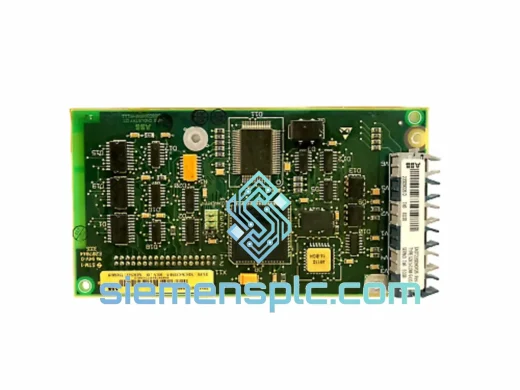
ABB SDCS-COM-5 3BSE006567R1 Fieldbus Communication Module
S800
Origin SE
Fieldbus Communication Module
ABB
RFQ Ready
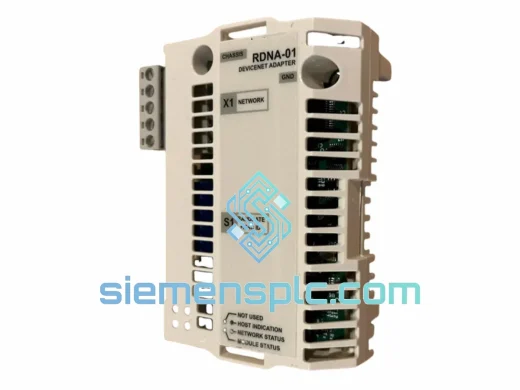
ABB RDNA-01 DeviceNet Adapter Module – ACS800 ACS600
S800
Origin SE
Fieldbus Communication Module
ABB
RFQ Ready
ABB RDCU-12C 3AUA0000036521 Drive Control Unit
S800
Origin SE
PLC & Drive Control Module