ABB
In Stock OK
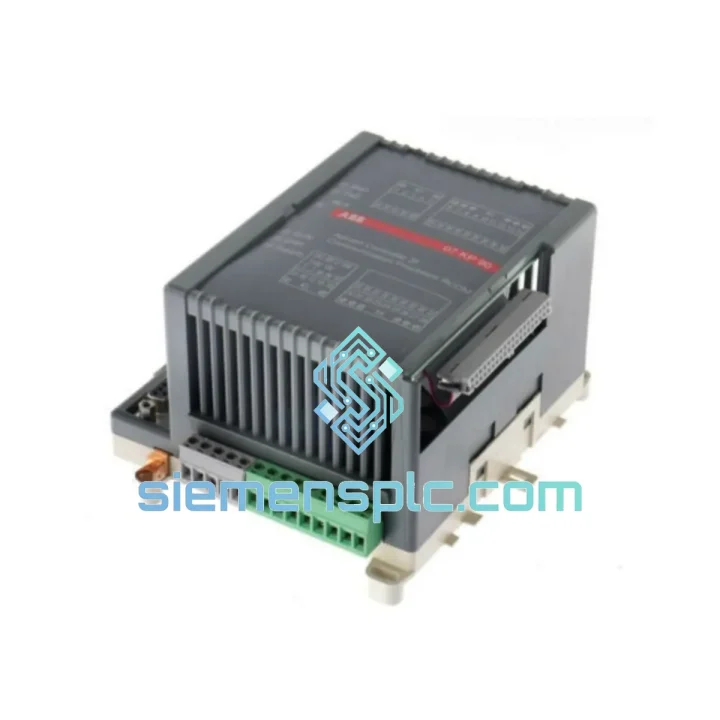
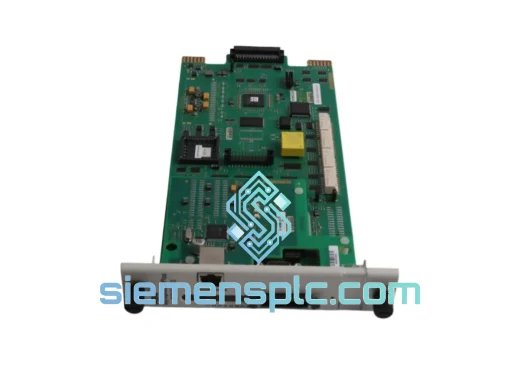
ABB 07KP90 PLC Communications Module – AC500 Series
Request verified availability, condition, replacement risk review, packing options and courier lead time for 07KP90.
BrandABB
Part Number07KP90
ConditionAvailability Check
Lead TimeRFQ Confirmation
DocumentsDatasheet / photos by RFQ
ShippingExport packing available
Auto-filled RFQ
07KP90
Click Request Quote and the part number is inserted into the inquiry form automatically.
- Reply by email: [email protected]
- WhatsApp / Tel: +86 18359268345
- Mon-Sat 9:00-18:00 GMT+8
Procurement Data
Key Product Information
Core fields for model confirmation and RFQ routing. Detailed product narrative remains below.
- Brand
- ABB
- Primary Part Number
- 07KP90
- Product Type
- PLC Communications Module
- Series / Family
- AC500
- Country of Origin
- SE
- Catalog Category
- Communication
- Operating Temp.
- 0°C to +55°C
- Warranty
- 12 months from date of shipment
Model confirmed for inquiry
07KP90
Send quantity, destination and urgency. The RFQ form keeps this part number attached.
Request Quote
Product Overview
ABB 07KP90 RCOM Serial Communications Module — Dedicated Protocol Offload Processor for AC500 PLC Control Architectures
In distributed control architectures, the communications subsystem is the most failure-prone boundary between the controller and the field. When a CPU is forced to handle both deterministic control logic and asynchronous serial protocol management within a single scan cycle, timing jitter accumulates, watchdog violations occur, and protocol retransmissions degrade overall system throughput. The ABB 07KP90 RCOM Communications Module was designed to eliminate this architectural conflict entirely.
The 07KP90 is a dedicated communications co-processor for the ABB AC500 PLC platform. It operates as an autonomous serial protocol engine on the CS31 expansion bus, executing RCOM, Modbus RTU, and IEC 60870-5-101 protocol stacks independently of the host CPU’s scan cycle. The CPU writes data to shared memory buffers; the 07KP90 handles all framing, error detection, retransmission, and link-layer management without consuming a single microsecond of CPU processing time. This architectural separation is not a convenience feature — it is a prerequisite for achieving deterministic response times in SIL-rated control loops where communication latency must be bounded and auditable.
The module provides two galvanically isolated serial ports: one RS-232 and one RS-485. The RS-485 port supports multidrop networks of up to 32 nodes across cable runs of 1,200 meters at 100 kbps, with 2.5 kV galvanic isolation protecting against ground potential differences in long-distance industrial cable installations. The RS-232 port supports point-to-point connections to modems, barcode readers, weighing terminals, and legacy field instruments at baud rates from 300 to 115,200 bps.
Across power generation substations, pipeline SCADA RTUs, municipal water treatment networks, pharmaceutical batch systems, and rail interlocking panels, the 07KP90 has accumulated a deployment record spanning two decades of continuous industrial service. Its operating temperature range of 0°C to +55°C, conformal-coated PCB, and DIN rail locking mechanism make it suitable for installation in standard IEC 60715 control panels without additional environmental conditioning.
📩 Real-time Stock & RFQ: [email protected] | WhatsApp: +86 18359268345
Technical Parameters
| Parameter | Specification |
|---|---|
| Part Number | 07KP90 |
| Module Classification | RCOM Serial Communications Co-Processor |
| Compatible Platform | ABB AC500 PLC (CS31 expansion bus) |
| Supported Protocols | RCOM, Modbus RTU (master/slave), IEC 60870-5-101, proprietary serial |
| Serial Port 1 | RS-232, DB9, point-to-point, 300–115,200 bps |
| Serial Port 2 | RS-485, isolated, multidrop up to 32 nodes, 300–115,200 bps |
| Galvanic Isolation | 2,500 V (RS-485 port) |
| Max Cable Length (RS-485) | 1,200 m at 100 kbps; 100 m at 1 Mbps |
| Operating Temperature | 0°C to +55°C |
| Storage Temperature | −25°C to +70°C |
| Relative Humidity | 5–95% RH, non-condensing |
| Power Consumption | <5 W (from CS31 backplane bus) |
| Mounting | DIN rail via AC500 expansion rack (IEC 60715, 35 mm) |
| Weight | Approx. 400 g |
| EMC Immunity | IEC 61000-4-2 (ESD), IEC 61000-4-4 (EFT/Burst), IEC 61000-4-5 (Surge) |
| Certifications | CE, UL, cUL, RoHS |
| Country of Origin | Germany |
| Warranty | 12 months from date of shipment |
Hardware Logical Analysis
CS31 Bus Interface and Shared Memory Architecture
The 07KP90 connects to the AC500 CPU via the CS31 parallel expansion bus, which operates at a fixed 1.5 Mbps token-passing cycle. The module maintains a dual-port RAM buffer accessible simultaneously by both the CS31 bus controller and the onboard communications processor. This architecture eliminates bus contention: the CPU reads and writes process data to the shared buffer at its own scan rate, while the communications processor services the serial ports asynchronously. The result is zero coupling between CPU scan jitter and serial protocol timing — a property that cannot be achieved with software-based serial drivers running on the CPU itself.
RCOM Protocol Stack Implementation
The RCOM protocol is ABB’s proprietary link-layer protocol for AC500 inter-device communication. On the 07KP90, the RCOM stack is implemented in firmware on the dedicated communications processor, not as a software library on the CPU. This means RCOM frame assembly, CRC-16 error checking, acknowledgment handling, and retransmission timers all execute at hardware interrupt priority, with deterministic latency bounded by the serial baud rate and frame length — not by CPU load or operating system scheduling. For a 256-byte RCOM frame at 115,200 bps, the worst-case transmission latency is 22.2 ms, independent of CPU scan cycle length.
EMC Design and Isolation Architecture
The RS-485 port’s 2.5 kV galvanic isolation is implemented using a transformer-coupled isolation barrier, not optocoupler-based isolation. Transformer coupling provides superior common-mode rejection at high frequencies (above 1 MHz), which is critical in environments with variable frequency drives, arc welding equipment, or high-voltage switchgear generating conducted EMI on cable shields. The PCB layout routes the isolated RS-485 circuitry on a physically separated ground plane, with a 3 mm creepage distance between isolated and non-isolated sections, meeting IEC 60664-1 Pollution Degree 2 requirements.
Watchdog and Fault Detection Logic
The 07KP90 implements a two-tier watchdog architecture. The first tier monitors the CS31 bus communication with the host CPU: if no valid CS31 frame is received within a configurable timeout (default 500 ms), the module sets its error output flag and enters a safe state, holding the last valid output data. The second tier monitors the serial port communication: if a Modbus RTU slave fails to respond within the configured timeout, the module logs the event in its diagnostic buffer and continues polling remaining nodes — preventing a single failed device from blocking the entire network. Both watchdog events are accessible via AC500 diagnostic function blocks in Automation Builder.
System Integration Benefits
- CPU scan cycle decoupling: Serial protocol execution runs on the 07KP90’s dedicated processor, eliminating the scan cycle extension that occurs when serial drivers run on the CPU. A 100 ms CPU scan cycle remains 100 ms regardless of serial network load or retransmission events.
- Deterministic communication latency: RCOM and Modbus RTU frame timing is governed by hardware interrupt logic, not software scheduling. Worst-case latency is calculable from baud rate and frame length alone, enabling precise SIL response time analysis per IEC 61508.
- Multidrop network scalability: The RS-485 port supports 32 nodes per segment. Multiple 07KP90 modules can be installed in a single AC500 rack, each managing an independent RS-485 segment, scaling serial network capacity without CPU overhead.
- Protocol bridging without external hardware: RCOM-to-Modbus RTU protocol conversion is handled internally by the 07KP90 firmware, eliminating the need for external protocol converters, reducing panel footprint, and removing an additional failure point from the communication chain.
- Diagnostic transparency: All communication events — frame counts, CRC errors, timeout events, retransmission counts — are logged in the module’s diagnostic buffer and accessible via standard AC500 diagnostic function blocks. No proprietary diagnostic tools are required.
- Long-distance RS-485 capability: 2.5 kV galvanic isolation and transformer-coupled common-mode rejection enable reliable operation on RS-485 cable runs up to 1,200 m, covering the majority of industrial plant layouts without repeaters.
- Low panel heat load: At <5 W power consumption, the 07KP90 contributes minimal thermal load to the control panel. In compact enclosures where thermal management is constrained, this allows higher module density without forced-air cooling.
- IEC 60870-5-101 native support: The module’s firmware includes a native IEC 60870-5-101 stack, the standard telecontrol protocol for substation automation and pipeline SCADA. This eliminates the need for software-based protocol emulation on the CPU, which is not permitted in IEC 61850 compliant substation automation systems.
Quality Assurance & Global Logistics
Genuine ABB Origin
Every ABB 07KP90 unit supplied by siemensplc.com is sourced through verified industrial channels with full traceability to ABB manufacturing documentation. Units are not refurbished, relabeled, or remanufactured. Serial numbers are cross-referenced against ABB production records where available. Each unit ships with a certificate of conformity, functional test report, and original ABB datasheet reference (1TGE120020R0001).
4-Stage Pre-Shipment Inspection
- Physical inspection: Connector pin integrity, PCB surface contamination, housing crack assessment, label authenticity verification, and firmware version confirmation via module LED diagnostic sequence.
- Power-on functional test: Module installed in AC500 test rack; CS31 bus enumeration, LED status sequence, and backplane power draw verified against ABB factory acceptance criteria.
- Serial port protocol test: RS-232 and RS-485 ports tested with Modbus RTU loopback at 9,600, 19,200, and 115,200 bps. RCOM handshake verified with reference AC500 CPU. Frame error rate confirmed at 0% over 1,000 consecutive frames.
- Packaging and documentation: Unit sealed in anti-static bag with humidity indicator card, placed in foam-lined carton. Serial number, test date, and technician ID recorded in shipment documentation.
Global Logistics from Xiamen, China
All orders ship from our Xiamen warehouse via DHL Express, FedEx International Priority, or UPS Worldwide Expedited. Standard transit times: Europe 3–5 business days, North America 4–6 business days, Southeast Asia 2–3 business days, Middle East 4–7 business days. Every shipment includes commercial invoice, packing list, certificate of conformity, and HS code documentation (HS 8537.10) for customs clearance. Export control compliance (EAR/ECCN classification) is handled by our logistics team. Emergency same-day dispatch is available for orders confirmed before 14:00 CST.
Contact Information
📧 Email: [email protected]
📱 WhatsApp: +86 18359268345
🌐 Web: siemensplc.com
📍 Location: Xiamen, China
© 2026 siemensplc.com. All rights reserved.
Ready to quote
[email protected]
Send This Part Number to Sales
RFQ workflow
Quality workflow ->
Confirmation Process
01Model confirmation
We check the full part number, brand, series and visible nameplate information before quotation.
02Availability reply
Sales confirms stock path, condition option, quantity and realistic lead time for export dispatch.
03Packing & courier
DHL, FedEx, UPS or buyer courier arrangements can be reviewed with packing requirements.
Continue sourcing
Browse full catalog ->
Related Automation Parts
Similar brand or category products for fast comparison and multi-item RFQ lists.
ABB
RFQ Ready
ABB SPBRC410 PLC Communication Controller
AC500
Origin SE
PLC Communication Controller