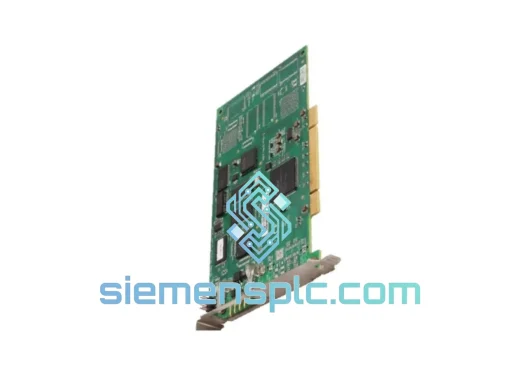
Product Overview
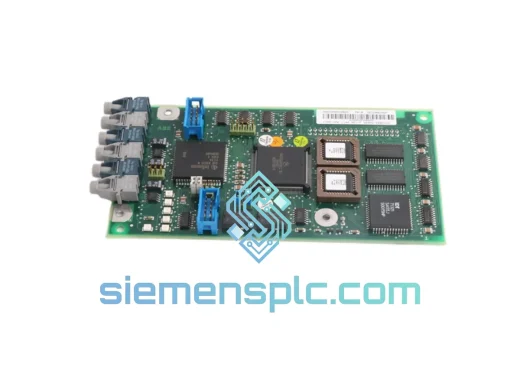
ABB 1TGE102019R4800 – Stop the Clock on Your Substation Outage
Every minute a REF615 or REC615 relay sits offline with a dead interface module, your SCADA screen goes dark, protection engineers lose visibility, and operations management starts asking questions you cannot answer. A failed 1TGE102019R4800 is not a scheduled maintenance item — it is an emergency. We stock it. We ship it today. From Xiamen to your site via DHL or FedEx, tracked door-to-door, with full export documentation. That is the only answer that matters when the clock is running.
URGENT REQUIREMENT? Contact: [email protected] | WhatsApp: +86 18359268345
Quick Technical Datasheet
| Parameter |
Value |
| Part Number |
1TGE102019R4800 |
| Brand |
ABB |
| Series |
Relion® 615 (REF615 / REC615) |
| Module Function |
Communication Interface Module |
| Supported Protocols |
IEC 61850, MODBUS RTU/TCP, DNP3 |
| Mounting |
Internal plug-in card, relay-specific slot |
| Operating Temperature |
-25°C to +55°C continuous |
| Humidity |
5–95% RH, non-condensing |
| EMC Compliance |
IEC 60255-26, Class III |
| Weight |
~300 g |
| Origin |
Germany |
| Stock Status |
✅ Ready to Ship – Xiamen Warehouse |
| Condition |
New / Surplus-New (state on inquiry) |
Troubleshooting & Replacement Tips
Common failure signatures for the 1TGE102019R4800:
-
COMM FAIL / LINK DOWN alarm on the relay HMI — the relay has lost its Ethernet or serial link. Before condemning the module, verify the cable and switch port first. If the link LED on the module itself is dead with a known-good cable, the module is the culprit.
-
IEC 61850 GOOSE subscription loss — peer relays stop receiving GOOSE messages from this IED. Check the relay event log for “Communication module not responding” entries. This is a hard indicator of module failure, not a configuration issue.
-
Relay reboots on communication load — intermittent resets under heavy SCADA polling often point to a degraded interface module rather than a firmware bug. Swap the module before chasing firmware.
-
No response to PCM600 engineering tool — if ABB PCM600 cannot establish a connection despite correct IP settings and firewall rules, the module’s onboard processor has likely failed.
Replacement procedure — field notes:
- De-energize the relay auxiliary supply and wait 30 seconds for capacitors to discharge before opening the relay case. The 615 series does not require a full panel outage, but confirm with your site safety rules.
- The interface module occupies a dedicated slot in the relay’s rear card cage. It is keyed — it only seats in one orientation. Do not force it.
- After seating the new 1TGE102019R4800, restore power and allow 60–90 seconds for the module to initialize. The relay will display a “Communication module starting” status during this window.
-
Firmware matching is critical. The replacement module must be compatible with the relay’s installed firmware version. Check the relay nameplate for the firmware revision (e.g., 3.0, 4.0, 5.0) and confirm with ABB’s compatibility matrix or contact us — we will verify before shipping.
-
IP address and protocol settings are stored in the relay’s main CPU, not in the interface module itself. After replacement, the relay will automatically push the stored configuration to the new module. No re-parameterization is required in most cases. Verify by checking the relay’s communication parameter menu post-restart.
- If the relay was running IEC 61850 Edition 2, confirm the replacement module supports Ed.2 — earlier hardware revisions of the 1TGE102019R4800 may only support Ed.1. The module’s hardware revision label on the PCB edge is the reference point.
- Run a full GOOSE and MMS communication test with your SCADA/EMS before returning the relay to service. Do not skip this step — a partially functional module can pass visual inspection and still drop packets under load.
Reliability in Harsh Conditions
Substations are not server rooms. The 1TGE102019R4800 is designed to operate where most electronics would fail within months. ABB’s Relion® 615 platform is type-tested to IEC 60255 and IEC 61000 series standards, covering the full spectrum of industrial electrical stress:
-
Vibration & Shock: Qualified to IEC 60255-21 Class 2 for vibration endurance and IEC 60068-2-27 for shock. In traction substations and industrial plants with heavy rotating machinery, this matters. The module’s PCB is conformal-coated and mechanically secured against connector fretting caused by continuous vibration.
-
Thermal Cycling: Rated for continuous operation from -25°C to +55°C ambient, with storage down to -40°C. Outdoor switchgear kiosks in northern climates and desert installations in the Middle East both fall within spec. The onboard components are selected for wide-temperature stability — no derating required within the rated range.
-
Humidity & Condensation: The conformal coating on the PCB provides protection against moisture ingress in high-humidity environments such as coastal substations and tropical climates. The relay enclosure itself is rated IP40 minimum, but the module is designed to tolerate the humidity levels that inevitably penetrate over years of service.
-
Electromagnetic Interference: Substations generate some of the harshest EMI environments in industry — switching transients, fast transients (IEC 61000-4-4), surge (IEC 61000-4-5), and conducted RF interference (IEC 61000-4-6). The 1TGE102019R4800 is tested to Class III immunity levels across all these categories. The module’s isolated communication ports prevent ground loop currents from corrupting data or damaging the interface hardware.
Global Express Logistics
Our dispatch hub is in Xiamen, China — one of the country’s primary export ports with direct DHL and FedEx service to over 220 countries. Here is what happens after you confirm your order:
-
Same-day dispatch for orders confirmed before 14:00 CST. The module is pulled from stock, inspected, ESD-bagged, and packed in a rigid outer carton with foam cushioning rated for air freight handling.
-
DHL Express Worldwide — typical transit: 2–4 business days to Europe, 3–5 days to the Americas, 1–3 days to Southeast Asia. Real-time tracking provided at dispatch.
-
FedEx International Priority — available as an alternative carrier for destinations where FedEx has a service advantage. We select the faster option unless you specify otherwise.
-
Export documentation included as standard: commercial invoice, packing list, certificate of origin. For regulated markets, we can provide an EAR99 classification letter and ECCN confirmation. Customs HS code: 8537.10 (control panels for voltage ≤1000V) or 8543.70 depending on destination customs authority — we advise on a per-shipment basis.
-
Insurance is included on all shipments above USD 500 equivalent. For high-value orders, we recommend declaring full replacement value — we handle the paperwork.
- We have shipped ABB Relion® modules to utilities in Germany, Saudi Arabia, Australia, Brazil, and South Africa within the past 12 months. Customs clearance has been smooth in all cases with our documentation package.
Contact Information
Email: [email protected]
WhatsApp: +86 18359268345
Web: siemensplc.com
© 2026 siemensplc.com. All rights reserved.