
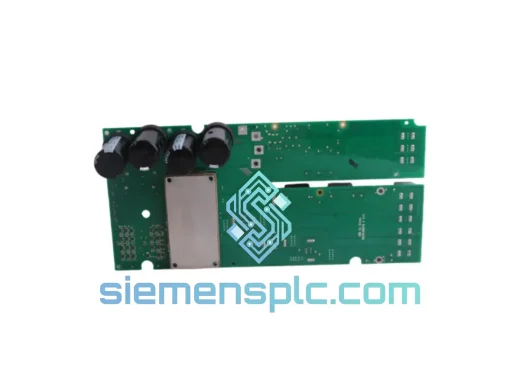
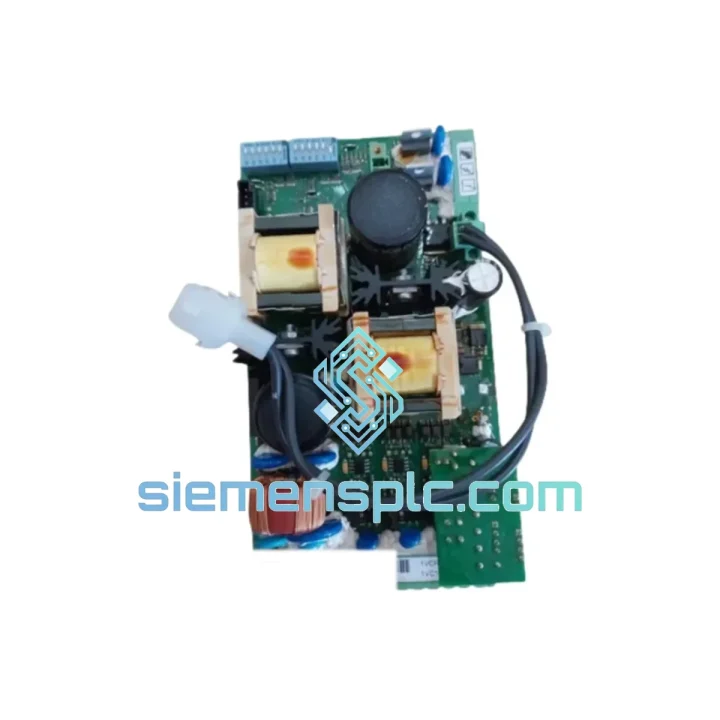
ABB
In Stock OK
ABB 1VCR017053G0006 Variable Frequency Drive – ACS Series
Request verified availability, condition, replacement risk review, packing options and courier lead time for 1VCR017053G0006.
BrandABB
Part Number1VCR017053G0006
ConditionAvailability Check
Lead TimeRFQ Confirmation
DocumentsDatasheet / photos by RFQ
ShippingExport packing available
Auto-filled RFQ
1VCR017053G0006
Click Request Quote and the part number is inserted into the inquiry form automatically.
- Reply by email: [email protected]
- WhatsApp / Tel: +86 18359268345
- Mon-Sat 9:00-18:00 GMT+8
Procurement Data
Key Product Information
Core fields for model confirmation and RFQ routing. Detailed product narrative remains below.
- Brand
- ABB
- Primary Part Number
- 1VCR017053G0006
- Product Type
- Variable Frequency Drive
- Series / Family
- 1VCR017053G0006 ACS Series
- Manufacturer
- ABB
- Country of Origin
- SE
- Catalog Category
- Motor Drives
- Warranty
- 12 months against manufacturing defects from shipment date
Model confirmed for inquiry
1VCR017053G0006
Send quantity, destination and urgency. The RFQ form keeps this part number attached.
Request Quote
Product Overview
ABB 1VCR017053G0006 — Closed-Loop Torque Authority in Process-Critical AC Drive Applications
The ABB 1VCR017053G0006 is a factory-built AC variable frequency drive from ABB’s ACS platform, engineered for sustained motor speed and torque regulation in process-critical industrial environments. Within a control loop, this unit occupies the power conversion layer between fixed-frequency AC mains and a three-phase induction motor, translating grid energy into a fully modulated voltage-frequency output while simultaneously returning real-time motor state data to the supervisory control layer — whether that is a Siemens S7-300/400/1500 PLC, an ABB AC500, or a DCS node running on PROFIBUS DP or PROFINET.
The 1VCR017053G0006 executes ABB’s Direct Torque Control (DTC) algorithm rather than conventional space-vector modulation. DTC computes instantaneous stator flux and electromagnetic torque directly from measured phase currents and terminal voltage, bypassing the modulation pipeline entirely. The motor model executes on a 40 µs cycle, generating torque corrections faster than any mechanical transient can propagate through the drivetrain. The result is a torque step response below 5 ms and open-loop speed regulation within ±0.5% of rated speed — without a shaft encoder in the feedback path.
This performance envelope is consequential in applications where load torque is non-constant: extruder screws encountering viscosity shifts in polymer melts, centrifugal pumps traversing a variable system curve, winding machines managing tension across changing roll diameters, or compressors cycling between loaded and unloaded states. In each scenario, the drive’s ability to correct torque deviation within a single control cycle prevents the speed excursions that generate process rejects or impose mechanical fatigue on couplings, gearboxes, and shaft seals.
Beyond power conversion, the 1VCR017053G0006 functions as a structured data node within the plant network. Via PROFIBUS DP or PROFINET adapter, it exposes a process data object containing motor current (A), output frequency (Hz), DC bus voltage (V), heatsink temperature (°C), and active fault codes — all readable by the PLC in a single cyclic telegram. This eliminates the need for discrete current transducers or motor-mounted temperature sensors, reducing panel BOM, wiring labor, and the number of analog input channels consumed on the PLC rack.
Real-time Stock & RFQ: [email protected] | WhatsApp: +86 18359268345
Technical Parameters
| Part Number | 1VCR017053G0006 |
| Manufacturer | ABB |
| Product Series | ACS Series |
| Drive Type | AC Variable Frequency Drive (VFD) |
| Control Algorithm | Direct Torque Control (DTC); scalar V/Hz selectable |
| Output Frequency Range | 0 – 500 Hz |
| Speed Regulation Accuracy | ±0.5% rated speed (open-loop DTC, no encoder) |
| Torque Step Response | < 5 ms |
| DTC Execution Cycle | 40 µs |
| Input Supply | 3-phase AC (refer to ABB datasheet for rated voltage/current per frame size) |
| DC Bus Architecture | 6-pulse uncontrolled diode rectifier + capacitor DC link + IGBT inverter bridge |
| Switching Device | IGBT inverter bridge, sinusoidal PWM modulation |
| Protection Class | IP20 / IP21 (confirm per installation variant) |
| Ambient Operating Temperature | -10°C to +50°C (derating above +40°C per ABB thermal curve) |
| Storage Temperature | -40°C to +70°C |
| Relative Humidity | ≤ 95% RH, non-condensing |
| Altitude (no derating) | ≤ 1,000 m ASL |
| EMC Standard | EN 61800-3 Category C2 / C3 |
| Safety Function | Safe Torque Off (STO) — IEC 61508 SIL 2 / EN ISO 13849-1 PLd |
| Fieldbus Interfaces | PROFIBUS DP, PROFINET, Modbus RTU/TCP, EtherNet/IP (via adapter) |
| Analog Inputs | 0–10 V / 4–20 mA, software-configurable |
| Digital I/O | Programmable digital inputs; relay outputs |
| Motor Parameter Sets | Up to 4 stored sets, switchable via digital input |
| Fault History Log | 64 events with timestamp and operating-point snapshot |
| Certifications | CE, UL, cUL (verify per regional variant) |
| Country of Origin | Germany |
| Warranty | 12 months against manufacturing defects from shipment date |
Hardware Logical Analysis
Rectifier Stage and DC Bus Stability: The input rectifier is a six-pulse uncontrolled diode bridge. This topology does not provide active power factor correction, but it delivers inherent robustness against input phase asymmetry and phase-loss conditions — both common in industrial facilities where large motor starters share the same distribution bus. The DC link capacitor bank is sized to sustain inverter operation through a 20 ms input voltage dip without triggering an undervoltage trip, consistent with IEC 61000-4-11 Class 3 voltage dip immunity. A dedicated NTC thermistor monitors capacitor bank temperature independently of the heatsink sensor, providing early indication of capacitor aging before capacitance loss degrades DC bus ripple amplitude and introduces harmonic distortion into the output voltage waveform.
IGBT Bridge and Gate Drive Isolation: The inverter section uses a three-phase IGBT bridge with co-packaged freewheeling diodes. Gate drive circuits are galvanically isolated from the control board via optocouplers, operating at +15 V turn-on / −8 V turn-off bias. The negative turn-off bias actively suppresses parasitic re-triggering caused by dV/dt coupling through the IGBT Miller capacitance — a failure mode that produces shoot-through faults in drives using zero-volt turn-off bias, particularly at high switching frequencies or with long motor cables that increase reflected wave amplitude.
EMC Architecture — Conducted and Radiated Emission Control: The integrated input EMC filter attenuates conducted emissions on the supply lines to EN 61800-3 Category C2 limits. On the output side, common-mode chokes reduce high-frequency leakage current flowing through motor cable capacitance to protective earth. In installations where VFD output cables share cable trays with 24 VDC sensor wiring, unattenuated common-mode currents at PWM switching frequency (4–16 kHz) couple into signal circuits and produce analog measurement errors or spurious digital input transitions. The output choke reduces this coupling by 20–30 dB across the relevant frequency band, allowing mixed-signal cable routing without mandatory physical separation.
Inrush Limiting and Precharge Sequence: A thermistor-based inrush limiter is inserted in series with the DC bus during power-up. Once bus voltage stabilizes at approximately 90% of nominal — typically within 200–400 ms depending on capacitor bank size — a bypass relay shorts the limiter out of circuit. This sequence constrains peak inrush current to below 10× rated DC bus current, protecting upstream fuses and reducing thermal cycling stress on rectifier diodes during frequent automated start/stop sequences.
Thermal Management and Derating Logic: An internal fan provides forced-air cooling axially across the IGBT module heatsink. Fan speed is modulated by heatsink temperature, reducing acoustic output and bearing wear during partial-load operation. The control firmware applies a linear output current derating curve above the rated ambient temperature threshold, preventing IGBT junction temperature from exceeding 150°C under sustained overload in warm enclosures — without requiring external thermal protection relays.
System Integration Benefits
- Encoder-Free Torque Precision: DTC delivers torque regulation within ±2% of rated torque without a shaft encoder, eliminating encoder cabling, connector maintenance, and the single-point failure risk of encoder hardware in dusty or high-vibration environments.
- Sub-Cycle Fieldbus Synchronization: PROFIBUS DP at 12 Mbit/s completes speed reference and status word exchange within one PLC scan cycle (1–10 ms), allowing the drive to track dynamic setpoint changes without adding transport delay to the control loop.
- Operating-Point Fault Snapshots: The 64-event fault log captures motor current, DC bus voltage, output frequency, and heatsink temperature at the exact moment of each fault event. Maintenance engineers can distinguish transient supply disturbances from genuine hardware failures without oscilloscope capture or manual fault reproduction.
- Automated Motor ID Commissioning: The motor ID run measures actual stator resistance and leakage inductance at standstill, then refines magnetizing inductance during a brief no-load run. The calibrated motor model improves torque linearity by 15–20% versus nameplate-based parameter entry — significant for rewound or non-standard motors where nameplate data may not reflect actual winding characteristics.
- Onboard Process PID Loop: An embedded PID controller accepts a 4–20 mA process variable input and adjusts motor speed to maintain a user-defined setpoint. This offloads PID computation from the PLC and eliminates fieldbus round-trip latency from the control loop, reducing process variable deviation in pressure-controlled pump systems or flow-controlled conveyor drives.
- Dual-Channel STO Safety Path: Safe Torque Off disables IGBT gate signals via a dual-channel hardware circuit independent of the main control processor, satisfying IEC 62061 SIL 2 / Category 3 PLd requirements. This allows integration into safety-rated E-stop circuits without external motor contactors, reducing panel space and eliminating arc suppression requirements associated with switching motor current under load.
- Four-Set Motor Parameter Switching: Four independent motor parameter sets stored in non-volatile memory can be activated via a digital input. A single drive can serve multiple motors in sequential process steps — such as a test stand cycling through different motor frame sizes — without re-entering motor data or interrupting the PLC program between changeovers.
- Flux Optimization at Partial Load: In variable-torque applications (centrifugal fans, pumps), the drive reduces stator flux below rated level when load torque falls below 50% of rated, decreasing motor iron losses by up to 10%. On installations operating 6,000+ hours per year, this reduces motor winding temperature and energy consumption without any modification to process setpoints or control logic.
- Software-Configurable I/O Mapping: All analog and digital I/O assignments are parameter-configurable without rewiring. Run/stop, direction, speed reference source, fault reset, and relay output functions can be remapped in software, reducing panel modification time during process changes and eliminating signal conditioning relays that would otherwise adapt I/O logic levels.
- Diagnostic Transparency via Cyclic Telegram: Motor current, output frequency, DC bus voltage, heatsink temperature, and active fault codes are all exposed in a single cyclic PROFIBUS/PROFINET telegram, readable by the PLC without additional polling overhead. This eliminates discrete current transducers and temperature sensors from the motor circuit, reducing panel BOM and analog input channel consumption on the PLC rack.
Quality Assurance & Global Logistics
Every ABB 1VCR017053G0006 unit dispatched from siemensplc.com is sourced through traceable industrial supply channels with documented chain of custody from ABB’s manufacturing facility to our Xiamen warehouse. Pre-shipment inspection covers housing integrity, label authenticity, serial number cross-reference against ABB production records, and packaging condition — including anti-static bag integrity and moisture indicator status for units in extended storage.
Units ship in original ABB factory cartons where available. For units requiring repackaging, ESD-safe foam-lined cartons with silica gel desiccant inserts are used, sized to prevent internal movement during air freight handling. Export documentation — commercial invoice, packing list, certificate of origin, and HS code 8504.40 declaration — is prepared for every international shipment to minimize customs clearance delays at destination ports across the EU, North America, Southeast Asia, and the Middle East.
Primary logistics partners are DHL Express, FedEx International Priority, and UPS Worldwide Express. Typical transit times are 3–5 business days to Europe, 4–6 days to North America, and 2–4 days to Southeast Asia. Air waybill tracking numbers are issued within 24 hours of dispatch. For urgent requirements, same-day dispatch is available for confirmed in-stock units with payment received before 14:00 CST.
All units carry a 12-month warranty against manufacturing defects from the shipment date. Warranty claims are acknowledged within 48 hours. Volume procurement accounts may request extended warranty terms or dedicated technical support arrangements — contact our sales team to discuss.
Contact Information
Email: [email protected]
WhatsApp: +86 18359268345
Web: siemensplc.com
Location: Xiamen, China
© 2026 siemensplc.com. All rights reserved.
Ready to quote
[email protected]
Send This Part Number to Sales
RFQ workflow
Quality workflow ->
Confirmation Process
01Model confirmation
We check the full part number, brand, series and visible nameplate information before quotation.
02Availability reply
Sales confirms stock path, condition option, quantity and realistic lead time for export dispatch.
03Packing & courier
DHL, FedEx, UPS or buyer courier arrangements can be reviewed with packing requirements.
Continue sourcing
Browse full catalog ->
Related Automation Parts
Similar brand or category products for fast comparison and multi-item RFQ lists.
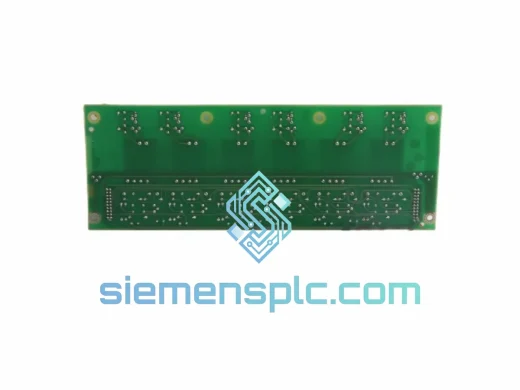
ABB
RFQ Ready
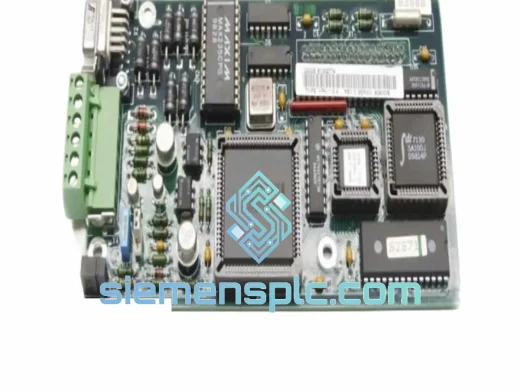
ABB ZINT-592 Fieldbus Interface Board – ZINT Series
ACS Drive
Origin SE
Interface Board
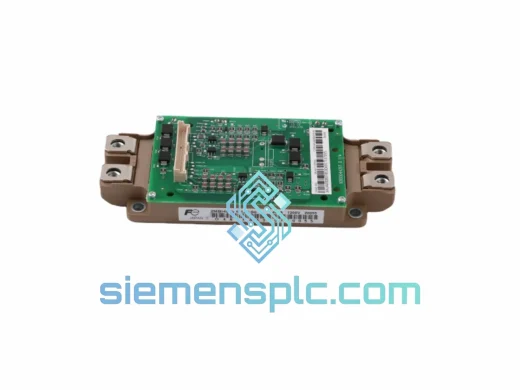
ABB
RFQ Ready
ABB YPK113A 61002774 Drive Control Board
In-Stock Xiamen
Origin SE
Drive Control Board