ABB
RFQ Ready
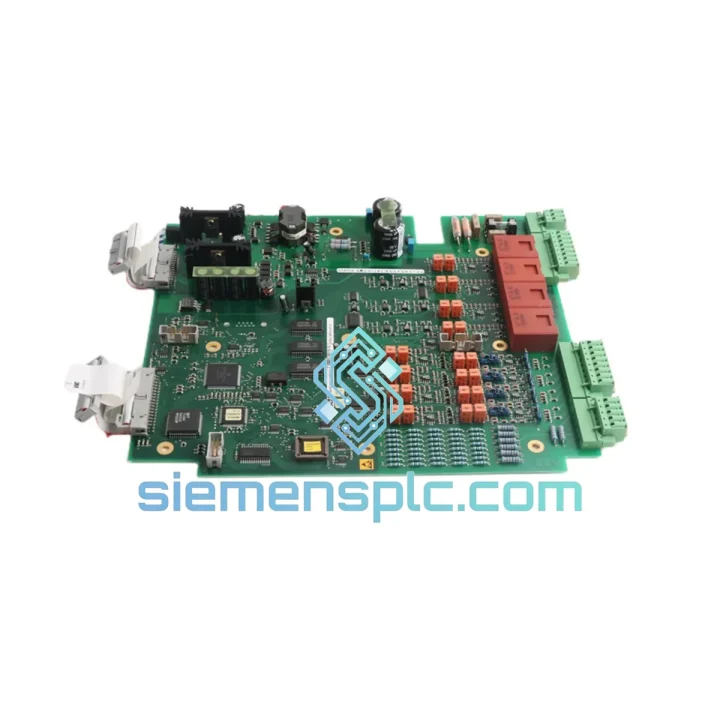
ABB PCD231 3BHE025541R0101 Excitation Control Module
UNITROL
Origin SE
Excitation Control Module
Request verified availability, condition, replacement risk review, packing options and courier lead time for UNS2881B-P-V1.
Click Request Quote and the part number is inserted into the inquiry form automatically.
Core fields for model confirmation and RFQ routing. Detailed product narrative remains below.
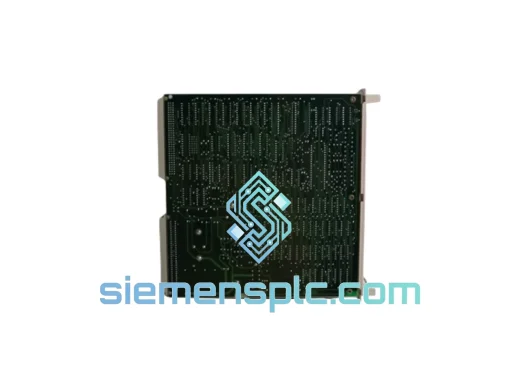
The ABB 3BHE009319R0001 UNS2881B-P,V1 is a rack-mounted measurement acquisition board designed for integration into ABB’s UNITROL 5000 and UNITROL 6000 generator excitation platforms, as well as compatible high-power AC drive enclosures. Its functional mandate is unambiguous: deliver galvanically isolated, digitized representations of generator terminal voltage and stator current to the excitation controller’s regulation core with sufficient accuracy and determinism to sustain closed-loop AVR (Automatic Voltage Regulator) performance within the tolerances defined by IEC 60034-16 and IEEE Std 421.5.
Within the excitation rack, this board occupies a dedicated measurement slot on the VME-compatible backplane. Raw secondary signals from the plant’s instrument transformers — typically 100 V line-to-line from voltage transformers and 1 A or 5 A from current transformers — enter the board’s isolated front-end, pass through a calibrated analog conditioning chain, are digitized by an onboard ADC, and are then transferred to the main excitation processor at a fixed cycle rate synchronized to the control loop period. The entire signal path from terminal to backplane bus is engineered to introduce less than 0.5% total measurement error under rated operating conditions, a figure that directly determines the AVR’s ability to hold generator terminal voltage within the ±0.5% steady-state band required for large synchronous machines connected to stiff grids.
This is not a general-purpose analog input card. The board’s input impedance, filter topology, ADC resolution, and bus interface protocol are co-designed with the UNS2881B slot specification. Introducing a non-OEM substitute — even one with nominally equivalent electrical ratings — risks systematic calibration offset that propagates into reactive power dispatch errors, potentially triggering generator protection relays or destabilizing the power system stabilizer (PSS) loop during grid disturbances.
Real-time Stock & RFQ: [email protected] | WhatsApp: +86 18359268345
| Parameter | Value / Specification |
|---|---|
| Manufacturer | ABB Ltd. (ASEA Brown Boveri) |
| Catalog Part Number | 3BHE009319R0001 |
| Board Designation | UNS2881B-P, Revision V1 |
| Module Function | Analog Measurement Acquisition — Voltage & Current Channels |
| Compatible Platforms | UNITROL 5000, UNITROL 6000, ACS High-Power Drive Series |
| Backplane Interface | VME-compatible parallel bus; fixed-cycle synchronous data transfer |
| Voltage Input | VT secondary, nominal 100 V L-L (50/60 Hz) |
| Current Input | CT secondary, 1 A or 5 A nominal |
| Measurement Accuracy | ≤ 0.5% of full scale (factory-calibrated, no field adjustment required) |
| Galvanic Isolation | Opto-isolated input stage; isolation barrier rated per ABB UNITROL design standard |
| Anti-Aliasing Filter | Low-pass, cutoff matched to ADC sampling rate; suppresses IGBT/thyristor switching noise |
| Operating Temperature | 0 °C to +55 °C continuous; storage −25 °C to +70 °C |
| Relative Humidity | 5–95% RH, non-condensing (IEC 60068-2-78) |
| EMC Compliance | IEC 61800-3 Category C2; CE marked as part of ABB excitation system assembly |
| PCB Construction | Multi-layer, separate analog/digital ground planes, star-point joined |
| Approximate Weight | 600 g |
| Country of Origin | Sweden (ABB Power Grids manufacturing) |
| Quality Certification | ISO 9001 — ABB certified production facility |
| Warranty | 12 months from confirmed shipment date |
Opto-Isolated Front-End Architecture: The voltage and current input channels each pass through an optocoupler-based isolation stage before reaching any active analog circuitry on the board’s digital domain. The isolation topology — LED-photodiode pairs operating in their linear region — provides a continuous galvanic barrier that withstands the transient overvoltages generated by generator circuit breaker operations and nearby lightning-induced surges on the HV bus. This barrier prevents ground loop currents, which are endemic in large generator halls where multiple earthing systems coexist, from injecting common-mode noise into the measurement signal. The result is a clean differential signal presented to the downstream conditioning chain regardless of the ground potential difference between the instrument transformer secondary circuit and the excitation cabinet chassis.
Analog Signal Conditioning Chain: Following isolation, each channel passes through a precision instrumentation amplifier stage with a gain set to map the nominal input range to the ADC’s full-scale input voltage. The amplifier’s common-mode rejection ratio (CMRR) exceeds 80 dB at 50/60 Hz, attenuating any residual common-mode interference that passes through the isolation stage. A low-pass anti-aliasing filter with a cutoff frequency matched to the ADC’s Nyquist limit follows the amplifier. In a drive cabinet environment where IGBT switching frequencies range from 1 kHz to 4 kHz, this filter is the primary defense against spectral aliasing that would otherwise fold high-frequency switching harmonics into the 50/60 Hz measurement band and introduce systematic error into the AVR’s feedback signal.
ADC Resolution and Sampling Synchronization: The onboard analog-to-digital converter operates at a sampling rate selected to capture the fundamental frequency and the low-order harmonics (up to the 5th or 7th) relevant to generator power quality monitoring. Sampling is synchronized to the excitation controller’s control loop clock via a backplane timing signal, ensuring that each measurement frame is time-coherent with the control algorithm’s execution cycle. This synchronization eliminates the phase jitter between measurement and control that would otherwise degrade the phase margin of the AVR’s proportional-integral regulation loop, particularly under dynamic conditions such as load rejection or sudden reactive power demand steps.
PCB EMC Layout Discipline: The board’s printed circuit layout follows ABB’s internal EMC design rules for industrial control electronics. The analog and digital ground planes are physically separated across the PCB and joined at a single star point located adjacent to the ADC’s reference pin — the topology that minimizes digital switching return currents from crossing the analog measurement ground. Guard traces surround high-impedance analog nodes to intercept leakage currents from adjacent signal lines. Decoupling capacitors — a combination of 100 nF ceramic and 10 µF electrolytic — are placed within 2 mm of each IC power supply pin to suppress conducted emissions at both high and low frequencies. This layout discipline is not cosmetic; in a generator excitation cabinet where field current cables carrying 200–800 A run in close proximity to the control electronics, radiated magnetic field immunity is a functional requirement, not a compliance checkbox.
Backplane Bus Data Transfer: Digitized measurement values are latched into an output register and transferred to the main excitation processor via the VME-compatible backplane at a deterministic cycle time — typically 1 ms or less, depending on the UNITROL platform configuration. The fixed transfer period ensures that the AVR’s PID algorithm and the PSS (Power System Stabilizer) always operate on measurement data of known age, preserving the control loop’s designed phase and gain margins. Non-deterministic measurement latency — a characteristic of some fieldbus-based I/O architectures — is architecturally excluded from this design.
Each ABB 3BHE009319R0001 UNS2881B-P,V1 unit dispatched from our Xiamen, China operations center passes through a structured pre-shipment inspection protocol. Physical examination covers PCB surface condition, solder joint integrity, connector pin alignment, component seating, and label authenticity verified against ABB’s part numbering and revision marking conventions. Serial number and revision data are recorded for full traceability documentation accompanying each shipment.
Where bench test fixtures are available for the UNS2881B board class, functional verification is performed prior to packaging: power-up sequencing, channel output signal verification, and backplane interface continuity checks. Units are then sealed in anti-static shielding bags with desiccant packs and humidity indicator cards, placed in custom foam-lined cartons engineered to withstand the shock and vibration loads of international air freight handling per ISTA 2A test protocols.
Export documentation — commercial invoice, packing list, certificate of origin, and HS code declaration — is prepared for each shipment to facilitate customs clearance in the destination country. Primary carriers are DHL Express, FedEx International Priority, and UPS Worldwide Express, with full shipment tracking provided at time of dispatch. Transit time to Europe, North America, Southeast Asia, the Middle East, and Australia is typically 3–7 business days from Xiamen. For plant shutdown emergencies, same-day dispatch options are available upon order confirmation before 14:00 CST. All units are covered by a 12-month warranty from the confirmed shipment date, applicable to manufacturing defects and functional failure under normal operating conditions as defined in ABB’s UNITROL system documentation.
Email: [email protected]
WhatsApp: +86 18359268345
Web: siemensplc.com
Location: Xiamen, China
© 2026
We check the full part number, brand, series and visible nameplate information before quotation.
Sales confirms stock path, condition option, quantity and realistic lead time for export dispatch.
DHL, FedEx, UPS or buyer courier arrangements can be reviewed with packing requirements.
Similar brand or category products for fast comparison and multi-item RFQ lists.