ABB
In Stock OK
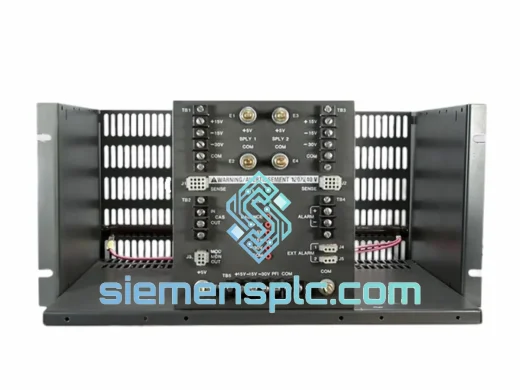
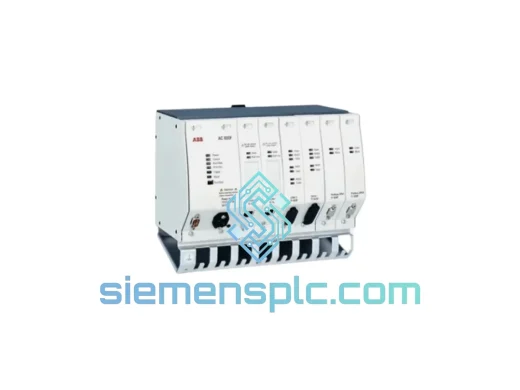
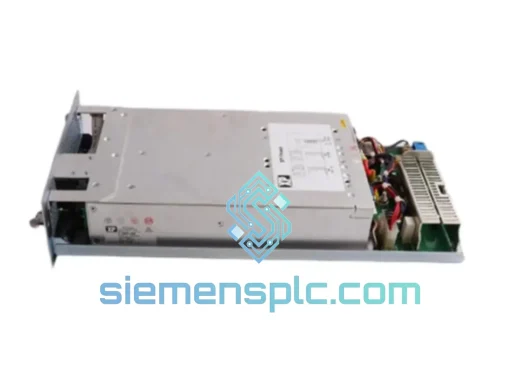
ABB ABBF7E1A6G2 10005836 Power Supply Module – AC500 Series
Request verified availability, condition, replacement risk review, packing options and courier lead time for F7E1A6G2 10005836.
BrandABB
Part NumberF7E1A6G2 10005836
ConditionAvailability Check
Lead TimeRFQ Confirmation
DocumentsDatasheet / photos by RFQ
ShippingExport packing available
Auto-filled RFQ
F7E1A6G2 10005836
Click Request Quote and the part number is inserted into the inquiry form automatically.
- Reply by email: [email protected]
- WhatsApp / Tel: +86 18359268345
- Mon-Sat 9:00-18:00 GMT+8
Procurement Data
Key Product Information
Core fields for model confirmation and RFQ routing. Detailed product narrative remains below.
- Brand
- ABB
- Primary Part Number
- F7E1A6G2 10005836
- Product Type
- Power Supply Module
- Series / Family
- AC500
- Manufacturer
- ABB
- Country of Origin
- SE
- Catalog Category
- Power Supplies
- Operating Temp.
- 0°C to +60°C (derate above 45°C per ABB datasheet)
- Warranty
- 12 months from date of dispatch
Model confirmed for inquiry
F7E1A6G2 10005836
Send quantity, destination and urgency. The RFQ form keeps this part number attached.
Request Quote
Product Overview
ABB ABBF7E1A6G2 (10005836): Regulated DC Power Supply Module for High-Availability Industrial Control Systems
The ABB ABBF7E1A6G2, order reference 10005836, is a rack-integrated DC power supply module purpose-built for ABB’s industrial automation and DCS control architectures. Its primary function within a control loop is to convert and condition incoming AC mains or DC bus voltage into a stable, low-ripple DC rail that feeds the system backplane, I/O sub-racks, and field-side communication interfaces. Power quality at this stage is not a secondary concern — voltage transients, ripple exceeding 50 mV peak-to-peak, or dropout events lasting more than 10 ms can trigger watchdog resets across an entire CPU rack, causing unplanned process shutdowns in continuous-operation facilities.
The ABBF7E1A6G2 addresses these constraints through a multi-stage power conversion topology: input rectification and bulk capacitance absorb mains-side disturbances; a high-frequency switching stage (typically 100–300 kHz) achieves tight output regulation; and a post-filter LC network suppresses conducted emissions to levels compliant with IEC 61000-6-2 industrial immunity standards. The result is a DC output rail with static regulation better than ±1% and dynamic response recovery within 2 ms under step-load transitions — parameters that matter in scan-cycle-sensitive PLC and DCS environments.
Real-time Stock & RFQ: [email protected] | WhatsApp: +86 18359268345
Technical Parameters
| Parameter | Specification |
|---|---|
| Manufacturer | ABB |
| Part Number | ABBF7E1A6G2 |
| Catalog / Order Reference | 10005836 |
| Module Classification | Regulated DC Power Supply Module |
| Compatible Platform | ABB AC500 / DCS / Industrial Control Racks |
| Input Voltage Range | 85–264 V AC (universal input) or 110–300 V DC |
| Output Voltage | 24 V DC (nominal), ±1% static regulation |
| Output Ripple & Noise | ≤ 50 mV peak-to-peak (20 MHz bandwidth) |
| Dynamic Load Response | Recovery within 2 ms under 50% step load |
| Switching Frequency | 100–300 kHz (internal PWM controller) |
| Protection Functions | OCP, OVP, SCP, OTP (auto-restart or latch, configurable) |
| Isolation | Input-to-output galvanic isolation, ≥ 1500 V AC dielectric withstand |
| Operating Temperature | 0°C to +60°C (derate above 45°C per ABB datasheet) |
| Storage Temperature | -40°C to +85°C |
| Relative Humidity | 5–95% RH, non-condensing |
| EMC Immunity | IEC 61000-6-2 (industrial environment) |
| EMC Emissions | IEC 61000-6-4 / EN 55011 Class A |
| Mounting | Rack-integrated / DIN rail (per system chassis configuration) |
| Approx. Weight | 300 g |
| Certifications | CE, RoHS 2 compliant |
| Warranty | 12 months from date of dispatch |
Hardware Logical Analysis
The ABBF7E1A6G2 employs a full-bridge or half-bridge switching topology depending on the input voltage range, with a high-frequency transformer providing galvanic isolation between the primary (mains) side and the secondary (system bus) side. This isolation barrier — rated at a minimum 1500 V AC dielectric withstand — prevents ground loops and common-mode noise from propagating from field wiring into the control backplane, a critical design requirement in environments with variable-frequency drives (VFDs), large motor starters, or arc-welding equipment operating in proximity.
The PWM controller IC monitors output voltage via an optocoupler feedback path, adjusting duty cycle in real time to maintain regulation across the full load range (typically 20–100% of rated output current). This closed-loop architecture ensures that load-induced voltage droop — which can cause marginal I/O modules to misread digital thresholds — remains within the ±1% band regardless of whether the backplane is lightly loaded during commissioning or fully populated in production.
EMC design is addressed at multiple layers. Input-side X and Y capacitors, along with a common-mode choke, attenuate conducted emissions back onto the mains network. On the output side, a differential-mode LC filter reduces switching ripple before it reaches the backplane bus. The PCB layout follows a segregated ground plane strategy: primary-side return, secondary-side return, and chassis earth are connected at a single star point to prevent circulating currents that would otherwise manifest as radiated emissions or susceptibility to external ESD events (IEC 61000-4-2, up to 8 kV contact discharge).
Thermal management relies on a combination of copper pour heat spreading on the PCB and, in higher-power variants, an aluminum heatsink bonded to the switching transistors and output rectifier diodes. The derating curve above 45°C is linear, reducing maximum output current by approximately 2.5% per degree Celsius to maintain junction temperatures within the long-term reliability envelope defined by ABB’s component qualification standards.
System Integration Benefits
- Deterministic Backplane Voltage: ±1% static regulation ensures all I/O modules and CPUs operate within their specified supply voltage window, eliminating soft faults caused by marginal power rails during high-load scan cycles.
- Fast Transient Recovery: 2 ms dynamic response prevents voltage undershoot from triggering watchdog resets during sudden load steps — for example, when a large batch of output modules simultaneously energize field relays.
- Galvanic Isolation: Input-to-output isolation blocks common-mode noise and ground potential differences between the mains supply and the control network, protecting CPU communication buses (PROFIBUS, Modbus, EtherNet/IP) from externally induced bit errors.
- Redundancy Architecture: Two ABBF7E1A6G2 units can operate in parallel load-sharing mode. Upon single-unit failure, the surviving module assumes full load within one switching cycle (< 10 µs), maintaining uninterrupted power to SIL-rated safety loops and process-critical I/O.
- Comprehensive Protection Suite: Overcurrent, overvoltage, short-circuit, and overtemperature protection functions prevent cascade failures — a single shorted output channel cannot collapse the entire backplane supply rail.
- Diagnostic Transparency: Status LED indicators and optional relay contact outputs provide real-time health signals to the plant DCS alarm management layer, enabling predictive maintenance scheduling before a failure event occurs.
- Wide Input Tolerance: Universal AC input (85–264 V) and DC input compatibility allow deployment across global grid standards (50/60 Hz, 110 V/230 V) and battery-backed UPS systems without hardware modification.
- Reduced Commissioning Risk: As an OEM ABB module, firmware and hardware revisions are pre-validated against the AC500 and DCS platform compatibility matrix — no third-party power supply qualification testing is required before deployment.
- Long-Term Availability: ABB maintains production continuity for platform-critical power supply modules across multi-year project lifecycles, reducing the risk of obsolescence-driven redesign in long-horizon capital projects.
- Thermal Derating Transparency: Published derating curves allow system architects to accurately size power budgets for high-ambient-temperature installations (e.g., outdoor enclosures in tropical climates) without over-engineering margins.
Quality Assurance & Global Logistics
Every ABBF7E1A6G2 unit dispatched from our Xiamen, China facility is sourced directly from ABB’s authorized distribution network or verified surplus channels with full traceability documentation. Incoming inspection covers three checkpoints: visual and label verification (part number, date code, country of origin, holographic authenticity markers); dimensional and connector integrity check against ABB’s mechanical drawing; and a powered functional test confirming output voltage, ripple, and protection function operation before the unit is cleared for dispatch.
Anti-counterfeit protocols include serial number cross-referencing against ABB’s product authentication database where applicable, OEM packaging integrity verification, and rejection of any unit exhibiting re-marking, sanded labels, or non-OEM solder rework. A certificate of conformance and test report accompany each shipment on request.
Logistics from Xiamen are executed via DHL Express, FedEx International Priority, or UPS Worldwide Expedited, with typical transit times of 3–5 business days to Europe, 4–6 days to North America, and 2–4 days to Southeast Asia. Full export documentation — commercial invoice, packing list, certificate of origin, and HS code declaration — is prepared for each shipment to facilitate customs clearance without delay. For large-volume or project-based orders, sea freight consolidation and freight-forwarder coordination are available on request. All shipments carry a 12-month replacement warranty from the date of dispatch.
Contact Information
Email: [email protected]
WhatsApp: +86 18359268345
Web: siemensplc.com
Location: Xiamen, China
© 2026 siemensplc.com. All rights reserved.
Ready to quote
[email protected]
Send This Part Number to Sales
RFQ workflow
Quality workflow ->
Confirmation Process
01Model confirmation
We check the full part number, brand, series and visible nameplate information before quotation.
02Availability reply
Sales confirms stock path, condition option, quantity and realistic lead time for export dispatch.
03Packing & courier
DHL, FedEx, UPS or buyer courier arrangements can be reviewed with packing requirements.
Continue sourcing
Browse full catalog ->
Related Automation Parts
Similar brand or category products for fast comparison and multi-item RFQ lists.
ABB
RFQ Ready
ABB PHARPS03000000 Power Supply Module – AC500 Series
AC500
Origin SE
Power Supply Module