ABB
RFQ Ready
ABB HAC807B102 Analog Input Termination Unit – AC800M Series
AC800M
Origin SE
Analog Input Termination Unit
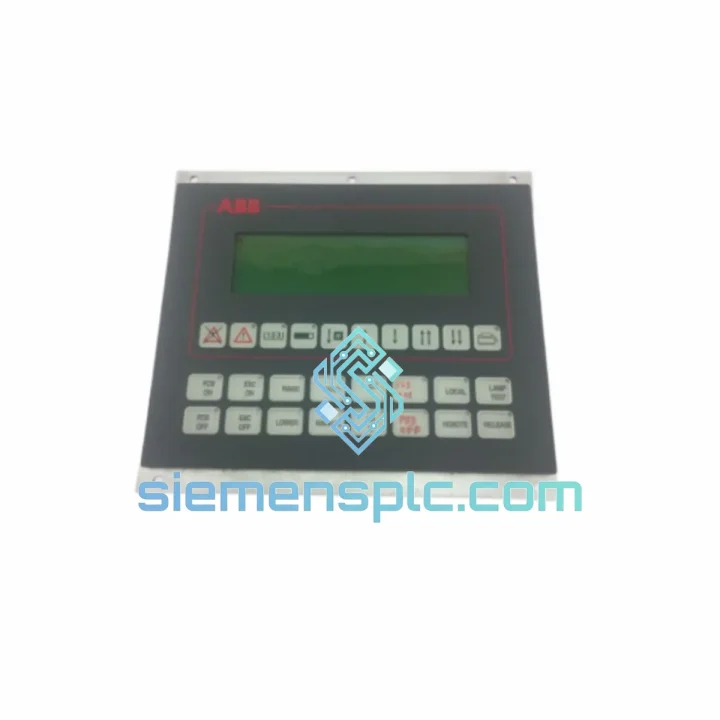
Request verified availability, condition, replacement risk review, packing options and courier lead time for AFC094AE01 HIEE200130R1.
Click Request Quote and the part number is inserted into the inquiry form automatically.
Core fields for model confirmation and RFQ routing. Detailed product narrative remains below.
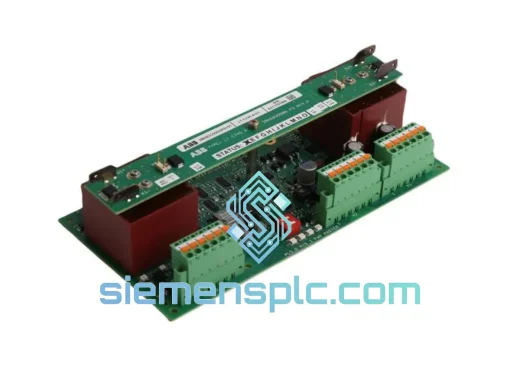
The AFC094AE01, identified by hardware revision code HIEE200130R1, occupies a structurally defined position within ABB’s AC800M control platform: it is the signal conditioning and galvanic isolation boundary between hardwired operator panel devices and the ModuleBus backplane communication layer. Its scope is narrow and its execution is precise. Pushbuttons, selector switches, pilot lamps, and hardwired interlock circuits terminate at the module’s external connector. From that point, the module is responsible for filtering, isolating, and transferring discrete signal state to the CPU’s I/O scan table with bounded latency and without introducing ground-loop-induced noise from the panel wiring domain.
The module’s input signal chain is structured in two sequential stages before any digital logic is involved. The first stage is a passive RC filter network on each input channel. The RC time constant — nominally 10 to 20 milliseconds — operates entirely in the analog domain and attenuates the multi-transition burst that mechanical contact closure generates. This hardware-defined debounce is not configurable and not subject to variation from CPU load or firmware state. The second stage is a per-channel optocoupler rated at 2,500 V RMS galvanic isolation. The optocoupler transfers the conditioned signal across the isolation barrier while breaking the electrical continuity between the panel wiring ground reference and the module’s internal logic ground. The combination of passive filtering before the isolation stage means the optocoupler input never processes the raw bounce waveform — a design discipline that eliminates a class of spurious interrupt events that software debounce routines cannot reliably suppress under variable CPU load.
The HIEE200130R1 hardware revision introduced revised PCB trace geometry and updated ferrite bead arrays at the external connector interface relative to earlier HIEE200xxx revisions. The ferrite arrays target conducted emissions and immunity in the 10 MHz to 1 GHz range — the frequency band occupied by switching-mode power supply harmonics, variable-frequency drive output switching transients, and RF-emitting field instruments that are standard equipment in process control cabinets. The revised trace geometry reduces parasitic coupling between the panel wiring domain and the ModuleBus interface circuitry, improving the module’s conducted immunity margin against EN 61000-4-6 test conditions without requiring external filtering components in the cabinet wiring.
On the backplane side, the AFC094AE01 interfaces with the AC800M rack via the ModuleBus differential serial protocol. Bus arbitration logic is implemented in dedicated hardware, not firmware. This means bus access timing is fixed and deterministic regardless of firmware execution state or interrupt load. In multi-module rack configurations, the module cannot extend the CPU’s effective scan cycle by contending for bus ownership at an incorrect time — a failure mode that firmware-based arbitration implementations are susceptible to under high interrupt load. The differential signaling scheme provides inherent common-mode rejection across the backplane trace length, maintaining signal integrity without shielded backplane cabling in electrically noisy cabinet environments.
The LED annunciation sub-circuit operates on a power domain isolated from the ModuleBus communication stack. During ModuleBus communication interruptions — including CPU firmware update sequences, rack power sequencing events, and communication fault recovery — the LED driver sub-circuit continues to reflect the last valid channel state. Operators retain accurate visual system state feedback during the transitional system states where status indication carries the highest operational consequence for safe and efficient plant operation.
In Symphony Plus DCS deployments, the AFC094AE01 participates in the platform’s unified diagnostic framework. Self-diagnostic registers are accessible via the ModuleBus within normal scan cycle execution, exposing module health status, per-channel input state, communication error counters, and supply voltage deviation to the S+ Operations HMI without physical cabinet access. This diagnostic transparency supports condition-based maintenance scheduling and reduces dependence on scheduled physical inspections in large DCS installations with hundreds of rack-mounted modules.
Real-time Stock & RFQ: [email protected] | WhatsApp: +86 18359268345
| Parameter | Specification |
|---|---|
| Manufacturer | ABB |
| Part Number | AFC094AE01 |
| Hardware Revision | HIEE200130R1 |
| Module Function | Discrete panel I/O interface — signal conditioning, galvanic isolation, status annunciation |
| Compatible Platforms | ABB AC800M Modular Controller; Symphony Plus S+ Controller Series |
| Backplane Protocol | ABB ModuleBus — differential half-duplex serial |
| Nominal Supply Voltage | 24 V DC ±15% |
| Maximum Power Dissipation | ≤ 7.5 W at rated channel load |
| Input Isolation Barrier | Per-channel optocoupler, 2,500 V RMS galvanic isolation |
| Hardware Debounce Time Constant | 10–20 ms RC network per input channel |
| Operating Temperature | 0 °C to +55 °C (IEC 60068-2-1 / IEC 60068-2-2) |
| Storage Temperature | −25 °C to +70 °C |
| Relative Humidity | 5%–95%, non-condensing (IEC 60068-2-78) |
| EMC Immunity — ESD | EN 61000-4-2: 4 kV contact discharge |
| EMC Immunity — EFT | EN 61000-4-4: 2 kV burst |
| EMC Immunity — Surge | EN 61000-4-5: 1 kV line-to-line |
| EMC Immunity — Conducted RF | EN 61000-4-6: 10 V (0.15–80 MHz) |
| Enclosure Protection | IP20 — cabinet installation required |
| Mechanical Mounting | AC800M rack slot; DIN rail per ABB mechanical specification |
| Module Weight | 1,040 g |
| Certifications | CE, cULus, ISO 9001 manufacturing origin |
| Country of Origin | Germany |
| Warranty | 12 months from verified shipment date |
Passive-First Input Architecture: The decision to place the RC filter network upstream of the optocoupler is not incidental. Mechanical contact bounce generates a burst of transitions within the first 5–20 ms of closure, with individual pulses as narrow as 100 µs. A software debounce routine executing within a CPU scan cycle of 10–50 ms may sample the input during a bounce interval and register a false state. The hardware RC network eliminates the bounce waveform before it reaches the digital domain, making the optocoupler output a clean single transition regardless of contact quality or wear state. This is particularly significant for emergency stop and safety interlock circuits where a false deactivation event carries process safety consequences.
Ground Plane Topology and Ferrite Isolation: The module PCB employs separate analog and digital ground planes joined at a single star point. This topology prevents digital switching transients from the ModuleBus interface circuitry from coupling into the analog signal conditioning stages through shared impedance in the ground return path. The HIEE200130R1 revision’s updated ferrite bead arrays at the external connector interface add a high-frequency common-mode choke in series with the panel wiring connection, attenuating conducted noise in the 10 MHz to 1 GHz range before it reaches the RC filter networks. The combined effect is a module that maintains specified input accuracy in the electromagnetic environment of a populated process control cabinet without external filtering.
Hardware Bus Arbitration Determinism: ModuleBus arbitration logic implemented in dedicated hardware gates means the module’s bus access timing is a fixed function of the ModuleBus clock, not a function of firmware execution state. Under high interrupt load conditions — common during process upsets when multiple I/O modules are simultaneously reporting state changes — firmware-based arbitration can defer bus access requests, extending the effective scan cycle beyond the watchdog timeout threshold. The AFC094AE01’s hardware arbitration eliminates this failure mode, maintaining consistent bus access timing independent of system load.
Isolated LED Driver Power Domain: The LED annunciation sub-circuit draws power from a regulated supply rail that is electrically isolated from the ModuleBus communication stack power domain. During ModuleBus communication faults, the LED driver continues operating from its independent supply, maintaining accurate panel annunciation. This is architecturally significant during CPU firmware update sequences, where the ModuleBus is temporarily suspended but operator panel status indication must remain valid for safe plant operation.
2,500 V RMS Isolation Margin Analysis: The 2,500 V RMS isolation rating provides a margin factor exceeding 100× against the common-mode voltages encountered in process control cabinets, where ground potential differences between cabinet sections can reach 10–30 V in installations with long cable runs and shared earthing infrastructure. The margin also provides protection against transient overvoltages generated by inductive load switching on the same 24 V DC control bus — a common source of isolation barrier stress in cabinets with mixed resistive and inductive panel loads.
Each ABB AFC094AE01 / HIEE200130R1 unit dispatched from our Xiamen, China operations center passes through a structured pre-shipment verification protocol before release. Procurement is conducted exclusively through verified ABB authorized distribution channels and authenticated surplus networks with documented chain-of-custody records. Upon receipt, each unit is physically authenticated against ABB’s published hardware documentation: part label format, serial number structure, PCB revision markings, and connector body specifications are cross-referenced against reference units. Any unit presenting a discrepancy in authentication criteria is quarantined and excluded from available inventory without exception.
Where bench test infrastructure is available for the specific module type, functional verification is performed using ABB-compatible test rigs that simulate ModuleBus communication cycles and exercise discrete I/O channel response across the full input voltage range. All units are packaged in ANSI/ESD S20.20 compliant anti-static bags, placed in foam-lined rigid cartons sized to prevent module movement during transit. Desiccant packs are included for shipments to high-humidity destinations.
Export shipments from Xiamen are executed via DHL Express, FedEx International Priority, and UPS Worldwide Expedited, with standard transit times of 3–7 business days to major industrial destinations in Europe, North America, Southeast Asia, the Middle East, and South America. Sea freight consolidation is available for project-volume orders requiring cost-optimized logistics. Complete export documentation — commercial invoice, packing list, and certificate of origin — is prepared in compliance with Chinese customs export regulations and destination country import requirements. A 12-month warranty covering verified manufacturing defects and confirmed functional failures accompanies every unit from the date of verified shipment.
📧 Email: [email protected]
💬 WhatsApp: +86 18359268345
🌐 Web: siemensplc.com
📍 Location: Xiamen, China
© 2026 siemensplc.com. All rights reserved.
We check the full part number, brand, series and visible nameplate information before quotation.
Sales confirms stock path, condition option, quantity and realistic lead time for export dispatch.
DHL, FedEx, UPS or buyer courier arrangements can be reviewed with packing requirements.
Similar brand or category products for fast comparison and multi-item RFQ lists.