ABB
RFQ Ready
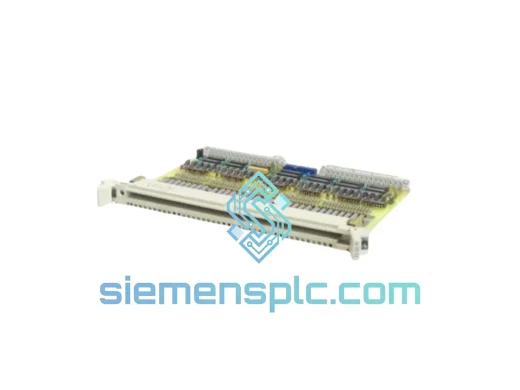
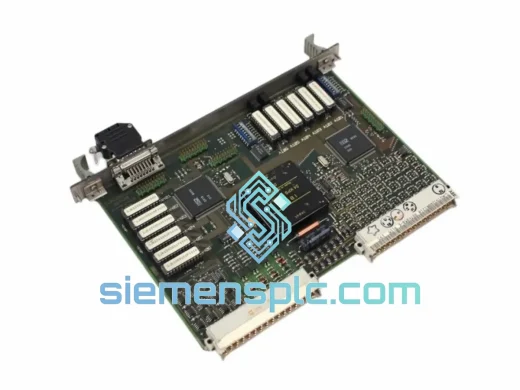
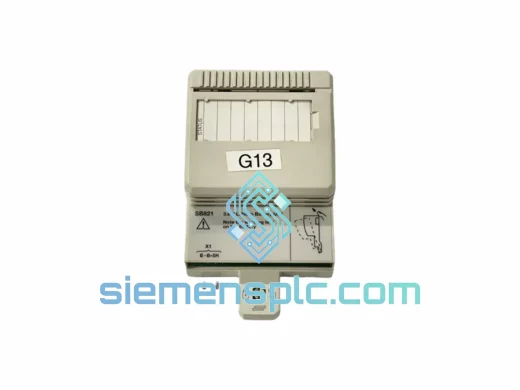
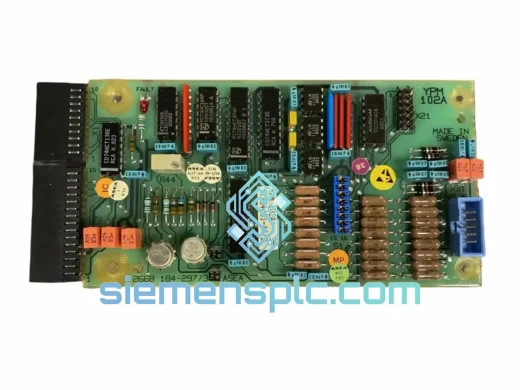
ABB YPM102A YT204001-AA Analog Output Module – AC 800M S800 I/O
S800
Origin SE
Analog Output Module
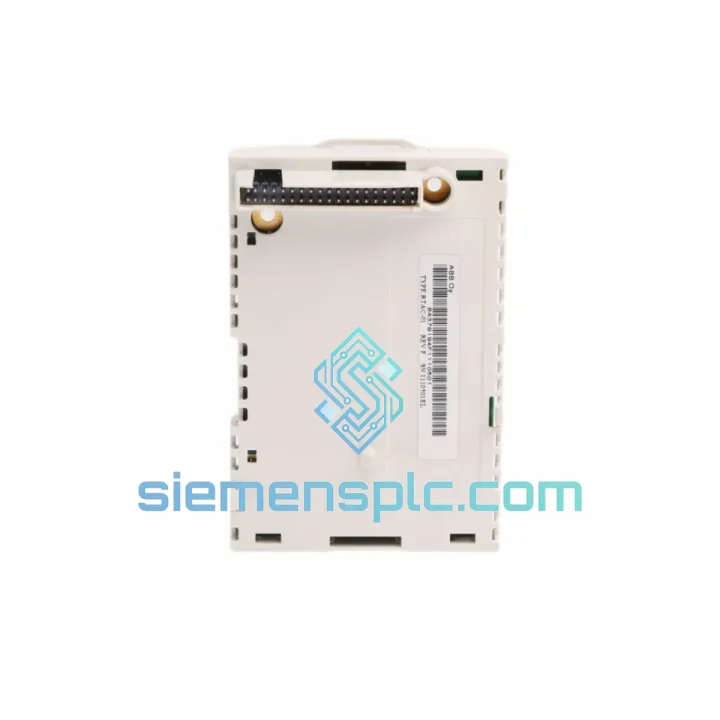
Request verified availability, condition, replacement risk review, packing options and courier lead time for AI801 3BSE020512R1.
Click Request Quote and the part number is inserted into the inquiry form automatically.
Core fields for model confirmation and RFQ routing. Detailed product narrative remains below.
Every hour your S800 I/O rack sits with a faulted AI801 slot, your process is bleeding money. Reactor temperatures unmonitored. Flow loops in manual. Operators running blind. We stock the ABB AI801 3BSE020512R1 in Xiamen specifically for this moment — the 2 AM call, the unplanned shutdown, the maintenance window that just got cut in half. Place your order before noon and it moves today.
URGENT REQUIREMENT? Contact: [email protected] | WhatsApp: +86 18359268345
| Part Number | 3BSE020512R1 ✔ Ready to Ship |
| Module Designation | AI801 |
| Brand | ABB |
| Series | S800 I/O (AC 800M DCS) |
| Module Type | Analog Input, 8-channel |
| Input Signals | 4–20 mA (HART), 0–20 mA, 1–5 V, 0–10 V |
| Resolution | 16-bit ADC |
| HART Protocol | HART 5 / HART 6 pass-through, per channel |
| Channel Isolation | Galvanic, channel-to-bus |
| Scan Cycle | ≤ 10 ms (all 8 channels) |
| Operating Temperature | 0 °C to +55 °C |
| Storage Temperature | −40 °C to +70 °C |
| Humidity | 5–95 % RH, non-condensing |
| Power Draw | ≤ 3.5 W from S800 ModuleBus |
| Compatible Baseplates | TB820V2, TB840A, TB845 |
| Compatible Controllers | PM851, PM856, PM860, PM861, PM864, PM866 |
| Configuration Tool | ABB Control Builder M (CBM) |
| Weight | 200 g |
| Dimensions (H×W×D) | ~130 × 30 × 100 mm |
| Origin | Germany |
| Stock Status | ✔ In Stock — Ships from Xiamen |
Swapping an AI801 looks straightforward on paper. In the field, it’s where things go sideways if you skip steps. Here’s what 10 years of S800 rack work actually looks like:
Step 1 — Confirm the fault before you pull the module. In Control Builder M, navigate to the hardware tree and check the AI801 slot status. A red LED on the module face combined with a “Module Fault” or “Communication Error” diagnostic in CBM confirms hardware failure. If the LED is green but channels are reading rail values (0 mA or 20 mA), suspect field wiring or transmitter failure first — don’t swap the module unnecessarily.
Step 2 — Check baseplate type before hot-swap. On TB840A and TB845 redundant baseplates, the AI801 supports hot-swap under power. On TB820V2 single baseplates, the slot goes to fault state during removal — the controller keeps running, but all 8 channels lose signal. Inform the control room before you pull. Never hot-swap on a TB820V2 without operator acknowledgment.
Step 3 — Module address is automatic, but verify. The S800 I/O uses ModuleBus auto-addressing based on physical slot position. When you seat the replacement AI801, CBM will detect it within one scan cycle and assign the same address as the removed module — provided you insert it into the same slot. Do not move it to a different slot position expecting it to inherit the old address. It won’t.
Step 4 — Firmware version matching. If your AC 800M controller is running an older firmware (pre-5.1), verify that the replacement AI801 firmware is compatible. Mismatched firmware can cause the module to appear in the hardware tree but fail to pass data. Check the firmware label on the module PCB edge and cross-reference with ABB document 3BSE036351 (S800 I/O Compatibility Matrix). If in doubt, use CBM’s firmware download function to align versions.
Step 5 — HART re-commissioning. After replacement, HART device descriptors cached in your asset management system (ABB Asset Vision, Emerson AMS, or Yokogawa PRM) may need a re-scan. Trigger a HART scan on the affected channels to re-populate device tags and confirm primary variable mapping. This step is frequently skipped and causes phantom alarms post-replacement.
Common fault codes to know:
The AI801 3BSE020512R1 was not designed for a climate-controlled server room. ABB engineered it for the environments where automation actually lives — offshore platforms with salt-laden air, chemical plants with corrosive atmospheres, steel mills with radiated heat and floor vibration that never stops.
The module’s conformal-coated PCB resists humidity ingress at the 5–95% RH range without condensation. The galvanic isolation barrier between field channels and the ModuleBus backplane is rated to withstand the kind of ground potential differences you find in large industrial facilities where multiple earthing systems coexist imperfectly. Surge immunity per IEC 61000-4-5 means a nearby lightning strike on a field cable won’t propagate into your controller backplane.
Vibration tolerance per IEC 60068-2-6 covers the sinusoidal vibration profiles typical of rotating machinery environments — compressor halls, pump stations, turbine decks. The module’s mechanical latch on the baseplate is not decorative; it’s a positive retention mechanism that keeps the module seated under the kind of structural vibration that loosens conventional card-edge connectors over time.
Operating temperature ceiling of +55 °C gives you real headroom in non-air-conditioned marshalling cabinets in tropical climates. Storage down to −40 °C means a unit shipped to a Siberian gas field in January arrives ready to install, not cracked from thermal shock.
Our warehouse is located in Xiamen, Fujian Province — one of China’s primary export hubs with direct access to DHL Express, FedEx International Priority, and UPS Worldwide Express gateways. This is not a drop-ship arrangement. Stock is physically on our shelves, inspected, and ready to pack.
Standard export process for the AI801 3BSE020512R1:
Every shipment includes a full commercial invoice, packing list, and HS Code 8537.10 declaration for smooth customs clearance. For DDP (Delivered Duty Paid) shipments, we handle import duty pre-payment on your behalf — your receiving dock gets the module, not a customs hold notice. Emergency shipments can be escalated to FedEx First Overnight or DHL 9:00 service where available at destination.
Tracking numbers are issued within 2 hours of dispatch and sent directly to your registered email. For plant-down emergencies, WhatsApp us the tracking number request and we’ll push it to you in real time.
Email: [email protected]
WhatsApp: +86 18359268345
Web: siemensplc.com
© 2026 siemensplc.com. All rights reserved.
We check the full part number, brand, series and visible nameplate information before quotation.
Sales confirms stock path, condition option, quantity and realistic lead time for export dispatch.
DHL, FedEx, UPS or buyer courier arrangements can be reviewed with packing requirements.
Similar brand or category products for fast comparison and multi-item RFQ lists.