
ABB
In Stock OK
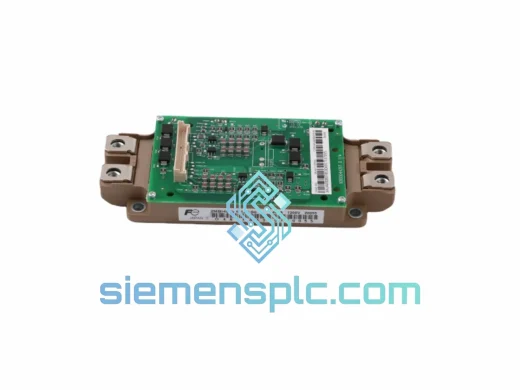
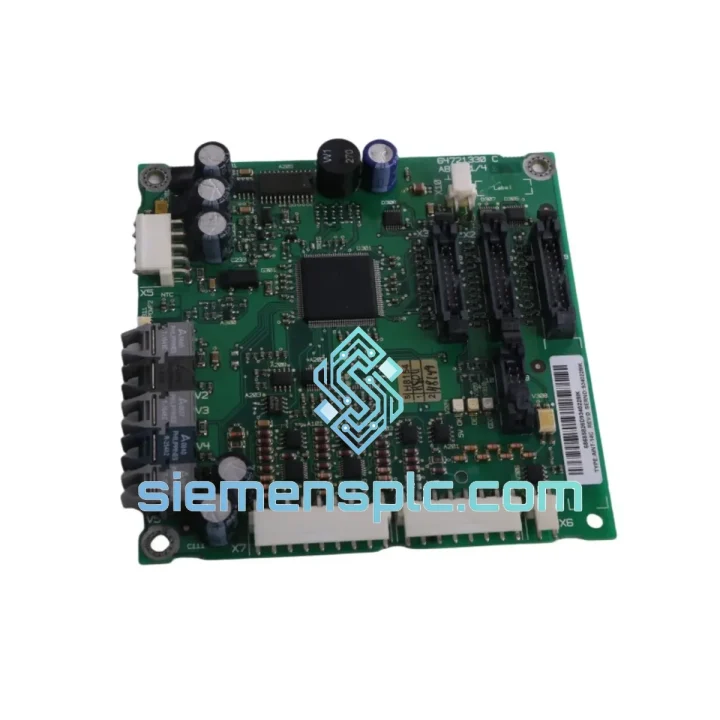
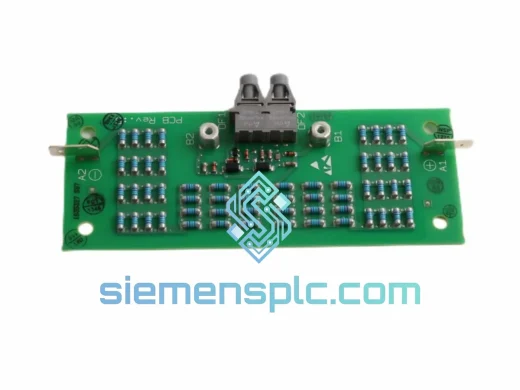
ABB AINT-14C Drive Interface Module – ACS800 Series
Request verified availability, condition, replacement risk review, packing options and courier lead time for AINT-14C.
BrandABB
Part NumberAINT-14C
ConditionAvailability Check
Lead TimeRFQ Confirmation
DocumentsDatasheet / photos by RFQ
ShippingExport packing available
Auto-filled RFQ
AINT-14C
Click Request Quote and the part number is inserted into the inquiry form automatically.
- Reply by email: [email protected]
- WhatsApp / Tel: +86 18359268345
- Mon-Sat 9:00-18:00 GMT+8
Procurement Data
Key Product Information
Core fields for model confirmation and RFQ routing. Detailed product narrative remains below.
- Brand
- ABB
- Primary Part Number
- AINT-14C
- Product Type
- Drive Interface Module
- Series / Family
- S800
- Manufacturer
- ABB
- Country of Origin
- SE
- Catalog Category
- Motor Drives
- Operating Temp.
- –10 °C to +55 °C
- Warranty
- 12 months from date of shipment
Model confirmed for inquiry
AINT-14C
Send quantity, destination and urgency. The RFQ form keeps this part number attached.
Request Quote
Product Overview
ABB AINT-14C: Motor Control Interface Architecture in ACS800 Variable Frequency Drive Systems
The AINT-14C is a dedicated motor control (MC) interface board engineered for deployment within ABB’s ACS800 series variable frequency drives. Its primary function is to serve as the signal conditioning and command arbitration layer between the drive’s main control board (RMIO) and the power electronics stage. In closed-loop vector control applications — where torque ripple below 0.5% and speed regulation within ±0.01% of rated speed are contractual requirements — the AINT-14C provides the deterministic signal path that makes those tolerances achievable in continuous industrial operation.
Unlike generic interface adapters, the AINT-14C is factory-specified for the ACS800 platform. It communicates over ABB’s proprietary DDCS (Distributed Drives Communication System) fiber optic bus, operating at 10 Mbit/s with a cycle time of 2 ms. This architecture eliminates ground loop interference entirely — a critical design decision in environments where common-mode noise from adjacent power cables routinely exceeds 50 V peak. The fiber optic medium provides galvanic isolation rated to 5 kV, ensuring that transients on the power side do not propagate into the control logic.
In multi-drive configurations — such as those found in paper machine drive lines or steel rolling mill tandem stands — the AINT-14C participates in the DDCS ring topology managed by an APBU branching unit. Each node on the ring is individually addressable, and the master controller (typically an AC800M PLC or APC2 application controller) can poll each drive’s status registers at 2 ms intervals without bus contention. This determinism is not incidental; it is a consequence of the DDCS protocol’s time-division multiplexing scheme, which the AINT-14C hardware is specifically designed to support.
The board’s signal processing chain handles encoder feedback, analog reference scaling, and digital I/O status reporting in a single hardware cycle. Encoder signals are conditioned through differential line receivers with hysteresis thresholds set to reject noise pulses below 200 ns — a specification derived from ABB’s internal EMC qualification testing for industrial drive environments. The result is a feedback path that remains stable even when the drive cabinet is mounted adjacent to medium-voltage switchgear or large transformer banks.
For maintenance engineers managing aging ACS800 installations, the AINT-14C is the OEM-exact replacement for failed interface boards. No firmware patching, parameter re-mapping, or hardware adaptation is required. Post-installation commissioning is limited to verifying drive parameter group 98 (option modules) and confirming DDCS node address assignment — a procedure that typically takes under 15 minutes with a CDP312R control panel or DriveWindow PC tool.
Real-time Stock & RFQ: [email protected] | WhatsApp: +86 18359268345
Technical Parameters
| Parameter | Value |
|---|---|
| Part Number | AINT-14C |
| Manufacturer | ABB |
| Series | ACS800 |
| Module Function | Motor Control (MC) Interface Board |
| Form Factor | Plug-in PCB, direct slot installation |
| Communication Bus | DDCS fiber optic, 10 Mbit/s |
| DDCS Cycle Time | 2 ms |
| Galvanic Isolation | 5 kV (fiber optic medium) |
| Encoder Input Noise Rejection | <200 ns pulse width rejection |
| Operating Temperature | –10 °C to +55 °C |
| Storage Temperature | –40 °C to +70 °C |
| Relative Humidity | 5–95%, non-condensing |
| Weight | 108 g |
| Compatibility | ABB ACS800 single-drive and multi-drive configurations |
| Certifications | CE (2014/35/EU, 2014/30/EU), UL 508C, IEC 61800-3, RoHS |
| Country of Origin | Finland |
| Warranty | 12 months from date of shipment |
Hardware Logical Analysis
The AINT-14C’s PCB layout reflects ABB’s ACS800-generation EMC design philosophy, which prioritizes signal integrity at the board level rather than relying solely on cabinet-level shielding. The board separates analog signal traces from digital logic planes using a split ground pour strategy, with the analog reference plane tied to chassis ground at a single star point. This prevents digital switching currents — which in a drive control board can reach 50 mA at 20 MHz — from injecting noise into the analog feedback paths.
The DDCS fiber optic transceivers on the AINT-14C use plastic optical fiber (POF) at 650 nm wavelength. The receiver sensitivity is specified at –21 dBm minimum, with a transmit power of –10 dBm typical. This 11 dB link budget accommodates up to 30 m of 1 mm POF with standard ST connectors — sufficient for all standard ACS800 cabinet configurations and most multi-drive panel layouts. The fiber medium’s immunity to electromagnetic interference is absolute within this link budget; there is no mechanism by which conducted or radiated EMI from the power stage can corrupt the DDCS data stream.
The encoder interface section employs RS-422 differential line receivers with a common-mode rejection ratio (CMRR) exceeding 40 dB at 1 MHz. This specification is relevant in applications where encoder cables run parallel to motor power cables over distances exceeding 10 m — a common installation scenario in paper machines and conveyor systems. The differential architecture rejects the common-mode noise induced by capacitive coupling from the power cables, preserving encoder pulse integrity at speeds up to 20,000 pulses per revolution.
The board’s power supply section draws from the ACS800’s internal +5 V and ±15 V rails, with local LC filtering on each supply line. The filter cutoff frequencies are selected to attenuate switching noise from the drive’s IGBT gate drivers, which operate at carrier frequencies between 1 kHz and 12 kHz depending on drive configuration. This local filtering ensures that supply rail noise does not modulate the analog reference signals processed by the board’s DAC and ADC circuits.
System Integration Benefits
- Deterministic 2 ms control loop closure: The DDCS protocol’s fixed cycle time allows the ACS800’s DTC (Direct Torque Control) algorithm to execute torque corrections within a single control cycle, achieving torque step response times below 5 ms — a performance level that eliminates the need for mechanical torque limiters in most winding and unwinding applications.
- Zero-configuration OEM replacement: The AINT-14C installs into the ACS800’s option slot without parameter re-initialization. Drive parameter group 98 automatically detects the board type at power-up, reducing unplanned downtime from board failure to the time required for physical replacement and a single drive restart.
- Fiber optic isolation eliminates ground loop faults: In multi-drive systems where drives share a common DC bus, ground potential differences between drive cabinets can reach several volts. The DDCS fiber link removes this as a failure mode entirely, eliminating a class of intermittent communication faults that are notoriously difficult to diagnose with copper-based fieldbus systems.
- Encoder feedback integrity at high pulse rates: The RS-422 differential input stage maintains signal integrity at encoder resolutions up to 20,000 PPR, supporting high-precision positioning applications such as winder diameter calculation and web tension control without requiring signal repeaters or active cable drivers.
- Diagnostic transparency via DDCS status registers: The AINT-14C exposes board-level diagnostic data — including fiber link quality, encoder signal status, and I/O state — through the DDCS data set registers accessible from the master PLC. This allows condition monitoring systems to detect degrading fiber connections or encoder signal quality before they cause process faults.
- Compatibility with ACS800 multi-drive topologies: The board operates correctly in DDCS ring configurations managed by APBU-44C or APBU-12C branching units, supporting installations with up to 12 drives per ring without requiring additional hardware or firmware customization.
- Reduced commissioning time in replacement scenarios: Because the AINT-14C is the factory-specified board, ABB’s standard commissioning checklist applies without modification. Maintenance teams familiar with ACS800 drives can complete board replacement and verification in under 30 minutes using standard tools.
- Long-term spare parts availability: Stocking the AINT-14C as a critical spare eliminates exposure to extended lead times from the OEM channel during unplanned failures. For continuous-process industries where a single drive failure can cost tens of thousands of dollars per hour in lost production, this inventory strategy is standard practice among reliability engineers.
Quality Assurance & Global Logistics
Every AINT-14C unit dispatched from our Xiamen, China facility is sourced through verified industrial supply channels with full batch traceability. Pre-shipment inspection covers visual integrity assessment, part number and label verification against ABB documentation, and anti-static packaging with humidity indicator cards. Units are packed in ESD-safe bags within rigid foam-lined cartons rated for international air freight handling.
Shipping from Xiamen Gaoqi International Airport (XMN) provides direct freight connections to major industrial hubs: Frankfurt (FRA), Chicago O’Hare (ORD), Singapore Changi (SIN), and Dubai (DXB) are all served by daily cargo flights with transit times of 3–5 business days for standard air freight. DHL Express, FedEx International Priority, and UPS Worldwide Express options are available for time-critical procurement. DDP (Delivered Duty Paid) and DAP (Delivered at Place) Incoterms are supported for customers requiring landed cost certainty.
The 12-month warranty covers manufacturing defects and premature component failure under normal operating conditions. Warranty claims are processed within 5 business days of receipt of the returned unit. Replacement units are dispatched from stock, not repaired units, ensuring that warranty replacements meet the same specification as the original shipment.
Contact Information
Email: [email protected]
WhatsApp: +86 18359268345
Web: siemensplc.com
Location: Xiamen, China
© 2026 siemensplc.com. All rights reserved.
Ready to quote
[email protected]
Send This Part Number to Sales
RFQ workflow
Quality workflow ->
Confirmation Process
01Model confirmation
We check the full part number, brand, series and visible nameplate information before quotation.
02Availability reply
Sales confirms stock path, condition option, quantity and realistic lead time for export dispatch.
03Packing & courier
DHL, FedEx, UPS or buyer courier arrangements can be reviewed with packing requirements.
Continue sourcing
Browse full catalog ->
Related Automation Parts
Similar brand or category products for fast comparison and multi-item RFQ lists.
ABB
RFQ Ready
ABB SDCS-UCM-1 3ADT220090R0008 Excitation Control Board
S800
Origin SE
DC Drive Control Module
ABB
RFQ Ready
ABB SDCS-PIN-51-COAT 3ADT220090R0006 DC Drive Control Card
S800
Origin SE
DC Drive Control Card